ADAD

Updating your news feed...
NEWS EXPRESS is Nigeria’s leading online newspaper. Published by Africa’s international award-winning journalist, Mr. Isaac Umunna, NEWS EXPRESS is Nigeria’s first truly professional online daily newspaper. It is published from Lagos, Nigeria’s economic and media hub, and has a provision for occasional special print editions. Thanks to our vast network of sources and dedicated team of professional journalists and contributors spread across Nigeria and overseas, NEWS EXPRESS has become synonymous with newsbreaks and exclusive stories from around the world.












Loading banners
Loading banners...

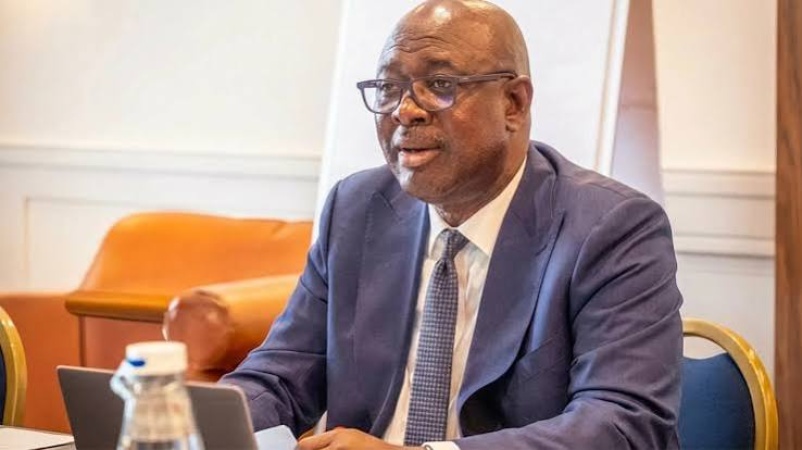
Minister of State for Petroleum Resources, Senator Heineken Lokpobiri
Nigeria could more than double its oil and gas reserves by intensifying frontier exploration, particularly in deepwater
Minister of State for Petroleum Resources, Senator Heineken Lokpobiri, is expected to lead discussions at this year’s Practical Nigerian Content (PNC) Forum, in Yenagoa,
Nigeria could more than double its oil and gas reserves by intensifying frontier exploration, particularly in deepwater and other underexplored basins, the Minister of State for Petroleum Resources (Oil), Heineken Lokpobiri, said.
However, the minister noted that the country’s substantial hydrocarbon potential would remain largely untapped without sustained investment in exploration, saying that the value of reserves depends on the ability to develop them and bring production to the market.
Lokpobiri spoke yesterday at the opening of the Nigerian Association of Petroleum Explorationists’ (NAPE) 44th annual conference and exhibition in Lagos, where he urged industry operators to intensify drilling campaigns, strengthen indigenous technical capacity, and invest in discoveries.
According to him, Nigeria’s deepwater terrain holds significant opportunities for additional discoveries; therefore, the country needs to move beyond its existing reserve estimates through deliberate exploration programmes.
He said the country cannot depend on discoveries made several decades ago to sustain future production, noting that exploration activities had declined over the years before the current administration began efforts to revive upstream operations.
The minister further said that active drilling rigs had increased from about 10, when he assumed office in August 2023, to over 50 currently, while Nigeria’s oil production has risen from about one million barrels per day, including condensates, to over 1.8 million barrels daily.
He said the increased drilling activities by operators had laid the foundation for future production, stressing that exploration undertaken today would determine the country’s ability to sustain oil and gas output in the coming years.
Lokpobiri, however, called for greater investment in frontier exploration, noting that the Petroleum Industry Act (PIA) had provided a dedicated fund for the purpose. He expressed confidence that sustained exploration could significantly expand the country’s reserves and unlock additional hydrocarbon resources.
Therefore, the minister warned that Nigeria must not mistake the size of its reserves for economic prosperity, citing Venezuela’s over 300 billion barrels of oil reserves as an example of how enormous resource endowments did not automatically translate into wealth.
He noted that the country’s oil and gas industry remained central to its economic stability, disclosing that approximately 85 per cent of Nigeria’s foreign reserves, which stood at about $56 billion, came from the petroleum sector.
In her keynote address, the Special Adviser to the President on Energy, Olu Verheijen, said Nigeria must ensure its increased oil and gas production translates into stronger industrial capacity, employment opportunities and improved economic conditions for citizens.
According to her, the country’s challenge was no longer limited to identifying hydrocarbon resources but creating the right investment conditions to develop them.
Earlier, NAPE President, Olajumoke Ajayi, noted that exploration must become a strategic priority as production from mature fields declines and existing reserves are depleted. (The Guardian)