ADAD
Updating your news feed...

NEWS EXPRESS is Nigeria’s leading online newspaper. Published by Africa’s international award-winning journalist, Mr. Isaac Umunna, NEWS EXPRESS is Nigeria’s first truly professional online daily newspaper. It is published from Lagos, Nigeria’s economic and media hub, and has a provision for occasional special print editions. Thanks to our vast network of sources and dedicated team of professional journalists and contributors spread across Nigeria and overseas, NEWS EXPRESS has become synonymous with newsbreaks and exclusive stories from around the world.




















Loading banners
Loading banners...

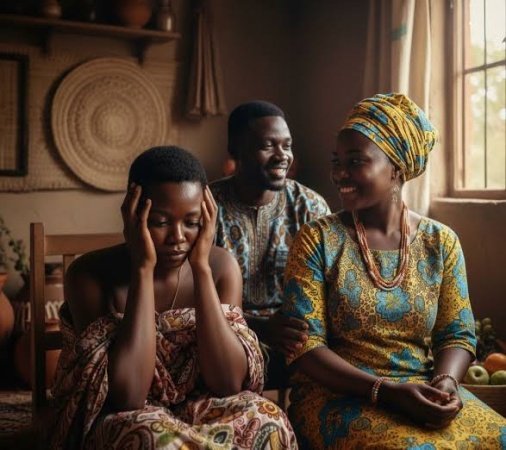
Scholars have warned that behind the structure of some polygamous homes lie tensions that can leave wives emotionally distressed, children caught in family rivalries and household finances stretched by competing responsibilities.
They cautioned that poorly managed polygamous marriages could expose families to jealousy, psychological trauma, sexual health risks and economic hardship, particularly where husbands fail to provide adequate care, fairness and financial support.
The concerns were raised during an international panel discussion organised under The Toyin Falola Interviews, with the theme, “Polygamy: Amplifying African Voices.” The discussion was convened by renowned historian, Prof Toyin Falola.
A medical pragmatics scholar, Dr Victoria Faleke Ogunnike, said rivalry among co-wives could create an unhealthy family environment, with damaging consequences for the mental health of spouses and the wellbeing of children.
She identified jealousy, competition, psychological trauma and uncontrolled childbearing as some of the challenges associated with polygyny, particularly when men failed to manage their households responsibly.
Ogunnike also warned that inadequate attention to sexual health could expose partners to sexually transmitted infections, including HIV, gonorrhoea and syphilis.
Beyond the emotional and health implications, she noted that maintaining multiple households and catering for children could place enormous pressure on family resources, potentially deepening disagreements among spouses.
Sharing his personal experience, Prof Emeritus A.B. Assensoh, a political scientist, legal scholar and ordained minister, recalled growing up in a royal household where his father had six wives.
Assensoh, who described himself as the 36th child, said jealousy, greed and competition among members of the household sometimes made family life difficult.
He observed that having substantial financial resources did not necessarily guarantee peace in a polygamous home, as managing relationships and competing interests among several wives and children could remain challenging.
Similarly, a South African educational leadership scholar, Dr Teboho Solomon Ngubane, argued that the sustainability of polygyny depended largely on a husband’s financial capacity, fairness, integrity and ability to treat all his wives with dignity.
He stressed that every wife deserves respect and every child is entitled to adequate care and attention, warning men against entering multiple marriages without first considering whether they could meet the responsibilities involved.
The Vice-Chancellor of Northwest University, Sokoto, Prof Mukhtar Umar Bunza, offered a religious perspective, arguing that polygyny had a place in Islamic teachings, which permit a man to marry up to four wives, provided he can treat them justly.
According to him, a man who cannot guarantee fairness among his wives should restrict himself to one marriage.
Veteran journalist and media strategist, Chief Adetola B. Adeniyi, also cautioned against presenting sexual health risks as peculiar to polygamous marriages, noting that irresponsible sexual behaviour could expose people in monogamous relationships to sexually transmitted infections.
In his remarks, Falola said the discussion was designed to encourage a balanced examination of polygyny rather than merely defend or condemn the practice.
He explained that the conversation sought to interrogate its cultural and social dimensions, particularly issues of responsibility, obligations, adaptability, continuity and the place of tradition in contemporary society.
The panel brought together scholars and professionals from different backgrounds to examine the cultural, religious, social, psychological and health implications of polygyny. (The Guardian)