ADAD
Updating your news feed...

NEWS EXPRESS is Nigeria’s leading online newspaper. Published by Africa’s international award-winning journalist, Mr. Isaac Umunna, NEWS EXPRESS is Nigeria’s first truly professional online daily newspaper. It is published from Lagos, Nigeria’s economic and media hub, and has a provision for occasional special print editions. Thanks to our vast network of sources and dedicated team of professional journalists and contributors spread across Nigeria and overseas, NEWS EXPRESS has become synonymous with newsbreaks and exclusive stories from around the world.

















Loading banners
Loading banners...

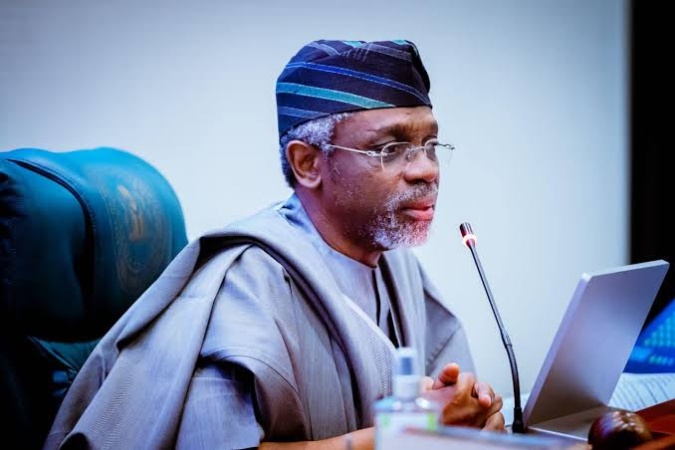
Chairman of the Presidential Working Group on the National Policing Bill, Femi Gbajabiamila
The only steps remaining are the collation of state endorsements and the transmission of the Bill by the National Assembly to President Bola Ahmed Tinubu for assent.
As at last count yesterday, 30 Houses of Assembly have concurred with the amendment of the Constitution to pave the way for State Police.
The threshold for Constitution amendment is concurrence of two-thirds of 36 states – which is 24.
Also yesterday, the Presidency requested the Organised Private Sector (OPS) to develop a financing and implementation blueprint for the proposed State Police system.
It said businesses had compelling reasons to support the reform because insecurity imposes costs beyond private security expenditure, including abandoned investments, delayed expansion and disrupted commercial activities.
“A company can reinforce its perimeter. Its workers still have to travel home, and its suppliers still have to move through the surrounding communities.
“Your long-term security depends on the strength of public institutions beyond your gates,” said Chief of Staff to the President and Chairman of the Presidential Working Group on the National Policing Bill, Femi Gbajabiamila.
Four more states yesterday endorsed the constitutional amendment as the Senate President, Godswill Akpabio, defended the initiative.
Lagos, Niger, Kogi and Ebonyi Houses of Assembly approved the proposed constitutional amendment, bringing the tally to 30 states that have endorsed the Bill.
The endorsements underscore growing legislative support for decentralised policing, although concerns remain about the capacity of state governments to finance the system, protect its independence and prevent governors from using it against political opponents.
During a plenary session on “Security, stability and economic resilience” at the 32nd Nigerian Economic Summit in Abuja, Gbajabiamila said insecurity was driving away investments, disrupting supply chains, delaying factory expansions and undermining employment opportunities.
He urged the Nigerian Economic Summit Group (NESG), chambers of commerce and business associations to develop practical proposals for financing, institutional management and accountable partnerships.
He said President Bola Ahmed Tinubu’s commitment to establishing state police offered businesses an opportunity to contribute to security institutions capable of protecting investments and strengthening economic resilience.
“I therefore ask the NESG to carry this engagement beyond our meeting. Bring forward a considered private sector contribution on financing and implementing state police, with practical proposals for accountable partnerships.
“Take that work into the legislative process and into your engagement with state governments,” he said.
Gbajabiamila urged business leaders to engage governors and legislators, contribute expertise in institutional management, expenditure control and risk assessment, and identify security failures preventing viable investments.
He warned that private sector participation must not compromise police independence, insisting that contributions towards communications infrastructure, equipment maintenance and financial planning must be transparent.
“Where businesses provide resources, those contributions need published accounts and independent scrutiny.
Public funding must remain dependable, and a donation must never purchase influence over an investigation or preferential treatment,” he cautioned.
The Chief of Staff said states seeking to establish police services must demonstrate sustainable financial capacity beyond the initial provision of vehicles, uniforms and equipment.
They must be able to meet recurring obligations, including salaries, professional training and operational maintenance, he said.
Failure to meet these obligations, Gbajabiamila warned, could expose police institutions to private influence and unlawful demands on citizens.
He assured that federal policing would remain available in states that were not financially or institutionally prepared to establish their own services.
30 Assemblies endorse amendment
Providing an update on the reform, Gbajabiamila said 24 State Houses of Assembly had approved the constitutional amendment as of October 23, meeting the required two-thirds threshold at that stage.
That was before six more states joined them.
He said the Presidential Working Group had submitted the draft National Policing Bill and 29 consequential amendment bills to the Federal Ministry of Justice on October 19 for legislative review.
Following the review and final consideration, the proposals would be presented to Tinubu for approval before transmission to the National Assembly.
Addressing fears of political abuse, Gbajabiamila said the proposed legislation would establish enforceable safeguards, national professional standards, independent oversight and remedies against misconduct.
“A citizen’s entitlement to protection cannot depend on whom he supports or where she comes from,” he said.
Lagos seeks greater state autonomy
The Lagos State House of Assembly unanimously endorsed the amendment after cutting short its recess.
Speaker Mudashiru Obasa welcomed the initiative but argued that the proposed framework did not adequately address the states’ concerns over control of their police services.
He said successive assemblies, from the fifth to the 10th, had debated the need for state police, but the present amendment still left significant powers at the federal level.
“It is unfortunate that what we believe in, our art and intention as well as our aspirations over the years, has not been fully captured in this alteration, even though we are pleased that at the end of the day, we have State Police in view,” he said.
Obasa expressed concern that some powers assigned to state legislatures were subject to joint control with the National Assembly, while the federal position would prevail in the event of a conflict.
“I don’t know if it is State Police or an offshoot of the National Police. But whatever it is, I want to state that at least, it is a step forward.
“I want to believe there is hope in the future that further amendments that will give total control to the states will happen,” he said.
Obasa also advocated the establishment of parliamentary police to protect legislative institutions and preserve their independence, citing past incidents in which state legislative buildings were allegedly demolished or locked at the instance of governors.
Ebonyi, Kogi endorse bill
In Ebonyi, all 24 members of the House of Assembly voted in favour of the bill during plenary at the Assembly Complex, Nkaliki Road, Abakaliki.
Speaker Moses Ije Odunwa said the unanimous endorsement reflected the lawmakers’ commitment to constitutional reforms aimed at strengthening security and protecting lives and property.
He said the demand for state police had been longstanding in Ebonyi, adding that the state had expressed support for the proposal during a National Assembly public hearing on constitutional review.
The Kogi State House of Assembly also unanimously approved the amendment after Speaker Aliyu Umar Yusuf urged members to support the proposal.
Yusuf said terrorism, banditry, kidnapping, farmer-herder conflicts, political thuggery and other crimes had intensified the need for more responsive policing.
In Niger, Governor Mohammed Umaru Bago announced the passage of the bill while speaking in Minna at the inauguration of the All Progressives Congress (APC) Presidential and Governorship Campaign Council.
He commended the Speaker, Abdulmalik Sarkindaji, and other lawmakers for their deliberations leading to the passage.
Akpabio defends proposal
Akpabio defended the proposed state police system as a means of strengthening Nigeria’s security architecture, saying it would complement rather than replace the federal police.
He spoke through Deputy Senate President Barau Jibrin at the 10th convocation of the National Institute for Legislative and Democratic Studies and the University of Benin in Abuja.
Criminologist Prof. Etannibi Alemika delivered a lecture titled: “State police in Nigeria: Issues, challenges and prospects.”
Akpabio disagreed with Alemika’s position that public hearings on the proposal had been inadequate, saying hearings were held in Abuja and across the six geopolitical zones to enable Nigerians to contribute.
“The federal police will remain intact. The objective is to complement the work of the existing police force,” he said.
He added that state police would operate under regulatory safeguards and federal oversight, with clearly defined limits on their weapons and powers.
Alemika, however, warned that decentralising policing without effective safeguards could worsen insecurity, particularly in states where governors wield considerable influence over public institutions.
He argued that state police alone would not address the underlying causes of insecurity, including unemployment, poverty, inequality, inadequate healthcare, poor education and environmental degradation.
“The solution to Nigeria’s insecurity lies not simply in state police or federal police, but in good governance,” he said.
The professor questioned whether constitutional provisions would adequately prevent political interference, given governors’ influence over state legislatures, judiciaries and electoral commissions. (The Nation)