ADAD
Updating your news feed...

NEWS EXPRESS is Nigeria’s leading online newspaper. Published by Africa’s international award-winning journalist, Mr. Isaac Umunna, NEWS EXPRESS is Nigeria’s first truly professional online daily newspaper. It is published from Lagos, Nigeria’s economic and media hub, and has a provision for occasional special print editions. Thanks to our vast network of sources and dedicated team of professional journalists and contributors spread across Nigeria and overseas, NEWS EXPRESS has become synonymous with newsbreaks and exclusive stories from around the world.
















Loading banners
Loading banners...

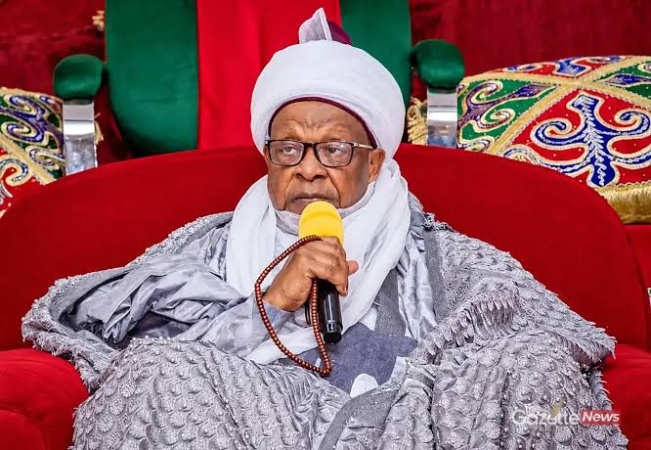
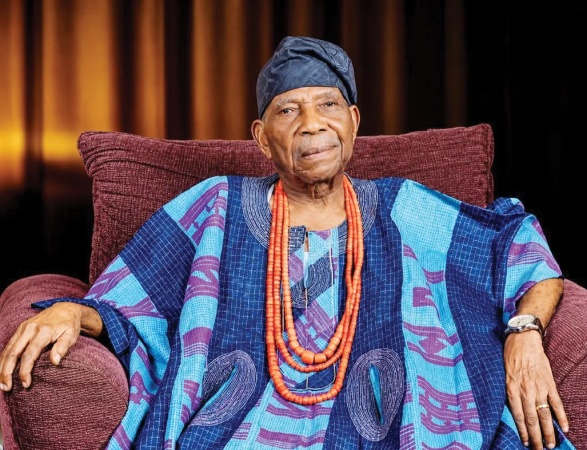
Emir of Katsina, Alhaji Dr Abdulmumini Kabir Usman addressing the APC campaign team
•APC group dismisses claims of Emir’s rebuke
By BONIFACE AKARAH
The Emir of Katsina, Alhaji Dr Abdulmumini Kabir Usman, has reportedly delivered a strong message to President Bola Tinubu’s campaign team, challenging political leaders to confront insecurity, economic hardship and the growing disconnect between politicians and ordinary Nigerians instead of concentrating on electoral ambitions.
According to a viral video clip the monarch spoke while recently receiving a delegation led by Senator Abdulaziz Yari, Director-General of the All Progressives Congress (APC) Presidential Campaign Council for Tinubu’s 2027 re-election bid. The delegation included Katsina State Governor Dikko Umaru Radda and other political stakeholders.
In the video of the meeting circulating online, the Emir urged Yari to recognise the national responsibility attached to his position and ensure political leaders confront the realities facing Nigerians.
“Director General, you are on board now. Not just here in Katsina, the whole country,” the monarch said, according to PREMIUM TIMES, which reported on the remarks.
The Emir’s message centred on the need for honesty, accountability and leadership that responds to the concerns of citizens rather than merely pursuing political power.
“Politics is not madness,” he declared, urging politicians to persuade voters through ideas and meaningful engagement rather than hostility and personal attacks.
“Convince me, into conviction. That is politics,” he added, according to PREMIUM TIMES.
Insecurity takes centre stage
The monarch also drew attention to the effect of insecurity on farming communities, warning that the inability of farmers to reach their fields was undermining livelihoods and economic activity.
“We have been stopped from farming,” he said, according to reports of the Hausa-language address.
His comments come as communities in Katsina and other parts of Nigeria’s North-West continue to face threats from banditry and kidnapping. The security crisis has affected farming, education, trade and the movement of residents in vulnerable areas.
The Emir also questioned the silence of influential leaders over the challenges facing northern Nigeria, calling on them to speak out and take responsibility.
“Where are our elders? We have to talk. We have to talk. We must stand up,” he reportedly said, according to coverage by Chronicles Reporters.
The monarch’s remarks put pressure on political leaders to demonstrate that their ambitions extend beyond winning elections to addressing the problems affecting the people they seek to represent
Warning against political selfishness
The video has also generated attention because of the sharp language in a separate viral account, which portrays the Emir as accusing politicians of abandoning ordinary people after elections and returning to traditional rulers only when they need political support.
That account attributes to him the statement: “Every 4 years you come to my palace with cap in hand, asking for prayers, asking for support. After election, you disappear to Abuja, to Lagos.”
It also attributes the phrase “You call it Renewed Hope, but people in Katsina are in renewed hunger” to the monarch.
However, an APC group known as the Democracy Watch Initiative (DWI) has challenged reports of the Emir rebuking APC and the Tinubu administration over insecurity and economic hardship, describing the accounts as unverified and politically motivated.
The group maintained that Yari’s visit to the traditional ruler was a consultation to seek royal blessings and counsel, not the confrontation portrayed, which alleged that the monarch delivered “four bitter truths” to the visiting delegation.
In a statement signed by its Deputy National Chairman, Hon. Musa Adam, the DWI said the report provided no recording, named witness or independently verifiable evidence to substantiate the alleged exchange.
According to the DWI, Yari led a delegation on visits to the palaces of the Emirs of Gwandu, Katsina, Daura and Zaria, where the traditional rulers received the visitors and offered prayers for peace, national unity and the success of Nigeria’s democratic process.
The organisation said Yari informed the emirs that he had come to seek their prayers, blessings and counsel, describing the engagements as consistent with established traditions of consultation between political leaders and traditional institutions.
It accused the authors of the disputed report of relying on an unnamed palace source to attribute remarks to the Emir of Katsina without providing evidence capable of independently confirming the claims.
“Palace visits of this kind are attended by many people and covered by the press. Comments of such nature attributed to the respected monarch should not be accepted without evidence,” the group said.
The organisation also rejected suggestions that the APC was embroiled in internal divisions in Katsina State, pointing to the participation of former governors Aminu Bello Masari and Ibrahim Shema in the delegation.
It further cited Governor Dikko Radda’s role in leading Yari to the Emir of Daura as evidence of political coordination within the state.
According to the group, the participation of political leaders across the state’s political landscape contradicted the narrative of a divided party.
DWI’s defence of the visit did not end with the political controversy. It also sought to counter criticism of the Tinubu administration’s handling of insecurity, particularly persistent banditry in Katsina and other parts of the North-West.
The group said the Federal Government was working with the Katsina State Government to address the security crisis, citing President Tinubu’s approval for the recruitment of 1,000 forest guards for the state.
The guards, it said, would be trained and equipped to work alongside the military, police, Department of State Services and local vigilantes, particularly in forested and remote areas allegedly used as hideouts by criminal gangs.
It also cited Radda’s commendation of the Federal Government over increased deployment of military personnel, police officers and DSS operatives to the state.
While defending the administration’s efforts, the organisation acknowledged that more needed to be done to tackle insecurity, describing it as a shared national challenge requiring collective action.
Group defends economic record
On the economy, the DWI accused critics of relying on selective information to portray the administration’s performance negatively.
It cited National Bureau of Statistics data showing that headline inflation eased to 14.63 per cent in September from 15.39 per cent in August, as well as the government’s announcement of a 30-day petrol discount at NNPC retail stations, with commercial transport operators given priority.
The group argued that such developments should be considered in assessing the administration’s economic policies rather than being ignored in political criticism.
It also rejected the suggestion that the palace visit amounted to an exercise in political self-interest, insisting that consultations with traditional rulers were intended to build consensus and obtain counsel ahead of the campaign season.
“Governance and campaigning can and do happen together,” the organisation said, adding that political consultations did not replace the government’s responsibility to deliver on its promises.
The DWI called on the media and the public to exercise caution when dealing with claims attributed to traditional rulers through anonymous sources, warning against the circulation of unverified information capable of misleading the public.