ADAD
Updating your news feed...

NEWS EXPRESS is Nigeria’s leading online newspaper. Published by Africa’s international award-winning journalist, Mr. Isaac Umunna, NEWS EXPRESS is Nigeria’s first truly professional online daily newspaper. It is published from Lagos, Nigeria’s economic and media hub, and has a provision for occasional special print editions. Thanks to our vast network of sources and dedicated team of professional journalists and contributors spread across Nigeria and overseas, NEWS EXPRESS has become synonymous with newsbreaks and exclusive stories from around the world.








Loading banners
Loading banners...

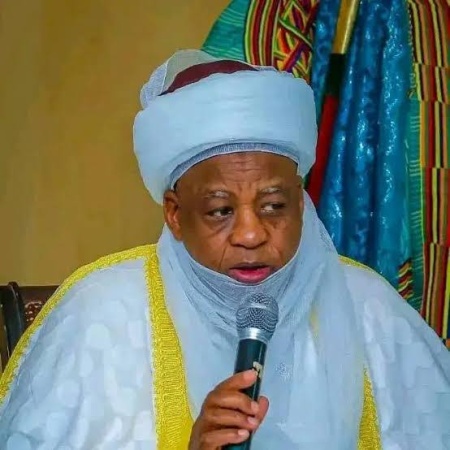
Sultan of Sokoto, Alhaji Saad Abubakar
By MUHAMMAD NASIR
The Sultanate Council says it is working to establish the Caliphate Islamic Microfinance Bank to combat poverty, create jobs and promote sustainable livelihoods across Nigeria and the West African sub-region.
The Sultan of Sokoto, Alhaji Sa’ad Abubakar, disclosed this on Sunday in Sokoto at the opening of a three-day training and capacity-building programme for stakeholders on Baitul Mal wat Tamweel (BMT).
The News Agency of Nigeria (NAN) reports that the event was organised by the Islamic Development Bank (IsDB) in collaboration with the Sokoto State Zakat and Endowment Agency.
Represented by the District Head of Kilgore, Alhaji Jabbi Kilgore, the Sultan said the proposed bank would provide small-scale entrepreneurs with access to Islamic finance to expand their businesses, create employment and improve livelihoods.
He said the initiative had reached an advanced stage, with investors, including those from outside Nigeria, expressing interest in partnering with the project.
“The aim is to establish a bank that will serve as a model not only for Nigeria but also for the West African sub-region,” he said.
The sultan described the IsDB’s collaboration with the Sokoto State Zakat and Endowment Agency as a significant step towards poverty eradication through effective Zakat collection, sustainable administration and productive use of charitable resources.
He urged participants and resource persons to ensure that the training translated into practical measures for improving the welfare of vulnerable people and strengthening poverty alleviation efforts.
Speaking, the Chairman of the Sokoto State Zakat and Endowment Agency, Malam Lawal Maidoki, called for a shift from excessive dependence on Zakat and other charitable assistance to productive activities that would enable beneficiaries to become self-reliant.
Maidoki said the BMT model combines social welfare with economic development by providing immediate assistance to vulnerable people, while helping them acquire resources and capabilities for sustainable livelihoods.
He noted that although Zakat and other charitable resources provide essential relief to disadvantaged households, such interventions must be complemented by opportunities that enable beneficiaries to establish businesses, generate income and gradually escape poverty.
“In many communities, Zakat and other charitable resources provide essential relief, but relief alone may not create a clear, supported pathway from vulnerability to sustainable livelihoods.
“At the same time, conventional microfinance may be inaccessible or unsuitable for people who cannot meet its conditions or who seek financing consistent with Islamic principles,” he said.
Maidoki explained that BMT mobilises and distributes social funds, including Zakat, Sadaqah and Waqf, to eligible beneficiaries while supporting productive activities through Shariah-compliant financial services and business development support.
He said the approach could strengthen poverty reduction efforts by linking social protection with economic empowerment and providing vulnerable households with opportunities to become financially independent.
Earlier, one of the resource persons, Saat Suharto, an Indonesian Social Activist and Islamic Economics and fFinance expert, said the programme was designed to strengthen stakeholders’ capacity to apply BMT principles in an inclusive, accountable and locally appropriate manner.
Suharto said the initiative would support the poorest and most vulnerable individuals to develop sustainable livelihoods and, over time, become financially capable of contributing Zakat themselves.
He added that the programme identified the need to strengthen Zakat and Waqf administration, improve staff capacity, simplify procedures and deploy technology to enhance transparency, accountability and operational efficiency. (NAN)