ADAD
ADADUpdating your news feed...

NEWS EXPRESS is Nigeria’s leading online newspaper. Published by Africa’s international award-winning journalist, Mr. Isaac Umunna, NEWS EXPRESS is Nigeria’s first truly professional online daily newspaper. It is published from Lagos, Nigeria’s economic and media hub, and has a provision for occasional special print editions. Thanks to our vast network of sources and dedicated team of professional journalists and contributors spread across Nigeria and overseas, NEWS EXPRESS has become synonymous with newsbreaks and exclusive stories from around the world.



Loading banners
Loading banners...

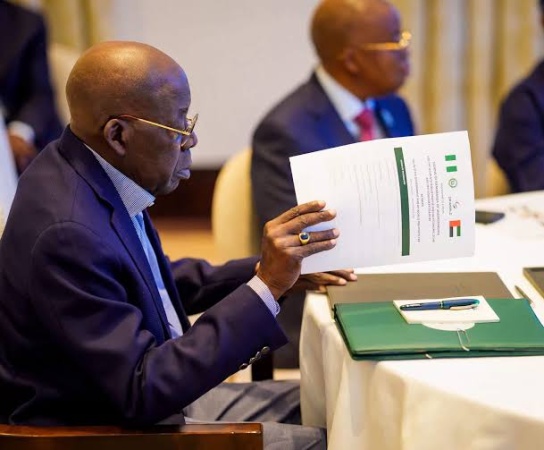
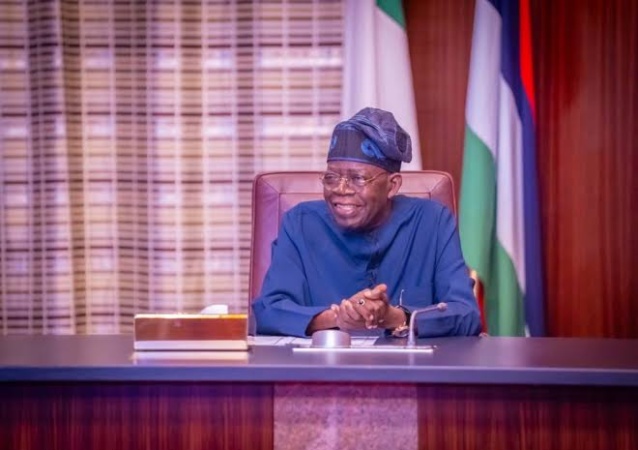
President Tinubu
It is the perfect time to revisit the fuel subsidy question because its consequences are no longer abstract: they are measurable in the rising cost of living and the growing hardship confronting Nigerians. For more than three decades, the subsidy debate has haunted Nigeria’s economic discourse. Neo-liberal economists called it a drainpipe, successive administrations described it as unsustainable, while civil society groups condemned it as a scam that enriched a privileged few.
On May 29, 2023, President Bola Ahmed Tinubu pulled the trigger with a single declaration at Eagle Square: “Subsidy is gone.” Three and a half years later, the dust has yet to settle. Instead, the country is grappling with a cost-of-living crisis that has pushed millions deeper into poverty. The promise that deregulation would encourage competition, attract investment and eventually lower pump prices remains largely unfulfilled for ordinary Nigerians.
With the 2027 general election approaching, the question is no longer whether the subsidy regime was corrupt. The critical question is whether its removal, as implemented, was desirable, sustainable and humane. As competing political camps propose different solutions, Nigerians must decide which approach offers genuine and lasting relief.
Promise that never came
The official argument for subsidy removal was straightforward: eliminate the enormous annual subsidy bills, redirect the savings to education, healthcare and infrastructure, and allow market forces to determine petrol prices. Competition among importers and local refiners was expected to bring prices down.
The reality has been different. Petrol prices have surged, transport fares have risen sharply, and higher fuel and diesel costs have aggravated food inflation and squeezed businesses. The naira’s depreciation has further complicated pricing, while the emergence of private refining has yet to translate into affordable petrol for most consumers.
For small business owners dependent on generators and workers commuting long distances, subsidy removal has resulted in mounting expenses and declining purchasing power.
Abdulkarim Daiyabu, former president of the Kano Chamber of Commerce, Industry, Mines and Agriculture, rejects the premise that Nigerians should pay international market prices for petroleum produced from their own resources. He said in an interview with Sunday Sun: “There is nothing like fuel subsidy in Nigeria. We produce the oil ourselves and have four major government refineries, alongside private refineries. The oil belongs to us, and so do the refineries. All we need to do is calculate the cost of refining a litre and compare it with the selling price.
“Petroleum products belong to all Nigerians. Even when sold elsewhere, the money should come back to us.
‘We are suffering because the people in government are not supposed to be there. They are there to loot our treasury and bankrupt the country.
“What we need now is a comprehensive judicial commission of inquiry to recover all stolen money and return it to the people. Those found guilty of looting and other crimes must be publicly punished so others can learn their lessons.”
Daiyabu’s position reflects a broader argument among critics of the policy: Nigeria’s oil resources should confer tangible benefits on its citizens, rather than leave them exposed to prices determined by exchange-rate volatility and international benchmarks.
Martin Onovo, a political activist and former presidential candidate, similarly argues that the country should determine petrol prices by production costs rather than international market prices.
“Anybody who tells you there is a subsidy on petroleum is telling a technical lie. There is a subsidy on imported petroleum, but not on domestically produced petroleum. Using international benchmark prices to determine local prices is wrong. In Venezuela and Iran, petrol costs about four cents per litre, equivalent to roughly N49–N56, depending on the exchange rate.
“If you want to see how satanic the APC is, compare the minimum wage with the cost of fuel. You will understand why Nigeria is the global poverty capital. Your minimum wage cannot fill my tank. I spend over N100,000 to fill it once and refuel at least three times weekly. The pain is graphic.”
Onovo’s argument challenges the logic of pricing locally refined petroleum as though Nigeria were entirely dependent on imported products. However, whether production-cost pricing can deliver the prices he advocates depends on the cost of crude, refining efficiency, exchange rates, distribution expenses and the management of the domestic petroleum supply chain.
Three roads to 2027
The hardship has returned subsidy to the political debate, with President Tinubu and opposition figures offering competing prescriptions.
Tinubu insists that removal is irreversible. His administration points to increased allocations to states through the Federation Account Allocation Committee (FAAC), the Presidential CNG Initiative and other interventions as evidence that the policy’s benefits are being redirected to the economy.
The difficulty is that increased government allocations have not translated into commensurate relief for many households. Without a transparent accounting of the savings generated by subsidy removal and their application, citizens have little basis for assessing the government’s claims.
For Chekwas Okorie, a politician and respected opinion leader, the failure lies not necessarily in the decision to remove subsidy but in the government’s inability to plan for its consequences.
“Before the last general election, there was a consensus that the subsidy regime was terribly managed and had become a cesspool of corruption. The figures diverted into private pockets were mind-boggling. Virtually every presidential candidate campaigned for subsidy removal, including the Buhari administration, which had budgeted for its termination in June 2023.
“What has made subsidy removal a campaign issue is that President Tinubu never planned how to manage the process or address its consequences. The abrupt implementation disrupted the economy and inflicted severe hardship.
“Tinubu repeatedly described the pain as labour that would soon end in joy. Now, as another election approaches and the suffering has worsened, he calls it cancer. He sounds like a doctor misdiagnosing the country’s illness. If labour pain lasts this long, the mother would have died. Nigerians are tired of the wrong prescription. Treatment based on a wrong diagnosis is bound to fail.”
Okorie’s criticism goes beyond the immediate increase in petrol prices. It questions whether the government adequately anticipated the economic shock and established mechanisms to protect vulnerable households.
Atiku’s promise of reinstatement
The African Democratic Congress (ADC) presidential candidate, Atiku Abubakar, has proposed reinstating subsidy if elected. His position appeals to Nigerians who believe government intervention is necessary to moderate fuel prices and cushion the cost-of-living crisis.
However, the proposal raises questions about funding, accountability and whether the corruption associated with the former regime can be prevented.
Okorie is unconvinced. He argues: “Those proposing to reinstate subsidies have not explained how they would fund them. I am yet to be convinced that the ADC presidential candidate’s proposal is workable. It sounds like a campaign promise designed to win the sympathy of suffering Nigerians, without explaining how to fund the policy or prevent the corruption that necessitated its removal.“
The challenge for Atiku is therefore to demonstrate that reinstatement would not reproduce the opaque arrangements, inflated claims and diversion of public funds that undermined the previous system.
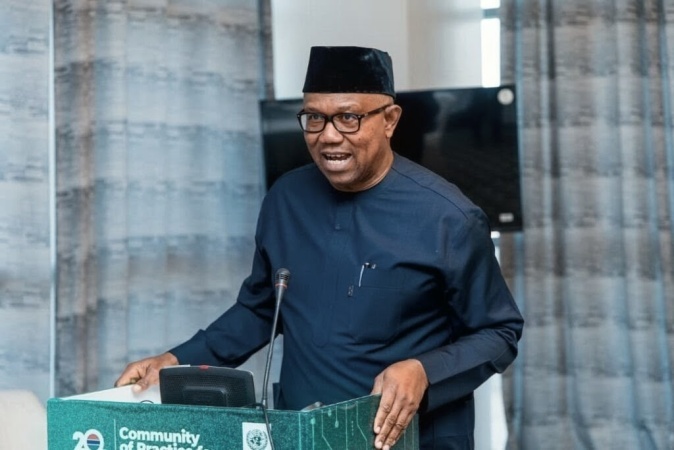
Peter Obi offers a different proposition, emphasising the fight against corruption and the need to address inefficiencies in the petroleum sector before determining a sustainable pricing framework. Onovo believes Obi’s approach is reasonable, although he considers the model adopted under the late General Sani Abacha more effective.
“The Tinubu option is completely corrupt and incompetent. The Atiku option is simply political and desperate, as his inconsistency shows. The Obi option is not the best, but it is the only reasonable one of the three. The best option is the Abacha model. With advice from Prof. Sam Aluko, the late General Sani Abacha determined the cost of producing and refining crude oil at about N6 per litre and sold it at N11, leaving a N5 margin for the Petroleum Trust Fund (PTF), managed by Buhari.
“Peter Obi does not have the best model; the Abacha model is better. But Obi’s approach is reasonable. If he can fight corruption, petrol could cost less than N700 per litre. Dr. Izielen Agbon’s production-cost pricing model estimates domestically refined petrol at N435–N687 per litre, using an exchange rate of about N1,333 to the dollar. It is the same technical basis Abacha used and the model Dr. Agbon recommends. That was also our approach when I ran for president. In 2015, we proposed N48 per litre when production costs were below N40. Remember that Umaru Yar’Adua reduced petrol prices from N75 to N65. With efficiency, what costs N250 to produce could be reduced to N150.”
Onovo’s position rests on the argument that efficient domestic production, rather than international price benchmarks, should determine what Nigerians pay. But his proposed prices remain estimates whose feasibility depends on production costs, refining capacity, crude supply arrangements, distribution expenses and exchange-rate conditions.
Okorie, meanwhile, questions whether Obi’s proposed sequence is realistic. “As for Obi’s approach, corruption exists everywhere. In a country like Nigeria, where corruption is endemic, waiting until it is eliminated before addressing fuel prices is a tall order, especially given his four-year commitment.
“I would rather see the revenue from subsidy removal invested in agriculture, healthcare and education. Affordable food would cushion the impact of high fuel prices, while investment in these sectors would improve livelihoods and generate economic growth. That is the path to sustainable development,” he posited.
His argument introduces an important distinction: Nigerians need immediate relief even as government pursues long-term reforms. Waiting for corruption to be eliminated before tackling the consequences of high fuel prices could leave households bearing the burden indefinitely.
The APC Defence
As the ruling party, every member is opposed to reversal of the regime of subsidy removal. Senator Gbenga Kaka argues that subsidy removal is irreversible and that the benefits will eventually materialise, provided those responsible for manipulating the former system are punished.
“As an APC member, I believe subsidy removal is irreversible and that its benefits will ultimately come. But it will only work if those who deprived ordinary Nigerians of its advantages are punished.
“Subsidy was introduced to benefit the common man and ensure that the gains of being an oil-producing country reached everyone. Unfortunately, scammers exploited the system. Our leaders claim they know these people. If they do, what is stopping them from dealing with them? Punish the culprits, and no sensible person will demand subsidy reinstatement.
“Rather than reversing the policy, government should introduce palliatives to ease hardship, investing in education, security, healthcare and other essential services. I speak for the downtrodden. Those who denied them the benefits of subsidy must face consequences.
“Interestingly, those who made money from subsidy scams are now the ones seeking to rule us. Obi talks about fighting corruption because he wants votes. Let him first go to Anambra and tackle corruption there. Anambra has many billionaires and considerable advantages in education and industry, yet its development does not match its endowments.
“I do not believe in all this rhetoric. That does not mean subsidy scammers should escape punishment. I link subsidy fraud with insecurity, and both must be addressed. I remain convinced that relief will come; Nigerians just have to endure a little longer.”
Kaka’s argument puts accountability at the centre of the debate. Yet his call for Nigerians to endure raises a difficult question: how long should citizens wait for the promised benefits while their purchasing power continues to decline?
The government must demonstrate that the removal of subsidy has not merely shifted the burden from public finances to households, while those who exploited the old regime escape prosecution.
Real question to answer
Nigeria’s subsidy experience has repeatedly exposed weaknesses in public financial management, petroleum accounting and regulatory oversight. Investigations into the former regime raised concerns about payments for fuel that was not imported, inflated claims and inadequate verification of petroleum supply.
These failures point to a governance problem that cannot be solved simply by changing the price at the pump. Removing subsidy without addressing corruption, improving transparency and strengthening domestic refining capacity risks treating the symptoms while leaving the underlying weaknesses intact.
Public affairs analyst Efiye Bribena captured this contradiction in an interview with Sunday Sun when he said: “They said they have abolished subsidy, but they are now talking about energy security running into trillions. It is another word for subsidy. Subsidy itself is not the problem, the real problem is corruption.”
The observation raises legitimate questions about the relationship between subsidy removal and other public expenditures. If government can commit substantial resources to energy security and other interventions, Nigerians are entitled to demand a clear explanation of the benefits and costs of those commitments.
Daiyabu’s proposed judicial commission of inquiry offers one avenue for addressing the accountability question. Recovering stolen funds and prosecuting those responsible for petroleum-sector fraud would help establish that subsidy reform is not an exercise in transferring costs to ordinary citizens while protecting powerful interests.
However, accountability must accompany a practical economic response. Nigerians cannot be expected to wait indefinitely for investigations, prosecutions and institutional reforms before receiving relief.
The options before the country are therefore not simply subsidy reinstatement or permanent removal. Policymakers must examine whether a transparent, targeted and financially sustainable intervention could protect vulnerable households and essential economic activities without recreating the corruption of the past.
Any such arrangement would require independently verified production and distribution costs, transparent public accounts, effective monitoring and clearly defined beneficiaries. Support for commercial transport, agriculture and small businesses could also be assessed against alternatives such as direct cash transfers and investments in essential services.
The central issue is not whether government should intervene in the petroleum market under every circumstance. It is whether any intervention can be designed to serve the public rather than a privileged few.
As Nigerians weigh the competing positions ahead of 2027, five questions demand answers. If subsidy savings are real, where is the money, and why is life becoming harder? Can meaningful competition emerge when petroleum prices remain exposed to exchange-rate volatility and global crude prices? How do other energy-related expenditures compare with the subsidy arrangements government abandoned? Would targeted support for transport, farming and small businesses offer better value than blanket intervention or complete withdrawal? And how long must Nigerians wait before the promised benefits become visible?
The answers should be measured against everyday realities: the price of food, the cost of public transport and the ability of small businesses to remain operational without spending much of their income on fuel.
Subsidy removal may have changed the government’s books, but it has yet to deliver sufficient relief to millions of Nigerians. The 2027 debate must therefore move beyond campaign promises and ideological arguments to credible plans for reducing costs, punishing corruption, improving domestic refining and protecting vulnerable citizens.
Ultimately, the test of reform is not whether government can declare a policy irreversible or promise that hardship will eventually end. It is whether Nigerians can live better because of it. (The Sun)