Updating your news feed...
NEWS EXPRESS is Nigeria’s leading online newspaper. Published by Africa’s international award-winning journalist, Mr. Isaac Umunna, NEWS EXPRESS is Nigeria’s first truly professional online daily newspaper. It is published from Lagos, Nigeria’s economic and media hub, and has a provision for occasional special print editions. Thanks to our vast network of sources and dedicated team of professional journalists and contributors spread across Nigeria and overseas, NEWS EXPRESS has become synonymous with newsbreaks and exclusive stories from around the world.























Loading banners
Loading banners...

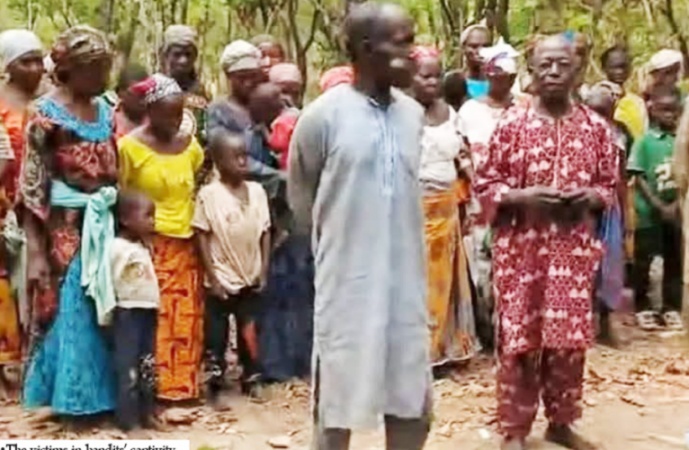
The Kachia kidnap victims
For 180 days, the forest was prison for a pregnant mother and her three daughters. It was there she gave birth, watched her newborn baby die, and struggled to keep her other children alive under the control of armed abductors.
When freedom finally came, it arrived on foot, through a torturous trek that claimed the life of her four-year-old daughter, Christy. Her escape was a homecoming marked by grief, exhaustion and the cruel reminder that for many families in Southern Kaduna, surviving captivity is only the beginning of another painful journey.
The mother, whose identity was withheld in a statement issued by security analyst and former Kaduna governorship aide, Reuben Buhari, was abducted from Ariko village in Kachia Local Government Area on Easter Sunday, April 5, 2026. She was pregnant when the gunmen took her and her daughters aged four, six and 12 into captivity.
What followed was a journey that featured hunger, exhaustion, childbirth, death and desperate hope. The family spent about 180 days in the bush before the mother and her surviving daughters escaped from the abductors’ camp last Saturday.
But their freedom came at a devastating cost. The youngest daughter, four-year-old Christy, who was already ill, died during the long walk to safety. Her mother had carried her on her back until exhaustion forced a change and the 12-year-old sister took over the burden.
Yet the tragedy of Christy’s death was only one part of the family’s ordeal. The mother had given birth inside the kidnappers’ camp, but the newborn died about three weeks later. The circumstances of the baby’s death, like the full details of the family’s captivity, remain a painful reminder of the conditions endured by abductees in the forest.
According to Buhari, the woman and her daughters escaped from the camp on Saturday and began trekking through the bush. Weak, hungry and exhausted, they pressed on, searching for a route back to civilisation. They trekked until nightfall and spent the night in the bush.
The following day, they resumed the journey, with the mother struggling to keep moving and the children depending on one another for strength. When Christy became too weak to continue, her mother carried her.
But the burden became too much and her 12-year-old girl took Christy over from her, carrying her younger sister as the family continued their desperate march. Unfortunately, the little girl eventually died, leaving a family already traumatised by months of captivity and loss of a newborn with another unbearable tragedy.
By Sunday, the mother and her two surviving daughters reached a community in Kachia Local Government Area, bringing to an end nearly six months of captivity and a torturous journey through the bush.
Luka Ayuba, a community youth who spoke to The Nation, said the survivors arrived in a condition that showed the devastating effects of their prolonged captivity. He described them as “critically ill, weak and completely exhausted”, saying the mother and her children had endured severe suffering before finally finding their way out of the forest.
According to Ayuba, the survivors were visibly affected by prolonged hunger, illness and exposure to the harsh conditions in the bush. He said they were in urgent need of medical attention when they arrived in the community.
“Their condition was very bad,” Ayuba said, explaining that the mother had gone through pregnancy, childbirth, loss of her newborn baby and months of captivity before attempting the difficult journey home with her daughters.
He said the surviving children were also severely weakened and had suffered from hunger and illness while in captivity.
Ayuba said the family’s return brought relief to residents, but the joy was overshadowed by the death of four-year-old Christy, who could not survive the journey out of the forest.
“It was painful to see what they had gone through,” he said, adding that the community immediately mobilised to assist the survivors.
According to him, residents provided immediate support and arranged for the mother and her surviving daughters to receive medical attention.
“They needed urgent medical attention,” Ayuba said, adding that the effects of spending months in the forest were clearly visible in their physical conditions.
He said the family’s suffering did not end with their escape because they would still have to recover from the physical and emotional trauma of captivity.
“They have suffered a lot,” Ayuba said, expressing concern about the other residents of Ariko and Awon who remained in the hands of the abductors.
For the survivors, the arrival at the hospital offered a measure of relief after six months of captivity, but their recovery was expected to be difficult. Beyond the immediate medical needs were the psychological scars of abduction, the loss of the newborn baby and the death of Christy during the journey to freedom.
The story of the woman and her daughters has drawn attention to the continued plight of abducted residents of Ariko and neighbouring communities. Buhari said 33 other abductees from Ariko, including 11 people reportedly kidnapped from Awon village, were still being held by their captors.
Behind that figure are families whose lives have been suspended. Mothers wait for children, children wait for parents, and relatives remain uncertain whether those taken into the forest will return alive.
The Ariko attack itself began on Easter Sunday, a day when many residents had gathered in churches for worship. Gunmen stormed the community, killing five people and abducting 37 worshippers, according to information provided by residents and community representatives.
Among those killed was 82-year-old Tango Aruna. The attack left the community mourning while families struggled to account for their missing relatives.
The Concerned Ariko Youths, in a statement signed by its chairman and secretary, Linus Audu and Kefas Likita, described the incident as a tragic assault on innocent worshippers during a solemn period of reflection.
The statement described the situation as a humanitarian crisis, saying affected families had been left traumatised and uncertain about the fate of their loved ones. It said the abductors demanded N1 billion and 35 motorcycles for the release of the remaining captives.
For a rural community already struggling with economic hardship, the demand was described as impossible to meet. Residents have often relied on communal contributions and family support to negotiate the release of abducted relatives.
The ransom demand has also deepened fears that the captives could remain in the forest for months. The case of the woman who escaped with her surviving daughters shows how prolonged captivity can turn into a struggle against hunger, illness and death.
Yet, even as the Ariko survivors returned, another mother’s story was moving towards a different ending. Joy Samuel was among 11 individuals kidnapped from Awon village, also in Kachia Local Government Area, on April 20, 2026. She was pregnant when she was abducted and taken into captivity with her daughter, Silvia Samuel.
Joy gave birth inside the kidnappers’ camp. Like the mother from Ariko, she tried to keep her newborn alive despite the harsh conditions in the forest. But the baby died while still in captivity.
The similarities between the two women are painful. Both were pregnant when abducted. Both were taken with their daughters. Both gave birth in the same kidnappers’ camp, and both lost their newborn babies under conditions that exposed the vulnerability of mothers and children in captivity.
Women also spent more than 100 days in the forest. Their experiences were shaped by the same insecurity that has repeatedly disrupted communities in Southern Kaduna.
But their stories eventually diverged. The Ariko mother, identified in accounts of her escape as Mama Sonia, returned home with her surviving children. Joy Samuel did not.
According to information provided by survivors and relatives, Joy died in the camp on Friday, August 28, after about five months of captivity. Her death left her three-year-old daughter, Silvia, still in the hands of the abductors and reportedly in critical condition.
The Awon captives have endured their own prolonged nightmare. One person reportedly escaped, while the remaining 10 were held for about 136 days. Three of the 10 were said to have died.
Among those reported dead were 34-year-old Yusuf Bawa and his five-year-old son. Both were reportedly ill and died after suffering from acute hunger in captivity.
Joy’s death added another name to the growing list of victims whose lives have been lost in the forest. Her daughter, Silvia, remains among those whose survival depends on urgent intervention.
Two other girls, Faith Kefas and Racheel Bulus, both 14, were also reported to be in critical condition. A survivor’s account said they were barely breathing and had not been fed for months, apart from drinking river water.
Other minors were reportedly still in the camp. Their conditions remained a source of concern as relatives appealed for action to secure the release of the captives.
The abductors reportedly made contact again and handed the telephone to some of the remaining victims. They later demanded N9 million and four motorcycles for the release of the last seven people, whom they reportedly confirmed were in very poor health because of illness and hunger.
The new demand was said to be a reduction from an initial demand of N300 million. But for the families, the amount remained a heavy burden, coming after months of uncertainty, loss and attempts to raise money for the release of their loved ones.
The two mothers, Joy and Mama Sonia, shared the same beginning and endured similar suffering. Both were taken from villages in Kachia, both were pregnant, and both gave birth in captivity. Both lost their newborn babies.
Their endings, however, were tragically different. Mama Sonia escaped and returned with her surviving daughters, even though she lost Christy during the journey. Joy died in captivity, leaving Silvia and other abductees behind.
Their stories are a reminder that kidnapping is not only about the number of people taken or the ransom demanded. It is also about the lives interrupted, the children who grow up in fear, the mothers who give birth without medical care and the families who wait for news from the forest.
As the survivors of Ariko receive medical attention and begin the difficult process of recovery, the fate of those still in captivity remains uncertain. The families of the Awon victims continue to hope that their loved ones will return alive.
The communities, however, appealed for continued efforts to secure the release of the remaining abductees, expressing concern over reports about their welfare.
Ariko youths also called on the Kachia Local Government authorities, the Kaduna State Government and the Federal Government to intensify efforts to rescue the victims and bring the perpetrators to justice.
For the families, every passing day carries the fear of another death. Every telephone call from the forest brings the possibility of either hope or heartbreak.
And somewhere beyond the roads and settlements of Kachia, in the forests where these families were held, children are still waiting for the sound of footsteps that will lead them home. (The Nation)