Updating your news feed...
NEWS EXPRESS is Nigeria’s leading online newspaper. Published by Africa’s international award-winning journalist, Mr. Isaac Umunna, NEWS EXPRESS is Nigeria’s first truly professional online daily newspaper. It is published from Lagos, Nigeria’s economic and media hub, and has a provision for occasional special print editions. Thanks to our vast network of sources and dedicated team of professional journalists and contributors spread across Nigeria and overseas, NEWS EXPRESS has become synonymous with newsbreaks and exclusive stories from around the world.























Loading banners
Loading banners...

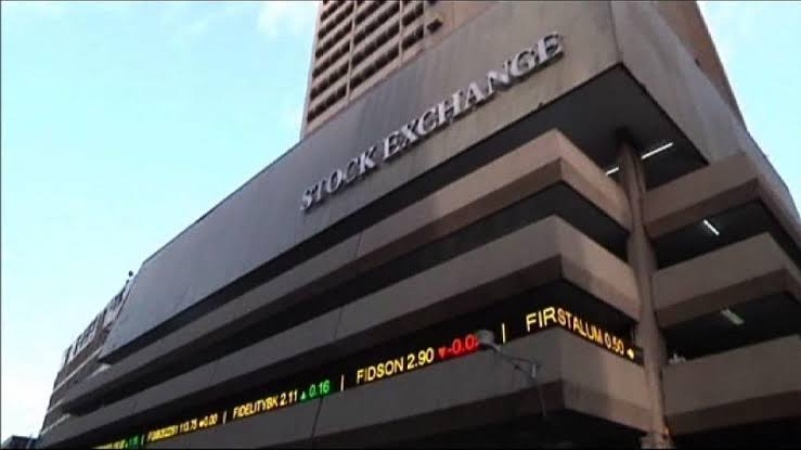
The Nigerian Stock Exchange
Nigerian stocks included in the FTSE Russell Frontier Market Index recorded a broadly positive performance this week, with 16 of the 31 stocks gaining as investor attention remained focused on large-cap equities following Nigeria’s return to the global index.
Six stocks declined, while nine closed unchanged, according to BusinessDay analysis of the weekly performance recorded by the Nigerian Exchange Group.
The strongest gain came from NAHCO, which rose 16.92 percent during the week, followed by Fidelity Bank, up 9.56 percent. Stanbic IBTC and NASCON also recorded strong gains of 7.19 percent and 7.10 percent, respectively.
Other notable gainers included Zenith Bank, which advanced 4.90 percent, Fidson Healthcare, up 5.25 percent, and First HoldCo, which gained 3.13 percent. GTCO rose 2.39 percent, UBA gained 2.04 percent, and Access Holdings increased 1.84 percent.
“Financial services stocks leading the gainers is understandable given the recent 350bps MPR cut to 23%. Lower interest rates can support credit growth, reduce funding costs and improve the valuation of financial assets. The sector is also one of the most liquid parts of the NGX, making it a major beneficiary when investor sentiment improves,” said Kehinde Jones, head of research and strategy at Anchoria Securities.
“Looking ahead, the outlook for financial services stocks remains positive, but the key will be how quickly the rate cut translates into lower lending rates, stronger credit growth and improved economic activity.
“Investors will also need to watch net interest margins, loan growth, asset quality and impairment charges. For the broader equities market, lower rates, improving market accessibility and stronger investor participation provide a supportive environment, although valuations and earnings growth will become increasingly important after the strong gains already recorded.”
The week’s gains came shortly after Nigeria officially returned to FTSE Russell’s Frontier Market status on September 21, reopening the market to a wider pool of global benchmark-tracking investors.
FTSE Russell’s reclassification has been associated with expectations of increased foreign participation and liquidity in eligible Nigerian equities.
“The outlook remains constructive, but there are risks. The 350-bps MPR cut to 23 percent should support liquidity and equities, but a faster-than-expected easing cycle could also narrow the yield advantage that attracts foreign capital,” Abiodun Ogunniyi, head of research at GTI Investment said.
“The 2027 pre-election fiscal cycle is another risk if increased spending puts pressure on inflation, the naira, or interest rates. Globally, renewed tightening in developed markets could also divert some capital away from emerging markets.”
Fidelity Bank leads trading activity
Trading activity among the constituents was led by Fidelity Bank Plc, which recorded 893.69 million shares valued at N18.30 billion, followed by Zenith Bank Plc with 260.08 million shares worth N34.00 billion.
Collectively, the 31 FTSE Russell constituents recorded 2.21 billion shares in turnover worth N120.31 billion during the week.
This accounted for nearly half (47.1percent) of the entire Nigerian Exchange’s (NGX) total weekly equity turnover of 4.69 billion shares valued at N240.82 billion.
activity is important because the return of Nigeria to the FTSE Russell benchmark does not necessarily mean that buying will be evenly distributed across all 31 stocks.
Initial market activity has shown that global investors can concentrate demand in larger and more liquid names, particularly major banks.
Ayomide Emmanuel, investment officer at Marathon Asset and Fund Management, noted that the divergence between gainers and decliners reflects strategic portfolio rebalancing.
“Investors are rotating capital out of mid-cap banking and consumer goods names to fund positions in higher-yielding Tier-1 banks and blue-chip equities,” Emmanuel said.
“Additionally, local institutional positioning ahead of upcoming market liquidity events and corporate disclosures has induced selective profit-taking across secondary constituent names.”
However, market observers caution against expecting an immediate, across-the-board windfall. In a one-on-one session, Victor Odulate, Esq., director at Redhill Media, emphasised that full institutional deployment takes time.
“Regarding this week’s performance, it is simply too early to attribute it strictly to the FTSE Russell re-listing,” Odulate said.
“Reclassification only took effect on Monday, September 21st, and institutional passive funds do not deploy all their capital at once. Due to post-earnings drift and portfolio management strategies, institutional buyers spread their entries out over time, meaning any significant market reaction will take months, not days, to fully play out. Furthermore, the FTSE Russell Frontier Markets Index is not tracked by a massive volume or value of funds compared to heavier indices like the MSCI.”
On the losing side, Wema Bank fell 3.76 percent, making it the biggest decliner among the constituents.
MTN Nigeria declined 3.03 percent, while United Capital, Nigerian Breweries, Dangote Sugar, and FCMB fell 2.29 percent, 1.87 percent, 0.70 percent, and 0.45 percent, respectively.
Looking ahead, market participants expect several major catalysts over the next three months to dictate market direction.
First, sentiment is anticipated to shift as the prospective listing of the Dangote Petroleum Refinery approaches, which could help curb capital bleeding from secondary market equities.
Second, the upcoming Q3 earnings season alongside audited H1 results for Tier-1 banks will provide updated clarity on corporate health and drive the next wave of positioning. (BusinessDay NG)
•