Updating your news feed...
NEWS EXPRESS is Nigeria’s leading online newspaper. Published by Africa’s international award-winning journalist, Mr. Isaac Umunna, NEWS EXPRESS is Nigeria’s first truly professional online daily newspaper. It is published from Lagos, Nigeria’s economic and media hub, and has a provision for occasional special print editions. Thanks to our vast network of sources and dedicated team of professional journalists and contributors spread across Nigeria and overseas, NEWS EXPRESS has become synonymous with newsbreaks and exclusive stories from around the world.


.webp)
.webp)






Loading banners
Loading banners...

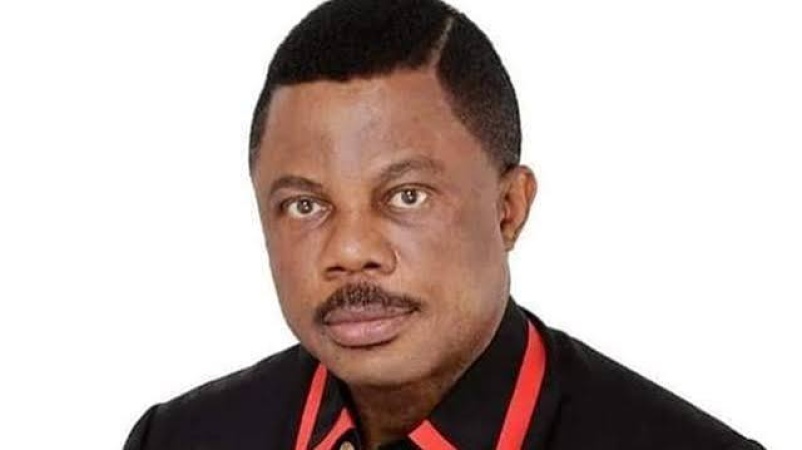
Former Governor Obiano
By BONIFACE AKARAH
The International Society for Civil Liberties and Rule of Law (InterSociety) has accused the administration of former Anambra State Governor Willie Obiano of leaving behind a heavy financial burden of loans, unpaid contracts and workforce obligations when he left office in March 2022.
In a statement dated September 22, 2026, and signed by Lead-Director Emeka Umeagbalasi, Barrister Chinwe Umeche, Barrister Chidinma Evangeline Udegbunam and Barrister Obianuju Joy Igboeli, InterSociety said the debt controversy in Anambra should be examined across the administrations of Peter Obi, Willie Obiano and Chukwuma Soludo rather than through partisan political arguments.
InterSociety alleged that a significant portion of the liabilities inherited by the Soludo administration arose from contracts awarded during Obiano’s tenure, particularly road projects awarded around the 2017 election period.
The organisation said: “That Obiano Government incurred and left heavy debt profile including local and foreign debts, contractors’ contractual obligations and un-cleared serving and retired workforce remunerations in hundreds of billions of naira. Chunk of Obiano’s un-cleared contractual debts came from 2017 staggered election season widespread award of white elephant road contracts-during which mobilization fees were paid and contractors ordered to sites.”
According to the group, some of the projects were left incomplete after contractors received mobilisation payments, while outstanding payments for earthworks and other contractual obligations were subsequently inherited by the Soludo administration.
InterSociety also pointed to a reported N10 billion infrastructure loan obtained during the Obiano administration in November 2015, saying the facility was structured for repayment over 20 years through an irrevocable payment standing order and carried interest.
It said: “The maddening loan profile under Obiano started with N10Billion reportedly secured in Nov 2015 and dubbed: ‘CBN Infrastructure Development Facility (loan) of N10Billion for Anambra November 2015’. The loan facility was reported to be repaid by installments and paid fully in 20 years through Irrevocable Payment Standing Order including deductions at source from the Federation Account and at interest of 9%.”
InterSociety further alleged that the financial burden was not limited to the N10 billion facility, claiming that plans were also made during the early years of Obiano’s administration to raise another N50 billion bond from local sources.
The group said the cumulative effect of the borrowing, unfinished projects and unpaid contractual obligations was significant for the government that took over in 2022.
“Not only that most of the road contracts were left undone after securement of his second term, but also monies spent on earth works—in tens of billions of naira remained unpaid and pushed into the present Prof Soludo Government of Anambra State,” InterSociety alleged.
The organisation’s claims come amid renewed public debate over Anambra’s inherited debt. The state’s Commissioner for Finance, Izuchukwu Okafor, recently said the Soludo administration was still servicing loans obtained by previous administrations, including those of Obi and Obiano, while claiming that the state’s debt burden had fallen by more than 83 per cent under Soludo.
InterSociety said its assessment was aimed at placing the financial records of the three administrations within the same historical framework, arguing that liabilities should be traced to the administration under which they were incurred rather than attributed retrospectively to another government.