
Updating your news feed...
NEWS EXPRESS is Nigeria’s leading online newspaper. Published by Africa’s international award-winning journalist, Mr. Isaac Umunna, NEWS EXPRESS is Nigeria’s first truly professional online daily newspaper. It is published from Lagos, Nigeria’s economic and media hub, and has a provision for occasional special print editions. Thanks to our vast network of sources and dedicated team of professional journalists and contributors spread across Nigeria and overseas, NEWS EXPRESS has become synonymous with newsbreaks and exclusive stories from around the world.














Loading banners
Loading banners...

Gov Alia
From leaking roofs and obsolete equipment to dysfunctional theatres and patients travelling across the state in search of treatment, Benue’s public healthcare system presents an uncomfortable contradiction. There is something profoundly wrong with a healthcare system in which the hospital itself has become a patient.
A hospital Is supposed to be the place where sickness ends. It should be where a frightened mother takes a sick child and finds hope; where a pregnant woman in distress can expect competent hands, electricity, blood, oxygen and the equipment necessary to save her life; where an accident victim can be stabilised before the difference between survival and death is measured in minutes. But across Benue State, the disturbing question increasingly being asked is who will rescue the hospitals?
For years, Benue’s network of general hospitals was designed to serve as the backbone of secondary healthcare delivery across the state. The logic was simple and compelling: a citizen In Katsina-Ala should not have to travel to Makurdi before receiving basic diagnostic attention. A patient in Oju should not embark on an expensive journey merely to access equipment that ought to be available at a properly functioning general hospital. Residents of Apa, Kwande, Obi, Otukpo, Gboko, Aliade, Okpoga and other communities should not have to experience illness as the beginning of a geographical expedition.
That was the philosophy of decentralised healthcare. The reality today, according to disturbing accounts of the condition of state-owned facilities, is something else entirely—dilapidated buildings, obsolete equipment, broken diagnostic machines, weak or unreliable electricity, inadequate water supply, frustrated health workers, patients travelling long distances, families spending money they do not have in private hospitals and, in some facilities, infrastructure so poor that the very idea of a modern secondary healthcare institution appears painfully distant.
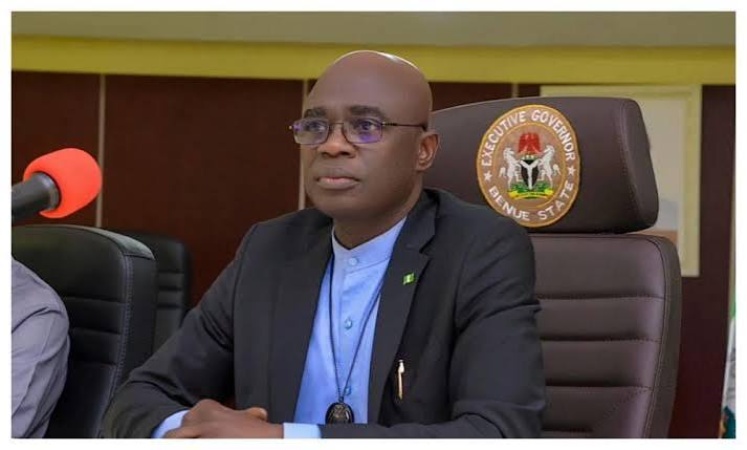
This is the uncomfortable healthcare inheritance—and increasingly, the uncomfortable healthcare responsibility—of Governor Hyacinth Alia. Every government inherits problems. But every government also eventually owns the consequences of failing to solve them.
Before he became governor, healthcare was among the commitments Hyacinth Alia made to the people. His published healthcare agenda promised to upgrade and equip primary healthcare centres across the wards of the state. It promised functional diagnostic laboratories. It promised the procurement and installation of intensive care equipment in health institutions, especially general hospitals. It promised the renovation and upgrading of general hospital facilities. The campaign also spoke of affordable and accessible healthcare through a strengthened contributory health insurance scheme
When a general hospital cannot function as one
The crisis confronting Benue’s state-owned general hospitals is not merely about whether drugs are available on pharmacy shelves. The deeper problem, according to assessments of the facilities, is structural. A hospital without functioning diagnostic capacity is severely handicapped. A doctor may have knowledge. A surgeon may have skill. A nurse may have commitment.
But medicine cannot be practised with commitment alone. A doctor cannot diagnose everything with the naked eye. A surgeon cannot perform safely in a theatre without functional equipment. An emergency cannot wait for government bureaucracy. And a patient suffering internal injuries cannot be expected to survive because the nearest functional diagnostic facility is several hours away. This is why the condition of equipment in Benue’s hospitals should be a matter of public alarm.
Many facilities are reported to have diagnostic machines purchased decades ago, with some equipment obsolete, broken down or no longer capable of meeting contemporary medical requirements—X -ray facilities, Ultrasound machines, laboratory equipment, Anaesthesia machines, sterilization systems, emergency equipment, oxygen support, ambulance services. These are not luxuries; they are among the basic building blocks of functional healthcare.
The World Health Organisation describes diagnostics as fundamental to prevention, screening, diagnosis, treatment and the monitoring of disease. In other words, modern medicine begins with knowing what is wrong with the patient. A health system that cannot reliably diagnose is a health system that is often forced to guess. That is why the Benue situation should be understood for what it is: This is not merely an infrastructure problem; it is a crisis of healthcare capacity.
A hospital building may carry a signboard. It may have doctors. It may have nurses.
It may even have patients. But without reliable diagnostics, functional theatres, electricity, water, emergency systems and modern equipment, the institution cannot perform the role the public assumes a general hospital should perform. The tragedy is that the people often discover this only when they are already sick.
The cruel tax of distance
For the wealthy, a dysfunctional public hospital is an inconvenience. For the poor, it can be a death sentence. This is the brutal inequality built into Benue’s healthcare crisis. When a hospital in a rural community cannot provide essential diagnostic or surgical services, the patient must travel. Travel means money. Money means transport. Transport means time. And in medical emergencies, time is often the one commodity a patient does not possess.
A pregnant woman experiencing complications does not need a political explanation. She needs a functioning theatre. A victim of a road accident does not need to hear about budgetary constraints. He needs emergency care. A child struggling to breathe does not need to be told that the government inherited obsolete equipment. The child needs oxygen.
That is the unforgiving nature of healthcare. Governments may have excuses; medical emergencies do not. Residents of communities across the state are therefore forced, according to the assessment, to travel to Makurdi and other major centres when facilities closer to them cannot provide the services they need. The result is predictable — treatment is delayed. Transport costs increase. Families are pushed towards expensive private healthcare. Confidence in government hospitals declines, and citizens who are already poor become poorer simply because they become sick.
That is what a failing public healthcare system does. It imposes a poverty tax on illness.
Gap between Benue and the rest of Nigeria becoming embarrassing
The tragedy of Benue’s healthcare predicament becomes even more apparent when placed beside developments in other Nigerian states. Nigeria itself remains far from global healthcare standards. The country’s health system continues to struggle with infrastructure deficits, shortages of skilled personnel, inadequate financing and high out-of-pocket expenditure.
So the appropriate comparison is not between Benue and a Scandinavian healthcare system. The more uncomfortable comparison is between Benue and states within Nigeria that have decided that healthcare infrastructure can no longer be treated as an afterthought. Kaduna State, for example, reported that it was upgrading hundreds of primary healthcare centres and rehabilitating, remodelling and equipping 13 of its 33 general hospitals across its three senatorial districts. It also completed a 300-bed specialist hospital that had remained unfinished for years.
The significance of that approach is not merely the number of hospitals; it is the strategy. Concentrate resources. Complete projects. Equip facilities and make them functional. Then move to the next set. That is exactly the kind of thinking Benue requires.
Ekiti State provides another revealing example of what deliberate healthcare reform can achieve. The state has reported significant expansion of primary healthcare coverage, revitalization of more than 100 facilities and improvements in access to essential medicines, while its health insurance and targeted programmes have sought to reduce the crushing burden of out-of-pocket healthcare costs.
At the national level, health authorities have also identified states such as Lagos, Kaduna, Enugu, Delta, Kano, Ogun, Bauchi, Cross River, Niger, Kwara, Edo and Anambra as among the sub-national governments demonstrating significant innovation and progress towards universal health coverage. Benue should be studying these examples. Why are some states moving ahead? Why are they able to identify priorities and execute them? Why are some governments measuring progress through functional facilities, insurance enrolment, maternal outcomes and access to services rather than through political announcements?
The painful answer is that healthcare improvement requires something governments often find difficult: discipline. It requires prioritization, continuity and maintenance. It requires accepting that painting the walls of a hospital is not the same thing as modernising a hospital.
A hospital Is more than a building
This is one of the greatest mistakes Nigerian governments repeatedly make. A governor visits a hospital. The walls are repainted. The compound is cleared. A few beds are supplied. Pictures are taken. Officials make speeches. And the government announces that the hospital has been “rehabilitated.”
But healthcare professionals know the truth. Paint does not diagnose malaria. A new gate does not perform surgery. A renovated office does not save a woman bleeding after childbirth. A freshly painted ward does not produce electricity. And a beautiful building without functioning equipment is still a monument to failure. The question is not whether a hospital looks better from the road. The question is whether it works.
Can it diagnose? Can it operate? Can it stabilise emergencies? Can it provide oxygen?
Can it conduct laboratory investigations reliably? Can it sterilise surgical instruments? Can it function through the night when public electricity fails? Can a poor citizen walk in and receive competent treatment without being immediately referred elsewhere? That is what a hospital is for.
Health workers as victims
There is another dimension to this crisis that government must not ignore. The condition of public hospitals does not only punish patients; it also punishes health workers. Imagine being trained as a doctor but lacking the equipment required to perform your duties. Imagine being a surgeon with patients but without a properly equipped theatre. Imagine being a nurse trying to maintain professional standards in an environment where the infrastructure itself works against you. Imagine being blamed by desperate relatives for failures caused by equipment you do not control.
This is how governments lose healthcare professionals. Morale declines. Frustration increases. The best-trained personnel seek opportunities elsewhere, and the hospital becomes trapped in a vicious cycle. Poor infrastructure drives away skilled professionals. The shortage of professionals weakens services further. Weak services reduce public confidence. Those who can afford it go to private hospitals. Those who cannot afford it simply endure. In the end, the poor inherit the consequences.
The challenge for Governor Alia
The healthcare situation in Benue now presents Governor Alia with a defining test. He can continue to speak about inherited problems or he can begin to leave behind a measurable legacy of solutions. There is no question that the decay of Benue’s hospitals did not begin with his administration. But that defence has an expiry date. The longer a governor remains in office, the less convincing it becomes to blame the past for conditions that remain unchanged in the present.
A government cannot inherit a broken hospital and then spend years merely explaining that it was broken when it arrived. The solution does not require mystical thinking; iIt requires a plan.
It Is important to acknowledge that Governor Alia has taken commendable steps in furnishing the Benue State University Teaching Hospital with modern equipment. This intervention though has significantly improved diagnostic and treatment capacity at the tertiary level, offering patients access to contemporary medical technology, it has not addressed the challenges at the general hospitals.
The phased hospital solution: less political spreading, more real results
Benue operates 23 general hospitals. The temptation in Nigerian governance is to allocate a little money to every facility. A little renovation here. A little equipment there. A little contract everywhere. The result is predictable: 23 hospitals receive attention on paper, none becomes genuinely functional. This is how public money disappears into thepolitics of thin spreading. Benue needs the opposite approach.
The state should adopt a phased comprehensive hospital revitalization programme. A zone at a time. Each selected hospital should receive a complete intervention; not cosmetic rehabilitation; not political window dressing. Every revitalised hospital should have:
Functional diagnostic equipment; reliable laboratory services; properly equipped operating theatres; functional anaesthesia and sterilisation equipment; emergency and resuscitation equipment; Oxygen systems; reliable water supply; Independent and sustainable power solutions; Adequate beds and modern ward facilities; functional ambulances and referral systems; accommodation and support facilities where necessary for essential health personnel; digital systems for records, inventory and accountability.
The money question
Benue’s government will undoubtedly argue that resources are limited. Resources are always limited. That is why leadership is about priorities. The state presented a ₦550.1 billion budget for 2025, with a significant portion designated for capital expenditure and with healthcare listed among the priority sectors. The existence of fiscal constraints, therefore, cannot eliminate the obligation to demonstrate clear priorities and measurable outcomes in public healthcare.
The real question is not whether Benue has unlimited money. No state does. The question is: What does Benue choose to do with the money it has? A government that spreads resources across dozens of politically convenient projects may have many things to announce. A government that concentrates resources on critical priorities may have fewer announcements—but more results
Healthcare cannot remain campaign slogan
Governor Alia came to power on a wave of extraordinary expectations. The people saw in him something different. They believed the priest could bring moral urgency into politics. They believed the populist campaigner could understand ordinary suffering. They believed the promise of accountability would mean that government would become more responsive to citizens. Healthcare is where that promise must now be tested, because nothing is more personal than sickness. (The Nation)




