
Updating your news feed...
NEWS EXPRESS is Nigeria’s leading online newspaper. Published by Africa’s international award-winning journalist, Mr. Isaac Umunna, NEWS EXPRESS is Nigeria’s first truly professional online daily newspaper. It is published from Lagos, Nigeria’s economic and media hub, and has a provision for occasional special print editions. Thanks to our vast network of sources and dedicated team of professional journalists and contributors spread across Nigeria and overseas, NEWS EXPRESS has become synonymous with newsbreaks and exclusive stories from around the world.









Loading banners
Loading banners...

PHOTO COLLAGE
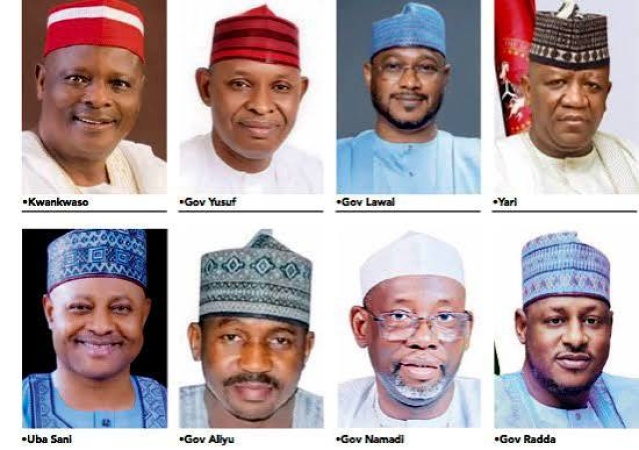
The All Progressives Congress (APC) is planning a grand entry into the 2027 elections with a clear advantage in Nigeria’s North West. It controls the governments of all seven states in the region. These are Kaduna, Kano, Katsina, Jigawa, Kebbi, Sokoto and Zamfara. The party believes its structure can deliver a strong victory at the presidential and governorship polls.
The campaign is gathering pace. The Peoples Democratic Party (PDP), African Democratic Congress (ADC) and Nigeria Democratic Congress (NDC), are working to turn voter discontent into an upset. They are focusing on grassroots mobilisation, candidate appeal and growing opposition alliances.
APC holds all seven governorships. The key question is whether that structure will translate into votes. Insecurity, economic hardship, internal party grievances and defections by prominent politicians could change how people vote.
From Kaduna to Kano, Katsina, Jigawa, Kebbi, Sokoto and Zamfara, the ruling party projects confidence. Opposition parties insist that control of government houses does not equal control of the electorate.
Kaduna’s three-party contest takes shape
The political battle for Kaduna State is forming around the ruling APC, the opposition PDP, the ADC and the NDC.
The governorship election is scheduled by the Independent National Electoral Commission (INEC) for 6 February 2027. It looks less like a routine contest between an Incumbent and a challenger. It is becoming a test of whether political structures and defections can turn into actual votes.
APC shows little doubt. Governor Uba Sani has secured the party’s ticket for a second term. He declared last year that Kaduna had become “95 percent APC” after a wave of defections by federal and state lawmakers from opposition parties.
“Today in Kaduna, we don’t have any opposition,” he said. He told President Bola Tinubu that the party was targeting 80 percent of the state’s votes. He has now raised that projection to 95 percent.
After the defections, the party said it had 13 members representing Kaduna in the House of Representatives against three for the PDP. Its strength in the State House of Assembly had risen to 26 members against eight for the PDP. House of Representatives Speaker Tajudeen Abbas, an influential APC figure from the state, was equally firm. “Today, whether in Zone 1, Zone 2, or Zone 3, APC is the party to beat,” Abbas said. “We’ve never been this strong before.”
That political strength raises a question the 2026 Osun governorship election has made hard to ignore. Does controlling politicians mean controlling voters? The answer from Osun is no. An elect’on observer, the Athena Election Observatory, said intense political competition combined with technological improvements by INEC helped safeguard the Osun election.
For Kaduna APC, the lesson is clear. Defections are political assets. They are not votes until voters turn out and vote for the party. Governor Sani has framed the expansion as more than political patronage. He says the influx results from his administration’s commitment to “justice, fairness, and inclusivity.” He has repeatedly presented the government’s record across Kaduna’s three geopolitical zones as the basis for its popularity.
The governor has also adjusted his 2027 ticket. In July, he selected Jerry Adams, the Executive Chairman of the Kaduna State Internal Revenue Service and a Christian from Southern Kaduna, as his running mate. Sani described the choice as part of his commitment to building a “united, peaceful and inclusive Kaduna State.”
The decision ends the Muslim-Muslim governorship ticket that APC had operated in Kaduna since 2019. It gives the ruling party a Muslim-Christian ticket for 2027. In a state where religious, ethnic and regional calculations remain important, the choice of Adams could help APC broaden its appeal, particularly in Southern Kaduna.
Southern Kaduna APC elders recently publicly endorsed President Tinubu and Governor Sani for 2027. They argued that continuity would allow ongoing development projects and policies to be consolidated. APC’s strategy combines incumbency, political consolidation, defections, performance claims and a broader religious and regional coalition.
The PDP faces a steeper climb. Its governorship candidate, former federal lawmaker Shehu Usman Bawa, emerged from the party’s primary in May. He has tried to position himself as the alternative to the APC administration. Bawa’s public messaging has focused on governance, security, unity and the welfare of citizens. At a recent engagement with the Nigeria Security and Civil Defence Corps, he called for a “peaceful and issue-based” campaign. He urged political actors to put the interest of Kaduna ahead of partisan considerations.
When he unveiled Amos Gandu as his running mate in July, Bawa said Kaduna needed “leadership that unites us, leadership that delivers and leadership that puts the people first.” The opposition faces a credibility test. Identifying dissatisfaction with an incumbent is one thing. Persuading voters that the opposition has the organisation, leadership and credibility to replace it is another. PDP’s challenge is twofold. It must rebuild its grassroots machinery while making Bawa visible and attractive to voters beyond the party’s traditional base.
The Osun experience is instructive. Adeleke’s victory showed that an incumbent or popular candidate can build a strong personal electoral coalition even outside the traditional structures of the party that originally brought him to power. His victory under the Accord platform showed that voters can prioritise candidate identity and local political appeal over established party structures.
For Kaduna PDP, that raises the possibility of a strategy centred not simply on “APC has failed,” but on a clearly defined alternative. Security, jobs, education, infrastructure, rural development, cost of living and the quality of government matter.
For APC, the danger is assuming that its current dominance among political elites automatically translates into 95 percent of the electorate. There is another difference between 2027 and some previous Kaduna elections. Transparent, polling-unit-level results are growing in importance. INEC’s IReV platform is designed to provide election-result information to aid transparency. Results move from the polling unit through Registration Area and Local Government Area collation centres before reaching the state level.
Parties can no longer treat election-day operations as an afterthought. The critical question is not simply who has more political appointees, defectors or campaign rallies. It is who can organise polling-unit agents, monitor results, document discrepancies and protect its votes throughout the collation chain.
IReV and other election technologies raise the stakes for both APC and PDP. They reduce the room for parties to rely solely on the old assumption that control of political structures will automatically determine the final result.
The Osun election has given Kaduna politicians a preview of the kind of contest they may face in 2027. It is a closely fought election in which technology, voter mobilisation, candidate popularity and the ability to defend votes can matter as much as the size of a party’s political establishment.
APC appears better prepared organisationally. It has the incumbent governor, a settled ticket, significant control of the state’s political structures and strong backing from the federal political establishment.
PDP is still rebuilding. The opposition has something that numbers in the legislature cannot measure. It has an electoral opening if it can convince enough voters that Kaduna needs a change.
Spokesman Isa Mohammed Ashiru (Sarkin Bai Zazzau), ADC Gubernatorial Candidate 2027, Kaduna State, Abdulwaheed Olayinka Adubi, said his principal and the party are already building a broad, united and formidable political structure capable of winning across the 23 Local Government Areas of Kaduna State.
“The readiness is no longer limited to political consultations, but has entered a new phase of structured grassroots mobilisation, reconciliation, coordination and engagement with stakeholders across Kaduna State.
“Recent developments within the Kaduna ADC, including the reconciliation of previously divided tendencies within the party, demonstrate the commitment of the party’s leadership to building a united platform ahead of the 2027 election,” he said.
Adubi was optimistic that Ashiru would win the 2027 gubernatorial election in the state. He cited the growing unity within the party, the expanding grassroots structure, and the increasing trust of the people of Kaduna State in his vision for inclusive and responsible governance.
“Ashiru and ADC are not preparing merely to participate in the 2027 election. Ashiru and his party, the ADC, are preparing to win it and, more importantly, to provide the responsible, inclusive and purposeful leadership that Kaduna people deserve.
“ADC structure is expanding. Ashiru and other leaders within are working together. His grassroots supporters are mobilised, and his campaign organisation is being positioned to reach every part of Kaduna State,” he added.
On the campaign strategy, he said it would be issue-based. Ashiru and the ADC are coming to the 2027 election with a focus on security, education, healthcare, employment, agriculture, infrastructure, youth development, workers’ welfare and responsible management of public resources.
“Ashiru is coming with Issues, not insults; facts, not propaganda; solutions, and not complaints.”
Adubi added that the outcome of the Osun governorship election has demonstrated one important fact. The more transparent the electoral process becomes, the harder it is to manipulate results after votes have been cast.
“The deployment of INEC’s Result Viewing Portal (IReV) provided political parties, candidates, journalists, observers and citizens with the opportunity to see polling-unit result sheets as they were uploaded. So definitely, we are consolidating our strategy. But, for now, we are keeping that to our chest,” he said.
Kano’s three bigwigs set to shape a fierce race
Kano State presents one of the most competitive contests in the North-West. Governor Abba Kabir Yusuf is seeking a second term under the APC after defecting from the New Nigeria Peoples Party. He described the move as a “Kano First” political decision.
The 2027 governorship election is expected to reflect the enduring influence of three former governors. Rabiu Musa Kwankwaso, Ibrahim Shekarau and Abdullahi Umar Ganduje continue to shape the state’s electoral direction.
Yusuf entered the race with the backing of several influential APC figures. Shekarau has emerged as the APC’s senatorial candidate for Kano Central. His influence is expected to strengthen the party’s fortunes in that zone. Ganduje’s political network also remains significant within the ruling party.
The major question is whether Yusuf has developed an independent political structure capable of securing re-election outside the Kwankwasiyya Movement. His alliance with the Ganduje factor will be tested against the Kwankwasiyya Movement, which is backing the NDC candidate.
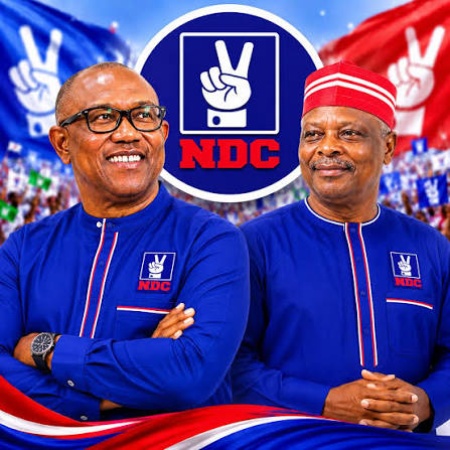
The NDC has nominated former Deputy Governor Aminu Abdussalam Gwarzo as its governorship candidate. Gwarzo resigned after disagreement with Yusuf over the latter’s defection to the APC. The Kwankwasiyya Movement provides the main organisational force behind the NDC ticket.
APC national chairman Nentawe Yilwatda has described Kano as already secured for the party. He identified three major political blocs in the state and argued that the APC has weakened opposition structures while reinforcing its own. He claimed that many of the votes Kwankwaso attracted in 2023 came from disgruntled APC members who have since returned.
Yet Kano politics remains unpredictable. Recent defections of APC members to the NDC in areas such as Kumbotso Local Government Area show that the opposition is still mobilising. The contest is likely to be more than a battle between party labels. It will test the personal followings of the three dominant political blocs.
Katsina’s APC seeks continuity on performance
In Katsina State, the APC has formally endorsed President Bola Tinubu and Governor Dikko Umaru Radda as the party’s candidates for the 2027 general elections. The state remains a stronghold of the ruling party.
Governor Radda has been affirmed as the APC consensus governorship candidate. Party delegates from across the state’s 34 local government areas and 361 wards endorsed him through a consensus arrangement. Former Governor Aminu Masari played a key role in the reconciliation process that produced the outcome.
Radda has made clear that his administration will campaign on its record rather than fresh promises. He has said every one of the state’s 361 political constituencies has benefited from projects or interventions under his government. Security remains the top priority, alongside healthcare, education and civil service reforms.
The APC points to Its near-total control of political structures in the state. All 361 councillors, all 34 local government chairmen, all state and national lawmakers from Katsina belong to the party. This unity is presented as evidence of strength ahead of 2027.
Opposition parties face an uphill task. The ADC has been divided, with rival factions presenting different governorship candidates. One faction has put forward Salisu Lawal Uli while another has endorsed former Senator Ahmed Babba Kaita. Internal divisions weaken the party’s ability to challenge the incumbent effectively.
The PDP also retains a presence but has not yet mounted a strong challenge comparable to the APC’s organisational reach. Radda has cautioned against complacency. He has urged candidates and party members to reconnect with voters at the grassroots and to mend fences where necessary.
Sokoto’s battle of political structures
Sokoto State is emerging as a closely watched battleground. At the centre of the contest are two formidable political figures: Senator Aliyu Magatakarda Wamakko and former Governor Aminu Waziri Tambuwal. Their rivalry is expected to shape the state’s political direction.
Governor Ahmed Aliyu has been unanimously affirmed as the APC governorship candidate for 2027. The endorsement followed a consensus arrangement across the state’s 244 wards and 23 local government areas. Wamakko, the APC leader in the state, has given strong backing to the governor’s second-term bid.
Aliyu’s administration points to visible public projects, improved funding under the federal government, and sustained efforts on security. The state has provided armoured vehicles, patrol vehicles and motorcycles to security agencies. The governor has also highlighted regular payment of salaries and palliative programmes for residents.
The opposition faces significant challenges. Tambuwal resigned from the PDP and moved to the ADC. Internal divisions within the PDP and ADC have limited their capacity to provide effective opposition. Recent defections of APC members to the ADC in areas such as Goronyo Local Government Area show some discontent, yet the ruling party’s structure remains largely intact.
Political observers note that the APC enters the contest with the advantage of incumbency, a united party structure under Aliyu and Wamakko, and a record of projects. The opposition will need to overcome its internal crises and present a credible alternative if it hopes to make an impact.
Jigawa parties intensify early mobilisation
As the 2027 general elections approach, political activities in Jigawa have picked up. Major parties have intensified efforts to woo more supporters. The development followed the official lifting of the ban on campaigning by the presidential and National Assembly candidates by INEC.
Only the candidate for the Jigawa Southwest Senatorial District on the platform of the PDP, former Inspector-General of Police Suleiman Abba, has so far officially launched his campaign at the State Headquarters of the party in Dutse.
Most of the parties in the state have chosen to keep their campaigns under wraps. Unlike the 2023 general elections, where only the three major political parties contested, the 2027 elections are expected to see more participation because of mass defections from some of the major parties.
In 2023, the ruling APC, the PDP and the New Nigeria Peoples Party were the main parties on the ballot. In 2027, the number may rise significantly with the emergence of strong political figures across the board.
Notable names that have emerged as gubernatorial candidates include the incumbent governor Umar Namadi of the APC, Mustapha Sule Lamido of the PDP, Senator Sabo Muhammad Nakudu of the ADC, Dr Aminu Musa Dutse of the NDC and Umar Ajah of the Allied People’s Movement, among others.
Despite the crowded contest, most party leaders spoken to appeared optimistic of victory. Mr Bashir Kundu, the State Publicity Secretary of APC, said that besides being the ruling party, the achievements recorded by the administration of Namadi would serve as a selling point.
“As you know, the APC is the ruling party in the state, and apart from being the ruling party, we are very comfortable with the kind of quality leadership of our governor in the state. The people can feel the positive impact of his government.
“Therefore, APC as a party is happy and confident that it’ll win over the hearts of the people who would reward him for a second term.
“Besides, our candidates for various elective legislatures, ranging from the Senate down to the House of Representatives and State Assembly, are individuals who have been tested and trusted.
“We have two sitting senators in the state, and a third one, a new person, would soon join them, so I can tell you confidently that we’re fully prepared for the election,” he said.
His counterpart in the PDP, Umar Kyari Jintau, and the State Chairman of the NDC, Mohammed Inuwa, do not share that optimism. The two party leaders said the performance of the governor does not warrant his re-election.
Kyari described the PDP as “the most structured party in Nigeria because it is found in all homes, villages and in every nook and cranny of the country, so PDP is the party when you talk about democracy in Nigeria.”
On preparedness, he said: “On the issue of our preparedness, let me make it clear to anybody who cares to listen that PDP in Jigawa is fully prepared and ready to go to the elections.
“This is because all our candidates, beginning from our progressive governorship candidate and our senatorial candidates, are people of proven integrity, so we’re sounding a note of warning to the APC that we’re going to be ready to come and take over the government at the state level.”
The NDC chieftain was equally confident. “We are very grateful to Almighty Allah for bringing us this far. This time is very critical for the political development of the country. Any time the INEC provides us with such opportunities.
“So, the NDC in Jigawa and the nation at large, this is what we’ve been expecting, because it’s been a long time since we finished our preparation.”
On the effects of the incumbency factor, both the PDP and NDC officials believed it would not happen again. People are now more aware of their rights. Both APC and PDP experienced mass movements of their members, including former and serving lawmakers, especially those who were unable to secure their return tickets. They alleged injustice.
While admitting that the affected people were entitled to be disappointed, party officials said they should understand that the party has the final say in who represents at any election cycle.
Zamfara opposition insists structure and personality will decide
The Chairman of the Peoples Democratic Party, Zamfara State chapter, Malam Bala Sale Gamji, has affirmed that the personality of the party’s Gubernatorial Candidate, Rt. Hon. Malam Wadato Madawaki, is strong enough to fetch the party’s victory in the 2027 general elections.
He disclosed that Madawaki was a two-term House of Assembly Member, a renowned businessman in Zamfara State and a major contributor who helped birth the government of Dauda Lawal. He stood firm in supporting the administration of Governor Lawal for three years until he decided to stay with the PDP after the defection of Governor Dauda Lawal from the party.
He maintained that his personality as a kingmaker in the state and the current leader of the party is enough to give all the candidates of the party sweet victory at the polls.
On the just-concluded Gubernatorial election in Osun State, the Chairman hailed the people of the state for standing by Governor Adeleke and ensuring the security of his second-term mandate. He noted that if the people did not establish their position for Governor Adeleke, he is sure that INEC would have swapped the electoral process in favour of APC. He called on INEC, security and the Judiciary to maintain neutrality in the upcoming 2027 general elections.
On the party’s structure, the Chairman said the structure of PDP in the state is strong because PDP is not a new party and the positive impacts of the party are known by all. The structure of the party in all the 14 LGAs of the state is strong enough to fetch victory for the party’s candidates at the 2027 polls.
The state Chairman maintained that the PDP remains the solution party to insecurity, poverty and all the problems that are militating against the peace of Nigeria.
The Accord Party Chairman, Zamfara State chapter, Bashir Abdullahi Ruwanbore, said that the party will definitely win in Zamfara State because he has a strong belief that victory is given by God.
On the party’s structure, the Chairman said that the party has a strong structure from the state level to the local government level and ward level that has the capacity to fetch victory for all the party’s candidates at the polls.
He extolled the candidacy of the Accord Gubernatorial Candidate for Zamfara State, Rtrd. Assistant Inspector General of Police, Malam Musa Yusuf Garba, describing him as the only answer to the insecurity issues that have bedevilled Zamfara State for the past decades.
He applauded the people of Osun State for standing by the Accord Party and Governor Adeleke, calling on the people of Zamfara State to stand by the Accord Party and AIG Rtrd Malam Musa Yusuf Garba for a positive transformation in the state.
The Publicity Secretary of the ADC, Malam Abdulkareem Kaura, speaking on behalf of the party’s chairman, Hon. Kabiru Garba Gusau, Ubandawaki Tudun Wada, said the party has a strong structure from the state to polling units with the capacity to fetch victory for the party in the 2027 general elections.
He extolled the candidacy of the ADC gubernatorial candidate, saying that all their candidates from state to national levels meet the expectations of the people of Zamfara State and Nigeria. He described them as credible and intelligent. The spokesman said they are ready to win in the forthcoming 2027 general elections.
He commended the integrity of INEC during the Osun State polls, urging them to improve on the Osun State guber election in the 2027 general elections to secure the voters’ conscience in Nigeria.
He maintained that INEC should not win the people’s impression at the just-concluded Osun State polls and dash it at the forthcoming general elections.
Kebbi’s preparations and early structures
In Kebbi State, it seems only APC and ADC are planning to inaugurate their campaign teams. The PDP in the state has gone into relative quiet since the eruption of crisis in the party at the national level. Some of the bigwigs have left for the APC and ADC respectively.
The Assistant Publicity Secretary of ADC, Alhaji Atiku Abubakar, sent a statement detailing the composition of their campaign council and other committees.
According to the statement, “The African Democratic Congress, ADC, Kebbi State is pleased to announce the constitution of the ADC Kebbi State campaign council for the 2027 General Elections.
“The council, which brings together seasoned leaders, professionals, and grassroots mobilizers from across the state, is charged with the responsibility of coordinating all campaign activities to ensure a resounding victory for our party and candidates.”
In the ADC list, Alhaji Sani Daudu Tadurga was appointed as the Director General of the campaign council, while Dr Umar Jibrilu Gwandu was named as the Director of Media and Publicity.
The party also ’Isted special committees such as the reconciliation committee, election committee, manifestos and Policy committee, among others.
The All Progressives Congress in the state has not yet made known any formal committee on its campaign. It was gathered that the ruling party is still sorting out whom to include in its campaign council.
Kebbi State Governor, Dr Nasir Idris, while addressing stakeholders in Birnin Kebbi recently, explained that the state is ready for both Presidential and Governorship elections.
Across the zone, structure meets voter reality
The APC enters 2027 with control of all seven North-West states and significant federal backing. Its governors have largely secured second-term tickets through consensus or affirmation. Party leaders project confidence based on political structures, defections and performance claims.
Opposition parties, particularly the PDP, ADC and NDC, insist that control of government does not automatically translate into control of votes. They point to insecurity, economic hardship and internal APC grievances as openings. The Osun experience has shown that transparent technology and candidate appeal can upset established structures.
The critical test will come at the polling units. Parties that organise agents, monitor results and defend their votes throughout the collation process will be better placed. Whether APC’s 95 percent claim in places like Kaduna, or its dominance elsewhere, survives the scrutiny of the electorate remains the central question of the North-West contest in 2027. (The Sun)




