
Updating your news feed...
NEWS EXPRESS is Nigeria’s leading online newspaper. Published by Africa’s international award-winning journalist, Mr. Isaac Umunna, NEWS EXPRESS is Nigeria’s first truly professional online daily newspaper. It is published from Lagos, Nigeria’s economic and media hub, and has a provision for occasional special print editions. Thanks to our vast network of sources and dedicated team of professional journalists and contributors spread across Nigeria and overseas, NEWS EXPRESS has become synonymous with newsbreaks and exclusive stories from around the world.









Loading banners
Loading banners...

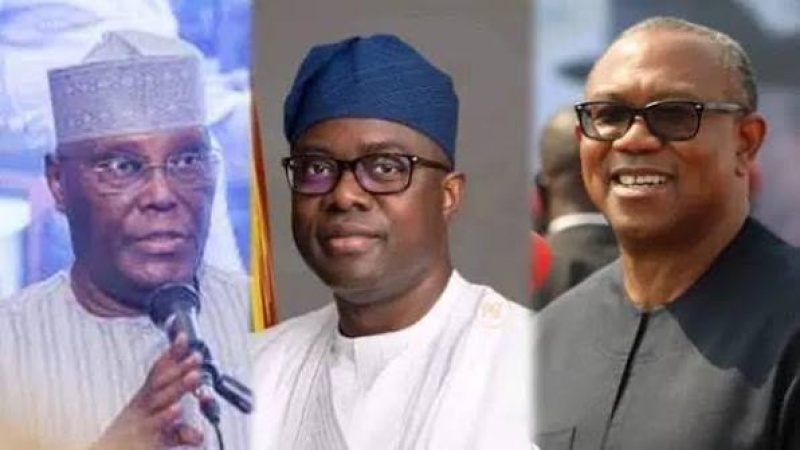
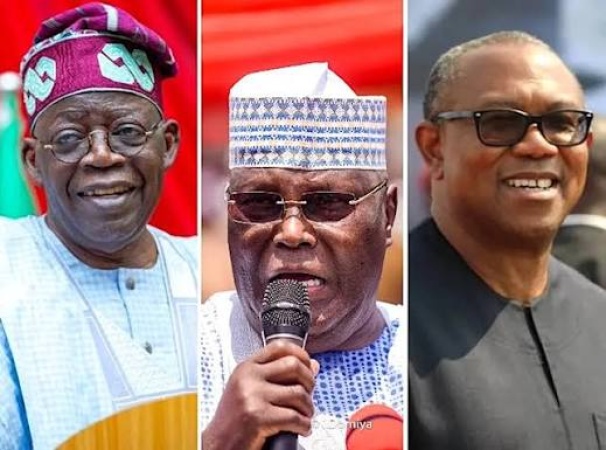
Tinubu, Atiku, Obi
The ongoing moves by opposition political parties to present a single presidential candidate for the 2027 general elections on the understanding that the candidate would serve only one four-year term have triggered fresh concerns over the feasibility and credibility of the proposal.
There are also doubts over the credibility of political promises in Nigeria, particularly when such promises involve the voluntary surrender of constitutional rights after political power has been acquired.
At the heart of the proposal is an attempt by opposition forces to manage competing presidential ambitions, forge a common front against the ruling All Progressives Congress, APC, and persuade Nigerians that the proposed alliance would offer a credible alternative to the present government.
Since the return to democratic rule in 1999, no Nigerian president has voluntarily limited himself to a single four-year tenure after winning a first term. Olusegun Obasanjo served two terms between 1999 and 2007, while Umaru Musa Yar’Adua, who succeeded him, died in office before completing his first term. Goodluck Jonathan, who succeeded Yar’Adua, completed the late President’s tenure before winning the 2011 presidential election and serving until 2015. Muhammadu Buhari also served two terms between 2015 and 2023, while President Bola Tinubu, elected in 2023, is currently serving his first term and remains constitutionally eligible to seek a second term.
G-100
Last Monday, opposition political parties and political stakeholders converged on Abuja under the auspices of the G-100 for the Summit of Nigeria’s Opposition Political Parties, where they began working out a framework for greater cooperation ahead of the 2027 general elections.
The summit proposed a Government of National Competence anchored on a single four-year transition term, while five working groups were proposed to develop, among other things, a Single-Term Transition Charter and a roadmap towards the emergence of a common presidential candidate. The G-100 framework is also built around a four-year National Reset Programme.
The proposal Is coming against the backdrop of Nigeria’s long-standing presidential politics, where the lure of a second term has remained a major feature of electoral calculations.
Even where political understandings have been reached over zoning, rotation or succession, the realities of political power have often altered calculations.
Question
The latest calculation has therefore raised a fundamental question: can a politician who wins the presidency, acquires the enormous powers of incumbency and becomes eligible for another four-year term be trusted to voluntarily walk away after only four years?
For proponents, a single-term presidency could free a president from the distraction of re-election and provide an opportunity to undertake difficult reforms within a clearly defined period.
But critics told Sunday Vanguard that the proposal amounts to little more than a political promise unless it is backed by constitutional amendment, enforceable agreements and strong institutions.
With the 2027 political season gathering momentum, stakeholders, including politicians, lawyers, civil society activists, political scientists and regional groups, in conversations with Sunday Vanguard, apart from being divided over whether Nigerians should trust the opposition, also expressed doubts that such an arrangement would see the light of day.
Political arithmetic
Speaking to Sunday Vanguard, former Special Adviser to former President Olusegun Obasanjo, Akin Oshuntokun, said, based on the political arithmetic on ground, the proposal would make little or no difference.
He said: “I doubt if that suggestion will make any difference to the political arithmetic on ground. And frankly speaking, it makes little or no sense to me.
“If any candidate becomes president and he performs well in office, would it make sense for anyone to ask him to leave? The only sense it makes is that such potential president is projecting that, at best, he is going to be a mediocre president whom nobody will miss if he leaves office.”
Naïve
Also, General Secretary of Afenifere, Chief Ademola Folarin, said such a proposal is possible but warned that it would be politically naive for anyone to bank on it.
Folarin, a legal practitioner, said: “That’s possible, if a candidate chooses to serve only one term of four years. But it will be politically naïve for anyone to bank on that. It’s highly unlikely that a candidate that has a constitutionally sanctioned allowance of two terms of four years each will surrender his right on the basis of a non-binding pledge.
“If a southern candidate were to make that pledge, the northern political establishment is too smart and sophisticated to buy into it.
“Only Goodluck Jonathan’s pledge in that regard is reliable, as he cannot serve more than a term.”
For President, Centre for Change, Dr. Joe Okei-Odumakin, the real intentions behind the proposal must be interrogated, particularly because it was made in an election year.
Odumakin, however, said the proposal could be feasible if there was unity of purpose and mass acceptance.
She said: “Every society evolves around the social mobilisation of the mass of the people towards a particular direction or goal.
“But we must always interrogate the real intentions behind some of these proposals, especially when they are made at election years. Politics is about mobilisation of the people to hijack or grab political power.
“There is nothing that is impossible provided there is unity of purpose and mass acceptance of such an agenda. The elites in any society set its political trajectory. But every positive change, desire must not be limited to election campaign promises, as the current proposal looks like.”
No magic
A former Minority Leader of the House of Representatives, Dr Wumi Bewaji, said he did not see any magic in the proposal.
Bewaji, who is Executive Leader of the Coalition of Democrats for Electoral Reform, CODER, said the arrangement had both constitutional and practical difficulties.
He said: “I must say that the way the opposition is carrying on its business is rather, you know, very strange, very bizarre to me. Because, number one, when you look at the proposal itself, the four-year, four-year single term for a single consensus candidate. Now, you note that such is not provided for, you know, either in our Constitution or under the Electoral Act.
“So, you can then, at the end of the day, not have a binding agreement. Anybody that is proposed, even if eventually that individual wins, is not bound to honour such an agreement. Because, as we speak, the Constitution, the highest law in the land, allows an individual to run two terms of four years apiece.
“ For example, you discover that under the Electoral Act, as at this moment, the chance to either add or subtract names, that is over now. That chance is over.
“And I don’t see how a consensus can be reached where, you know, all shades of opposition will not be accommodated under specific, particularly as it concerns presidency.”
Bewaji added: “So, you want to think that, if group A has a president, then group B or group C or group D will have the vice president. That window is closed, as we speak.
“And then, don’t forget that some of these individuals have also tried their hands in the so-called coalition or mega coalition and they failed. Some of them have moved from one party to another party and to another party.
“I don’t think there is any magic they can perform at this stage and the time for that, as far as the Electoral Act is concerned, that time is over.
“People seem to have forgotten that we have just three months to the presidential election.
“We are in September already. We have just October, November, December. The election is in the second week of January.
“Just three months in between. What magic do they want to perform now? What exactly do they want to achieve now that they have not been able to do in the last four years? They have an entire four years to do whatever they wanted to do and they failed.
“I don’t see any magic coming, I mean, within the next three months.
“And don’t forget, some of these political parties, you know, from recent reports, some of them have even not been able to field candidates for some offices. And this concerns, I’m talking of major oppositions now, not being able to field candidates in many states for ballot elections.
“I believe that the personal aggrandisement of the leaders of the so-called opposition are taking the better path of whatever agenda they might have. I think it is too little too late coming from them. You are talking of a plan for a candidate when nomination has closed, when substitution has closed, except in case of death or something. It is rather strange to me.”
Desperation
Spokesperson of The Osun Masterminds, TOM, Ayo Ologun, described the move as a sign of desperation to gain power.
Ologun said: “The plan for a single term of four years being proposed by the opposition party is a mere sign of desperation to get to power.
“First, there is no basis for such issue. The Constitution did not restrict the tenure of any intending party or candidate to a term and once such party or parties get to office, the argument will return to the provision of the Constitution and you start hearing, ‘we did not sign any document to that effect.’
“Also, who will believe coalition of opposition parties, who cannot reach consensus on a single candidate, to preach single term of office if elected?
“It is a long dream to achieve in the Nigerian political context. One would rather prefer to hear the vision and the economic programme of opposition party than promises that are not constitutional or legally binding in a bid to gain power.
“Going by the antecedents of the political elites in the country, such promise is just a plot to access power, after which it will become very difficult to hold the parties to account, considering that such opposition party will have become the ruling party with enormous power at its disposal.
“It is better for the parties to campaign with the agenda and vision for Nigeria. We should hear the viable alternatives they want to bring than to depend on sentiment to gain power.”
Political convenience
A former chairman of Ijebu North East Local Government Area of Ogun State, Mr Tayo Onayemi, said the proposal remained a private exercise for political convenience.
Onayemi said: “Any arrangement contemplated by a party or group of parties outside the provisions of the Nigerian Constitution, as amended, and the Electoral Act 2026, amounts to nothing more than a private exercise for political convenience. Such an arrangement cannot withstand the test of time. To me, it is nothing short of a deceitful adventure.
“More importantly, personal interests and political differences will ultimately prevent such an arrangement from seeing the light of day.
“Arriving at such a conclusion would only serve to reduce our multiparty system to a two-party political configuration. This would run contrary to the spirit and intention of the Nigerian Constitution, which provides the framework for the formation, evolution and operation of political parties in Nigeria.”
Lending his voice, a former Vice Chairman, Nigerian Bar Association, NBA, Ijebu-Ode Branch, Mr Moruff Balogun, took a more nuanced position, saying the plan is feasible in principle but could not be relied upon without constitutional backing.
Balogun said: “The truth is that, to determine the feasibility of this proposal, it should be examined from two perspectives: Is it feasible? Yes. But would its implementation be straightforward? I do not think so.
“Section 9 of the Constitution of the Federal Republic of Nigeria, 1999, as amended, empowers the National Assembly to alter the Constitution, subject to the various requirements stipulated under the relevant subsections. This, in itself, creates the possibility that such a proposal could eventually become a constitutional reality.
“But the critical question is: Are we saying that if any of the political parties within the G-100 wins the 2027 election, the proposal would subsequently be pursued as a constitutional amendment to establish a single four-year presidential term?
“If the Constitution, as the supreme law of the land, expressly provides for its supremacy, then a mere charter, agreement, political arrangement or proposal cannot override its provisions.
“The implication is that, under the existing constitutional framework, a person may serve as President for a maximum of two four-year terms, subject to the constitutional requirements. Therefore, any political arrangement purporting to limit the presidential tenure to a single, non-renewable four-year term would have to be properly anchored in a constitutional amendment. It cannot simply be established through a political agreement or transition charter.”
According to him, a single non-renewable term could potentially alter the incentive structure of political leadership.
“It would mean that political leaders would not have to spend a significant portion of their tenure positioning themselves for re-election. Instead, they could focus on implementing policies and delivering measurable results within a defined four-year period.
“However, the proposal also carries potential risks. A leader who knows that there is no possibility of seeking re-election could, for instance, become less concerned about public accountability and more inclined to exploit the limited period in office for personal gain. Therefore, a single-term presidency is not, by itself, a guarantee of good governance.
“The truth is that political leaders cannot simply be trusted to voluntarily commit themselves to a single four-year term. But perhaps the objective should not be to trust them in the first place.
“The real objective should be to establish a robust legal and institutional framework capable of holding political leaders accountable.”
Balogun argued that the proposal should neither be dismissed outright nor accepted without rigorous scrutiny.
“It is, fundamentally, a political strategy with significant constitutional implications. Rather, it should clearly set out how the 2027 elections would be used to pursue a defined four-year national reform programme, including the possibility of a constitutional amendment establishing a single, non-renewable presidential term.
Risks
“Such a reform programme should also provide for strong and genuinely independent institutions capable of checking executive power and holding political leaders accountable. This should include meaningful reforms relating to the fight against corruption, the independence and effectiveness of the judiciary, electoral integrity, institutional checks and balances, transparency in public administration and the strengthening of other democratic institutions.
“Ultimately, the credibility of this proposal should not rest on the personal promises of politicians. It should rest on the strength of the Constitution, the effectiveness of our institutions and the existence of enforceable mechanisms capable of holding every political leader accountable.
“That, in my view, is the foundation upon which any credible national reform agenda should be built.”
Objective
On his part, the Head, Human Rights Department, Justice, Development and Peace Movement, Abeokuta, Mr Niyi Rotimi, welcomed the initiative but said It should not be reduced to a mere change of guard.
He said the objective should be to provide good governance to Nigerians.
Rotimi said: “The Nigerian Constitution currently does not provide that a president or governor must serve only one four-year term. A president or governor elected for a first term is constitutionally entitled to seek a second term, subject to the relevant legal requirements.
“This raises an important question about the proposal by some opposition parties to present a single presidential candidate on the basis of a one-term agreement.
“What happens if a candidate agrees to serve for only one term but changes his or her mind after the first four years and decides to seek re-election? The parties may attempt to rely on a gentleman’s agreement or even approach the courts to compel the candidate to step aside. However, a private political agreement cannot ordinarily override a constitutional right.
“If the Constitution permits a second term, such an agreement would be difficult to enforce unless the Constitution is first amended.”
He also questioned the timing of the proposal, given the electoral timetable.
“The opposition parties have known these timelines for a considerable period. It is therefore difficult to understand why the idea of a single presidential candidate is being seriously pursued at such a late stage.
“If the opposition parties now agree to present a single presidential candidate, several questions arise: How will they persuade or compel INEC to recognise the new arrangement within the existing electoral framework? What happens if INEC rejects the request? And would the opposition subsequently blame INEC for enforcing rules and timelines that were already known to the political parties?
“Would the choice be based on popularity, previous electoral performance, experience, integrity, competence, national spread or some other measurable criteria? More importantly, would the leading candidates and their political structures willingly agree to step aside for another candidate?
“Without a clear and credible mechanism for resolving these competing interests, the proposed alliance could easily collapse.”
According to him, Nigerians should look beyond political promises and examine the records of those seeking their votes.
“Anyone advocating a single four-year presidency should therefore present a practical, measurable and implementable manifesto showing exactly what can be achieved within four years.
“The past records of the candidates should also be critically examined. Where a candidate has previously served as a governor, minister, legislator or in another significant public office, Nigerians should assess what the person actually achieved.
“In my view, the present campaign for a single opposition presidential candidate appears primarily aimed at defeating the APC and President Bola Tinubu.
“While political parties have every right to form alliances to challenge an incumbent government, such an alliance should be based on a credible programme for governing Nigeria and not merely on the objective of removing another party from power.”
Records
A political scientist, Prof ’Gbade Ojo of the University of Ilorin and former Chief of Staff to the late Governor Abiola Ajimobi, expressed reservations about the matter.
Ojo said: “It may sound attractive politically, particularly at a time when Nigerians are looking for an alternative, but the critical question is whether such a promise can be trusted.
“In politics, promises are easy to make when you are seeking power. The real test comes when you eventually acquire that power. The Nigerian Constitution currently provides for a four-year presidential tenure and permits a president to seek a second term.
“So, if somebody voluntarily promises not to seek re-election, what is the mechanism for enforcing that promise when he gets into office?
“If the opposition is genuinely serious about this proposal, then let them come out clearly and tell Nigerians how they intend to guarantee it. Let the agreement be documented and made public. Let all the political parties involved sign it.
“More importantly, let them tell us whether there is any constitutional or legal mechanism that can make such an undertaking binding.”
Ojo also warned against reducing the presidency to an instrument of regional power sharing.
“We must also talk about competence, character, capacity and national acceptability,” he said.
According to him, the opposition parties must first demonstrate that they can respect agreements within their own political organisations before asking Nigerians to trust them with a four-year single-term presidency.
“We have seen politicians cross political lines, abandon agreements and alter positions when their interests change.
“The presidency is too important to be subjected to political experiments based solely on verbal assurances.
“My position is simple: do not ask Nigerians to trust a promise that has no enforcement mechanism. If the politicians are serious, let them show Nigerians the document, the safeguards and the institutional framework that will prevent the beneficiary of the arrangement from changing his mind after winning the election.
“Ultimately, Nigerians should judge politicians by their records, not merely by their promises. If you want me to believe that you will spend only four years in office, show me what you are prepared to do now to ensure that you cannot change that decision when you become president.”
Examined
National Coordinator, Civil Society Coalition on Sustainable Development, CSCSD, Dr. Tola Winjobi, said the proposal should be examined carefully, arguing that the opposition could not simply expect Nigerians to take its promise on trust.
He said: “There may be good intentions behind it, but civil society cannot simply accept such a promise at face value.
“The first issue is trust. Can Nigerians trust politicians to voluntarily surrender the enormous power and political advantages that come with incumbency after just four years? That is a legitimate question that the opposition must answer convincingly.
“We have seen political agreements in Nigeria before. Some have survived, while others have collapsed when the interests of the political actors changed. Therefore, it would be dangerous to assume that because politicians have signed an agreement today, they will necessarily honour it tomorrow.”
Winjobi called for wider stakeholder participation in the process.
“Civil society organisations, labour, professional bodies, youth organisations, women’s groups, traditional institutions, regional groups, the media and other stakeholders must be involved in the discussion.
“We must also ask whether this is genuinely about reforming Nigeria or merely an electoral strategy designed to bring a particular group of politicians to power.”
He said the proposal also carried both opportunities and risks.
“There is also a danger in having a president who knows from the beginning that he cannot seek re-election. It could encourage good governance because the president does not have to spend his first term thinking about re-election.
“But it could also produce the opposite if institutions of accountability are weak. A president who has nothing to lose electorally could become less responsive to public opinion.
“Therefore, the issue is bigger than whether we trust politicians. It is about whether Nigeria has strong enough institutions to hold any president accountable.
“My position as a civil society actor is that trust must be earned, not demanded. Opposition politicians cannot simply tell Nigerians, ‘Trust us; we will serve for only four years.’ They must demonstrate that commitment through a transparent and enforceable process.”
Constitution
On his part, the Secretary-General of Yoruba Council of Elders, YCE, Chief Oladipo Oyewole, said Nigerians must carefully evaluate the proposal rather than be carried away by its attraction.
He said: “As elderly Nigerians, we do not jump for the carrot. Therefore, the mouth-watering proposition by the opposition to the Federal Government of Nigeria must be reasoned out and well evaluated by the citizenry.
“Except there is a predetermined intention to go into the ‘power house’ for other purposes than to do serious government business, voters must not be rushed into agreeing to be swayed into a pattern of voting for a single term of a four-year tenure. The Constitution of the Federal Republic of Nigeria clearly defined this situation.
“We do not want to be browbeaten by any ploy devoid of political or economic analysis aimed at cajoling Nigerians and goading us to do their wish.
“After a statutory four-year term, voters can give their support or decline it. Accordingly, whoever wants to serve for four years should go on, do so and withdraw after serving his chosen term or stand for re-election.”
The Executive Director, Africa Network for Environment and Economic Justice, ANEEJ, Rev David Ugolor, said there is nothing wrong with the opposition promising Nigerians a single term but warned against accepting the promise cheaply.
Ugolor said: “A one-term promise is politically attractive, but Nigerians should be careful not to confuse a political promise with a credible commitment. We have heard one-term promises from Nigerian politicians before, and our experience shows that such promises can change when politicians get into office and the political incentives change.
“The question therefore is not simply whether the opposition candidates promise to serve for four years. The question is: what mechanism will make that promise credible and enforceable?
“Will it be incorporated into the coalition agreement? Will the political parties formally commit to it? Will there be a clear transition programme with measurable targets and timelines? And, most importantly, what institutional safeguards will prevent the president from changing his mind once in office?”
He acknowledged that a single-term presidency could have advantages.
“If properly designed, it could allow a president to concentrate on difficult structural reforms rather than spending much of the first term preparing for re-election. But it could also create a lame-duck president from day one if there are no strong institutions, political discipline and a clear programme of succession.
“For me, therefore, the one-term pledge should not be the basis on which Nigerians decide who to vote for. It should be treated as one item in a much larger credibility test.
“Nigerians should ask: What exactly will you do in four years? How much will it cost? Where will the money come from? What evidence shows that your policies can w”rk? What institutions will you reform? What measurable outcomes should Nigerians expect after one year, two years and four years?
Hardship
“The economic hardship facing Nigerians is real, and that creates an opportunity for the opposition. But hardship alone does not automatically translate into electoral victory. The opposition must present a compelling, evidence-based alternative to the government in power. Nigerians are increasingly likely to demand evidence, not merely promises.
“The bigger problem for the opposition at the moment is that we are still seeing many familiar political faces and familiar political narratives. There is yet to be a sufficiently bold and credible alternative that fundamentally changes the political conversation.
“A promise to serve only one term, by itself, does not constitute that alternative.
“The 2027 election should therefore become a contest of records, evidence, ideas and credible implementation plans, not simply a contest of promises. Politicians asking Nigerians to trust them for four years must first give Nigerians reasons to believe that their word will mean something after they have obtained power.”
Cautiously optimistic
In his reaction, the Executive Director of Yiaga Africa, Samson Itodo, said the move by opposition political parties to pursue a single-term arrangement is commendable as an attempt to build consensus, but warned that Nigerians should not be expected to trust it completely where the commitment is not legally binding.
Itodo said: “They deserve commendation for making an attempt to form a coalition or even build a consensus. So, for the fact they are making that attempt is a welcome development.
“But the issue is, if they are to mobilise citizens around a single-term ideology, nothing is impossible. But before they consolidate and try to pass the narrative that would convince Nigerians that they are an alternative towards the status quo would require more time.”
On the question of trust, Itodo said any agreement reached must reflect Nigeria’s political realities and must address the issue of inclusiveness.
“A classical example is to alternate between the North and the South because Nigeria is a creation of regional and ethnic parts. Therefore, there has to be inclusiveness and representation.
“If they are seeking one-term as part of the political settlement, and if you have a political settlement, an agreement within them in the political class that is going to shift the way citizens are going to vote because people care about where is the political party that advances their interest, and when they back down on this trust, I think a lot of Nigerians will be cautiously optimistic that politicians would uphold their commitment, especially when the commitment is not legally binding.
“What do we do when someone the Constitution does not permit one term in office? Are we going to say it is a gentleman agreement they should not exercise their rights? So, those are the things.”
Goal-post shifted after agreement
Itodo said the history of political promises in Nigeria should make voters cautious.
“They themselves know within themselves they are not trusted because in the past they said they will run for one term, and we have seen how they shifted the goalpost, negotiated those stands because in this clime people love power so much that they don’t resign from office and they don’t concede power until it is forced out of their hands.”
Justify citizens’ trust
According to him, politicians seeking power must first demonstrate that they can be trusted to uphold agreements and protect public interest.
“I think that first, politicians who have been given power in trust by Nigerians need to justify that power given to them, and listen to the people and protect public interest.
“So far, we have seen situations where politicians’ interests are not in line with citizens’ interest. For those who are seeking to grab power, they must also come to equity with clean hands and they must also know that Nigerians don’t trust politicians.
“So how they manage their affairs equally matters. You can’t expect Nigerians to trust you as a political party when simple rules that govern your party primaries you cannot comply with them. You cannot expect Nigerians to trust you when you substitute candidates unlawfully.
“You say we will adopt direct primaries and at the 11th hour you change the approach without communicating with people. There is no way people will trust you. Rather than give people who are popular, who win party tickets, instead you are distributing party nomination as though it is served as a family dinner,” he added.
Meanwhile, the Executive Director, Civil Society Legislative Advocacy Centre, CISLAC, Auwal Rafsanjani, said the proposal is a legitimate political initiative but Nigerians must distinguish between a pre-election promise and a commitment capable of being honoured after power is secured.
Promise
Rafsanjani said: “The Civil Society Legislative Advocacy Centre (CISLAC) considers the opposition’s proposal to present a common presidential candidate who would serve only one four-year term a legitimate political initiative that could help manage competing ambitions and strengthen opposition cooperation ahead of the 2027 general elections.
“However, Nigerians must distinguish between a pre-election political promise and a commitment that can actually be honoured after power is secured.
“Such an arrangement is possible because a President is not constitutionally required to seek a second term. However, an eligible President retains the constitutional right to contest for re-election. Therefore, without serious commitment and integrity arrangements, a single-term commitment will largely depend on the integrity of the candidate and the strength of the political agreement supporting it.
“CISLAC believes the commitment should be contained in a transparent, publicly available political charter signed by the candidate and participating parties, clearly outlining the objectives of the four-year government and its priorities.
“Nigerians are confronting insecurity, poverty, unemployment, corruption, economic hardship and declining public services. The opposition must therefore present a credible programme explaining what it intends to achieve within those four years.
“Trust must be earned through conduct, not declarations. Nigerians should judge the coalition not simply by its promise to defeat the ruling party or serve for only four years, but by whether it offers a credible, accountable and competent alternative capable of improving governance and strengthening Nigeria’s democracy.” (Sunday Vanguard)




