ADAD
ADAD
Updating your news feed...
NEWS EXPRESS is Nigeria’s leading online newspaper. Published by Africa’s international award-winning journalist, Mr. Isaac Umunna, NEWS EXPRESS is Nigeria’s first truly professional online daily newspaper. It is published from Lagos, Nigeria’s economic and media hub, and has a provision for occasional special print editions. Thanks to our vast network of sources and dedicated team of professional journalists and contributors spread across Nigeria and overseas, NEWS EXPRESS has become synonymous with newsbreaks and exclusive stories from around the world.










Loading banners
Loading banners...

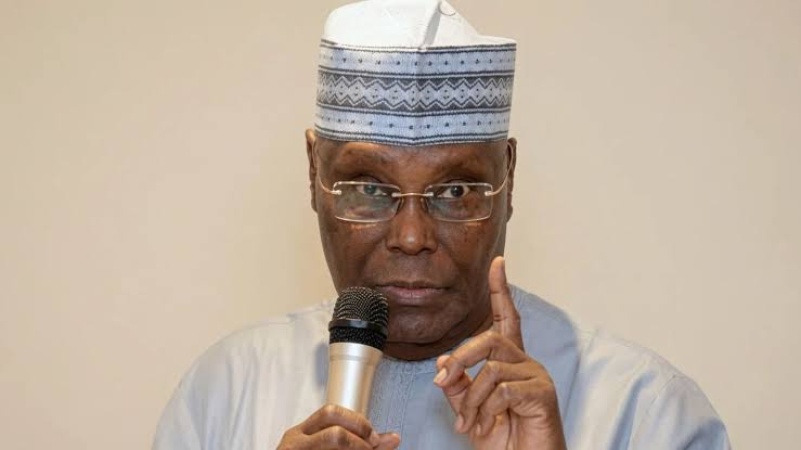
ADC presidential candidate Atiku
Former Vice President Atiku Abubakar has welcomed the call by the Independent Petroleum Marketers Association of Nigeria, (IPMAN) for government intervention with domestic refiners to reduce petrol prices, saying the association has arrived, though belatedly, at the central economic principle behind his plan to make energy affordable again.
In a statement issued by his Senior Special Assistant on Public Communication, Phrank Shaibu, Atiku said IPMAN’s intervention was significant because it came from people who buy, distribute and sell petroleum products every day and therefore understand, beyond government propaganda, what expensive petrol is doing to businesses and Nigerian families.
“IPMAN has come late to this conversation, but it has come to the right conclusion. The association is now saying that government cannot simply stand aside while petrol prices punish Nigerians and that deliberate subsidy around domestic refining can help bring prices down. That is precisely the policy principle President Tinubu and his gang of jesters have spent weeks trying to ridicule.
“Tinubu’s argument has always depended on deliberately confusing the import-subsidy bazaar and a transparent, production-linked intervention that strengthens Nigerian refining and delivers measurable relief to Nigerian consumers.
“Let me put it to President Tinubu in simple English: the difference between the import subsidy and the policy I have put before Nigerians is the difference between a farmer who harvests cassava, sells it all cheaply and then travels elsewhere to buy expensive garri for his family, and one who builds the capacity to process his cassava at home.”
“Nigeria produces crude oil. It is economic foolishness to possess the raw material, fail to maximise its processing at home and then tell Nigerians that unaffordable fuel is the price they must pay for reform.
“My principle is simple: subsidy follows the barrel. Strengthen the Nigerian barrel, strengthen Nigerian refining and ensure that the benefit follows that barrel all the way to the Nigerian consumer.”
Atiku said the proposal would also strengthen important objectives of the Petroleum Industry Act, including promoting petroleum processing within Nigeria and ensuring safe and affordable access to petroleum products.
“The law itself recognises that local refining and affordability matter. A policy that expands domestic refining capacity while lowering the burden on consumers therefore advances the direction of the PIA. What is the value of producing crude oil if the taxi driver in Kano, the teacher commuting from Kubwa, the trader in Onitsha or the farmer moving produce to Lagos cannot afford the fuel derived from it?”
Atiku said Tinubu’s celebration of subsidy removal as an economic triumph had become increasingly detached from the reality confronting ordinary Nigerians.
“The real test of petrol policy is not how cheap one litre appears after somebody converts it into dollars. The real question is how much of a Nigerian’s income and labour it consumes.
“The DailyFuels Fuel Affordability Index places Nigeria at number 91 on its affordability ranking and estimates that the average Nigerian requires about 44 minutes of work to afford one litre of petrol. A 40-litre tank represents about 29.5 hours of work under its methodology.
“That is the Tinubu economy in one statistic. Petrol may appear cheap when converted into dollars and compared with richer countries, but Nigerians do not earn American or European salaries.
“A teacher does not experience fuel policy through a government spreadsheet. A tomato seller experiences it when the truck bringing her produce charges more, her own transport fare rises and her customers arrive at the market with less money in their pockets. By the time one tomato reaches a Nigerian kitchen, Tinubu’s expensive petrol has collected its own levy several times along the journey.
“That is why my targeted intervention is fundamentally a cost-of-living policy. When energy costs rise, transportation, food, production and distribution rise with them. Making fuel affordable means restoring purchasing power to Nigerian families. You do not govern spreadsheets. You govern human beings.”
The former Vice President said IPMAN’s intervention should now move beyond commentary and become part of the solution Nigerians will need from 2027.
“I therefore invite IPMAN to join us in an unbreakable contract with the Nigerian people — not merely by acknowledging the principle of targeted intervention, but by bringing its experience, market knowledge and advisory capacity into the monitoring and implementation of this policy when we assume office in 2027.
“The people who buy, distribute and sell petroleum products every day know where distortions occur, where leakages hide and where good policy can be sabotaged between the refinery gate and the filling station. That knowledge must be put at the service of Nigerians.
“Our commitment is clear: subsidy under our administration will strengthen domestic refining, expand local capacity, prevent arbitrage, operate transparently and deliver measurable relief at the pump. IPMAN should have a voice in ensuring that every benefit intended for the Nigerian consumer actually reaches the Nigerian consumer.” (Daily Trust)