 ADAD
ADAD
Updating your news feed...
NEWS EXPRESS is Nigeria’s leading online newspaper. Published by Africa’s international award-winning journalist, Mr. Isaac Umunna, NEWS EXPRESS is Nigeria’s first truly professional online daily newspaper. It is published from Lagos, Nigeria’s economic and media hub, and has a provision for occasional special print editions. Thanks to our vast network of sources and dedicated team of professional journalists and contributors spread across Nigeria and overseas, NEWS EXPRESS has become synonymous with newsbreaks and exclusive stories from around the world.






Loading banners
Loading banners...

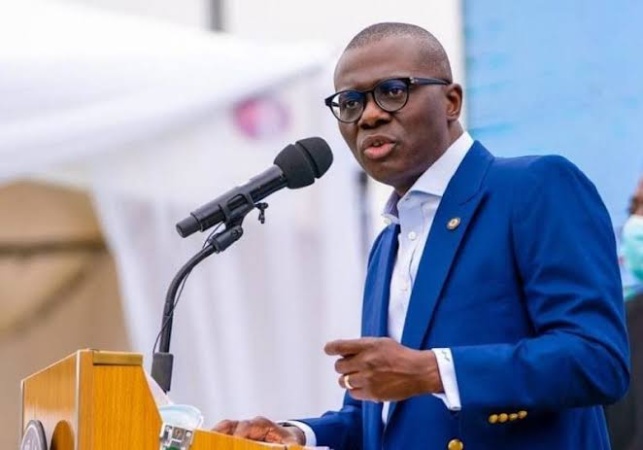
Governor Sanwo-Olu delivering the 7th Freedom Online Anniversary Lecture, Thursday in Lagos
By BONIFACE AKARAH
Lagos State Governor Babajide Sanwo-Olu has urged Nigerians to approach the 2027 general elections with a focus on the economy, security and the long-term future of the country, arguing that the three issues are closely connected.
Sanwo-Olu spoke on Thursday, September 3, 2026, while delivering a lecture titled “2027 Elections: Economy, Security and Nigeria’s Future” at the Freedom Online 7th Yearly Lecture held at the Sheraton Lagos Hotel, Ikeja.
The governor, who is serving his second and final term and will not be on the ballot in 2027, said his position gave him some freedom to speak about the coming election.
He, however, acknowledged that he was a member of the All Progressives Congress (APC) and expressed support for President Bola Ahmed Tinubu’s reforms, while promising to speak first as a Nigerian and then as a partisan.
Sanwo-Olu said the 2027 election would be the eighth consecutive general election since the return to democratic rule in 1999, describing Nigeria’s uninterrupted electoral cycle as an important democratic achievement, particularly against the backdrop of military takeovers in several West African countries.
He said the economic debate ahead of the election should move beyond political slogans, particularly on the removal of the petrol subsidy.
According to him, the subsidy was removed because it had become a major drain on government finances, although he acknowledged that the policy had imposed significant hardship on Nigerians.
“Lagosians have felt it at the pump, at the market, and in the price of a bag of rice, and any governor who tells you otherwise has not been listening to his own people,” he said.
Sanwo-Olu, however, argued that recent economic indicators suggested that the reforms were beginning to produce results.
He cited second-quarter growth figures published by the National Bureau of Statistics, saying the economy grew by 4.43 per cent, compared with 3.89 per cent in the first quarter.
He also pointed to increased external reserves, lower inflation, improved credit ratings, a trade surplus and stronger formal remittance inflows as evidence of improving economic conditions.
“These are not my numbers. They belong to the National Bureau of Statistics and the Central Bank of Nigeria, and every journalist in this hall can check them,” he said.
On security, the governor said insecurity could affect the 2027 election in practical ways, including candidates’ ability to campaign, the movement of electoral officials and materials, and voter turnout in affected communities.
He called on the Independent National Electoral Commission (INEC) and security agencies to begin preparations early for potential threats to the electoral process.
Sanwo-Olu also praised measures taken by the Tinubu administration to strengthen the country’s security architecture, including the expansion of the Nigerian Army, the creation of new security commands and the deployment of Forest Guards and Mining Marshals.
He further backed the proposed introduction of state policing, drawing on Lagos’ experience with community-based security initiatives.
According to him, security works best when communities can see and hold accountable those responsible for providing it.
“Security works best when the people who pay for it and the people who depend on it can see, and hold to account, the people who provide it,” he said.
Sanwo-Olu linked insecurity directly to economic conditions, arguing that poverty can fuel insecurity while insecurity can undermine economic activity.
“When a farmer cannot go to his farm, the nation gets hungrier. When a school is not safe, the country gets another cohort of children who never learned to read,” he said.
He highlighted several federal government programmes targeting young Nigerians, including the Nigerian Education Loan Fund, Consumer Credit Corporation, 3 Million Technical Talent programme, Student Venture Capital Grant and other youth-focused initiatives.
The governor also stressed the importance of credible elections, saying improvements in Nigeria’s electoral system should not lead to complacency.
He cited the August 15 governorship election in Osun State, where the APC candidate lost to incumbent Governor Ademola Adeleke, as evidence that political competition could take place without undermining democratic stability.
According to Sanwo-Olu, President Tinubu congratulated Adeleke after the election and thanked the electoral and security authorities for what he described as a peaceful and transparent process.
He urged all political parties and candidates, including his own, to respect the electoral process.
“No office in this land is worth the life of a single Nigerian, and no victory won by the wrong means is a victory at all,” he said.
Turning to the role of state governments, Sanwo-Olu said voters would judge governors and other political leaders based on their records, arguing that Nigerians were capable of assessing how public resources were being used.
He said the removal of the petrol subsidy had resulted in a significant increase in allocations to state and local governments, adding that governors must now account for how the additional resources were used.
On Nigeria’s international environment, the governor said factors including global oil prices, wars and interest-rate decisions by major economies would continue to affect the country, stressing that governments must focus on how they respond to external shocks.
He also praised the Tinubu administration’s foreign policy and efforts to strengthen international security partnerships.
Looking beyond the 2027 election, Sanwo-Olu said Nigeria should pursue the goal of becoming a $1 trillion economy by 2030.
He expressed confidence that the country could achieve the target if reforms were sustained and properly implemented.
The governor disclosed that he expected the APC to win the 2027 elections and President Tinubu to secure a second term, arguing that unfinished reforms would be costly to abandon.
He nevertheless said he expected the election to be peaceful and for losers to concede, regardless of the outcome.
Sanwo-Olu also challenged the media to play a more rigorous role during the election season, urging journalists to fact-check claims from all political camps, including the APC.
He warned that misinformation, anonymous social media accounts and doctored videos could become particularly dangerous during the campaign.
“I am not asking for a compliant press. A compliant press is of no use to a democracy; it flatters the powerful and abandons the public. I am asking for a rigorous press,” he said.
He also called on the media to pay greater attention to women and young people contesting political offices and to report not only Nigeria’s challenges but also developments that demonstrate progress.
Sanwo-Olu concluded by urging the Federal Government, state governments, INEC and the media to play their respective roles in ensuring that the 2027 election strengthens Nigeria’s democratic journey.
“Let 2027 be remembered not as the election Nigeria survived, but as the election at which Nigeria came of age,” he said.



