ADAD
ADADUpdating your news feed...

NEWS EXPRESS is Nigeria’s leading online newspaper. Published by Africa’s international award-winning journalist, Mr. Isaac Umunna, NEWS EXPRESS is Nigeria’s first truly professional online daily newspaper. It is published from Lagos, Nigeria’s economic and media hub, and has a provision for occasional special print editions. Thanks to our vast network of sources and dedicated team of professional journalists and contributors spread across Nigeria and overseas, NEWS EXPRESS has become synonymous with newsbreaks and exclusive stories from around the world.



















Loading banners
Loading banners...


Adeleke, Oyebamiji
On August 15, 2026, eligible voters across Osun State will head to the polls to elect a governor who will lead the state for the next four years.
According to the Independent National Electoral Commission (INEC), 14 candidates—including the incumbent governor, Ademola Adeleke, who is vying for a second term—have been cleared to contest the election. Notably absent from the list are the Peoples Democratic Party (PDP) and the Labour Party (LP), two major parties that participated in the state’s previous governorship election.
This election marks the first time in recent years that an incumbent governor in Osun will seek re-election on the platform of a different political party, following Governor Adeleke’s defection from the PDP to the Accord Party (A). His defection has fundamentally altered the political landscape, transforming what was expected to be a straight contest between the PDP and the All Progressives Congress (APC) into a far more competitive race.
A competitive race
An Osogbo-based political scientist, Samson Elesho, confirmed to Daily Trust via phone that the governorship election has evolved into a fiercely contested three-way battle.
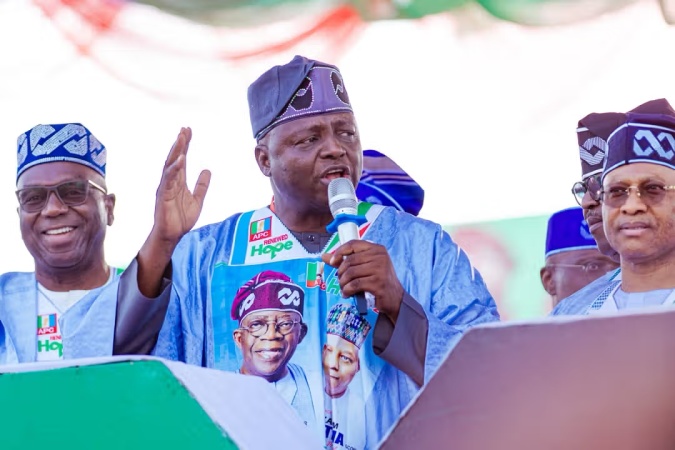
The frontrunners are incumbent Governor Ademola Adeleke of the Accord Party (A), Bola Oyebamiji of the All Progressives Congress (APC), and Najeem Salaam of the African Democratic Congress (ADC).
A major factor shaping the competition, Elesho noted, is the geographical origin of the main contenders: Governor Adeleke, APC candidate, Bola Oyebamiji, and ADC candidate, Najeem Salaam, all hail from the Osun West Senatorial District.
Specifically, Governor Adeleke is from Ede North Local Government Area (LGA), Oyebamiji hails from Irewole LGA, and Salaam comes from Ejigbo LGA.
Other candidates are Farinloye Olarenwaju of the Action Alliance (AA); Esan Olajide of the African Action Congress (AAC); Adeagbo Opawoye of the African Democratic Party (ADP); Adesina Adeyemi-Doro of the All Progressives Grand Alliance (APGA); Saliu Oyelami of the People’s Redemption Party (PRP).
Also in the race are Ogunsakin Olalekan of the Young Progressives Party (YPP); and Adefemi Adesuyi of the Zenith Labour Party (ZLP); Adewale Adebayo, Allied People Movement (APM); Clement Adesuyi of the Action Peoples Party (APP); Masilo Adeleke of Boot Party (BP); and Taofeek Adeleke of New Nigeria People’s Party (NNPP).
High voter registration, declining turnout
Election data from INEC illustrates two contrasting realities in Osun’s electoral landscape. While the number of registered voters has grown steadily across the last three governorship election cycles, voter turnout has consistently declined.
According to INEC statistics, registered voters grew from 1,411,373 in 2014 to 1,678,985 in 2018, reaching 1,952,387 in 2022.
Accredited voters saw modest gains from 764,582 in 2014 to 775,687 in 2018, and 827,218 in 2022 while Voter turnout percentage dropped steadily from 54.17% in 2014 to 46.20% in 2018, and fell further to 42.37% in 2022.
Despite the drop in percentage turnout, total votes cast followed a modest upward trend—rising from 750,021 in 2014 to 769,495 in 2018, and 823,124 in 2022.
Valid votes also increased from 717,321 to 804,450 over the same period.
Meanwhile, rejected votes dropped significantly from a peak of 47,874 in 2018 to 18,674 in 2022.
The collection of Permanent Voter Cards (PVCs) also expanded, rising from 1,213,026 in 2014 to 1,518,303 in 2022.
However, political analyst Jimoh Eruobami observed that higher PVC collection has not translated into active voting.
He cited insecurity, electoral distrust, and unfulfilled political promises as key drivers of voter apathy.
Adeleke’s defection reshapes the race
Since its creation in 1991, Osun has earned a reputation as one of Nigeria’s most fiercely contested governorship battlegrounds.
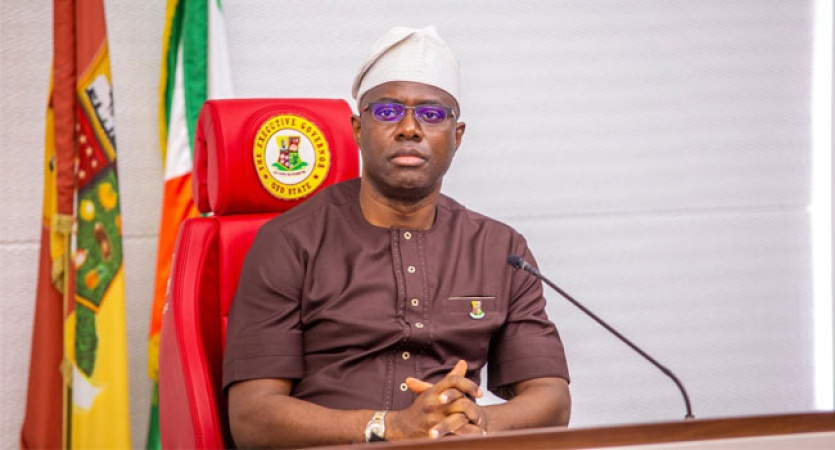
Governor Ademola Adeleke enters the 2026 governorship election with both the advantages and the uncertainties that come with incumbency.
His victory in the 2022 election was widely attributed to a combination of public dissatisfaction with the then APC administration and his own personal appeal.
In 2022, he contested on the platform of the Peoples Democratic Party (PDP), and won 17 of Osun’s 30 local government areas, while the APC secured the remaining LGs.
Four years later, Adeleke is running under the Accord Party. His defection poses a critical test: Did voters elect the PDP platform in 2022, or did they vote specifically for Ademola Adeleke? If a significant portion of the electorate remains loyal to the PDP rather than the individual, his party switch could open doors for opponents.
Moreover, securing a simple majority is not enough. Under Nigerian constitutional law, the winning candidate must also secure at least 25% of the valid votes cast in at least two-thirds (20 out of 30) of the state’s local government areas.
INEC urges grassroots awareness, inclusive participation
The Independent National Electoral Commission (INEC) has stepped up preparations for the August 15 poll with a renewed focus on voter education, inclusive participation, and addressing voter apathy.
The Resident Electoral Commissioner for Osun state, Mrs. Oluwatoyin O. Babalola, stated that elections should be viewed as an ongoing process rather than a one-day exercise, emphasizing the need for sustained civic engagement.
She cautioned that without consistent voter education, public participation in the electoral process could decline.
Also, she identified voter apathy as one of the key challenges facing the electoral system despite improvements in election administration.
According to her, factors such as misinformation, lack of confidence in the electoral process, political disinterest, and limited access to credible election information continue to discourage voter participation.
She noted that citizens should not only be informed about election dates but also understand the importance of exercising their voting rights.
To strengthen voter awareness, Babalola directed Electoral Officers and Assistant Electoral Officers to expand grassroots sensitization efforts by engaging residents in markets, motor parks, schools, and places of worship.
She also encouraged collaboration with traditional rulers and religious leaders to help spread voter education messages across communities. She urged election officials to ensure that women, young people, senior citizens, and Persons with Disabilities have equal opportunities to participate in the electoral process. (Daily Trust)