ADAD
ADAD
Updating your news feed...
NEWS EXPRESS is Nigeria’s leading online newspaper. Published by Africa’s international award-winning journalist, Mr. Isaac Umunna, NEWS EXPRESS is Nigeria’s first truly professional online daily newspaper. It is published from Lagos, Nigeria’s economic and media hub, and has a provision for occasional special print editions. Thanks to our vast network of sources and dedicated team of professional journalists and contributors spread across Nigeria and overseas, NEWS EXPRESS has become synonymous with newsbreaks and exclusive stories from around the world.










Loading banners
Loading banners...

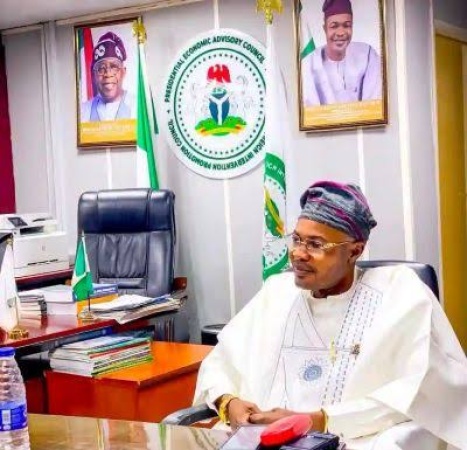
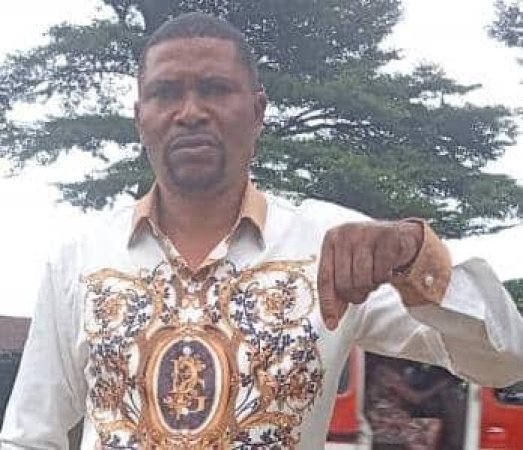
Embattled COS to President Tinubu, Femi Gbajabiamila and fake PFIPC DG, Prince Adeniyi Adeyemi Matt
Pressure intensified on the President Bola Tinubu-led administration yesterday as the opposition, rights groups, anti-corruption organisations and the Nigeria Union of Journalists (NUJ), demanded independent investigations into the alleged Presidential Foreign Intervention Promotion Council (PFIPC) scandal, saying the controversy threatens confidence in governance and public accountability.
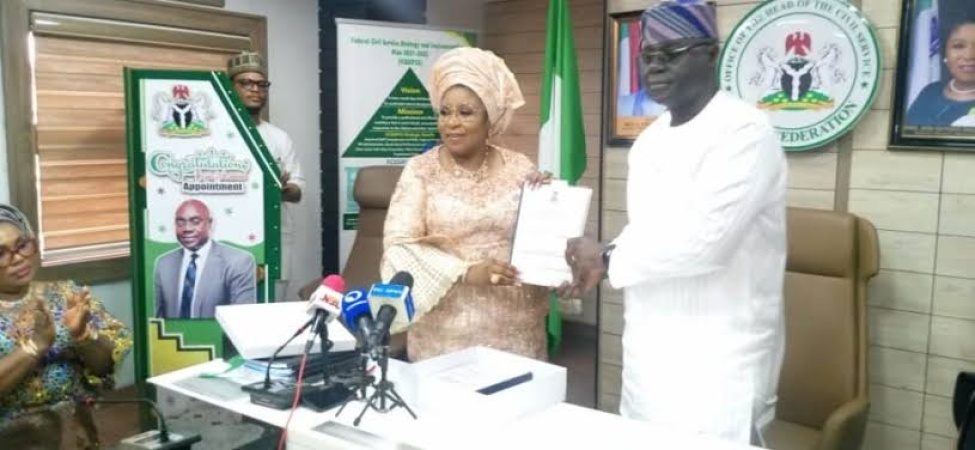
The controversy centres on allegations that the purported council secured office space, opened Central Bank of Nigeria accounts and received a budgetary allocation, alongside claims linking its leadership appointment to the Chief of Staff to the President, Femi Gbajabiamila.
Former Vice President and presidential candidate of the African Democratic Congress (ADC), Atiku Abubakar, said the controversy reflects what he described as a pattern of scandals under the administration of President Bola Tinubu.
In a statement issued yesterday by his spokesman, Phrank Shaibu, Atiku argued that the controversies associated with the Tinubu administration could no longer be regarded as isolated incidents.
According to him, the President has become identified with the recurring controversies affecting his government.
“Nigeria has sadly arrived at that point. The issue is no longer one scandal or another. The issue is the pattern. And when scandals become a pattern of governance, the inevitable conclusion is this: you are no longer managing scandals; you have become the scandal itself,” he said.
Atiku described the PFIPC controversy as more than another embarrassment for the government, saying it represents the latest in a series of controversies that have characterised the present administration.
He said the PFIPC affair did not emerge in isolation but forms part of what he called a troubling sequence of unresolved issues.
“From unresolved questions surrounding the Humanitarian Affairs scandal to allegations of crude oil theft and illegal tanker releases that faded without publicly released investigative reports; from concerns raised over alleged discrepancies in the 2024 budget and the absence of a comprehensive forensic explanation; to the billions reportedly expended on refinery rehabilitation while public refineries remain largely dysfunctional; from procurement controversies involving major infrastructure projects to recurring concerns over opaque contract awards, missing procurement records and appointments of persons linked to unresolved allegations, Nigerians have watched a familiar and deeply troubling pattern unfold,” Atiku stated.
Similarly, the Peoples Democratic Party (PDP) accused the Federal Government of demonstrating what it described as a troubling pattern of institutional failure following the controversy surrounding the alleged Presidential Foreign Intervention Promotion Council.
In a statement issued yesterday by its National Publicity Secretary, Ini Ememobong, the Kabiru Turaki-led faction of the party said the allegations and the Presidency’s response have raised serious questions about governance and the integrity of public institutions under the current administration.
The PDP said the government’s explanation was as disturbing as the allegations levelled against senior officials, arguing that the administration has continued to exhibit institutional weaknesses.
According to the party, if the Presidency’s account of the incident is accurate, it points to a serious breakdown in government systems, as it would mean that an individual allegedly secured office space, staff, budgetary allocations, Central Bank of Nigeria (CBN) accounts and interacted with government agencies without detection.
The opposition party added that if the allegations made by Prince Adeniyi Adeyemi against the Chief of Staff to the President, Femi Gbajabiamila, are eventually substantiated, they would amount to “yet another act of shameless corruption added to a long and growing queue of unchallenged corrupt officials in this administration.”
“Anyway this pendulum swings, the Nigerian people lose. Assuming that Nigerians were to accept the Presidency’s explanation at face value, the implications would be staggering. How could an impostor operate freely and undetected at the highest level of government?” the statement said.
HEDA, SERAP seek probe, disclosure over alleged N1.3b budget allocation
Human and Environmental Development Agenda (HEDA Resource Centre) and the Socio-Economic Rights and Accountability Project (SERAP) called for an independent investigation and greater transparency over the alleged allocation of more than N1.3 billion to the Presidential Foreign Intervention Promotion Council in the 2026 Appropriation Act.
The groups separately argued that the controversy surrounding the council, whose existence has been denied by the Presidency, raises serious concerns about the integrity of Nigeria’s budgetary process, legislative oversight and public financial management.
In a statement signed by HEDA Chairman, Olanrewaju Suraju, the anti-corruption organisation said the matter has gone beyond the actions of any individual and now requires a comprehensive public inquiry and explanation from the Federal Government.
HEDA described the development as a major governance issue that raises questions about the credibility of government operations, the budget process and the management of public resources.
“If the Presidency maintains that the PFIPC does not exist, Nigerians deserve to know how an allocation for the council found its way into the 2026 Appropriation Act. The public has a right to know who proposed the allocation, the government institutions that processed and approved it, and whether any public funds have been released or committed considering the secondment of public servants to the office,” Suraju said.
The organisation stressed that transparency and accountability remain the foundation of democratic governance, adding that every budgetary allocation should be backed by legitimate legal and administrative processes.
“This controversy presents an opportunity for the Federal Government to demonstrate its commitment to openness by making all relevant information available to the public. The integrity of the national budget is fundamental to public trust. Any uncertainty surrounding the legitimacy of government institutions or public expenditure weakens confidence in governance and raises avoidable concerns about fiscal accountability,” he added.
HEDA urged the administration of President Bola Tinubu to publish all documents relating to the alleged PFIPC, including the origin of the budget proposal, the approval process, any expenditure connected with the allocation and measures being taken to prevent a recurrence.
Similarly, SERAP urged Senate President Godswill Akpabio and Speaker of the House of Representatives Tajudeen Abbas to disclose certified copies of all documents relating to the consideration and approval of the allocation of over N1.3 billion to the PFIPC/Presidential Economic Advisory Council in the 2026 Appropriation Act.
The organisation also asked the National Assembly leadership to exercise its constitutional powers under Sections 88 and 89 of the Constitution to investigate the circumstances surrounding the allocation to what it described as “a fictitious presidential council” and identify those responsible for any irregularities.
SERAP further requested certified copies of records identifying the National Assembly committees that considered the allocation, as well as the names and official designations of public officers or representatives who appeared before the committees to defend the proposed budget.
In a Freedom of Information request dated at the weekend and signed by its Deputy Director, Kolawole Oluwadare, SERAP said the conflicting accounts over the council raise serious concerns about the integrity of the appropriation process, legislative oversight, public financial management and accountability.
“Nobody has a more sacred obligation to obey the law than those who make the law. The National Assembly ought to keep an eye on what the Executive is doing and to keep the Presidency and agencies of government in check, including before and during the appropriation process, by thoroughly scrutinising the Executive’s budget proposals before any authorisation,” the organisation stated.
CHRICED, CDHR demand independent probe, urge Gbajabiamila to step aside
Similarly, the Resource Centre for Human Rights and Civic Education (CHRICED) and the Committee for the Defence of Human Rights (CDHR) called for an independent investigation into the controversy surrounding the Presidential Foreign Intervention Promotion Council, with both groups urging the Chief of Staff to the President, Femi Gbajabiamila, to step aside pending the outcome of the probe.
In separate statements issued yesterday, the organisations said the allegations linked to the PFIPC have raised serious concerns about transparency, accountability and governance.
CHRICED, in a statement by its Executive Director, Comrade Ibrahim M. Zikirullahi, described the allegations as grave and deserving of an independent and transparent investigation.
The organisation said the controversy reinforces concerns about what it described as growing opacity in governance and underscores the need for stronger institutional accountability.
It called for the immediate suspension of Gbajabiamila pending the conclusion of investigations, the establishment of an independent investigative panel comprising civil society representatives, anti-corruption experts and jurists, and the publication of details of all government-linked councils, committees and intervention bodies, including their mandates, funding and operational structures.
CHRICED also urged the government to recommit itself to transparency and accountability, particularly amid economic hardship and persistent insecurity.
The organisation appealed to civil society groups, the media, labour unions, religious leaders, youth groups and other stakeholders to remain vigilant and continue demanding accountability from public officials.
Similarly, the Committee for the Defence of Human Rights called on the Federal Government to launch an independent investigation into allegations that Gbajabiamila demanded N27.4 billion and received N400 million through proxies to facilitate the appointment of Prince Adeniyi Adeyemi Matthew as Director-General of the purported Presidential Foreign Intervention Promotion Council/Presidential Economic Advisory Council.
In a statement signed by its National President, Yinka Folarin, and National Secretary, Idris Afees, the group said Gbajabiamila should voluntarily step aside as Chief of Staff pending the outcome of an independent investigation.
The organisation said the call should not be interpreted as a presumption of guilt but as a necessary step to ensure the credibility and impartiality of any investigation.
“To preserve the credibility and integrity of the investigation, and in keeping with constitutional principles of accountability and international best practices in public governance, CDHR calls on Rt. Hon. Femi Gbajabiamila to voluntarily step aside as Chief of Staff to the President pending the conclusion of an independent investigation,” the statement read.
The group added that the temporary withdrawal of the Chief of Staff from office would help eliminate any perception of interference, safeguard the integrity of the investigative process, reassure Nigerians that no public official is above the law, and reinforce public confidence in the Federal Government’s commitment to transparency and accountability.
CDHR further stated: “The allegations on both sides are grave. While the Federal Government alleges forgery, impersonation, fraudulent operation of bank accounts and misrepresentation, the defendant has levelled equally weighty allegations of bribery and abuse of office against one of the country’s highest-ranking public officials.
“If either set of allegations is proven, it represents a serious assault on the integrity of public institutions and further diminishes public confidence in governance.”
NUJ scribe seeks independent probe of PFIPC allegations
The National Secretary of the Nigeria Union of Journalists (NUJ), Achike Chude, urged the administration of President Bola Tinubu to order a thorough, transparent and independent investigation into the allegations.
Speaking in a telephone interview with The Guardian, Chude warned that without sustained pressure from the media, civil society organisations and other stakeholders, the allegations risked being swept under the carpet.
According to him, the accusations involve one of the most senior officials in the Presidency and therefore require an impartial investigation to safeguard public confidence in government institutions.
“The media must not relent. If journalists and other stakeholders stop asking questions, there is every likelihood that nothing meaningful will come out of the investigation,” he said.
Chude stressed that Nigeria’s institutions must demonstrate that no individual, regardless of status or office, is above the law, insisting that public confidence in government depends on the willingness of authorities to subject powerful public officials to due process whenever serious allegations arise.
He argued that the Presidency should distance itself from any official facing weighty allegations pending the outcome of investigations, noting that such a step would protect, rather than diminish, the integrity of the office of the President.
“The nation is bigger than any individual. Those entrusted with governing Nigeria must show that the country’s institutions are stronger than the people who occupy public offices,” he stated.
Drawing parallels with established democracies, Chude noted that senior government officials have, in the past, stepped aside to allow investigations to proceed unhindered and to shield their administrations from further public scrutiny.
According to him, embracing a similar standard would strengthen public trust in Nigeria’s democratic institutions and reinforce the Tinubu administration’s commitment to accountability.
The NUJ scribe also expressed concern over what he described as the growing public perception of impunity in governance, warning that failure to transparently investigate allegations involving highly placed public officials could further erode confidence in the government’s anti-corruption drive.
“When serious allegations are not openly investigated, citizens begin to lose faith in public institutions. Once confidence in those institutions is weakened, governance suffers and the consequences ultimately affect national stability and security,” he said.
He urged security agencies, including the police and the Department of State Services (DSS), to conduct a professional, impartial and independent investigation without interference from any quarter.
According to him, anyone found culpable after due investigation should be prosecuted in accordance with the law, irrespective of position or political influence.
Chude maintained that allowing the investigation to run its full course would not only establish the facts but also reassure Nigerians that the administration is committed to transparency, accountability and the rule of law.
“The investigation must be pursued to its logical conclusion. If anyone is found culpable, such a person should face trial in accordance with the law. That is the only way to convince Nigerians that the government is genuinely committed to fighting corruption and protecting the credibility of its institutions,” he said.
In a statement, Ubani described the controversy as a serious governance concern, arguing that it raises questions about accountability and the integrity of Nigeria’s public finance system.
“There are scandals that embarrass a government. Then there are scandals that expose the naked incompetence of a government. The alleged fake presidential agency scandal belongs to the second category,” he said.
According to him, reports indicate that the disputed agency appeared under the Presidency in the 2026 Appropriation Act with a total allocation of N1,302,978,784, comprising about N802.98 million for personnel, N200 million for overhead and N300 million for capital projects.
“A national budget is not scribbled on the back of an envelope; it passes through offices, desks, memos, codes, reviews, committees, hearings, approvals and finally presidential assent. If an agency that the Presidency says does not exist can enter that process and emerge with N1.3 billion beside its name, then Nigeria is not dealing with a simple forgery case; it is dealing with a collapsed public finance system,” he said.
Ubani also questioned the National Assembly’s oversight role, saying lawmakers should have verified the agency before approving funds for it.
“If lawmakers can appropriate money to an agency whose existence is now being denied, then the legislature has failed in its most basic duty. It did not scrutinise. It did not verify. It did not protect the public purse. It behaved like a budget-passing factory,” he stated.
He further argued that all federal agencies and appointments should be supported by proper documentation and legal instruments.
“Federal appointments should have records. Agencies should have legal instruments. Directors-General should have appointment files. Official bodies should be traceable. If this agency was fake, every office that treated it as real must explain why,” he said.
Ubani called on the President, the National Assembly, the Office of the Secretary to the Government of the Federation, the Office of the Head of the Civil Service of the Federation and the Budget Office to provide explanations over the controversy.
“Tinubu must answer. The National Assembly must answer. The SGF must answer. The Head of the Civil Service must answer. The Budget Office must answer. Until they do, Nigerians have every right to conclude that this government’s accountability system is not merely weak. It is badly broken or non-existent,” he added. (The Guardian)