ADAD
ADAD
Updating your news feed...
NEWS EXPRESS is Nigeria’s leading online newspaper. Published by Africa’s international award-winning journalist, Mr. Isaac Umunna, NEWS EXPRESS is Nigeria’s first truly professional online daily newspaper. It is published from Lagos, Nigeria’s economic and media hub, and has a provision for occasional special print editions. Thanks to our vast network of sources and dedicated team of professional journalists and contributors spread across Nigeria and overseas, NEWS EXPRESS has become synonymous with newsbreaks and exclusive stories from around the world.


.webp)






Loading banners
Loading banners...

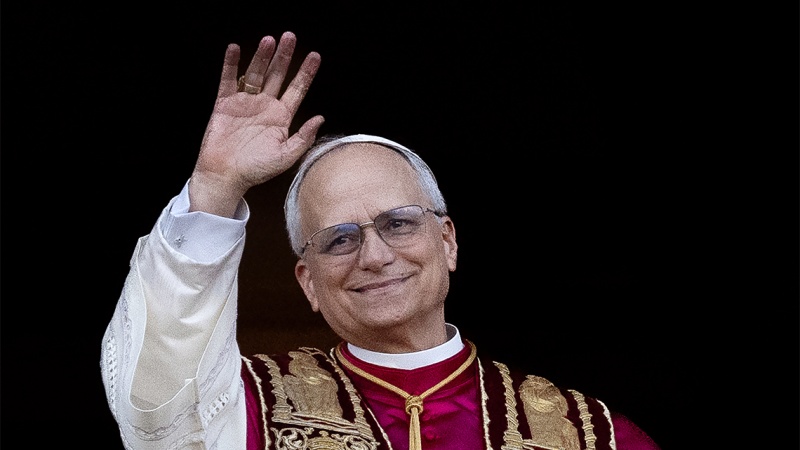
Pope Leo XIV
By Fr. OKHUELEIGBE OSEMHANTIE ÃMOS
On July 1, 2026, while the universal Church celebrated the Feast of the Most Precious Blood of Jesus Christ, another event unfolded in the quiet Swiss town of Écône that has sent shockwaves across the Catholic world. The Society of Saint Pius X (SSPX) consecrated four new bishops without the approval of Pope Leo XIV.
The Society immediately released a carefully worded statement. It expressed regret that the consecrations had to occur without papal permission. Yet it also insisted that the action was "necessary" for preserving Catholic Tradition.
The statement contained perhaps its most revealing sentence:
"The Fraternity sincerely regrets... these consecrations had to have been carried out without the permission of the Holy Father."
Notice what it did not say.
It did not apologise. It did not ask forgiveness. It did not indicate any intention of reversing the act. In effect, the Society was saying:
"We regret the circumstances. We do not regret the decision."
That distinction is at the heart of the present crisis. To understand today's event, one must return to 1970.
The Society of Saint Pius X was founded in 1970 by the French Archbishop Marcel Lefebvre.
Lefebvre believed that many reforms introduced after the Second Vatican Council endangered Catholic tradition. Among the reforms he opposed were:
I. the celebration of Mass in local languages rather than Latin
Ii. ecumenical openness
III. interreligious dialogue
IV. certain approaches to religious liberty
V. aspects of collegial governance in the Church
It is important to state accurately that the SSPX has never rejected the papacy itself. Instead, it argues that certain post-Vatican II developments represent dangerous departures from authentic Catholic Tradition.
Rome, on the other hand, insists that an ecumenical council approved by the Pope belongs to the living Magisterium and cannot simply be accepted selectively.
Thus, the disagreement is not over whether the Pope exists. It is over how the Pope's authority should be exercised and obeyed.
The wound of 1988 never completely healed
Everything changed on June 30, 1988.
Archbishop Lefebvre consecrated four bishops without the permission of Pope John Paul II.
Canon Law requires a papal mandate before a bishop may be consecrated. The relevant norm is Canon 1013 (now reflected in the revised numbering) and Canon 1382 of the 1983 Code as then in force, which attached the penalty of automatic excommunication to such acts.
Rome described Lefebvre's action as a schismatic act. Lefebvre insisted he acted out of necessity. Remarkably, that same argument is being repeated thirty-eight years later.
The SSPX continues to invoke what it calls a "state of necessity," arguing that extraordinary circumstances justify extraordinary measures. The Holy See has consistently rejected that claim.
Why did they consecrate four more bishops now?
The answer is surprisingly practical.
Several SSPX bishops are elderly.
Without bishops, the Society cannot perpetuate itself in the same way, because bishops alone can confer Holy Orders and administer certain sacraments reserved to the episcopate.
From the SSPX perspective, waiting until the present bishops die would threaten the continuity of the Society.
Rome offered dialogue.
The SSPX chose consecration. That decision reveals that the Society believes preserving its sacramental structure outweighs the juridical requirement of obtaining papal approval.
Why was Pope Leo XIV personally involved?
This is perhaps the most remarkable feature of the story.
Unlike 1988, Pope Leo XIV personally intervened. In a heartfelt letter dated June 29, he pleaded with the Society not to proceed. His appeal was not framed primarily as a legal warning. It was a father's appeal.
He urged them not to "tear the seamless garment of Christ" by deepening division within the Church.
According to the SSPX, it sought a personal audience with the Pope but was not granted one before the ceremony. The Society cited this among the reasons it proceeded.
What happened today?
Before more than fifteen thousand faithful gathered at Écône, Bishop Alfonso de Galarreta, assisted by Bishop Bernard Fellay, consecrated:
a. Pascal Schreiber
b. Michael Goldade
c. Michel Poinsinet de Sivry
d. Marc Hanappier
They become bishops for the Society, but not diocesan bishops. The SSPX describes them as auxiliary bishops "without jurisdiction," meaning they have episcopal orders but no canonical governance over a diocese.
Were the consecrations valid?
Here lies one of the most misunderstood aspects.
The Catholic Church distinguishes between validity and liceity.
A sacrament may be valid yet illicit.
Validity asks:
"Did the sacrament truly happen?"
Liceity asks:
"Was it celebrated according to the law of the Church?"
Because the consecrating bishops themselves are validly ordained bishops using the proper rite and intention, the episcopal consecrations are generally understood to be sacramentally valid.
However, because they occurred without the required papal mandate, they are considered illicit under canon law.
That distinction explains why Rome can simultaneously recognise the sacramental reality of the consecrations while condemning the act itself.
What are the canonical consequences?
The Holy See warned beforehand that proceeding without papal approval would constitute a schismatic act carrying the canonical penalty of “latae sententiae” (automatic) excommunication under the applicable law. Vatican officials reiterated that warning before the ceremony, and multiple reports state that those directly involved incur that penalty by the act itself.
The SSPX rejects that conclusion.
Its Superior General declared that any penalties or censures "have no value whatsoever," arguing again from a claimed state of necessity.
This is why many observers describe the Society's position as: "We regret the situation, but we do not accept the Vatican's legal judgment."
Why this crisis is different from 1988
Several differences stand out.
First, Pope Leo XIV personally made a public and pastoral appeal before the consecrations.
Second, decades of dialogue under successive pontificates—including significant pastoral concessions under Pope Benedict XVI and Pope Francis, such as broader faculties for SSPX confessions and certain marriages, had created hope that a full reconciliation might eventually be possible.
Third, today's consecrations therefore represent not simply another disagreement but a serious setback after years of painstaking efforts toward unity.
What happens next?
Several possibilities now lie before the Church.
The Vatican may formally clarify the canonical status of those involved and determine whether additional measures are needed beyond the penalties already attached by law.
Dialogue could continue, though it will almost certainly become more difficult.
Some of the pastoral concessions extended to the SSPX over recent years may come under renewed scrutiny.
Within the SSPX, however, today's consecrations ensure episcopal continuity for decades, fulfilling what the Society regards as an essential safeguard for its mission.
Beyond the Headlines
This is not fundamentally a dispute about Latin versus English, old vestments versus new vestments, or nostalgia versus modernity, or Pope Leo XIV versus SSPX. At its deepest level, the question is ecclesiological:
Can any group within the Catholic Church decide, on its own judgment, that circumstances are so extraordinary that it may exercise one of the Church's most important episcopal acts without the authorization of the Successor of Peter?
The Holy See answers No, because episcopal consecration without a pontifical mandate wounds the visible unity of the Church and challenges the Pope's role in safeguarding apostolic communion.
The SSPX answers Yes, but only because it believes the Church is experiencing a prolonged crisis so grave that extraordinary measures are justified to preserve what it understands as the fullness of Catholic Tradition.
Thus, the events at Écône are not simply about four new bishops. They reopen a theological, canonical, and ecclesiological debate that has remained unresolved since 1988. The consecrations have secured the Society's future leadership, but they have also deepened one of the most enduring fractures in contemporary Catholicism. Whether this becomes the beginning of a permanent rupture or another difficult stage on the path to eventual reconciliation will depend on choices made not only in Écône but also in Rome in the months and years ahead.
•Fr. Dr. Okhueleigbe Osemhantie Ãmos is a communication scholar, not a Church historian. Should you require a more detailed historical exposition of the subject, specialists in Church history would undoubtedly be better positioned to provide it than I have attempted here.