ADAD
ADAD
Updating your news feed...
NEWS EXPRESS is Nigeria’s leading online newspaper. Published by Africa’s international award-winning journalist, Mr. Isaac Umunna, NEWS EXPRESS is Nigeria’s first truly professional online daily newspaper. It is published from Lagos, Nigeria’s economic and media hub, and has a provision for occasional special print editions. Thanks to our vast network of sources and dedicated team of professional journalists and contributors spread across Nigeria and overseas, NEWS EXPRESS has become synonymous with newsbreaks and exclusive stories from around the world.
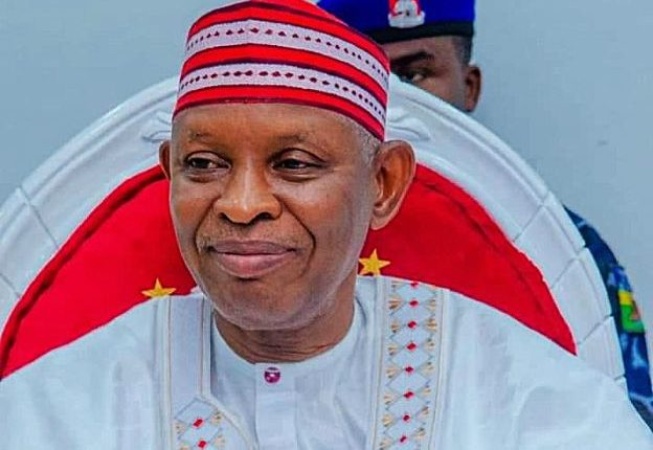








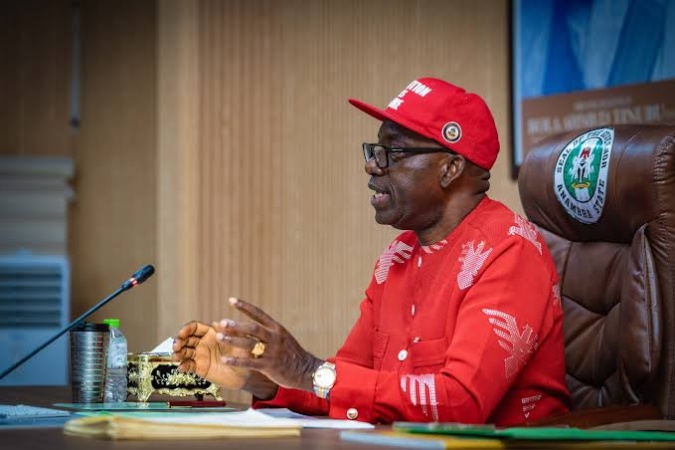




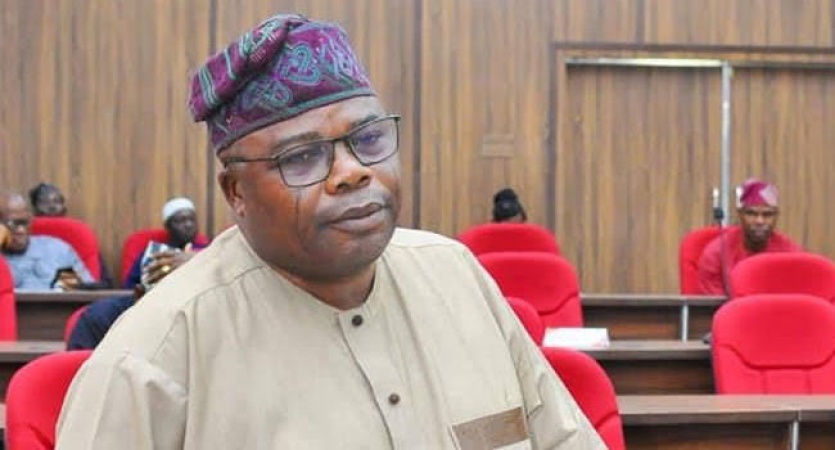
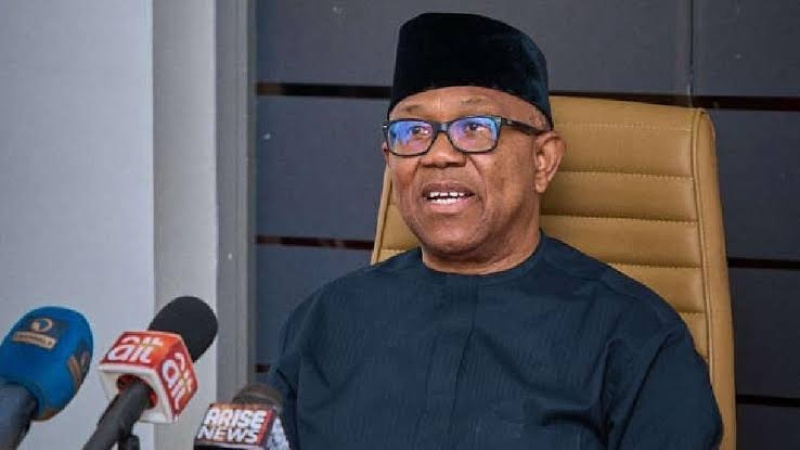

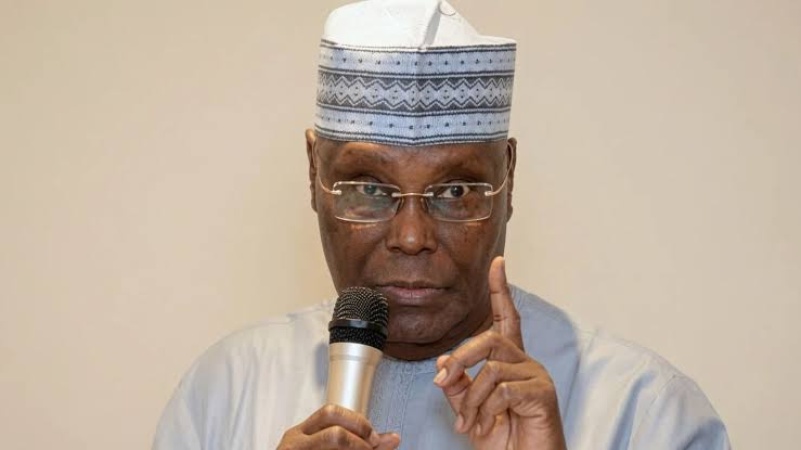
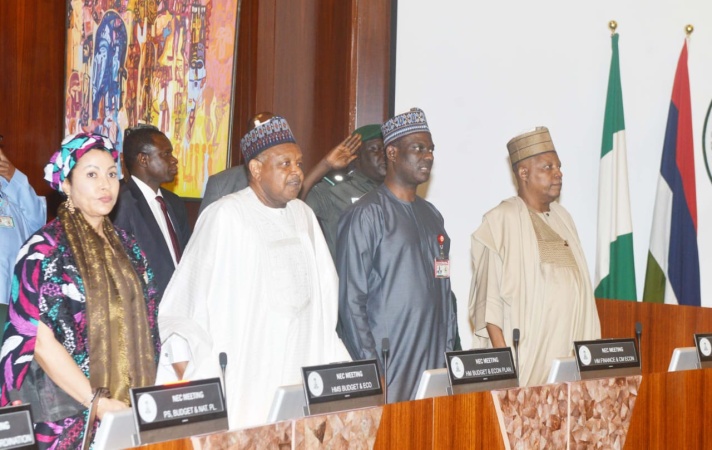
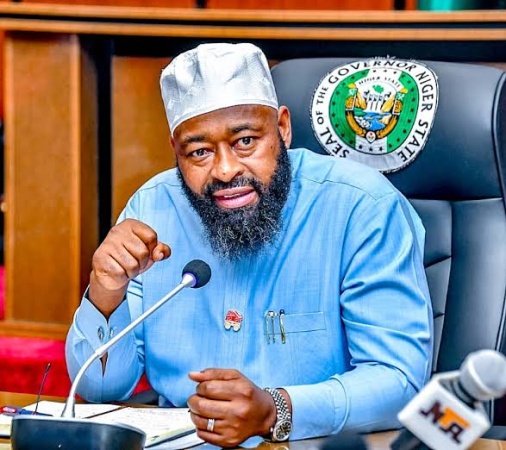


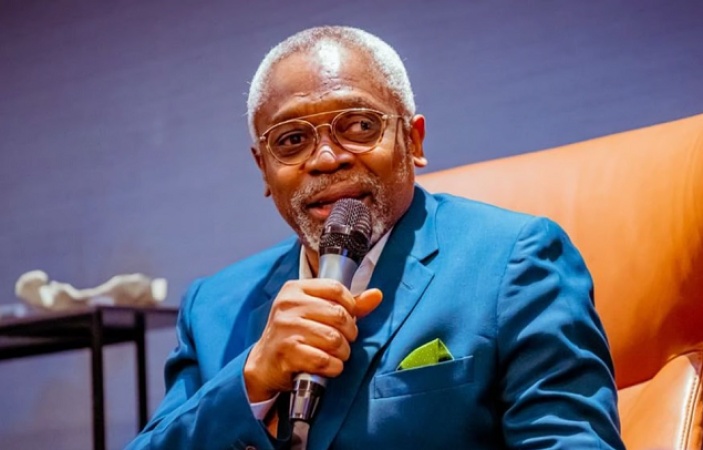
President Tinubu's Chief of Staff, Femi Gbajabiamila
What began as the Presidency’s attempt to dismiss the Presidential Foreign Intervention Promotion Council (PFIPC) as a fictitious organisation has snowballed into a far wider controversy over the integrity of Nigeria’s public institutions.
It has also stirred several questions over how an agency declared non-existent could allegedly operate within government circles and appear in the 2026 Appropriation Act with a N1.3 billion allocation.
Yesterday, opposition leaders, lawyers, civil society groups and former senior government officials intensified calls for an independent investigation, warning that the affair has become a test of the Tinubu administration’s commitment to transparency and accountability.
While the Presidency has firmly dismissed Adeniyi Adeyemi as an impostor and absolved Chief of Staff Femi Gbajabiamila of bribery allegations, the central question has shifted.
It is no longer simply whether Adeyemi forged documents; it is whether Nigeria’s governance systems contain weaknesses significant enough to allow a fictitious institution to pass through multiple layers of official scrutiny.
Chronologically, the Presidency’s account suggests that concerns first emerged in October 2025 after the Nigerian Investment Promotion Commission (NIPC) complained that PFIPC’s activities conflicted with its statutory mandate.
According to the Presidency, Gbajabiamila immediately petitioned the police and the Department of State Services (DSS), describing the organisation as fraudulent. Adeyemi was subsequently arrested, and investigators allegedly recovered forged documents. Police concluded that both the council and his appointment were fictitious.
Ordinarily, such an explanation might have settled the matter. Instead, fresh questions emerged because the same council later appeared in the 2026 Appropriation Act with an allocation exceeding N1.3 billion for personnel, overheads and capital expenditure. This transformed the controversy from an alleged criminal case into a governance puzzle.
The most important issue is not the bribery allegation itself. Rather, it is the budgetary trail.
Nigeria’s budget is not produced by a single individual. Before any agency receives an allocation, proposals typically originate from the relevant institution, undergo scrutiny by the Budget Office, receive executive approval through the Federal Executive Council, pass detailed committee examination in both chambers of the National Assembly and are ultimately signed into law by the President.
The implications are that if the Presidency maintains that PFIPC never legally existed, then one of Nigeria’s most fundamental public finance processes appears to have failed, as stakeholders pointed to implications far beyond this particular controversy.
Equally overlooked is the question of institutional validation, as Adeyemi was not merely issuing press statements. Public records indicate engagements with the Deputy Speaker of the House of Representatives, meetings with the Economic and Financial Crimes Commission (EFCC), consultations with the Nigerian Electricity Regulatory Commission (NERC), and preparations for a World Investment Summit.
According to his claims, the council also maintained office space within the Federal Secretariat, operated bank accounts through the CBN and secured recognition from the Office of the Head of the Civil Service.
How scandal exposes gaps in National Assembly oversight
One institution that may bear significant responsibility, and perhaps the greatest share of the blame, for the Presidential Foreign Intervention Promotion Council (PFIPC) scandal is the current bicameral National Assembly under the leadership of Senate President Godswill Akpabio.
Right from the outset, and perhaps owing to the manner of his emergence as the first among equals in the federal parliament, Akpabio left little doubt that, under his watch, the line of oversight between the Executive and the Legislature could fade into near insignificance.
The Akpabio-led National Assembly appeared to align itself closely with the Bola Ahmed Tinubu administration when, during the President’s first appearance to present the 2024 Appropriation Bill, lawmakers replaced the national anthem with President Tinubu’s campaign song, ‘On Your Mandate, We Shall Stand.’
Having elected to stand on the President’s mandate, the 10th National Assembly appeared to have effectively abdicated its constitutional role as a check on the Executive. Beyond making laws, the Legislature is charged with ensuring that the Executive operates within the rule of law and remains transparent and accountable in its conduct.
At a press conference on June 25, 2026, Prince Adeyemi accused the Chief of Staff to the President, Femi Gbajabiamila, of receiving N400 million through a proxy and later demanding an additional N200 million to facilitate his appointment as Director of the Presidential Foreign Intervention Promotion Council.
Adeyemi also alleged that he rejected a request by the Chief of Staff for 48 per cent of the PFIPC’s proposed N27.4 billion take-off grant.
Pushing back against the Chief of Staff’s denial of the council’s existence, Adeyemi expressed dismay that Gbajabiamila could issue “a disclaimer distancing the Office of the Chief of Staff to the President from the Presidential Foreign Intervention Promotion Council (PFIPC), alongside the Presidential Economic Advisory Council (PEAC).”
He said: “My name has been drawn into this storm. I reject outright any attempt to reduce this matter to simple denials without addressing the core questions that Nigerians are now asking.
“The issue is no longer about personalities. It is about contradictions that demand answers.
“This claim by the Chief of Staff to the President, Femi Gbajabiamila, that he doesn’t know about the existence of the agency is derisory because, in the real world, he should cover his face in shame.
“If Femi Gbajabiamila, who is supposed to be the Chief of Staff to the President and also the administrative gateway to the Presidency, can make such an administrative error by allowing the President to sign a document containing a fake agency, he should possibly resign his appointment now.”
The National Assembly also came under scrutiny when the chief executive of the disputed council asked: “How did the agency’s name get into the 2026 Appropriation Bill on pages 50 and 51? If the agency does not exist yet has found its way into the Nigerian national budget, it means the entire 2026 appropriation budget is fraudulent and should be discarded.
“What the Chief of Staff to the President is now saying by his denial, published in various national dailies, is that our 109 distinguished senators, among whom are seasoned administrators, former governors and diverse professional experts, were incompetent to detect the fake agency in the national budget.
“What it means is that our 360 members of the House of Representatives are merely rubber stamps, as has been speculated. This is not an emotional question. It is a procedural one because the national budget does not emerge in isolation. It passes through multiple layers of technical drafting, executive coordination, ministerial inputs, Budget Office review, and finally legislative scrutiny by both chambers of the National Assembly…”
Ex-SGF questions how fake agency operated without executive knowledge
Former Secretary to the Government of the Federation (SGF), David Babachir Lawal, has questioned claims that a government agency could exist within the federal bureaucracy without the executive’s knowledge.
Lawal said it would be unusual for any organisation to operate as a government agency without passing through established administrative processes.
“I don’t know how it can happen (whether an agency of government can exist without executive input), if you’re asking me, because all such agencies report to the Office of the Secretary to the Government. Appointment letters are signed by the Secretary to the Government. Office allocation for MDAs is done by the Office of the Secretary to the Government.
“So, I don’t know this government; their own style is different. But while I was there, all appointment letters were signed by the SGF after approval by the President. The President approves and directs you to issue the letters. They come to the agencies, come to you, request office allocation, and then you allocate the office, and so on and so forth.”
On whether the National Assembly could approve budgetary provisions without establishing whether such agencies existed, the former SGF explained that budgets are first compiled by ministries, departments and agencies (MDAs), presented by the Budget Office at the Federal Executive Council (FEC), and later defended by the MDAs.
“Usually, all budgets are aggregated under the supervising minister, and then he comes to defend them. Many times, even before it gets there, all MDAs defend their budgets before the Minister of Budget and Planning.
“So, there are processes. I don’t know how it can be done without the SGF knowing or without the Federal Executive Council knowing. The budget is forwarded to the National Assembly by the President after the Federal Executive Council has approved it, and after every MDA has defended it before the Budget Office.
“When a line appears in the budget that has no owner, you begin to wonder. But this is a different government, and their whole style is different. So, I don’t know how they do it.”
Lawal added that while the President has the power to award contracts without the input of the National Assembly, such contracts must be backed by appropriated funds.
“This government, their style of doing things is different. The President is the Executive President, so I don’t know what he can do. The National Assembly doesn’t get involved in contract awards. What happens is that if the President awards a contract for which funds are not appropriated, it is an impeachable offence in the government in which I served. But now I don’t know,” he said.
Atiku seeks independent probe, says Presidency’s defence self-indicting
Presidential candidate of the African Democratic Congress, Atiku Abubakar, has said the presidency’s response to allegations against the chief of staff to the president, Femi Gbajabiamila, over the scandalous activities of the Presidential Foreign Intervention Promotion Council, and its director general, Adeniyi Adeyemi, is self-indicting.
Atiku disclosed this in a statement by his spokesperson, Phrank Shaibu, yesterday.
Atiku declared that the presidency’s desperate attempt to explain away the scandal surrounding the so-called PFIPC has inadvertently exposed a far more disturbing reality under President Bola Ahmed Tinubu’s administration.
He said the response by presidential spokesperson, Bayo Onanuga, was not a defence of the government but a public confession of institutional collapse.
According to him, the allegations are too grave to ignore and demand an urgent probe into all parties involved, including the Central Bank of Nigeria and the National Assembly.
“There is an African proverb that says that ‘the man who points at the moon should not have blood on his finger.’ A government cannot claim to be exposing fraud while simultaneously struggling to explain how that same fraud found its way into the very heart of the Nigerian state.
“What the presidency intended as damage control has become self-indictment. Rather than extinguish the fire, it has illuminated how deeply the flames have consumed the foundations of governance.
“The Presidency now wants Nigerians to believe that one private citizen single-handedly forged presidential documents; impersonated senior government officials; established an office inside the Federal Secretariat; allegedly opened dozens of bank accounts—including accounts bearing government identities; hosted foreign ambassadors without diplomatic clearance; secured official recognition across several government circles; and all but embedded a phantom agency into the machinery of government without a single insider aiding him. That explanation demands far greater faith than the scandal itself.
“There is another timeless African proverb: ‘When termites consume a tree from within, it still appears healthy until the first storm.’ The fictitious agency scandal is that storm. What Nigerians have witnessed is not merely the exposure of an alleged impostor; it is the exposure of institutions hollowed out by years of negligence, incompetence, and impunity.
“Even more troubling is the glaring contradiction that the presidency has failed to explain.
“On one hand, it insists that the PFIPC never existed and was nothing more than an elaborate scam. On the other hand, public records reportedly reveal that approximately N1.3 billion was appropriated for that very council in the 2026 Appropriation Act, listed alongside the Presidential Economic Advisory Council.
“This contradiction is too monumental to ignore.
“If the agency was fictitious, who prepared the budget estimates bearing its name? Which ministry submitted them? Which officials defended those estimates before the National Assembly? Which committees scrutinised them? Which lawmakers approved them? Who inserted the allocation into the appropriation bill? And ultimately, who signed that budget into law?”
He added: “We therefore demand a truly independent investigation that follows the evidence wherever it leads. No sacred cows. No political protection. No selective justice.”
Afenifere says FG can’t investigate itself, demands independent probe.
The Yoruba socio-cultural organisation, Afenifere, aligned with the late Chief Ayo Adebanjo’s faction, yesterday declared that it had little confidence in the Federal Government’s willingness to investigate allegations against the President’s Chief of Staff, Femi Gbajabiamila, arguing that the administration “cannot investigate itself.”
The group, alongside anti-corruption campaigners and civic organisations, called for an independent, transparent and evidence-driven investigation into the allegations, warning that any attempt to ignore or suppress the matter could erode public confidence in the government’s anti-corruption credentials.
Speaking with The Guardian in his personal capacity, Afenifere’s National Publicity Secretary, Prince Justice Faloye, said the allegations against Gbajabiamila did not come as a surprise, alleging that they were consistent with what he described as a pattern of misconduct.
Faloye alleged that the Chief of Staff had become “the face of corruption” in President Bola Tinubu’s administration, insisting that Nigerians should not expect the Federal Government to conduct a credible investigation.
“I doubt the Chief of Staff would have the audacity to engage in such actions without enjoying the backing of powerful interests within the system,” he alleged.
According to him, any meaningful investigation is unlikely to come from within the government unless sustained pressure is mounted by civil society organisations, the media and other accountability institutions.
He argued that only persistent public scrutiny and advocacy could compel the authorities to institute a credible and transparent probe into the allegations.
Also reacting, Chairman of the Centre for Anti-Corruption and Open Leadership (CACOL), Debo Adeniran, stressed the need for the government to investigate the allegations thoroughly in the interest of transparency, accountability and the rule of law.
He warned that shielding the Chief of Staff from investigation could prove counterproductive, even as he cautioned against treating allegations as proof of guilt.
Adeniran maintained that while the allegations deserve serious attention, due process must be allowed to take its course.
“There have been several allegations surrounding the development. However, allegations alone are not enough. If anyone believes an individual was involved, such claims must be backed by credible evidence.
“The responsibility of law enforcement agencies is to conduct a thorough, impartial and transparent investigation. The key question is: what evidence is available? Are there documents, physical evidence or credible witnesses that can substantiate the allegations?” he asked.
He emphasised that every accused person remains innocent until proven guilty, irrespective of the office occupied.
“If investigations are ongoing, the authorities should gather all available evidence, including eyewitness testimony where necessary, and allow the facts to determine the outcome.
“Where there is sufficient evidence, the law should take its course. Where there is none, no individual should be subjected to trial by public opinion.
“Some people have alleged that the government is attempting to suppress or influence the process. Such claims should also be subjected to scrutiny. The investigation should remain open, transparent and evidence-based so that the truth can emerge and justice can be served,” he added.
Similarly, the Yoruba Ronu Leadership Forum urged President Tinubu’s administration not to sweep the allegations under the carpet, while calling for a broader review of alleged irregularities in the budgeting process.
In a statement, the forum’s President, Akin Malaolu, said the allegations of bribery for appointments and demands for kickbacks raised serious questions that should be independently investigated.
While noting that Gbajabiamila had denied the allegations and described them as false and politically motivated, the forum maintained that the matter should not end with denials.
It called on the Federal Government to investigate the claims in the national interest and prosecute anyone found culpable after due process.
The forum also urged the President to ensure that allegations of budget padding and fraudulent insertions into federal budgets were thoroughly examined, warning that any manipulation of the nation’s budget amounts to a betrayal of public trust and should not be tolerated.
Lawyers demand probe, say scandal exposes institutional failure
Reacting, the Convener, Security Situation Room, Mr Douglas Ogbankwa, said the entire episode is a shame to the country.
According to him, it is unheard of that an agency that is operating from the Federal Secretariat is fake.
“I have been to the Federal Secretariat, once or twice in my life.
If you cannot identify yourself very well, they will not give you access to the structure.
“So, apart from identifying yourself, you must say exactly where you are going to, and who you want to see before they can give you access to the Federal Secretariat. It’s within the Three Arms zone, which is like the green zone of the Federal Government.
“Now, imagine somebody taking a space in the Federal Secretariat, putting the portrait of the President, his own portrait, the coat of arms and the national flag,” he questioned.
Ogbankwa argued that it is not easy to host ambassadors without getting a recommendation from the Ministry of Foreign Affairs, adding that for Prince Adeniyi Adeyemi to be engaged in those showed that he had the contacts.
He also wondered how the agency got into the national budget and also got gazetted by the federal government.
“So, they should stop the crap. As far as I’m concerned, Femi Gbajabiamila should step aside.
“There are some things, when you begin to talk to some of us, you make us feel as if we are fools. We are not fools. The truth of the matter is that he has been caught red-handed,” he said, urging those involved to stop weaving wrong narratives to divert attention.
He explained that charging Adeyemi to court is not a challenge, but those involved in the scandal should be identified, investigated and also punished.
According to him, they are making frantic efforts to bury the incident under the carpet, warning that a judicial panel of enquiry should be inaugurated to unravel the truth about the incident.
He said: “If an agency can set up 34 bank accounts, set up nine accounts with the Central Bank of Nigeria, and can have the Central Bank of Nigeria credited with over N1 billion, it should not be a fake agency.
“They should step aside. It’s a shame. No country in the world would take us seriously with this kind of thing going on.
“This is a state, it’s not a child’s play. The role of a state is not a joke, even if you don’t know what you are doing.”
The lawyer argued that if this is true, it means that there are other fake agencies existing within the government unknown to the public, insisting that those involved should cover their faces in shame.
Kano-based lawyer, Abubakar Sani believes the scandal is an insider-job.
According to him, the heads of the relevant agencies (at all levels) were all in on it.
“They were compromised. Quid pro quo. All contrary to their oaths of office under the Constitution (the 7th Schedule).
“Otherwise it would have been completely impossible to execute with such brazenness and impunity,” he declared.
The senior lawyer stated that the relevant law enforcement and regulatory agencies (ICPC, EFCC and the Code of Conduct Bureau) have questions to answer for sleeping on their beat.
He asked: “Will they dare step on the very big toes clearly involved? Will they name names? Who are the culprits within the system? Can anyone dare blow the whistle on them?
“There are obviously more questions than answers in the scandal. Nigerians are watching and waiting. Perhaps it will take another public interest suit by SERAP (or may be an application under FOI) before a semblance of action is taken.”
Similarly, a Lagos based lawyer, Mr Stephen Azubuike lamented that the unprecedented level of corruption within the ranks in various government agencies makes ugly stories like this believable.
A thorough check of this fraudulent scheme, he stated, will certainly reveal the role of accomplices within the system who carefully ensured the success of the well-orchestrated criminal venture.
He said: “With all we have seen in this country—from cash loads taking lease of apartments—to wild animals swallowing funds—the story of Adeyemi Adeniyi is one of those stories we only wish were fairy tales.”
Ex-minister: Presidency’s defence leaves critical questions unanswered
Former Minister of Youth and Sports, Solomon Dalung, has criticised the Presidency’s defence of the Chief of Staff to the President, Femi Gbajabiamila, over the alleged activities of Prince Adeniyi Adeyemi, saying the official response leaves several critical questions unanswered.
Dalung was reacting to a statement by Presidential spokesman Bayo Onanuga, which sought to clear Gbajabiamila of any involvement in the matter.
According to Dalung, while the Presidency attempted to exonerate the Chief of Staff, its explanation highlighted what he described as significant gaps in government oversight.
He argued that regardless of the outcome of the ongoing court proceedings involving Adeyemi, the Presidency still owes Nigerians an explanation of how a purportedly fictitious presidential agency allegedly operated within government circles without being detected.
Dalung questioned how an individual could allegedly establish a fake government agency, forge an appointment letter, operate from the Federal Secretariat, recruit personnel, engage with government institutions, meet diplomats and reportedly obtain a Central Bank of Nigeria account without attracting official scrutiny.
He also expressed concern over reports that the alleged agency appeared in the national budget, noting that budget proposals undergo several stages of executive and legislative review before approval.
“If the council was fake, explain how it entered the budget,” Dalung said.
He added that the Presidency did not explain who introduced the budget provision, processed it or approved it during the budget process.
Dalung further questioned how office space was allegedly secured at the Federal Secretariat, asking which authority approved the allocation and why the operation was not discovered earlier.
He also referred to the Presidency’s mention of Dolapo Babatunde Tanimola, whom investigators reportedly identified as the person Prince Adeniyi Adeyemi claimed helped procure the alleged forged appointment letter before reportedly dying in a hotel fire days before Adeyemi’s arrest.
Dalung questioned whether investigators thoroughly examined the circumstances surrounding Tanimola’s death, including whether an autopsy, coroner’s inquest or forensic analysis of his communications and financial records was conducted.
While acknowledging that the allegations against Adeyemi are currently before the court, Dalung maintained that accountability should not end with prosecuting one individual.
He said the government should also explain how its institutions allegedly interacted with, or failed to detect, what the Presidency now describes as a fictitious agency.
Dalung called on the Presidency to make public documentary evidence, timelines and official records addressing the alleged inclusion of the agency in the national budget, its reported operations within the Federal Secretariat and the apparent failure of institutional safeguards.
CISLAC wants transparent investigation into PFIPC saga
The Civil Society Legislative Advocacy Centre (CISLAC) has called for an independent investigation into the alleged activities of Adeniyi Adeyemi, saying the controversy exposes serious institutional failures that threaten public confidence in government.
In a statement signed by Executive Director Auwal Musa Rafsanjani, the organisation expressed concern over allegations that Adeyemi operated for years under the guise of leading the Presidential Foreign Intervention Promotion Council and the Presidential Economic Advisory Council, reportedly maintaining government offices, operating bank accounts, employing staff and interacting with several public institutions before being declared an impostor.
CISLAC argued that if the allegations are confirmed, the scandal extends beyond one individual and points to widespread lapses in administrative controls, due diligence and institutional oversight. It urged the Presidency to support a transparent and independent probe into the role of all agencies and officials whose actions or omissions allegedly enabled the operation.
The organisation also called for a forensic audit of all accounts and transactions linked to the alleged councils, a review of procedures governing presidential committees and advisory bodies, and sanctions against any public officials found to have facilitated or failed to prevent the alleged misconduct. It said the investigation should be used to strengthen governance systems and prevent similar incidents in the future.
Analyst flags concerns over PFIPC’s N1.3b budget allocation
A public affairs commentator, Walter Ononuju Nnadi, has raised questions over an apparent contradiction between the Presidency’s position and the 2026 Appropriation Act regarding the existence of the Presidential Foreign Intervention Promotion Council.
Nnadi argued that the issue raises concerns about transparency, budget accountability and public trust.
He noted that the Chief of Staff to the President, Femi Gbajabiamila, had on June 11, 2026, stated that the PFIPC does not exist under the administration of President Bola Tinubu and cautioned the public against dealing with individuals claiming to represent it.
However, Nnadi pointed to the 2026 Appropriation Act, which lists the Presidential Economic Advisory Council/Presidential Foreign Intervention Promotion Council under the Presidency with an allocation of about N1.3 billion, comprising personnel, overhead and capital expenditure.
According to him, the discrepancy raises questions over whether the budget contains an error or whether the council exists in some official capacity despite the Presidency’s disclaimer.
Nnadi also referenced claims by Prince Adeniyi Adeyemi that the council maintains official accounts, occupies office space and has approved personnel, arguing that these assertions warrant independent verification by the relevant government agencies.
He called on the Presidency and the Budget Office to provide a clear explanation, maintaining that resolving the issue is important for strengthening public confidence in government budgeting and accountability processes. (The Guardian)