

ADVERTISEMENT

ADVERTISEMENT
Updating your news feed...

NEWS EXPRESS is Nigeria’s leading online newspaper. Published by Africa’s international award-winning journalist, Mr. Isaac Umunna, NEWS EXPRESS is Nigeria’s first truly professional online daily newspaper. It is published from Lagos, Nigeria’s economic and media hub, and has a provision for occasional special print editions. Thanks to our vast network of sources and dedicated team of professional journalists and contributors spread across Nigeria and overseas, NEWS EXPRESS has become synonymous with newsbreaks and exclusive stories from around the world.
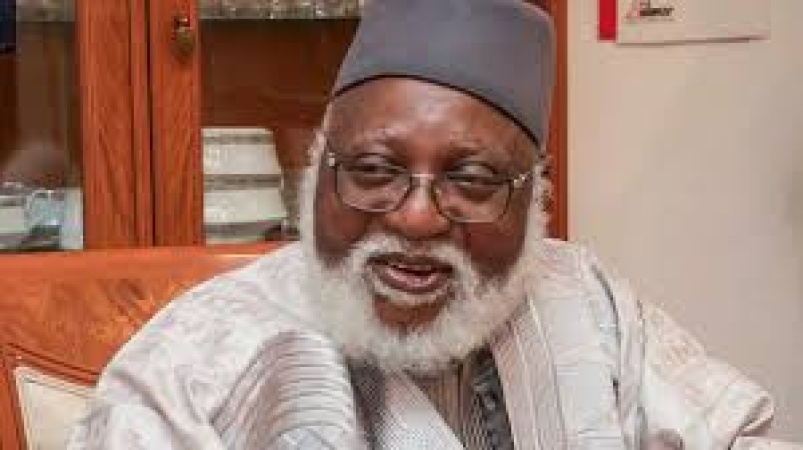
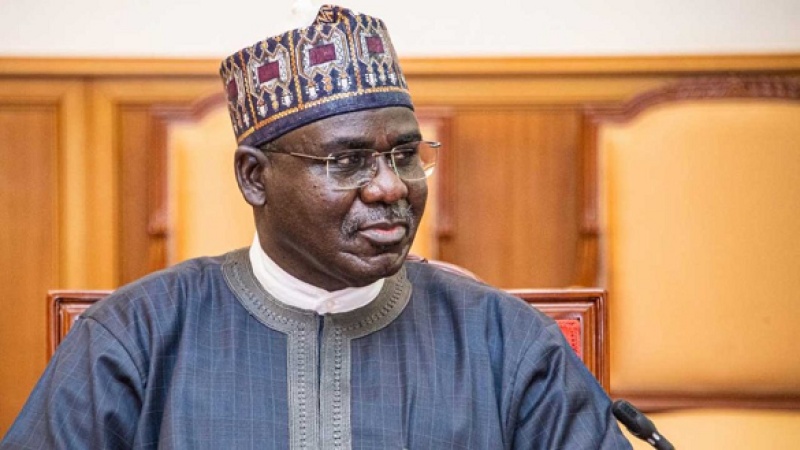
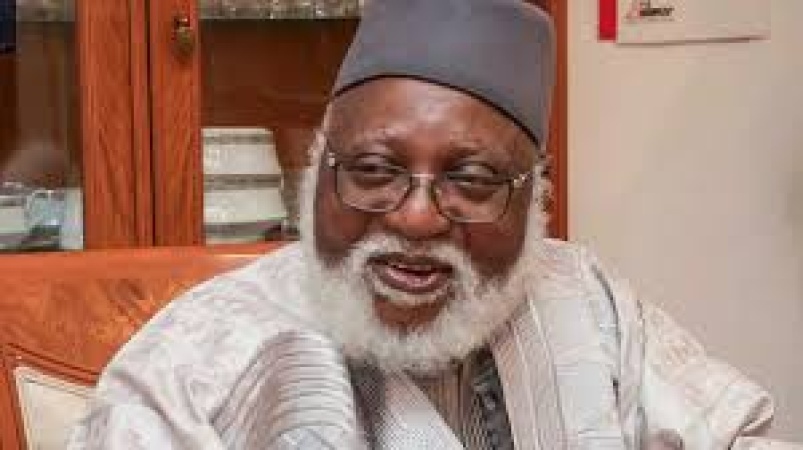
Ex-Head of State, Gen Abdulsalami Abubakar retd
Former Head of State, General Abdulsalami Abubakar (retd.), has revealed that he made efforts to secure the release of Chief Moshood Kashimawo Olawale (MKO) Abiola long before he became Nigeria’s leader in 1998, despite the risk of being perceived as disloyal to the late General Sani Abacha.
Abdulsalami also disclosed that the whereabouts of the presumed winner of the June 12, 1993 presidential election were so closely guarded during the Abacha years that even senior officials of the regime, including then Chief of General Staff, Lt.-Gen. Oladipo Diya, did not know where he was being held.
The revelations are contained in Call of Duty: An Autobiography of Gen. Abdulsalami Alhaji Abubakar, one of the three books unveiled in Abuja on Saturday during celebrations marking the former Head of State’s 84th birthday.
In the book, Abdulsalami said he quietly engaged some leaders of the National Democratic Coalition (NADECO) after Abiola’s arrest in 1994 in an attempt to find a way out of the political crisis triggered by the annulment of the June 12 presidential election.
“At this point, I need to recount that after Abiola was arrested in 1994, I had, against the grain, made efforts to get him released at the risk of being deemed disloyal by Abacha,” he wrote.
The former military ruler said his efforts were largely unknown to the public because of the sensitive political environment at the time and the perception that any move in support of Abiola could be interpreted as opposition to the Abacha administration.
According to him, one of the most striking aspects of Abiola’s detention was the secrecy surrounding his location, a situation that underscored the tightly controlled nature of decision-making within the military government.
“Before I became Head of State, I didn’t know where Abiola was being detained. Even General Diya, who was second-in-command to Abacha, had no idea where Abiola was being held.
“They kept moving him from one detention centre to another”, Abubakar revealed.
The disclosure appears to reinforce long-held claims that despite his closeness to Abacha and his position within the military hierarchy, Abdulsalami remained outside the inner circle that controlled key political and security decisions during the period.
According to him, Abiola’s detention conditions were so restrictive that members of his family were denied access to him throughout the period, while only his personal physician, Dr. Ore Falomo, was allowed limited contact.
“His family never saw him. It was only his personal physician, Dr. Ore Falomo, that had access to him,” he wrote.
Abubakar said one of his earliest decisions after assuming office following Abacha’s death in June 1998 was to ensure that Abiola’s family was granted access to him.
The move, he revealed, was opposed by some members of his administration who remained uncomfortable with changing the policy surrounding Abiola’s detention.
“When I became Head of State, I insisted that his family must be granted access to him, despite strong opposition from some members of my government,” he wrote.
The former Head of State said many Nigerians failed to appreciate the extent of the internal power struggles he faced after assuming office, noting that becoming leader of the country did not automatically translate into total control of the military and government machinery.
“What many people outside government did not know was that even though I was now in power, there were still different interests in the military and in government.
“I was new in office and needed to consolidate my hold on the system. I needed to be careful and calculated with my actions”, he explained.
Abubakar further stated that despite his access to Abacha during his years in office, he was never part of the core power structure that controlled critical decisions.
“Despite my access to Abacha when he was in power, I was still effectively an outsider in his government.
“Becoming Head of State did not mean I could dissolve the power centres or displace entrenched interests overnight”, he wrote.
The former military ruler said arrangements were subsequently made for members of Abiola’s family to visit him in detention after he assumed office.
According to him, the family travelled to Abuja at his invitation, but internal disagreements prevented all members from seeing the detained politician together.
“One group saw him on the first day, July 6, 1998. The other group was to see him the next day, July 7,” he wrote.
However, that second meeting never took place.
“That was not to be,” Abubakar stated, in an apparent reference to Abiola’s death on July 7, 1998.
Abiola died in custody less than a month after Abacha’s death and shortly after Abdulsalami assumed office, bringing an abrupt end to hopes that the political crisis surrounding the annulled June 12 election could be resolved through his release.
The former Head of State’s account provides a rare insider perspective into the final weeks of Abiola’s detention and the complex web of interests, secrecy and power struggles that characterised one of the most contentious periods in Nigeria’s political history. (The Nation)