Updating your news feed...
NEWS EXPRESS is Nigeria’s leading online newspaper. Published by Africa’s international award-winning journalist, Mr. Isaac Umunna, NEWS EXPRESS is Nigeria’s first truly professional online daily newspaper. It is published from Lagos, Nigeria’s economic and media hub, and has a provision for occasional special print editions. Thanks to our vast network of sources and dedicated team of professional journalists and contributors spread across Nigeria and overseas, NEWS EXPRESS has become synonymous with newsbreaks and exclusive stories from around the world.


















Loading banners
Loading banners...

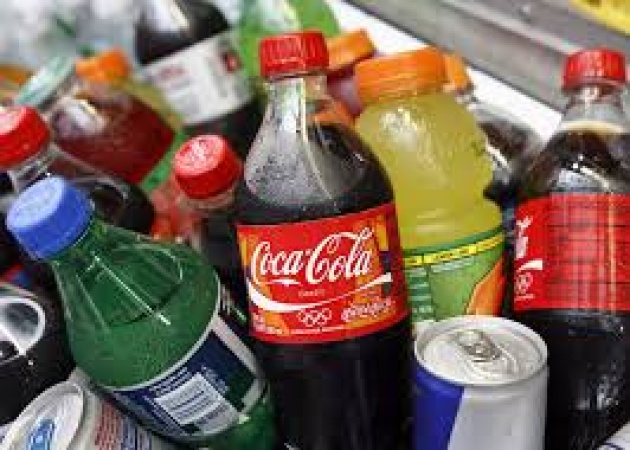
Sugar-sweetened drinks under a new excise duty regime
…introduces retail pricing to fund healthcare challenges
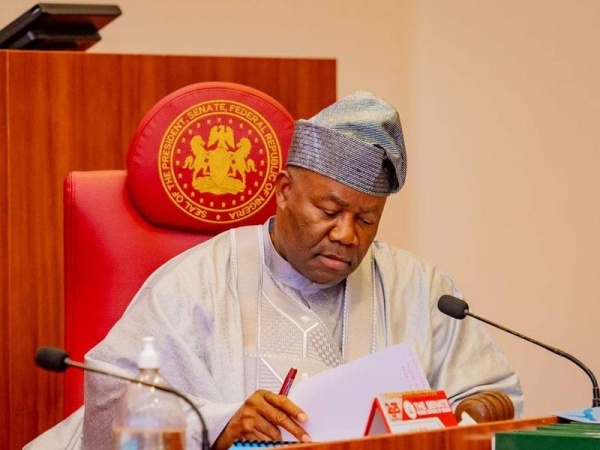
Manufacturers of sugar-sweetened carbonated drinks in the country are to pay higher taxes to the government, with the rates now to be determined by the retail prices of their products, according to a new bill passed by the Senate.
Prior to the new legislation, a flat rate of N10 per litre was charged as tax on sugar-sweetened drinks.
However, under the new bill, which has just passed its third reading in the Senate, manufacturers will be taxed according to the current retail prices of their beverages.
Part of the new revenue generated will be spent on the provision of healthcare services, including health promotion and disease prevention programmes.
Details of the committee report on the bill, obtained by the Nigerian Tribune, stated that “a levy calculated as a percentage of the retail price” will be charged “in order to ensure that the tax remains effective and responsive to inflation.”
The bill, which seeks to amend the existing Customs and Excise Tariffs, etc. (Consolidation) Act 2004, bears the long title: “A Bill for an Act to Amend the Customs, Excise Tariffs, etc. (Consolidated) Act 2004 to Replace the Fixed Ten Naira (N10) Per Litre Excise Duty on Non-Alcoholic, Carbonated Sugar-Sweetened Beverages with a Percent Levy Per Litre of the Retail Price, and to Provide for the Earmarking of a Portion of the Revenue Generated Therefrom for Health Promotion and Disease Prevention Programmes; and for Related Matters.”
The report was presented to the Senate by its Joint Committee on Finance and Customs/Excise and Tariffs.
As an alternative to the existing N10 flat tax per litre on sugar-sweetened, non-alcoholic beverages, the Senate asked the Minister of Finance to “provide a suitable percentage levy per litre of the retail price on non-alcoholic, carbonated or sugar-sweetened beverages in line with global best practices.”
According to the Senate, the move is aimed at reducing sugar consumption and, by extension, curbing the prevalence of sugar-related diseases such as diabetes and hypertension, among others.
“Excise taxation on sugar-sweetened beverages should be strengthened as part of a broader public health strategy aimed at reducing excessive sugar consumption and preventing non-communicable diseases,” the report stated.
It added that “a portion of the revenue generated from excise duties on products associated with health risks should be earmarked to support national programmes for the prevention and management of non-communicable diseases.”
Among the major concerns highlighted in the report are diabetes, obesity, hypertension and cardiovascular diseases, “many of which are associated with unhealthy dietary patterns and excessive sugar consumption.”
According to the Senate, Nigeria’s healthcare system remains underfunded and “heavily dependent on out-of-pocket payments,” exposing many citizens to financial hardship and limiting access to essential healthcare services. The bill seeks to address this challenge through the revised tax regime.
The Senate also recommended that the government explore tax structures that better reflect sugar content or retail prices “in order to encourage manufacturers to reformulate products and reduce sugar levels.”
The new law places higher expectations on the Nigeria Customs Service to surpass the N108.6 billion generated for the government from sugar-sweetened beverages between 2022 and September 2025. (Nigerian Tribune)