Updating your news feed...
NEWS EXPRESS is Nigeria’s leading online newspaper. Published by Africa’s international award-winning journalist, Mr. Isaac Umunna, NEWS EXPRESS is Nigeria’s first truly professional online daily newspaper. It is published from Lagos, Nigeria’s economic and media hub, and has a provision for occasional special print editions. Thanks to our vast network of sources and dedicated team of professional journalists and contributors spread across Nigeria and overseas, NEWS EXPRESS has become synonymous with newsbreaks and exclusive stories from around the world.


Loading banners
Loading banners...

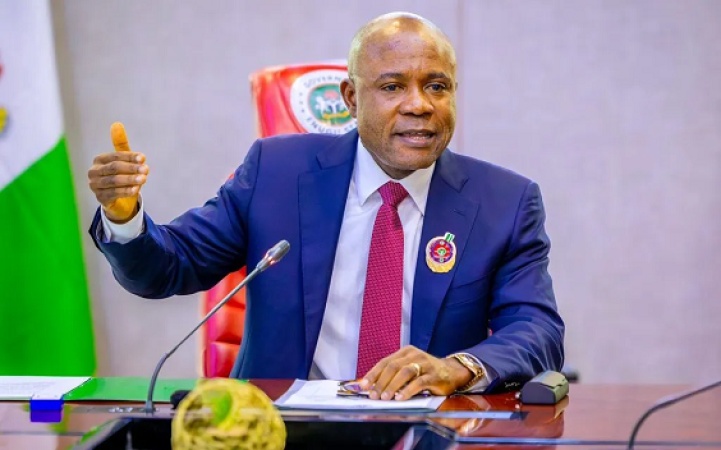
Enugu State Gov Peter Mbah
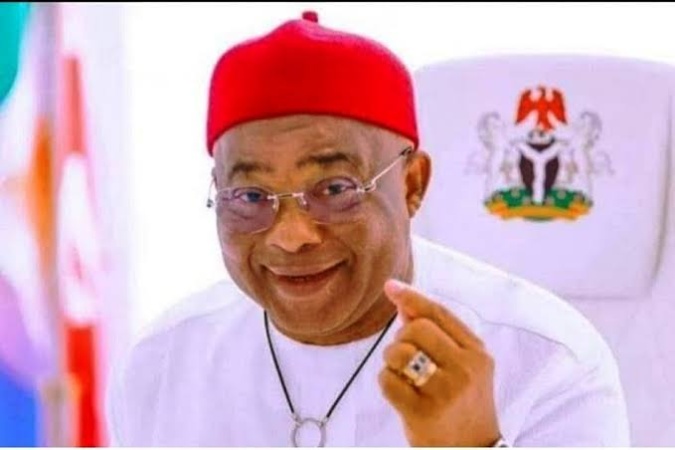
By almost every conventional measure, Enugu State governor Peter Mbah enters the 2027 race as the clear favourite. Since taking office in May 2023, he has transformed the state’s governance narrative. Long neglected roads are being rebuilt. The Smart Green Schools initiative has drawn national attention. New primary healthcare centres have appeared across the state, alongside investment in transport, security, water and economic reform.
That record has won him endorsements from traditional rulers, political leaders and business groups across Enugu’s three senatorial districts. Even some former critics concede the pace of project delivery has been impressive.
On paper, then, Mbah appears set for a comfortable second term. Yet elections are rarely won on paper alone. Nigerian politics has repeatedly shown that infrastructure does not automatically secure re-election. Public perception, economic pressure, internal party rivalries and opposition strategy often matter just as much as visible projects. Governors with strong records have found themselves in tighter contests than expected, having underestimated issues that seemed minor until the campaign gathered pace.
For Mbah, the task may not be persuading voters that he has worked. It will be convincing them that visible transformation has actually improved their daily lives. That distinction could define the election. Perhaps no decision has reshaped Enugu’s political landscape more than Mbah’s move from the Peoples Democratic Party, on whose platform he won in 2023, to the ruling All Progressives Congress. Strategically, the logic is clear. Alignment with the centre strengthens access to federal institutions and cooperation on major projects, while weakening what had begun to look like an organised opposition within the state.
But the move carries risk. Enugu has been a reliable PDP stronghold for over two decades, while the APC has struggled to build deep support across the south east. Mbah will need to defend not only his record but the rationale for the switch itself. His supporters argue that development should outweigh party labels, and that closer ties to Abuja unlock benefits for residents. Opponents are likely to argue that personal goodwill towards the governor will not erase broader scepticism towards his new party.
A further paradox awaits him. Visible development does not always translate into political comfort. Few dispute that Enugu has seen an unprecedented wave of infrastructure investment, yet voters often judge government less by what has been built and more by whether their own circumstances have improved. Inflation and rising living costs are largely national problems, but state governors frequently absorb the political consequences regardless.
The opposition is unlikely to campaign against roads and schools directly. It is more likely to focus on the everyday struggles of traders, workers and families, and ask whether capital projects have reached ordinary kitchen tables.
Mbah has pushed hard to increase internally generated revenue, arguing that sustainable development cannot depend solely on federal allocations. But the reforms have proved politically sensitive. Traders, landlords and business owners have complained about rising charges and land related levies. The government eventually reversed some of these, reducing certain fees and suspending daily levies on small traders, a move supporters call responsive governance and critics call an admission that the original policy caused needless hardship.
The administration has since introduced a mandatory 150 million naira advertising permit fee for political parties and candidates ahead of the 2026 local elections and 2027 general election, a policy opponents call exclusionary and which is already being challenged in court over its constitutionality.
Few 2023 campaign pledges captured public imagination like Mbah’s promise to restore regular piped water within his first 180 days. That target proved far more ambitious than the state’s infrastructure allowed. Officials point to major investment in the Ajali, Ninth Mile and Oji River water schemes, and insist daily production has risen substantially. The opposition continues to focus on the missed deadline. For many residents, the calculation is simple. They care less about engineering statistics than whether water actually reaches their taps. If more households gain reliable supply before the election, it could become one of the government’s strongest achievements. If not, critics will call it a broken promise.
The Smart Green Schools programme, aiming to build a technologically advanced school in each of Enugu’s 260 wards, remains the administration’s signature project, but ambition invites scrutiny. Opposition figures question whether every school will be completed, staffed and equipped on schedule, and isolated complaints have emerged about construction quality after heavy rain, though the government says defects are being corrected. The real political test will not be the number of commissioning ceremonies, but whether children are learning in properly functioning schools.
Mbah also faces quieter pressure closer to home. Several respected figures from his own Enugu East district, including Chief Chinyeaka Ohaa, Chief Uche Nnaji and Senator Gilbert Nnaji, have either declared interest in the governorship or been linked with it. None currently rivals Mbah’s strength individually, but together they risk projecting an image of internal division that opposition parties could exploit. One Enugu East stakeholder, Chief Amobi Edeani, has already urged local politicians to rally behind Mbah rather than risk fragmenting their zone through early positioning.
Enugu North has been the governor’s most enthusiastic base, with traditional rulers and figures such as former Ohanaeze Ndigbo president Chief John Nnia Nwodo pointing to tangible achievements as the foundation of their support. Yet even there, pockets of dissatisfaction persist, including anger over the demolition of Ogige Market and concerns about livelihoods, a reminder that elite endorsement does not always reflect grassroots sentiment.
Critics argue the administration leans too heavily on consultants and experts from outside the state, and that greater involvement of local professionals would deepen public ownership of projects and boost the state’s economy. The government rejects any suggestion of bias, insisting appointments are based purely on competence, with aides describing this approach as cosmopolitan meritocracy rather than favouritism towards outsiders. Whether this becomes a genuine campaign issue is unclear, but it reflects a wider debate about who benefits from the state’s transformation.
The largest uncertainty remains the opposition itself. Currently split across several parties and personalities, its fragmentation clearly benefits Mbah. Nigerian political history offers plenty of examples of divided oppositions eventually finding common cause. Should rival politicians unite behind a single candidate focused on household economics, taxation, water and inclusion, the contest could tighten considerably. For now, that remains speculation rather than certainty, but experienced incumbents plan for such possibilities regardless.
Mbah enters 2027 with advantages few first term governors enjoy: visible development, incumbency and growing elite backing. Those strengths are real. So are the unresolved questions. His opponents will struggle to dismiss the roads, schools and hospitals now dotting the state. Their stronger strategy will be to focus on what those projects have not yet fixed: the cost of living, the burden of taxation, water still missing from many taps, and whether Enugu’s transformation has truly reached the people meant to feel it. (The Sun)