ADAD
ADAD
Updating your news feed...
NEWS EXPRESS is Nigeria’s leading online newspaper. Published by Africa’s international award-winning journalist, Mr. Isaac Umunna, NEWS EXPRESS is Nigeria’s first truly professional online daily newspaper. It is published from Lagos, Nigeria’s economic and media hub, and has a provision for occasional special print editions. Thanks to our vast network of sources and dedicated team of professional journalists and contributors spread across Nigeria and overseas, NEWS EXPRESS has become synonymous with newsbreaks and exclusive stories from around the world.


























Loading banners
Loading banners...

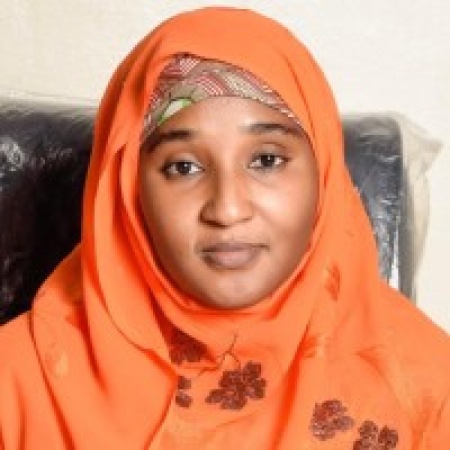
Minister of State for Education, Professor Suwaiba Said Ahmad
The Federal Government has commenced the upgrading of colleges of education across the country with modern digital tools as part of efforts to strengthen teacher training, improve digital literacy, and enhance access to quality education.
The Initiative began with the official handover of Information and Communication Technology (ICT) equipment and materials to 15 Federal and State Colleges of Education drawn from the six geopolitical zones of Nigeria.
The Intervention, facilitated through support from the Government of Japan and the UNESCO International Institute for Capacity Building in Africa (IICBA), is being implemented under the project, “Capacity-building of Teachers to Promote Continuous and Inclusive Access to Safe and Quality Education for Girls in West Africa.”
Speaking during the handover ceremony in Abuja on Tuesday, the Minister of State for Education, Professor Suwaiba Said Ahmad, described the intervention as a major milestone in the Federal Government’s drive to modernise teacher education and promote inclusive learning.
She noted that the project, which covers Burkina Faso, Cameroon, Chad, Mali, Mauritania and Nigeria, aligns with the Federal Ministry of Education’s priorities under the Renewed Hope Agenda, particularly in the areas of equity, quality education, digital transformation and inclusive access to learning.
According to the minister, teachers remain central to the success of any education reform, stressing that no education system can thrive without well-trained, motivated, and digitally empowered educators.
“It is encouraging that within the framework of this project, UNESCO-IICBA, in close consultation with the Federal Ministry of Education and beneficiary institutions, has acquired ICT equipment aimed at upgrading institutional facilities with modern digital tools,” she said.
Professor Ahmad explained that the equipment would significantly enhance both pre-service and in-service teacher training by expanding access to digital learning content, promoting innovative teaching methods and supporting more inclusive and learner-centred classroom practices.
The 15 beneficiary institutions are Federal College of Education, Kontagora; Federal College of Education, Zaria; Federal College of Education (Technical), Gombe; Federal College of Education, Yola; Federal College of Education (Technical), Asaba; Federal College of Education (Special), Oyo; Federal College of Education (Technical), Umunze; College of Education, Zuba; Isaac Jasper Boro College of Education; Enugu State College of Education (Technical); Sa’adatu Rimi College of Education, Kumbotso-Kano; Adamu Augie College of Education, Argungu; Shehu Shagari College of Education, Sokoto; Adamawa State College of Education, Hong; and Taraba State College of Education, Zing.
The equipment handed over includes 65 laptop computers with cases, 71 tablets, four desktop computers, five interactive smart boards, 19 all-in-one desktop computers, 14 projectors, 15 printers, and 15 backup hard drives.
The minister noted that the intervention would contribute significantly to the development of digitally competent teachers capable of meeting the demands of 21st-century education.
She added that the event also featured consultations and training sessions on safe school learning environments, infrastructure security, the Safe School Declaration, and the use of ICT to promote inclusive and gender-responsive teaching.
“Safe schools are essential to achieving quality education, especially for girls and vulnerable learners. We must continue to ensure that our institutions remain secure, supportive and conducive spaces for teaching and learning,” she stated.
Professor Ahmad further highlighted the ministry’s priority areas, including Technical and Vocational Education and Training (TVET), Science, Technology, Engineering and Mathematics (STEM), Out-of-School Children Education, girl-child education, quality assurance, data management and digitisation.
She also disclosed ongoing initiatives aimed at empowering female teachers and school leaders through mobile-based learning platforms, as well as programmes targeted at integrating out-of-school children into formal education.
Speaking at the event, the Chargé d’Affaires of the Embassy of Japan in Nigeria, Hitoshi Kozaki, reaffirmed Japan’s commitment to supporting educational development in Nigeria and across Africa.
“I really hope that this project makes a difference for the future and the institutions that we have here,” Kozaki said.
He emphasised that Japan’s development cooperation with African countries is based on partnership, mutual respect and local ownership, rather than imposing external solutions.
Kozaki expressed confidence that the ICT equipment would strengthen teacher preparation and create more learning opportunities, particularly for girls.
Also speaking, Director of UNESCO-IICBA, Dr. Quentin Wodon, commended Nigeria’s commitment to education reforms and its active participation in international education programmes.
He stressed the need to encourage more women to assume leadership positions in schools, noting that evidence from several countries shows positive educational outcomes where women occupy leadership roles.
“If there was one thing I would love Nigeria to do, it is to see whether we could launch some kind of programme to encourage more women to become school leaders. It is really important,” Wodon said.
The Federal Ministry of Education expressed appreciation to UNESCO-IICBA, the Government of Japan, the African Union and other development partners for their support, urging beneficiary institutions to make effective and sustainable use of the facilities to improve teacher training and learning outcomes across the country. (Nigerian Tribune)