Updating your news feed...
NEWS EXPRESS is Nigeria’s leading online newspaper. Published by Africa’s international award-winning journalist, Mr. Isaac Umunna, NEWS EXPRESS is Nigeria’s first truly professional online daily newspaper. It is published from Lagos, Nigeria’s economic and media hub, and has a provision for occasional special print editions. Thanks to our vast network of sources and dedicated team of professional journalists and contributors spread across Nigeria and overseas, NEWS EXPRESS has become synonymous with newsbreaks and exclusive stories from around the world.







Loading banners
Loading banners...

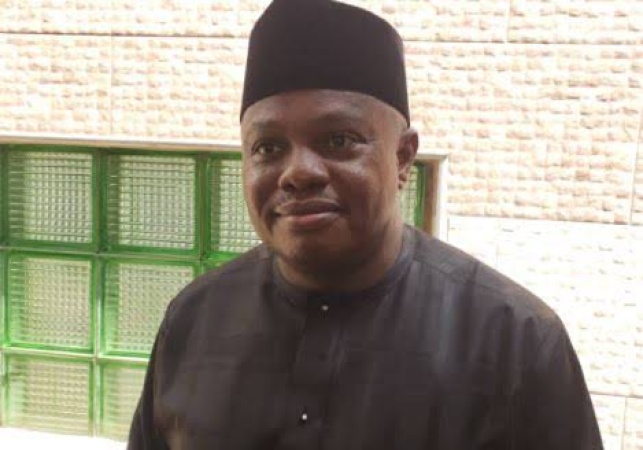
By ANTHONY UBANI
There is a difference between preparing for rain and building your house inside a flood. What the Tinubu administration has done with the 2026 budget is the latter. It has set aside N135.22 billion for post-election litigation. Not for roads. Not for hospitals. Not for the 20 million out-of-school children roaming our streets. But for lawsuits. For courtroom battles. For the legal chaos that follows a broken election.
Let that number sit with you for a moment. N135.22 billion. That is not a typo. It is a confession.
This allocation, buried like a shameful secret inside the Service-Wide Votes of the 2026 Appropriation Bill, is officially tagged “Electoral Adjudication and Post-Election Provision.” It did not appear in the original draft of the budget. It materialised later, quietly, as if someone hoped nobody would notice. But we noticed. And we must talk about what it means.
Here is the first problem. In 2023, Nigeria spent ?3.08 billion on election litigation and legal defence.
The new provision represents a jump of nearly 4,300 percent. Four thousand, three hundred percent. What exactly does the government know about the 2027 elections that justifies this astronomical leap? What kind of electoral Armageddon is it anticipating?
The second problem Is where the money hides. Service-Wide Votes are the dark alley of the national budget. They are not tied to any specific ministry, department, or agency. They are the government’s contingency ATM, the same mechanism used to finance a $100 million presidential jet in 2024. This is not transparency. This is a black box. And inside that black box, the administration has stashed enough money to build three world-class teaching hospitals.
The third problem Is the message it sends. In any democracy worth its name, elections are decided at polling units. Voters choose. Ballots are counted. Winners are declared. Losers concede. That is the ideal. But in Nigeria, elections are now fought on three battlegrounds: the primary, the polling booth, and the courtroom.
By budgeting N135 billion for the third battlefield, the Tinubu administration is telling us, in advance, that it expects the first two to fail. It is budgeting for dysfunction. It is planning for fraud.
Let us look at the numbers properly. INEC says it needs N873.78 billion to conduct the 2027 general elections. It also wants N171 billion for its 2026 operations. On top of that, the commission is set to receive a statutory transfer of N1.01 trillion. The total proposed election spending is heading toward N2 trillion. And now, ?135 billion more for litigation. The 2023 elections cost N313.4 billion. The 2027 elections could cost nearly three times that. For what? For an exercise that produces the same outcome: disputed results, angry citizens, and judges deciding who governs. This is not governance. This is an industry. And the Nigerian taxpayer is the unwilling investor.
Femi Falana, the senior advocate and human rights lawyer, has done the math. He says INEC has legal departments in all 36 states and the FCT. He says INEC does not pay more than N3 million per brief, even to a senior advocate, because the commission is supposed to be neutral.
In 2023, INEC was joined in fewer than 3,500 cases. Falana estimates that altogether, INEC may not spend up to N20 billion on election legal battles. So, why N135 billion? Who gets the difference? Which lawyers? Which law firms? Which political godfathers?
These are not cynical questions. They are necessary ones. The Independent Corrupt Practices Commission once reported that lawyers paid an estimated N9.45 billion in bribes to judges between 2018 and 2020.
In this environment, a N135 billion litigation slush fund is not just wasteful. It is dangerous. It is an open invitation to the very corruption that has turned our judiciary from the last hope of the common man into a marketplace for the highest bidder.
Remember the words of the late Supreme Court Justice Kayode Eso. After the rigged 2007 elections, he lamented the rise of “billionaire judges” who had polluted the temple of justice. That was nearly two decades ago. Today, we are not fixing the system. We are funding it.
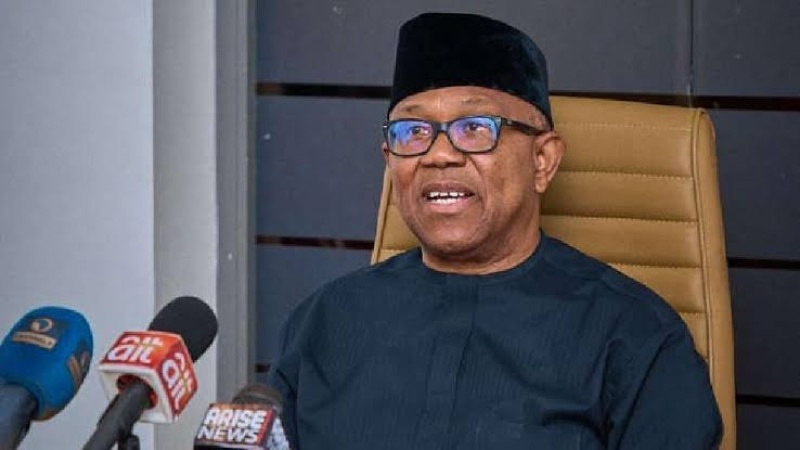
The oppositeion and civil society have spoken. The Peoples Democratic Party says this budget means INEC is anticipating that it will not do well. The African Democratic Congress says if elections are free and transparent, litigation should be minimal. Peter Obi has criticised the allocation and called for investment in education instead. Civil society groups like CHRICED and ActionAid Nigeria have condemned it as insensitive, irresponsible, and a profound misplacement of national priorities.
But the most devastating criticism comes from Professor Pat Utomi. He asked a simple question: why should the Federal Government budget for election litigation at all? Elections are contested by individual candidates, not by the government. If the budget is for INEC, it should be in INEC’s budget. If it is for political parties, it should be paid for by those parties. If it is for the president and his allies to defend stolen mandates, then it is daylight robbery of public funds.
And that is the heart of this matter. This administration is not budgeting for free, fair, and credible elections. It is budgeting for the opposite. It is budgeting for confusion, anger, and lawsuits. It is admitting, with naira and kobo, that it does not intend to win the confidence of the people. It intends to win the patience of the courts.
Think about what N135 billion could do instead. It could fund the construction of 2,700 primary health care centres at N50 million each. It could equip 13,500 schools with learning materials. It could provide scholarships for 27,000 university students. It could feed millions of families suffering under inflation that has pushed food prices beyond the reach of the average Nigerian. But no. It will go to lawyers. To briefs. To appeals. To the endless technicalities that delay justice while politicians cling to power.
There is a better way. And it is not complicated.
First, the National Assembly must reject this provision entirely. Not reduce it. Reject it. There is no justification for a N135 billion litigation fund when INEC already has internal legal capacity and when credible elections should produce minimal disputes. But a national assembly that aligned with the executive branch to intentionally pass a flawed 2026 electoral act that opens the floodgates of fraud, opacity, confusion and eventual litigations cannot now be expected to be part of the solution.
Second, INEC must be compelled to conduct elections that do not require a war chest to defend. That means mandatory real-time electronic transmission of results from polling units to a public server. It means biometric verification that cannot be bypassed. It means making the voter register available for public scrutiny before election day. It means punishing electoral officials who connive with politicians to rig votes. These reforms cost money, yes. But they cost far less than N135 billion in lawsuits.
Third, election litigation must be reformed. Presidential petitions should originate and terminate at the Supreme Court. Governorship disputes should end at the Court of Appeal. The current system of endless appeals, stays of execution, and technical delays is designed not for justice but for power retention. Kenya concluded its 2022 presidential election petition within weeks. Nigeria drags the same process for months, sometimes years, leaving governance in limbo and legitimacy in tatters.
Fourth, no public funds should be used to finance the legal battles of political parties or individual candidates. If you want to contest an election, hire your own lawyers. The government’s job is to provide a level playing field, not to pay for the ambulance after it has driven over the players.
Fifth, the Service-Wide Votes must be abolished or radically reformed. It is a slush fund. It is opaque. It has been abused before, and it will be abused again. A democracy cannot function when billions of naira are moved around without accountability, without oversight, and without explanation.
The Tinubu administration has a choice. It can continue down this path of budgeting for failure, treating elections as a prelude to litigation and citizens as obstacles to be managed by lawyers. Or it can choose credibility. It can choose to invest in prevention rather than cure. It can choose to respect the voter instead of preparing to fight the voter in court.
But the budget does not lie. The numbers do not lie. N135.22 billion for post-election litigation is not a plan for credible elections. It is a plan for contested elections. It is a plan for disputed elections. It is a plan for elections where the judiciary, not the citizen, determines who holds power.
And that is the most damning indictment of all. In a democracy, the people are sovereign. Their vote is sacred. But when a government budgets more for lawsuits than for the integrity of the ballot, it is telling you exactly what it thinks of your vote. It thinks your vote is a problem to be solved by a judge. It thinks your voice is a noise to be drowned out by legal technicalities. It thinks your choice is an inconvenience.
Nigerians deserve better. They deserve an election they can trust. They deserve a government that budgets for their future, not for courtroom battles over a stolen present. They deserve leaders who win at the ballot box, not lawyers who win at the tribunal.
The N135 billion litigation budget must be withdrawn. And if it is not, then every Nigerian must understand what it truly represents. It is not the price of justice. It is the price of distrust. It is the price of a democracy that has stopped believing in itself.
And that price is too high for any nation to pay.
•Anthony Ubani, a leadership, governance and democracy expert, writes from Abuja.