ADVERTISEMENT

ADVERTISEMENT

ADVERTISEMENT

ADVERTISEMENT













Loading banners
Loading banners...


NEWS EXPRESS is Nigeria’s leading online newspaper. Published by Africa’s international award-winning journalist, Mr. Isaac Umunna, NEWS EXPRESS is Nigeria’s first truly professional online daily newspaper. It is published from Lagos, Nigeria’s economic and media hub, and has a provision for occasional special print editions. Thanks to our vast network of sources and dedicated team of professional journalists and contributors spread across Nigeria and overseas, NEWS EXPRESS has become synonymous with newsbreaks and exclusive stories from around the world.
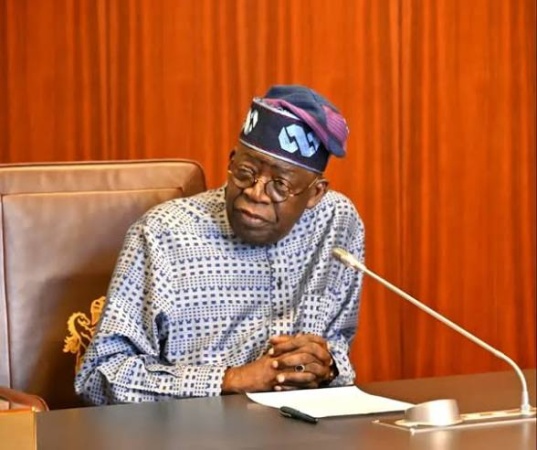
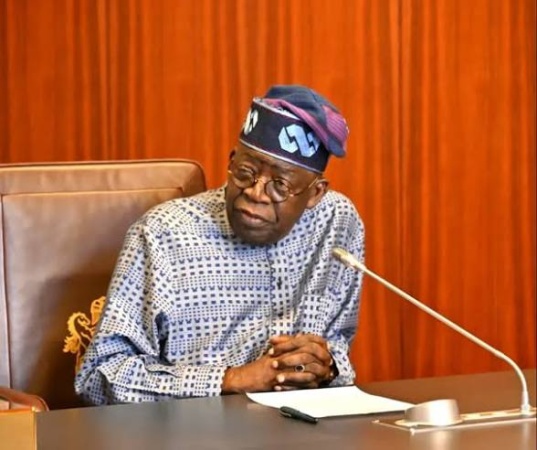
President Tinubu
By LANRE OGUNDIPE
If the preceding parts of this series have examined the structure, intelligence and economic foundations of President Bola Ahmed Tinubu’s political system, the question that now arises is more demanding and less forgiving: can that system be converted into measurable public value? Power, once acquired and stabilised, must pass a higher test. It must justify itself not through endurance alone, but through outcomes that are visible, sustained and broadly shared.
This is the problem of conversion.
Political systems are constructed for acquisition and continuity. They mobilise support, negotiate alliances and manage competing interests across cycles. Governance systems, by contrast, are judged by delivery—economic stability, institutional strength, infrastructure development and the lived experience of citizens. The transition between these two domains is neither automatic nor seamless. It requires deliberate recalibration of priorities, of methods and of expectations.
In the case of Bola Ahmed Tinubu, this transition carries particular significance. His political model, as earlier established, is structured, network-driven and sustained by resources. These attributes have proven effective in building and maintaining influence over time. The question is whether they can be redirected toward national transformation within a system as complex and layered as Nigeria’s.
The first layer of this challenge lies in the distinction between political capacity and state capacity.
Political capacity enables mobilisation. It assembles coalitions, aligns interests and sustains networks. It thrives on flexibility, negotiation and timing. State capacity, however, operates on a different logic. It is measured by the ability to design policy, implement it consistently, coordinate institutions and deliver outcomes over time.
The gap between these two capacities is where many governments encounter difficulty.
A political system may be highly effective in organising support, yet struggle to translate that support into policy outcomes. Decisions may be taken at the highest level, but their implementation becomes uneven as they move through layers of bureaucracy. This is not merely an administrative failure; it is a structural challenge. It reflects the difference between systems built for negotiation and those built for execution.
Bridging this gap requires transformation—not only of leadership, but of method.
Political systems must evolve into governance systems.
The Lagos experience is frequently cited as evidence that such evolution is possible. Through sustained expansion of internally generated revenue, reforms in tax administration and continuity in governance, Lagos developed a model of sub-national resilience. This created a platform for infrastructure development, administrative stability and policy continuity across successive administrations.
Yet the national context introduces a different order of complexity.
Nigeria is not Lagos.
At the federal level, governance must contend with macroeconomic variables that extend beyond sub-national control; currency stability, inflation management, energy pricing, national debt and global economic pressures. It must also operate within a federal structure where states possess varying capacities, interests and levels of institutional maturity.
This makes direct replication insufficient.
Adaptation becomes necessary.
What is transferable from Lagos is not the structure itself, but the underlying principles, fiscal discipline, administrative continuity and strategic planning. What is less transferable is the relative coherence of a single-state system, which is far more difficult to achieve in a federation marked by diversity and competing priorities.
This introduces a second dimension of the conversion challenge: policy discipline versus political flexibility.
Political systems benefit from adaptability. Alliances shift, strategies evolve and positions adjust in response to changing conditions. Governance, however, depends on consistency. Economic policy requires predictability. Investors respond to stable signals. Citizens require clarity in direction.
This creates a structural tension.
Too much flexibility weakens policy credibility. Too much rigidity limits responsiveness. Effective governance lies in balancing these two imperatives-maintaining strategic adaptability while ensuring policy coherence.
This balance becomes particularly visible in moments of economic reform.
For Bola Ahmed Tinubu, this is the defining test of the present phase. The political machine has demonstrated its capacity for organisation and endurance. Its intelligence has been tested across cycles. Its economic base has supported continuity.
What remains is conversion.
Can power produce value?
Can networks strengthen institutions rather than substitute for them?
Can political endurance translate into economic transformation and improved living conditions?
These are not abstract questions.
They will be answered through policy execution, economic direction and the lived experience of citizens.
Power can be organised.
It can be sustained.
It can be extended.
But governance imposes a higher demand.
It must deliver, consistently, credibly and at scale.
•Ogundipe, a Public Affairs Analyst, former President Nigeria and Africa Union of Journalists, writes from Abuja.