Updating your news feed...
NEWS EXPRESS is Nigeria’s leading online newspaper. Published by Africa’s international award-winning journalist, Mr. Isaac Umunna, NEWS EXPRESS is Nigeria’s first truly professional online daily newspaper. It is published from Lagos, Nigeria’s economic and media hub, and has a provision for occasional special print editions. Thanks to our vast network of sources and dedicated team of professional journalists and contributors spread across Nigeria and overseas, NEWS EXPRESS has become synonymous with newsbreaks and exclusive stories from around the world.














Loading banners
Loading banners...

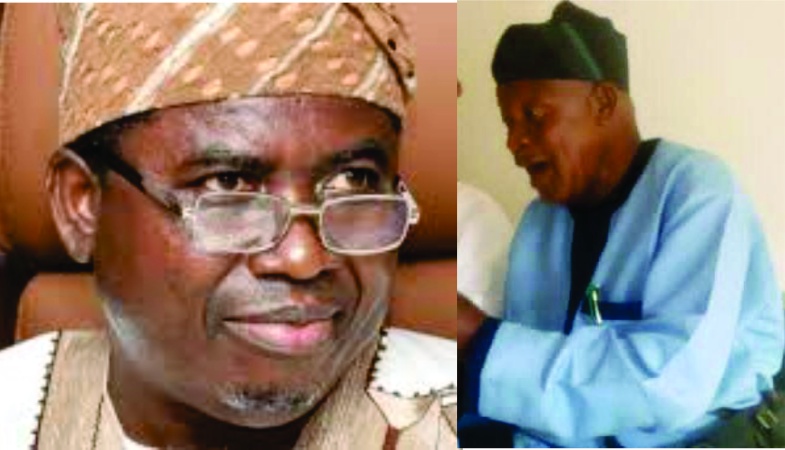
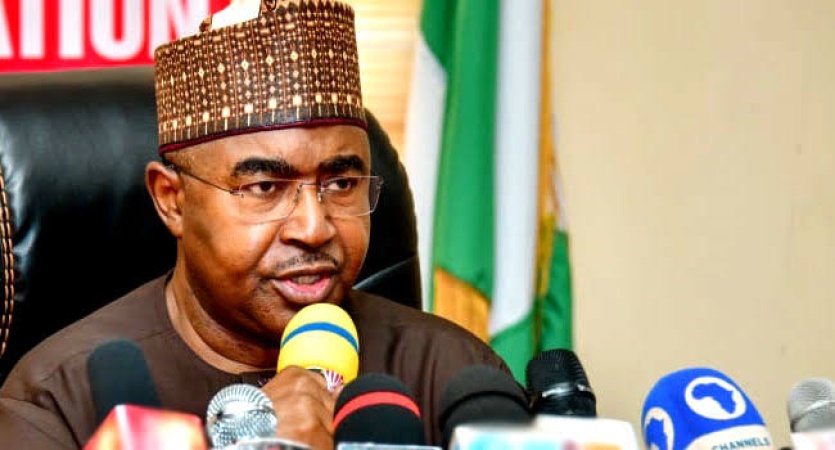
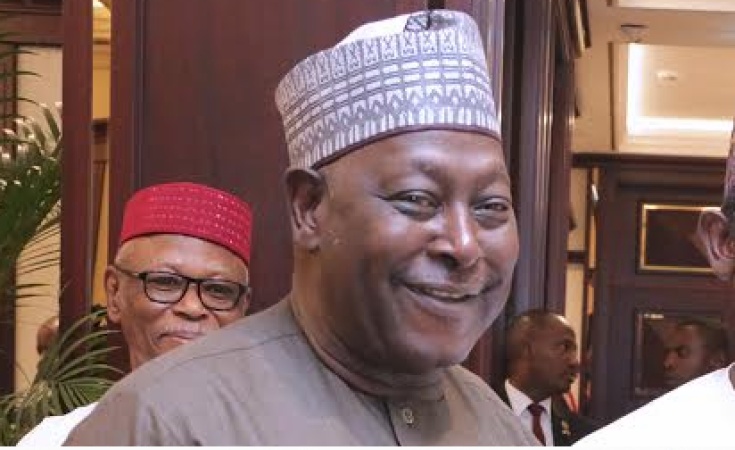
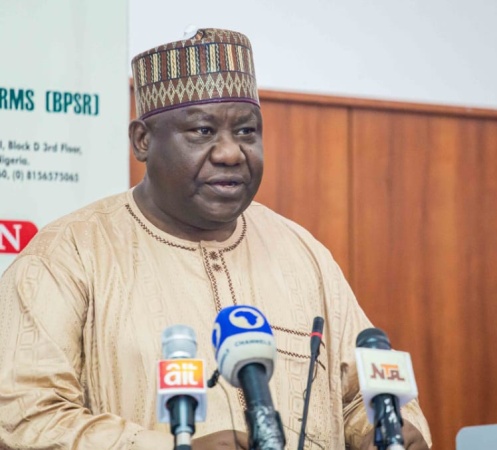
INEC Chairman, Prof Amupita, Middle Belt leader, Dr Manzo Dominique Agbir Maiwazi Abubakar
By Dr DOMINIQUE AGVIR-MANZO ABUBAKAR
President General, Middle Beltan Rally for the Nigerian Republic
Leader, Middle Belt Leadership Council Secretariat
I. PREAMBLE: THE STAKES OF MISDIAGNOSIS
The Saturday Tribune column of Saturday, 19 April, 2026 by Farooq A. Kperogi, “Amupitan’s Past Tweets Show an APC Sympathizer,” is presented as a “must read for an objective mind.” In truth it is a text that can only be read objectively if one first decodes the ideological architecture that produced it. That architecture is not new. It is the well-worn, unconscionable path of Caliphate apologetics: a political tradition in Nigeria that tradues, disingenuously lampoons, and seeks to delegitimize high-office appointees from the Middle Belt who refuse to bend the knee to caliphal thralldom and fealty.
This rejoinder therefore proceeds from four dialectical pillars.
II. FIRST PILLAR: THE BEATEN PATH OF CALIPHAL APOLOGETICS
1. The pattern: From the First Republic to the Fourth, every Middle Beltan who ascended to sensitive national office without prior obeisance to the Oligarchy has met the same script. The script has three acts: (a) magnify any fragment of personal opinion, (b) convert it into “evidence” of disqualifying bias, (c) demand resignation to preserve “trust.”
2. The sense of entitlement: This script is undergird by the presumption that national institutions are the birthright of the spoilt children of the Oligarchy. When a son of the Middle Belt holds INEC, the same voices that were silent during decades of open sectional capture suddenly discover the doctrine of “appearance of neutrality.”
3. Application to Amupitan: Professor Joash Ojo Amupitan is from the Okun sociopolitical bloc of Kogi State — a people whose civilizational posture straddles the Core Middle Belt and the South West Yoruba world, sharing language, mores, and historical experience with both. Trained at UNIJOS and a Senior Advocate of Nigeria, his social locus is the Middle Belt. The attempt to re-read three tweets from 2023 as a constitutional crisis is not jurisprudence; it is boundary policing. It tells Middle Beltans and Okun Yoruba alike: you may serve, but only if you first surrender your memory, your idiom, and your right to civic speech before appointment.
III. SECOND PILLAR: THE QUESTION OF “CHRISTIAN GENOCIDE” AND THE MIDDLE BELT FACT
Kperogi faults Amupitan for authoring a memo alleging “Christian genocide” without equally acknowledging Muslim deaths. Since when did it become a crime to acknowledge the imperative of the time to state the ground demographics of violence in the Middle Belt?
1. Context specificity: The memo in question concerned central Nigeria. In Plateau, Southern Kaduna, Benue, Taraba, Kogi West, and contiguous fringe LGAs, the empirical pattern from 2001–2025 shows: (a) systematic village displacement, (b) desecration of worship centres, (c) targeted killing of clergy and congregants. The expression “Christian genocide” is a descriptive category used by state governments, community unions, and international monitors to name a pattern.
2. Reciprocity and asymmetry: Nobody denies that Muslims too sometimes get killed in the same theatre. But dusty cobwebs obscure reality when equivalence is demanded without proportion. In the history of Nigeria — pre-Independence, First to Fourth Republic — no Muslim cleric, no Muslim, no member of the Muslim Ummah has been targeted to recant their faith on pain of death by Christian warlords or gangs. The reverse is documented across the Middle Belt. To name this is not bias; it is taxonomy.
3. Epistemic honesty: An electoral umpire from Kogi West does not cease to be a witness to his region’s sociology. To demand that he expunge that memory in the name of “neutrality” is to demand amnesia as qualification for office.
IV. THIRD PILLAR: THE HISTORICO-GEOGRAPHICAL BASE OF THE MIDDLE BELT
The pertinent base of our analysis is the geographical Middle Belt, and Kperogi’s column erases it.
1. Pre-colonial fact: The peoples now called “Northern minorities” — including the Okun of Kogi, and Tiv, Idoma, Igala, Nupe, Gbagyi, Berom, Jukun, Mumuye, Bachama, Bura, Tangale, Sayawa (Zhaar) et al. — were never conquered under any guise by the Sokoto Caliphate of Bn Fodio or the Borno Sultanate of the Kanem Mais. They clarified to the British that they never _ab initio_ subscribed to the same religio-historico-cultural nationalism as the two halves of the Islamic inheritance of the Usmaniyya and Kanem. The Okun, though Yoruba-speaking, explicitly rejected incorporation into the Caliphal orbit and retained distinct chieftaincy and civic traditions.
2. Colonial pledge: The British stated, audaciously and on record, that the Northern Region would be a secular polity showcasing the virtues of secular democracy. That pledge was the condition of inclusion.
3. Post-colonial breach: The undemocratic, thoroughly unrepresentative 1979 and 1999 Constitutions created lacunae for the proclamation of Sharia in many Northern states from 1999–2001. This was a breach of the secular compact. Within the purview of rights, both native law and civil law enforcement circumscribed the authoritative use of power. That circumscription is now observed in the breach thanks to the manipulation of religion in Nigeria called Sharia.
4. Consequence: Hence the imperative to revisit, re-evaluate, and robustly interrogate the consequences of the fall of the institutions of colonial rule. An INEC chairman from Okunland who understands this breach is not “partisan.” He is historically literate.
V. FOURTH PILLAR: TWEETS, NEUTRALITY, AND THE FALLACY OF RETROACTIVE DISQUALIFICATION
1. On “Asiwaju” and “Victory is sure”: These utterances, made in 2023 by a private citizen, are cited as disqualifying in 2025. The standard being invented is retroactive thought-crime. By this standard, no Nigerian who ever expressed a political preference before appointment can head any agency. The Republic would be ungovernable.
2. On account changes: Digital rebranding is not confession. It is not evidence of guilt. It is what millions of Nigerians do. To convert it into “obscuring prior activity” without forensics is to substitute suspicion for proof.
3. On “appearance of neutrality”: Appearance is not an autonomous constitutional category. It is a derivative of conduct in office. Amupitan’s conduct of off-cycle elections 2025–2026 is the record to judge. Kperogi cites no infraction in office. He cites memory.
4. The real test: Did Amupitan, as INEC chairman, alter BVAS rules to favour APC? Did he manipulate collation? Kperogi adduces no such evidence. The column is therefore not about electoral integrity. It is about narrowing the corridor of eligibility for Middle Beltans and Okun Yoruba.
VI. TOWARD A MIDDLE BELTAN THEORY OF THE STATE
1. Secular democracy: The Middle Beltan position is not “Christian politics.” It is constitutionalism. It is the insistence that the secular pledge of 1914–1960 be honoured.
2. _Plural security_: The Middle Beltan demand is that the Nigerian state protect all citizens without requiring them to recant identity to be safe.
3. Institutional access: Middle Beltans, including Okun, will no longer accept a convention where our sons must pass a “caliphal loyalty test” before they are deemed neutral. Neutrality is not the absence of memory. It is the presence of law.
VII. CONCLUSION: WE WILL NOT RESIGN FROM HISTORY
Kperogi calls on Amupitan to resign “to salvage what remains of public trust.” We reply: public trust is not salvaged by the ritual sacrifice of Middle Beltans on the altar of Oligarchic suspicion. It is salvaged by elections that are free, and by a polity that stops criminalizing the biography of its citizens.
Professor Joash Ojo Amupitan should not resign. He should conduct 2027 under law, and let the law, not lineage, judge him.
The Middle Belt, from the hills of Plateau to the savannahs of Okunland, did not bend the knee in 1804. It will not bend it in 2026.
•Dr Dominique Agbir-Manzo Abubakar, President General, Middle Beltan Rally for the Nigerian Republic, and Leader, Middle Belt Leadership Council Secretariat, Abuja, can be reached via 08138911757 and 07042451419.