ADAD
ADAD
Updating your news feed...
NEWS EXPRESS is Nigeria’s leading online newspaper. Published by Africa’s international award-winning journalist, Mr. Isaac Umunna, NEWS EXPRESS is Nigeria’s first truly professional online daily newspaper. It is published from Lagos, Nigeria’s economic and media hub, and has a provision for occasional special print editions. Thanks to our vast network of sources and dedicated team of professional journalists and contributors spread across Nigeria and overseas, NEWS EXPRESS has become synonymous with newsbreaks and exclusive stories from around the world.
.webp)
















Loading banners
Loading banners...

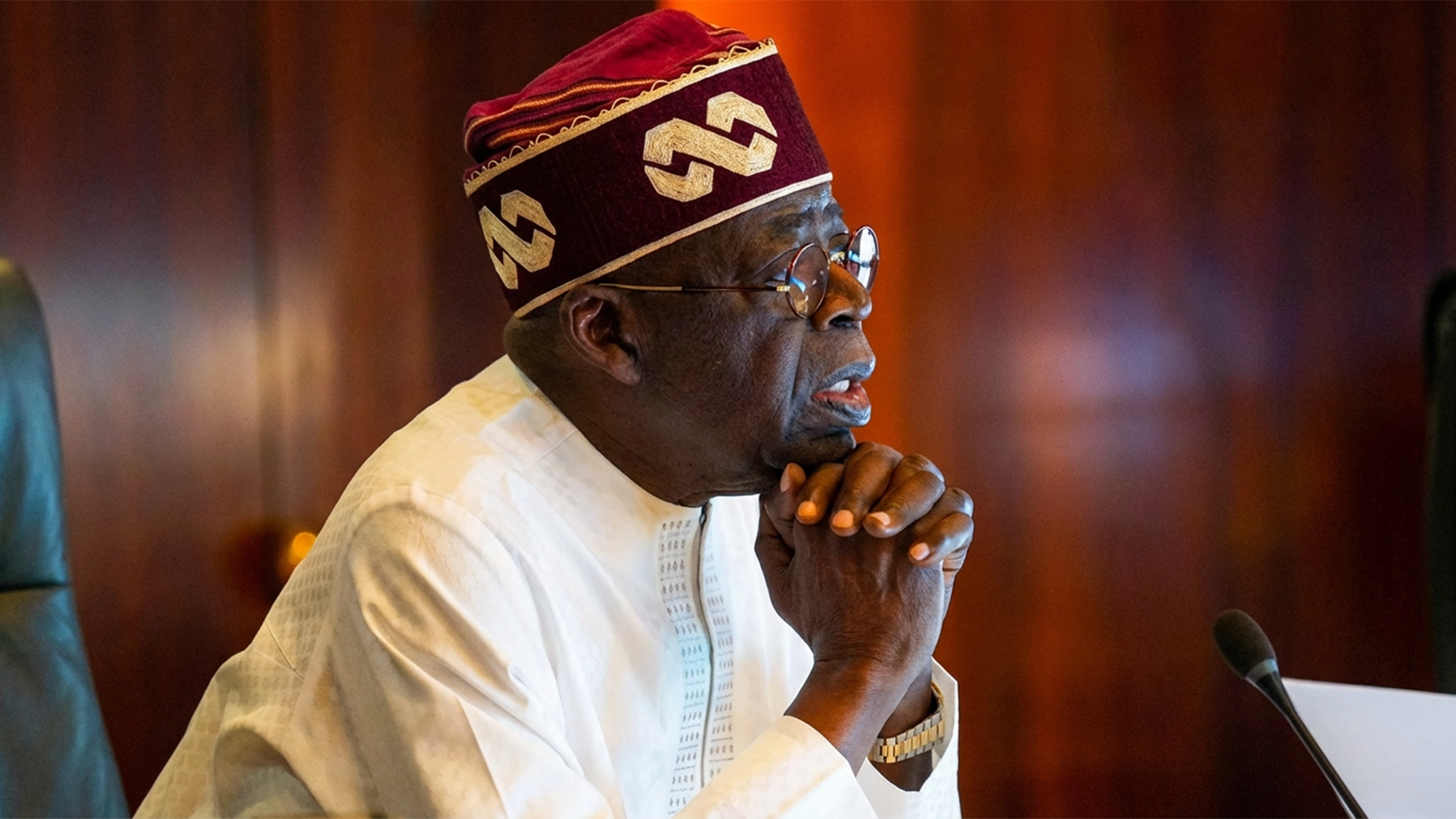
President Bola Ahmed Tinubu
Nigeria continues to dig itself deeper into a debt hole, not necessarily because it borrows more than its peers, but it earns far less than it requires to service its liabilities.
At 70.7 per cent debt service cost-to-revenue ratio (taking an average of the past three years’ figures), the Federal Government barely has much left to bridge the infrastructure gap, which is estimated at $300 million yearly.
President Bola Tinubu has made significant efforts in reducing the proportion of expenditure thrown into debt funding. In 2023, the figure, which had almost hit 100 per cent at some point during the previous administration, stood at 68 per cent. It slowed down to 60 per cent in 2024, a feat widely celebrated by the national economic managers as an outcome of the fiscal reforms.
Last year’s final budget implementation report (BIR) has not been made public. But the half-year (H1) report points to a possible uptick as the six-month debt service cost rose to N9.14 trillion or 84 per cent of the accrued revenue (N10.93 trillion).
In the past four years, covering 2022 to 2025, the government spent an average of 127 per cent of its revenue on recurrent expenditure. This suggests that it had to borrow to meet recurrent needs, which is contrary to the expectation of the Fiscal Responsibility Act (FRA), which restricts the government from borrowing strictly for capital projects.
Recurrent expenditure as a percentage of total revenue was, however, higher four or five years ago than now. In 2022, the ratio was 152 per cent. It declined to 125 per cent in the subsequent year and dropped sharply to 101 per cent in 2024, perhaps the lowest in over a decade. In H1 last year, it spiked again to 130 per cent, suggesting the government may be losing grip on fiscal control.
A country grappling with a wide fiscal deficit, as Nigeria is expected to free a significant portion of its revenue for capital expenditure, a reason the International Monetary Fund (IMF) often recommends a 30 per cent debt service to revenue ratio for developing countries.
Sadly, debt overhang may worsen in the coming years with the Debt Management Office (DMO) pegging the public debt stock at the close of last year at N159.28 trillion. The rose by 10 per cent year-on-year, which is more than double the less-than-10 per cent output growth in the same year. The disparity between the debt and gross domestic product (GDP) growth suggests that debt liability leaves a decaying effect on the economy.
The DMO update came as the International Monetary Fund (IMF) warned that worsening global debt conditions could tighten borrowing costs for countries like Nigeria, suggesting the country could spend more to service its debts.
Data released by the DMO show that the country’s debt stock continues its upward trajectory, reflecting sustained reliance on both domestic and external borrowing to fund fiscal deficits. This year’s fiscal deficit is estimated at N23.85 trillion. The country’s fiscal deficit projections are often outrun. For instance, in 2024, the last fully reported budget performance, the fiscal deficit estimates were N9.18 trillion. It was overrun by 15 per cent.
IMF: Global debt-to-GDP may spike to 100% in 2029
The IMF’s latest Fiscal Monitor, released yesterday at the ongoing IMF/World Bank Spring Meetings in Washington DC, projects global public debt to rise to 100 per cent of GDP by 2029 and drew political leaders’ attention to resurging debt sustainability risks.
Global debt had already reached about 94 per cent of GDP in 2025, with fiscal deficits averaging five per cent and interest costs climbing steadily.
The Fund attributed the rising global debt burden largely to persistent deficits in major economies such as the United States and China, warning that higher global interest rates and tighter financial conditions could spill over to emerging and developing economies.
According to the report, when the United States borrows more, global interest rates rise and strengthen the dollar, increasing the cost of servicing external debt, particularly.
A stronger dollar portends danger to countries with significant external funding needs, including Nigeria. The country also faces a heavier burden on existing dollar-denominated debts. As of December 31, the country’s total external debt was $51.86 billion, a year-on-year growth of 13.3 per cent. This implies that the country’s external debt is expanding three percentage points faster than the composite debt.
Last week, the National Assembly approved a fresh debt contract of $6 billion. The debt will be sourced from First Abu Dhabi Bank and Citibank. Earlier, the Federal Government signed a $990 million port development facility with the United Kingdom.
The near N24 trillion deficit packed into the 2026 budget is to be funded with both external and domestic debts, which will further increase the country’s foreign loan exposure.
Economists debate benchmarking borrowing on GDP
Economists have argued that as more revenue is tied up in servicing loans, critical infrastructure will remain underfunded, a possibility that will kneecap economic growth and limit the opportunity to drive development.
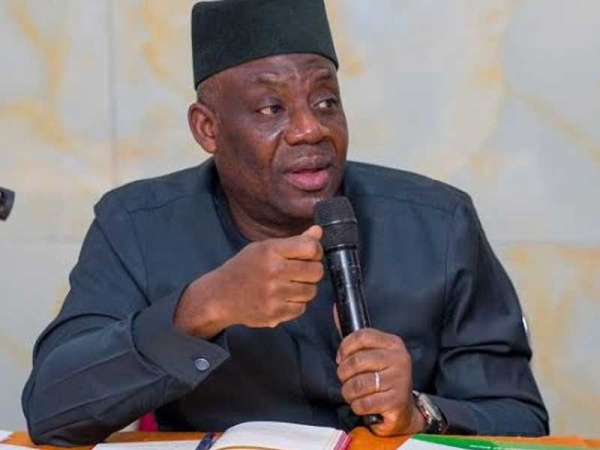
With the modest growth in the GDP last year, Nigeria’s debt-to-output ratio stands at 36 per cent, which is a far cry from the global average estimated at 94 per cent. But Executive Chairman of the Society for Analytical Economics, Nigeria, Prof. Godwin Owoh, questioned the basis for assessing Nigeria’s debt sustainability, arguing that the country lacks reliable economic benchmarks.
“There is no accurate GDP for Nigeria. What we call GDP today cannot be properly disaggregated across states. Without a credible GDP base, it becomes difficult to measure the true burden of debt or align with global projections,” he said.
He described Nigeria’s borrowing pattern as largely unstructured and weakly tied to productive returns and poor in cash flow analysis.
“The rising debt is not linked to cash flow. In a proper system, borrowing should be tied to projects that generate revenue to repay the loans. But most of our borrowings are not structured that way,” he added.
Owoh called for greater transparency in public borrowing, stressing the need for legislative scrutiny and public disclosure of loan terms.
“Debt contracts should be debated openly. Nigerians need to know the terms, conditions, and expected cash flows associated with these loans. That is how accountability is enforced,” he said.
He also urged authorities to define a clear borrowing limit for the country, noting that the absence of an established debt threshold raises concerns about sustainability.
A renowned economist, Prof. Chiwuike Uba, said Nigeria’s debt trajectory reflects deeper structural weaknesses in the economy, warning that borrowing will likely continue unless growth becomes more productive and inclusive.
“Our debt will keep growing,” he said, noting that the country’s current growth pattern is narrow and unsustainable. “What we have is largely service-driven growth that does not create enough jobs or generate stable revenue. That makes borrowing inevitable.”
He explained that while recent tax reforms may boost revenues in the short term, they are unlikely to provide a lasting solution without stronger productive capacity.
“You can only tax what is produced. If the economy is not expanding in real sectors like agriculture and manufacturing, revenue will remain weak, and the government will continue to resort to borrowing,” he added.
He also raised concerns about the quality of public spending, pointing to low capital budget implementation and what he described as misallocation of borrowed funds.
“If you look at recent budgets, less than 30 per cent of capital projects were executed in some years. Even when loans are taken, questions remain about how they are used. Are they tied to productive investments or political considerations?” he said.
He warned that structural inefficiencies, including high recurrent expenditure and weak project selection, are driving Nigeria deeper into debt without corresponding economic returns.
On the global outlook, Uba said ongoing geopolitical conflicts and supply disruptions are already pushing countries towards more borrowing, including from multilateral institutions.
“These global tensions are affecting productivity and revenues across countries. Many will turn to borrowing to cushion the shocks, and that will further tighten global financial conditions,” he said.
“We must deploy resources to productive sectors and support businesses to grow. When the economy becomes more productive, government revenue will improve, and dependence on borrowing will reduce,” he said.
The IMF, in its report, warned that countries with weak fiscal frameworks and rising debt without clear repayment strategies face increasing risks as global financial conditions tighten.
It also cautioned against inefficient fiscal practices, including poorly targeted subsidies and weak oversight of public spending, noting that such policies could worsen debt vulnerabilities.
The IMF, on its part, advised countries like Nigeria to strengthen domestic revenue mobilisation, broaden tax bases and improve fiscal discipline to reduce dependence on borrowing.
An investment banker, Tolulope Alayande, said borrowing itself is not inherently harmful when channelled into productive investments.
He stated that investment in power, transport, agriculture and industry could stimulate growth and expand the economy’s capacity to repay.
He explained: “Nigeria is not yet in a debt crisis by conventional global benchmarks. But by its own fiscal realities, it is under intense debt pressure.”
Alayande maintained that the Tinubu administration has done well, given the recklessness of the past government.
“The managers of Nigeria’s economy are carefully mending how to balance payment for yesterday’s mistakes and the needs of the people today. Yes, the citizens are right to demand lower debt, but they must not be oblivious of where we are coming from as a country,” he said. (Guardian)