
ADVERTISEMENT

ADVERTISEMENT

ADVERTISEMENT

ADVERTISEMENT








Loading banners


NEWS EXPRESS is Nigeria’s leading online newspaper. Published by Africa’s international award-winning journalist, Mr. Isaac Umunna, NEWS EXPRESS is Nigeria’s first truly professional online daily newspaper. It is published from Lagos, Nigeria’s economic and media hub, and has a provision for occasional special print editions. Thanks to our vast network of sources and dedicated team of professional journalists and contributors spread across Nigeria and overseas, NEWS EXPRESS has become synonymous with newsbreaks and exclusive stories from around the world.
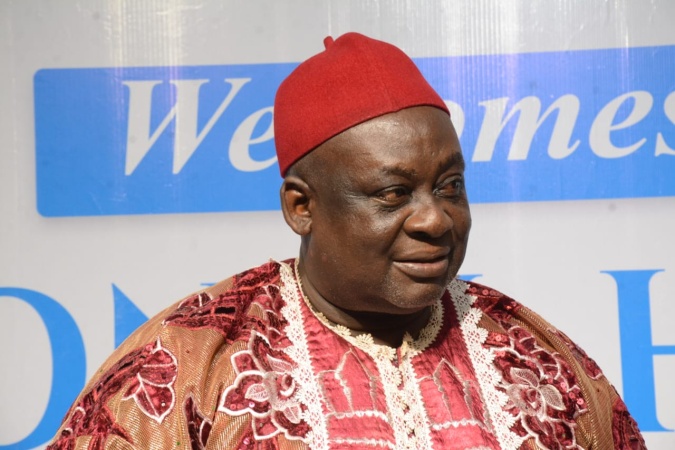
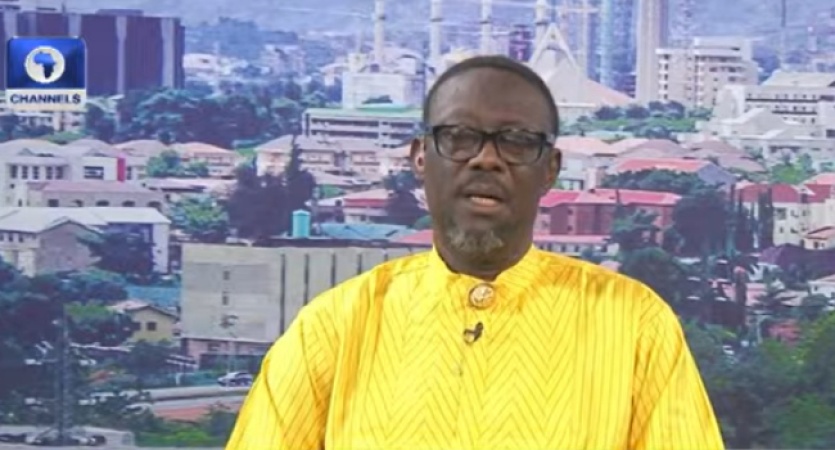
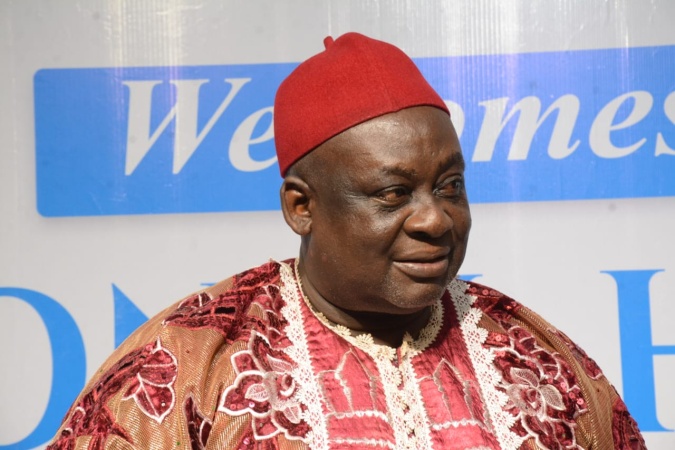
Nze Dr Okolie Amaechi Sadiq, National President National Alliance for Peace
By PETFER ANOSIKE
The National President of National Alliance for Peace in Nigeria, Nze (Dr) Okolie Amaechi Sadiq, has warned Nigerian politicians not to militarize their supporters ahead of the 2027 general election.
Speaking recently in an interview with News Express, he said that such act would not augur well for our democracy.
According to him, there is a growing concern over the increasing tendency to mobilize and arm party supporters in ways that resemble militarization.
Nze Sadiq said that while political participation is a cornerstone of democracy, turning supporters into instruments of intimidation, coercion, or violence poses a grave threat to national peace, democratic integrity, and sustainable development.
He also spoke on other burning national issues.
Excerpt:
What exactly do you mean by militarisation of party supporters ahead of the general election?
“The militarisation of party supporters refers to the recruitment, training, arming, or deployment of civilians to act in aggressive or forceful ways during political activities. This may include the use of thugs, militias, or loosely organised groups to disrupt opponents, influence voting, or assert dominance.
Such practices erode the very essence of democracy, replacing dialogue with fear, persuasion with coercion, and participation with violence. It also creates a parallel system of power where loyalty is enforced through fear rather than earned through trust and credibility. We can draw lessons from previous elections in Nigeria. In fact, Nigeria’s electoral history provides sobering examples of the consequences of political violence: The 2011 Post-Election Violence. After the 2011 presidential election, widespread violence erupted across several northern states, including Kaduna, Kano, Bauchi, Gombe, Niger, and Adamawa States. Hundreds of lives were lost, properties destroyed, and thousands displaced. Political tensions, fueled by mobilized supporters, quickly escalated into deadly communal clashes, leaving deep scars on national unity. In 2019, reports from various parts of the country indicated the presence of armed political thugs, voter intimidation, and violent clashes. States such as Rivers, Lagos, Kano, Akwa Ibom, and Kogi witnessed incidents of ballot box snatching, attacks on electoral officials, and disruptions of voting processes. In some areas, elections were marred by fear, low turnout, and loss of lives. Lastly the 2023 general elections, although there was relative improvement in some respects, incidents of voter suppression, intimidation, and violence were still recorded. In Lagos, Rivers, Imo, Kogi, Ogun, and parts of the Federal Capital Territory (Abuja), organized groups attempted to influence outcomes through force. Attacks on voters and electoral personnel further reinforced a dangerous pattern of electoral aggression.”
What kind of negative impact does this militarisation have on the nation?
“Well, the militarisation of party supporters carries far-reaching consequences: This includes loss of lives and property: Violence during elections often leads to unnecessary deaths, injuries, and destruction.
Erosion of Democratic Values: In many cases, elections become contests of strength rather than ideas, undermining credibility and legitimacy. Deepening Divisions: Political violence often takes ethnic and religious dimensions, worsening social fragmentation. Economic Setbacks: Instability discourages investment, disrupts businesses, and slows development. Normalization of Violence: Young people recruited into political thuggery may continue criminal activities beyond elections. Weakening of Institutions: Electoral bodies and security agencies become overstretched or compromised under pressure from violent actors.
How can we overcome this?”
“As far as I am concerned, elections should be a celebration of democracy, not a battleground. Political parties, candidates, and supporters must recognise that the long-term stability of Nigeria is more important than short-term electoral victories. True leadership is demonstrated not through domination, but through the ability to unite, inspire, and build consensus. Political actors must resist the temptation to weaponise poverty and youth vulnerability for electoral gain. So, the way forward is choosing Peace over violence. To safeguard the 2027 elections and the future of Nigeria, all stakeholders must commit to the following – reject violence and political thuggery; promote dialogue, tolerance, and issue-based campaigns; Respect electoral laws and institutions; Encourage peaceful participation among supporters; Hold to account, those who incite or sponsor violence; Invest in voter education and civic responsibility and strengthen community-based early warning and response systems. Political actors must understand that peace is not weakness, it is the foundation of legitimacy, stability, and national progress.
What advice do you have for the politicians?
“Nigeria stands at a critical moment. The choices made in the lead-up to the 2027 elections will shape the nation’s democratic future. Militarising party supporters is a dangerous path that leads only to instability, loss, and regret. Let us choose a different path. Let all political parties, candidates, and citizens embrace peace, uphold justice, and commit to a democratic process built on dialogue, respect, and unity. Only then can Nigeria achieve its shared vision for national unity and sustainable development.”


