
Updating your news feed...
NEWS EXPRESS is Nigeria’s leading online newspaper. Published by Africa’s international award-winning journalist, Mr. Isaac Umunna, NEWS EXPRESS is Nigeria’s first truly professional online daily newspaper. It is published from Lagos, Nigeria’s economic and media hub, and has a provision for occasional special print editions. Thanks to our vast network of sources and dedicated team of professional journalists and contributors spread across Nigeria and overseas, NEWS EXPRESS has become synonymous with newsbreaks and exclusive stories from around the world.









Loading banners
Loading banners...

Dirty Naira notes
By PATRICK A. OGBE
Mankind tackled one of its most cumbersome, societal problems, by introducing paper money into virtually every nation and society, across the globe. Before the advent of paper money, mankind engaged in the commercial act of buying and selling via a process that was referred to as trade by barter. Trade by barter is the oldest, non-monetary system of exchange, directly swapping goods or services of equal value without using money. It requires a “double coincidence of wants, where both parties need exactly what the other person offers. While largely replaced by currency, that is paper money, it still exists in some rural low-income communities.
Since the advent of paper-money into the economy of every nation however, people no longer have to exchange goods for other goods-or precious items – for desired items, or products, before a would-be-buyer, can purchase ‘wares’ from another trader. The introduction of paper-money into the global society, solved a lot of buying and selling problems for people, everywhere. With the emergence of paper money into the affairs of mankind, individuals can buy whatever they want, pay for bought items and goods with cash, or currency notes, or the national legal tenders of nations of the world, and by so doing, evade all the “trade travails” associated with the ancient, commercial practice of trade by barter.
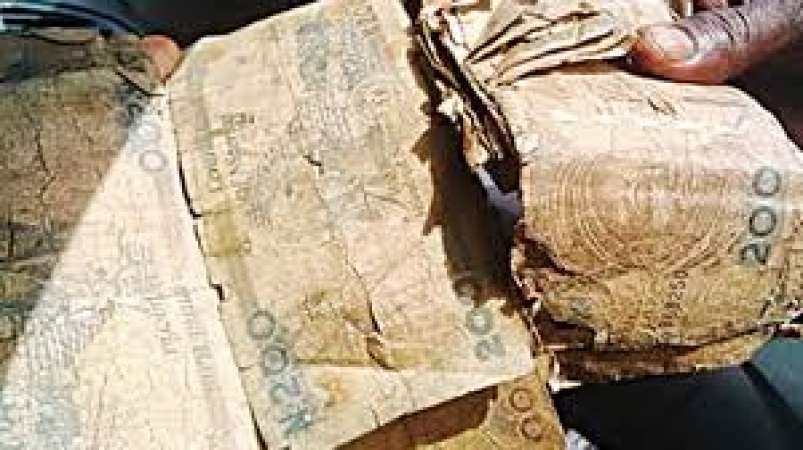
In as much as the emergence of paper-money, helped mankind, tremendously in facilitating the practice of buying and selling, the introduction of paper-money, into the commercial activities of living man, brought along with its advent, particular, peculiarities, and issues. Un-like coins, whether made out of gold, silver, bronze, or copper, paper money has the likelihood to “wear and tear”, can be stained or soiled, can be torn, can become squeezed, can become dirty, or defaced, and can indeed become mutilated. It seems that all newly printed bank currency notes, have stipulated, short, life-spans. In a country like Nigeria, and one dare say, in many nations of the world, newly-printed, paper money, have life-spans of about 12-18 months, while polymer notes last for 24-36 months. Thus, in many societies and nations today, Nigeria inclusive, the issue for many people to ponder on, is: WHY ARE CRISP BANK CURRENCY NOTES SO SCARCE IN OUR SOCIETY? Or, put in another way, WHERE ARE OUR CRISP, BANK CURRENCY NOTES?
In Nigeria, crisp, clean, new bank currency notes seem to be scarce, ubiquitously, to an alarming rate, in all the nooks and crannies of the nation, nowadays. It is even disheartening that at times, when a bank customer goes to an ATM to withdraw money, paper money that is, the currency notes that the ATM dispenses, are quite often, old, worn out, dirty, or lacking in crispness. The situation, in many interjected situations, is not any better inside banking halls, of many banks. For instance, if as a customer, you seek to withdraw bulk cash from the counter at many banking halls, chances are rife that a large percentage of the cash, or rather bank currency notes that’ll be paid out to such a customer, will include bank currency notes that that are worn out, torn, defaced, dirty, or mutilated. I am of the mind-set that this trend, is a bank-etiquette that is a mis-nor mar!!!
As an individual, I have on many occasions, made out ample time to repair (as much as I am able to) torn, defaced, and mutilated bank currency notes that are passed on to me, either from a banking hall, ATM, dispensing cash, or from POS agents at their kiosks. The same is the case for paper money, naira notes that are passed on to me, as “change”, or “balances” for purchases made. At such instances, I try as much as possible, not to complain, or reject such “un-wholesome” bank currency notes when they are circumstantially passed on to me. As a “perturbed” Nigerian citizen, I however really feel that the Central Bank of Nigeria (CBN) has to address this un-healthy and unpleasant monetary trend in our country, and nation, and indeed, society. The currency notes, or bank notes denominations of any country, or nation-Nigeria inclusive, are always “prime” in the day-to-day commercial affairs of such a country. All the nations of the earth – or rather world, have their individual, currency notes, which serves as the legal tender of such a nation, For Nigeria, as we all know, the nation’s national currency, and legal tender, is the Nigerian Naira. Although the Kobo used to be a legal tender in Nigeria, many, many decades past, Nigeria, as currently, does not use coins-or, metal money, or rather, Kobo, as a legal tender anymore.
The Nigerian Naira, Is one of the nation’s national symbols. Among the many national symbols which Nigeria has an independent nation has; the Naira is the one that that is very prone to abuse by multitudes of people, resident in the country. Daily (this is true) people squeeze, tear, deface, and stain the surface of the Naira. Nowadays, in virtually all the nooks and crannies of the country, the currency notes that people come in contact with, and which people spend, are bank currency notes that are dirty, torn, stained, or defaced. This is so, because, we the people do not take adequate care of our national currency bank notes, the proper way we should, when such bank currency notes enter our custody, momentarily, or before we spend them as cash.
In this light, relevant Federal Government Ministries, Departments, and Agencies (MDAs), should work in collaboration with the Central Bank of Nigeria (CBN), from time to time, to educate, enlighten, and sensitise members of the general public, on proper handling of the Naira, and bank currency notes that are at every given time, in circulation, whenever such currency bank notes are in the custody of their owners. Particularly the National Orientation Agency, as a Federal Government Parastatal, should be “shouldered” with the chore of working with CBN, and other relevant ‘money-related’ MDAs so as to educate Nigerians –and indeed, residents in Nigeria, at any given time, on how to avoid abuses of the Naira, and the array of Naira currency notes denominations that Nigeria, as a nation has to parade.
National Orientation Agency (NOA), for many that are not aware of the said fact, as an established, Federal Government Parastatal, has the noble vision “to develop a Nigerian society that is orderly, responsible and disciplined, where citizens demonstrate core values of honesty, hard work, and patriotism. The said Agency, also has the onerous mandate “to consistently raise awareness, indoctrinate the mind of citizens with the goal of making them to positively change attitudes, values, and behaviors, and sufficiently, mobilize citizens to act in ways that promote, love for the country, respect for the nation’s many national emblems, and symbols, and also to in any way feasible, add to the national development of Nigeria.
Shouldered with such a mandate; I don’t think that it would be out of place, if – in the nearest future – the Federal Government provides the said Agency, with the necessary administrative ‘enablement’, so that they and the CBN, will work in dual-collaboration, so as to sensitise members of the general public, on how to properly handle our nations’ paper money, that is, the Naira, whenever we are spending them.
The Nigerian paper money, that is the Naira, is “prime” among the array of Nigeria’s national symbols, and deserves to be handled with due care, and ‘respect’. Rather sadly, nowadays, in present day Nigeria, in many circumstances and scenarios, the currency notes that citizens come in daily contact with, are currency notes that are in dirty, torn, stained, mutilated, or worn-out conditions (which ought not to be so.) In Nigeria-nowadays-it is not every time that one is lucky, or privileged, to come in contact with crisp, new currency notes. The currency notes that are usually available for citizens, and residents in this country to spend-as cash-are Naira notes that are in “worn out” conditions. Not minding the condition of the currency notes which we come in contact with regularly; the onus, and indeed patriotic responsibility, lies on us, to handle such currency notes with the due care that they deserve.
As patriotic citizens, we must not tear the Naira note into pieces. We also must not cut off its edges, with any sharp object of any type. We must not deliberately stain it. Spraying of currency notes on “certain people” at certain occasions, is a common practice in different parts of Nigeria. This, being the reality, at most occasions, in our society, it is advised that people take care not to trample on such currency notes that are being “sprayed” on particular, dancing celebrants at an(y) occasion.
Of all the national symbols that Nigeria can boast of the most popular, the most commonly used by citizens, and the most ubiquitous, and also the most easily handled by citizens daily, everywhere, is the Nigerian Naira. This, being the case, it behooves us that we handle the array of currency notes denominations that are in circulation in our nation-at every point in time-with adequate care, whenever we become recipients of such currency notes.
There are certain citizens, or individuals, that by the virtue, or nature of their jobs, are prone to staining, dirtying, squeezing, and or mutilating a large percentage of the array of currency notes that are in circulation in the country, at every given time. Motor mechanics, for example, are prone to soiling bank, currency notes that enter their custody. Similarly, individuals that are into trades of repairs of generators, motor-cycles, and industrial machines, are prone to soiling the surface of bank currency notes, easily. Then there are tradesmen-and trade-women, such as brick-layers, meat and fish sellers in the market, and butchers of livestock in abattoirs. Then also, there are traders that sell wares in the market, such as red, palm-oil, vegetables, and smoked fishes, etcetera. Also some citizens that sell petrol motor spirit, (p.m.s), diesel, and kerosene at petrol stations, situated in different parts of the nation. These afore-mentioned category of tradesmen and tradeswomen, have a habit of “squeezing” Naira currency notes that are in their custody, whenever they are at their “duty posts”. Then there are also commercial buses’ conductors.
All such category of Nigerian citizens need to be adequately, and regularly, educated and enlightened, on how best to handle the Nigerian paper-money, the Naira, whenever they become recipients of any of the country’s currency notes-denomination(s). Uses of wallets, purses, waist pouches, little boxes-where to place currency notes-during trade and business transactions: all such measures should be advocated for individuals that are into handling the Naira, on a daily, and or regular basis.
We all touch money daily. We all spend paper money daily. Money is the most ubiquitous of all things among mankind. I am sure that no citizen likes it whenever, torn, worn out, defaced, stained, or mutilated currency notes are given out to any one, requiring cash. For now, the fact remains that there abound multitudes of torn, and worn-out bank, currency notes in circulation in the country today. Not minding this fact however, it doesn’t have to be you that’ll become a culprit in the un-patriotic practice of tearing, squeezing, defacing, or staining the paper-money of the nation. Collectively, in all ways possible, let us stop the abuse of the Nigerian Naira. God bless Nigeria.
•Patrick A. Ogbe writes from Abuja and can be reached via patrickadaofuoyi@yahoo.com




