Updating your news feed...
NEWS EXPRESS is Nigeria’s leading online newspaper. Published by Africa’s international award-winning journalist, Mr. Isaac Umunna, NEWS EXPRESS is Nigeria’s first truly professional online daily newspaper. It is published from Lagos, Nigeria’s economic and media hub, and has a provision for occasional special print editions. Thanks to our vast network of sources and dedicated team of professional journalists and contributors spread across Nigeria and overseas, NEWS EXPRESS has become synonymous with newsbreaks and exclusive stories from around the world.























Loading banners
Loading banners...

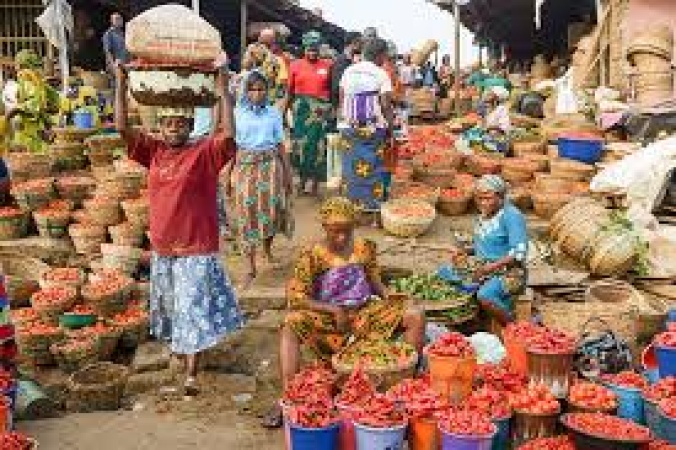
Nigerian market
•Say ‘it has never been this severe’
As the price of petrol continues to rise, market women and shoppers across the country are feeling the impact, with many describing the current situation as one of the toughest economic conditions in recent memory.
Despite the dwindling purchasing power of many Nigerians, prices of essential food items have remained stubbornly high, with no immediate relief in sight as the Easter celebrations continue.
Findings by the Saturday Tribune show that due to the high cost of petrol, the prices of basic food items, including garri, rice, beans, fish, and groundnut oil, have recorded a sharp increase, leaving many households struggling to put meals on the table.
Market leaders spoken to across the country said the surge in petrol prices has triggered an unprecedented rise in foodstuff costs and also affected Easter celebrations.
“The prices of goods have gone up. Foodstuffs are now expensive due to the surge in the price of petrol. Fish, garri, and groundnut oil are all now expensive. We are just managing currently and praying to God to help us because things are very expensive,” a trader told Saturday Tribune in Abuja on Friday.
Another Abuja trader, Folashade Ibrahim, noted that the fuel price hike had affected goods significantly, especially through increased interstate transport fares.
“Prices of most goods have increased because the cost of interstate transportation has risen, and that has also affected Easter celebrations because not everyone has the money to buy garri, rice, and beans at their current price rates.
“We are also experiencing low patronage because people are no longer shopping like before. Their salaries have not increased, and transportation costs keep rising every day. That has taken two-thirds of their budget, so the budget for food is limited. It is difficult for people to stock up their kitchens because transportation has taken almost everything,” Ibrahim said.
For shoppers, the reality is even grimmer. A buyer, Chichi, said foodstuff prices had nearly tripled within weeks.
“The price we bought foodstuffs last week and what we bought this week are not the same. I don’t know if it is the hike in fuel prices or transportation that has affected everything. We are just tired.
“The government should intervene. Things are getting out of hand. The prices are not funny. In fact, everybody is just angry,” she said.
Chairmen of various market associations and traders in Anambra State have also lamented the crippling effects of the increased pump price of petrol on their businesses.
President General of the Building Materials Market, Ogidi, in Idemili North Local Government Area, Chief Jude Okonkwo, told Saturday Tribune on phone that traders were no longer finding the situation bearable as conditions worsened daily.
“Of course, it’s affecting everybody, not only traders of building materials; it’s very bad and everything is going up. People are suffering and the economy is too bad. So, it’s a very bad situation here,” he said.
Okonkwo stated that since the increase in petrol prices, customer turnout had dropped significantly due to the rising cost of transportation.
“Patronage is decreasing because transport fares are too high and the cost of materials is also high. People are not finding it funny. It’s pushing away our customers,” he said.
He appealed to the Federal Government to find ways to cushion the effects of the price hike on both traders and the general public.
“We appeal to them to help the masses because people are suffering. Many are dying. The economic hardship is becoming too much. The government should help the masses and not just give palliatives. People don’t want those palliatives again.
“Let them control the economy. We have crude oil in Nigeria; why are we looking at Iran and Israel? Let them give Dangote some incentives so that prices will come down,” he added.
Also, the Chairman of Onitsha Main Market, Chief Chijioke Okpalaugo, when contacted, said he was in a crucial meeting and would respond later but did not do so as of press time.
In Lagos, the Babaloja General of the state, Alhaji Wasiu Balogun, said the increase in petrol prices has led to a sharp rise in the cost of foodstuffs and other commodities.
He called on the government to increase local refining capacity to ease the hardship.
“The increase in the price of petrol has led to an increase in the prices of foodstuffs in all markets in Lagos State. Commercial transporters have increased fares by almost 300 per cent, and that has affected the price of goods,” he said.
Balogun, however, commended the government for ongoing economic reforms, urging it to do more to ease the burden on Nigerians.
“I commend the government for their efforts, but they should also do something about this increase to make life easier for Nigerians,” he added.
In Calabar, traders in major markets lamented the devastating effects of rising fuel prices on their businesses, warning that the situation has reduced customer turnout and profits during the Easter period.
At Mbukpa Market in Calabar South, Aniefiok Essien, Chairman of the Meat Sellers Association, said rising transportation costs had severely impacted traders.
“The hike in petrol prices has hurt our business immensely. Previously, we paid between N500 and N800 for transporting meat from the slaughterhouse, but now it costs between N1,500 and N 2,000,” he said.
Visits to Mbukpa, Watt and Marian markets showed inconsistent customer turnout, with many vendors reporting reduced sales.
Mrs Mma Offiong, a trader in peppers, tatashe and tomatoes, said rising prices had severely affected her business.
“A basket that used to cost between N22,000 and N 25,000 now sells for about N30,000. When I try to keep my prices reasonable, I incur losses. It has become difficult to recover my capital,” she said.
With over 25 years in the trade, she described the situation as unprecedented.
“It has never been this severe. I just hope fuel prices drop to around N 850 so I can make a small profit to support my family,” she added.
Nnena Chijioke, a rice dealer at Watt Market, said a bag of local rice now sells for about N42,500, up from N 25,000 – N30,000, while a cup now costs about N250.
“Even foreign rice has become unaffordable. Palm oil is also scarce and expensive,” she said.
Rekpene, Vice Chairman of Palm Oil Dealers, said traders in perishable goods were worst hit due to spoilage and low sales.
“The price of a jerrycan of palm oil is now about N44,000. Recovering costs is difficult,” he said.
A provision dealer, Ulu, also noted a sharp rise in the cost of packaged goods, with a carton of noodles increasing from N1,500 to about N7,000, while milk, Milo and sugar have also recorded significant increases.
Market leaders linked the rising prices to high transport costs driven by fuel prices and poor road conditions.
Mr Ndifon of the Yam Dealers Association at Watt Market said traders were not responsible for the price hikes.
“We cannot sell below cost price. Fuel prices are high, roads are bad, and transport costs keep increasing. These are the factors affecting our businesses,” he said.
Across Mbukpa, Watt and Marian markets, traders said the combination of high fuel costs, expensive transportation and reduced consumer spending has made this Easter one of the most difficult in recent years, urging government intervention to stabilise prices and restore market confidence.
Market leaders in Benin City have raised concerns over the adverse impact of the recent increase in the pump price of Premium Motor Spirit (PMS), popularly known as petrol, on their businesses, especially during the Easter season.
The traders, who spoke with our correspondent during visits to major markets across the Benin metropolis, decried the rising cost of transportation, which they said has significantly driven up the prices of essential commodities.
They noted that the festive period, usually marked by brisk business activities, has instead been characterised by low patronage, as consumers struggle to cope with the rising cost of living.
Madam Esohe Ediagbonya, a market leader at the popular Oba Market, lamented that the hike in fuel prices has made it more expensive to transport goods from farms and other supply points to markets.
According to her, “The cost of bringing goods to the market has gone up seriously. Transporters have increased their fares, and this is affecting the prices we sell. Customers are complaining, and it is affecting our sales this Easter.”
Similarly, Madam Oviawe Elizabeth of Ekiosa Market said the situation has forced many traders to adjust their prices upward in order to stay in business.
“We are not happy increasing prices, but we have no choice. Everything has gone up because of transportation. Even customers are buying less now,” she said.
Also speaking, Mr Chijoke Alloy, a market leader in Agbado Market, attributed the surge in food prices to rising logistics costs, stressing that traders are bearing the brunt of the situation.
He said, “The increase in petrol price has affected everybody. From transportation to the market, everything is now more expensive. We are not making the kind of sales we used to make during Easter.”
Other traders, including Sarah Imade, John Okhomina and Juliet Eriagbonse, echoed similar sentiments, noting that staple food items have recorded sharp price increases.
They disclosed that the price of chicken has risen from N25,000 to about N35,000, while the cost of rice and tomatoes has also surged in recent weeks.
According to them, rising transportation costs remain a major factor responsible for the increase in prices.
The traders called on the government to urgently address the situation by implementing measures to reduce fuel costs and ease transportation challenges, warning that continued increases could further dampen economic activities and worsen the hardship faced by Nigerians. (Saturday Tribune)