 ADAD
ADAD
Updating your news feed...
NEWS EXPRESS is Nigeria’s leading online newspaper. Published by Africa’s international award-winning journalist, Mr. Isaac Umunna, NEWS EXPRESS is Nigeria’s first truly professional online daily newspaper. It is published from Lagos, Nigeria’s economic and media hub, and has a provision for occasional special print editions. Thanks to our vast network of sources and dedicated team of professional journalists and contributors spread across Nigeria and overseas, NEWS EXPRESS has become synonymous with newsbreaks and exclusive stories from around the world.




















Loading banners
Loading banners...

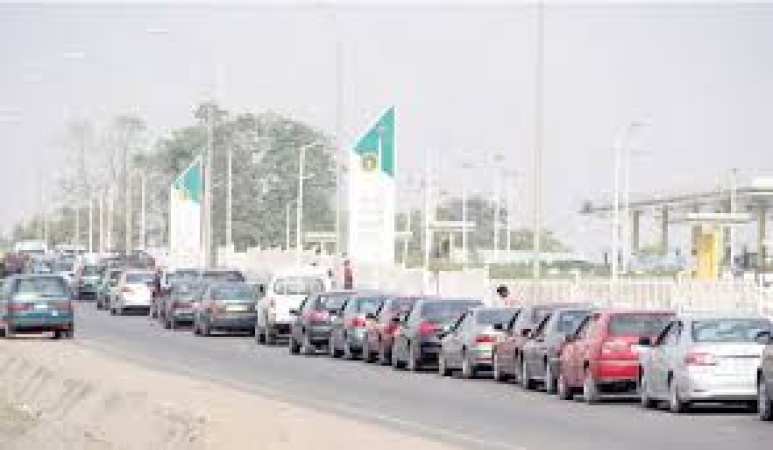
Fuel queue
Amid sustained increases in fuel prices and its attendant deepening economic hardship, oil industry, economic and development experts have called on the Federal Government to adopt controlled crude oil pricing for domestic refineries as a strategy to stabilise petroleum product costs in Nigeria.
They also outlined practical steps to curb rising fuel prices in Nigeria, stressing that solutions must address the entire value chain rather than focus solely on refining.
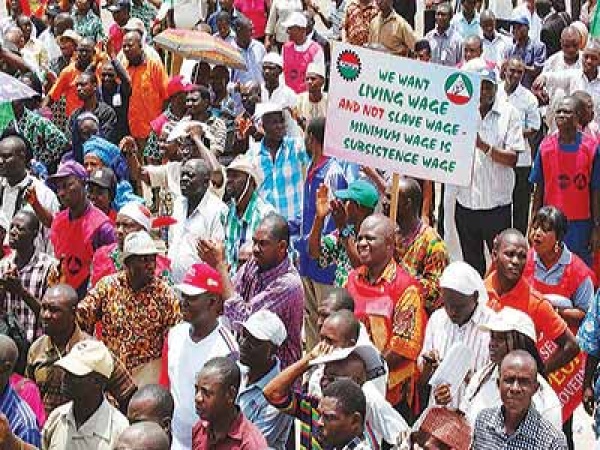
The Nigeria Labour Congress (NLC) is also calling on the government to urgently implement wage awards and tax relief measures to cushion the Impact of the escalating cost of living on workers and ordinary Nigerians.
The experts submitted that prioritising crude allocation to local refineries, strengthening domestic refining capacity, reducing distribution costs, promoting alternative energy, and providing targeted consumer relief would make Nigeria less vulnerable to global price shocks and ensure that the benefits of local refining reach ordinary consumers through cheaper fuel.
Governments at all levels, the experts say, should increase food imports, tackle insecurity and prioritise rehabilitation of state-owned refineries as part of efforts to ameliorate the situation.
The stakeholders warned that unless urgent and coordinated measures are taken, rising fuel costs will continue to drive inflation, increase transportation fares, and worsen living conditions for millions of citizens.
Economists, others counsel govt
Group Managing Director/Chief Executive Officer of Bristol Investments Limited, Chijioke Ekechukwu, said Nigeria, as an oil-producing nation, has the capacity to insulate its domestic fuel market from global volatility by controlling the price of crude supplied to local refineries.
Ekechukwu also stressed the need for stronger border controls to curb the smuggling of petroleum products to neighbouring countries, noting that such leakages further strain local supply and contribute to price instability.
“We can actually ensure that crude supplied to our refineries is sold at a controlled price and not at prevailing global market prices. If this is done, petroleum product prices can remain relatively stable in Nigeria,” he said.
On his part, Professor of Economics and Public Policy at the University of Uyo, Akpan Ekpo, urged the government to take both short-term and long-term measures to address the rising cost of living caused by the hike in the price of petrol.
“To cushion the extraordinary increase in food prices in the short term, the government may need to import food.
In the long term, however, Nigeria must take agricultural production more seriously and address security challenges so that farmers can return to their farms and increase food output.”
Also speaking, renowned economic and development expert, Aliyu Ilias, faulted the country’s failure to fully develop its refining capacity and alternative energy sources, describing the situation as avoidable.
“I think CNG would have solved the problem if it was efficiently implemented. Having more working refineries, especially our Nigerian-owned refineries, would have solved it, but we have failed to do it,” he said.
He further called for stronger regulatory oversight by the Nigerian Midstream and Downstream Petroleum Regulatory Authority (NMDPRA), noting that fuel prices often rise rapidly without adequate monitoring.
“There should be proper monitoring. Within weeks, we see filling stations increasing prices. If we also had sufficient reserves that could last up to four months, it would help cushion the impact of global market shocks,” he added.
What Nigerian workers want – NLC
Meanwhile, NLC President Joe Ajaero decried the surge in petrol prices, which he said has risen to between N1,170 and N1,400 per litre, describing the development as a direct burden on Nigerian workers.
Ajaero warned that the situation has exposed the fragility of Nigeria’s downstream petroleum sector, stressing that reliance on market-driven pricing tied to global oil fluctuations leaves the country vulnerable.
The labour leader called for immediate government intervention, including the introduction of a wage award and cost of living allowance (COLA), tax relief for workers, and the urgent rehabilitation of public refineries in Port Harcourt, Warri, and Kaduna.
He also urged the government to ensure that any projected oil windfall from the ongoing global crisis is channelled towards alleviating the suffering of Nigerians.
“The costs of PMS and AGO have made transportation a noose around workers’ necks. Food inflation is galloping, and meagre wages are being swallowed by this induced scarcity. When a worker cannot afford to go to work, the economy stops. When a family cannot afford three meals a day, society sits on a keg of gunpowder.
“The government cannot foreclose any action that would offer succour. We demand an immediate intervention. It is the duty of the state to act to prevent the agony of its citizens and not wring its hands in hopelessness, mouthing the Middle East war.
“The NLC subsequently demands: An immediate Wage Award and Cost of Living Allowance (COLA) for all workers to cushion the high cost of living. Current wages are stipends of starvation.
“An expansion and overhaul of Cash Transfers to ensure transparency, and that they reach the most vulnerable, with increased value to match inflation.
“Immediate Tax Reliefs for Workers and a stoppage of all regressive taxes on low-income earners, including the proposed tax on the informal economy. Taxing the minimum wage is extortion.
“A timeline for the full-scale operationalisation of all public refineries. The Nigerian state must be held accountable for the billions spent on turnaround maintenance. Nigerian workers are being pauperised and massively suffering. We are not a statistic; we are the engine of this nation. When the engine overheats, the entire vehicle crashes.
“The about N30 trillion only oil windfall expected to accrue to Nigeria as a result of the current Middle East war must not grow wings like the Gulf War oil windfall but should be invested in the Nigerian people. It should be used to cushion the negative effects of the crisis in Nigerian people.
“The government must engage in sincere social dialogue with Nigerian workers and the broader citizenry. Using the Middle East war as an excuse to further impoverish Nigerians is unacceptable. The primary duty of the government is to ensure the welfare of the citizenry. We demand action. We demand justice. We demand survival.”
Similarly, Publicity Secretary of the Crude Oil Refiners Association of Nigeria (CORAN), Eche Idoko, said international crude prices, exchange rate volatility, and logistics costs are the main drivers of pump prices.
While stressing that increasing crude allocation to the Dangote and other refineries can help, he emphasised that this must be done strategically, with local refineries given priority access to crude, fair pricing models adopted, the naira-for-crude framework stabilised, and downstream logistics improved.
Billy Gillis-Harry, President of the Petroleum Products Retail Outlets Owners Association of Nigeria (PETROAN), called for the urgent restoration of full operations at the Port Harcourt Refinery to break monopolistic constraints and boost domestic supply.
He also advocated temporary food security initiatives, accelerated adoption of alternative energy such as compressed natural gas (CNG) and liquefied petroleum gas (LPG), and ongoing engagement among oil and gas stakeholders to ensure long-term energy security and price stability.
Energy policy analyst Ayodele Oni of Bloomfield Law Practice stressed that practical, coordinated solutions are needed to address global oil shocks, subsidy removal, and a weak naira.
He recommended stabilising the naira and prioritising foreign exchange for petroleum inputs, deepening domestic refining while ensuring competitive downstream markets, improving logistics and monitoring, promoting cleaner energy alternatives, as well as protecting vulnerable households through targeted support rather than broad subsidies.
The experts agreed that prioritising crude allocation to local refineries, strengthening domestic refining capacity, reducing distribution costs, promoting alternative energy, and providing targeted consumer relief would make Nigeria less vulnerable to global price shocks and ensure that the benefits of local refining reach ordinary consumers.
Organised private sector proffers solution
Director General of the Lagos Chamber of Commerce and Industry (LCCI), Dr Chinyere Almona, said the escalation of global crude oil prices to about $112 per barrel, alongside the fourth upward review of Dangote Refinery’s gantry price to approximately N1,245 per litre, signals intensifying pressure in Nigeria’s downstream market, with pump prices trending toward N1,500 per litre.
She noted that the development is rapidly transmitting inflationary shocks across transportation, food, and industrial production.
According to her, the persistent fuel affordability challenge reflects a structural supply deficit, as Nigeria’s daily petrol demand of 50 to 53 million litres continues to outpace effective domestic refining capacity.
Almona stressed that government intervention should focus on strategic market stabilisation rather than price suppression.
She added that stabilising the naira through improved foreign exchange liquidity and policy coordination is essential, given the strong exchange-rate pass-through into fuel pricing.
She also called for policy clarity and consistency to reinforce investor confidence in the deregulated regime.
She urged the Federal Government and the Nigerian National Petroleum Company Limited to enforce domestic crude supply obligations under the Petroleum Industry Act, ensuring consistent allocation of more than 300,000 barrels per day to local refineries, particularly the Dangote Refinery.
She added that a transparent naira-for-crude framework would reduce foreign exchange exposure, lower production costs, and stabilise output.
Almona further called for a clear, rules-based pricing framework by regulators, accelerated operationalisation of modular refineries, and maintenance of strategic imports as a short-term buffer to stabilise prices.
Addressing constraints such as foreign exchange volatility, logistics inefficiencies, and distribution bottlenecks, she said, remains critical to improving market efficiency.
President of the Manufacturers Association of Nigeria (MAN), Francis Meshioye, said the impact of rising fuel costs on manufacturing is significant, particularly in transportation of raw materials and finished goods, as well as staff commuting expenses.
He noted that increased operational costs are forcing businesses to pass additional expenses to consumers, while rising energy costs are driving up production and material costs.
Meshioye warned that weak consumer demand, driven by declining disposable income, could eventually lead to job losses, although manufacturers would strive to maintain their workforce.
Chairman of the Lagos chapter of the National Association of Small Scale Industries (NASSI), Gertrude Akhimien, described the fuel-price situation as a multidimensional challenge affecting business viability and household welfare.
She recommended short-term measures, including stabilising supply, removing avoidable delays, implementing targeted subsidies for essential sectors, suspending non-essential taxes on fuel importers, and expanding local refining capacity.
She also advocated publishing weekly fuel-price data and establishing consumer helplines to report market abuses.
Akhimien added that higher transportation costs are squeezing margins across logistics-heavy sectors such as retail, manufacturing, agriculture, and shipping, while small businesses face immediate livelihood risks that could increase unemployment and poverty.
She urged emergency price-stabilisation measures, cash relief through grants and soft loans for businesses, targeted subsidies for transport operators, improved electricity reliability, and dedicated fuel allocations for agriculture and food distribution.
SMEs expert and LCCI member, Daniel Dickson Okezie, said rising fuel costs are affecting every sector, leading to higher prices of goods and services and reduced patronage for small businesses.
He called for temporary fuel subsidies and closer monitoring of filling stations to prevent exploitation.
He also suggested government collaboration with Dangote Refinery to prioritise domestic supply and reduce exports, warning that prolonged high fuel prices could worsen economic hardship and increase migration pressures.
Project Lead, Calabar and Gulf of Guinea Municipal and Trade Centre, David Etim, proposed a fully integrated fuel monitoring and anti-smuggling system to track petroleum products from the refinery to the final destination.
He said digital registration of trucks, GPS tracking, and real-time monitoring could curb smuggling, improve supply, and help stabilise prices.
Stakeholders agreed that while administrative controls may offer short-term relief, sustainable price moderation will depend on structural reforms that expand domestic supply, foster competition, and improve transparency across the petroleum value chain. (The Sun)



