ADAD
ADAD
Updating your news feed...
NEWS EXPRESS is Nigeria’s leading online newspaper. Published by Africa’s international award-winning journalist, Mr. Isaac Umunna, NEWS EXPRESS is Nigeria’s first truly professional online daily newspaper. It is published from Lagos, Nigeria’s economic and media hub, and has a provision for occasional special print editions. Thanks to our vast network of sources and dedicated team of professional journalists and contributors spread across Nigeria and overseas, NEWS EXPRESS has become synonymous with newsbreaks and exclusive stories from around the world.










Loading banners
Loading banners...

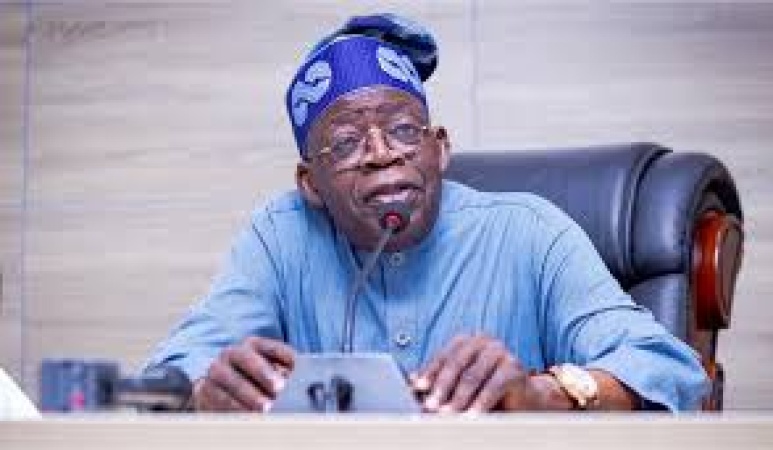
President Bola Ahmed Tinubu
President Bola Tinubu’s early preparations for his second-term bid have covered significant ground, but the opposition’s mobilisation of the electorate, especially in the densely populated voting areas of the North, could trigger the deployment of incumbency advantages in next year’s poll, LEO SOBECHI reports.
Up until March 2025, the prevailing view among observers of Nigeria’s presidential politics was that there was no stopping President Bola Ahmed Tinubu from securing a second term with minimal effort.
However, by March, when the idea of a coalition of opposition politicians began to circulate, many who held that view began revising their positions. By July, when the new interim leadership of the African Democratic Congress (ADC) was unveiled, the momentous defection of former Kaduna State governor, Nasir el-Rufai, from the ruling All Progressives Congress (APC) on March 10, 2025, to the Social Democratic Party (SDP), and later from the SDP on November 16 to the ADC, gave traction to the pushback against Tinubu’s second-term ambition.
Freed from the restraints of party loyalty, el-Rufai began his opposition activism by shedding light on how the APC zoned its presidential ticket to the South and on how President Tinubu emerged as President. After posting what he described as the true results of the February 28, 2023, presidential poll on his Facebook page, the former Kaduna governor declared that Tinubu was headed for a one-term presidency.
Being an insider in the APC, as well as a prime mover within the bloc of northern governors that shaped former President Muhammadu Buhari’s succession plan, el-Rufai became a credible voice to challenge Tinubu and dismiss the President’s second-term bid.
Consequently, by positioning himself as the mobiliser-in-chief of the opposition coalition, el-Rufai heightened public apprehension about the impending electoral contest between an incumbent and a loosely aligned opposition front.
Swimming against the tide
Against the backdrop of behind-the-scenes manoeuvres within the APC, which led to the party’s decision to respect the power rotation principle between North and South, the North has struggled to present persuasive arguments to justify restricting Tinubu to a single term or producing his successor.
Buoyed by el-Rufai’s assertion that the presidency should remain in the South for the next four years, opposition leaders within the ADC echoed this sentiment, insisting that the party must field a southern presidential candidate if it is serious about unseating Tinubu. In muted tones, some southern opposition figures argue that despite Tinubu’s early progress toward re-election, he may still be swimming against the tide of the power rotation principle.
There are no fewer than five critical junctures that define President Tinubu’s pathway to a second term. A review of incumbents’ re-election bids in Nigeria and across Africa reveals a common pattern: such contests are often fraught with emotional and psychological tension for citizens, particularly those not deeply aligned with partisan politics.
In Nigeria, from the Second Republic re-election of President Shehu Shagari and the now-defunct National Party of Nigeria (NPN) in 1983, through Chief Olusegun Obasanjo’s garrison-style re-election in 2003, to Dr Goodluck Jonathan’s defeat in 2015, second-term contests involving incumbents have consistently been marked by tension and uncertainty.
The quest for second-term mandates often generates anxiety between incumbents and the electorate for various reasons. While governments highlight ongoing projects and reforms, voters seek to independently assess how such policies have affected their lives.
In the clash of these perspectives, experience shows that attempts by incumbents to limit the electorate’s ability to use elections as referenda on performance often render the process chaotic and contentious.
Barring unforeseen developments in the domestic or international arena that could disrupt the timetable, the Independent National Electoral Commission (INEC) has rescheduled the presidential poll for January 16, 2027, as against earlier dates of February 20 and February 6, while governorship and State Assembly elections are now slated for March 6, 2027.
With barely five months to the commencement of electioneering for the presidential ballot, the incumbent appears to have a head start. Some observers note that, in the context of the 2027 election, Tinubu reflects the imperatives outlined by Prof. Wole Soyinka in “You Must Set Forth at Dawn”.
In the book, Soyinka emphasised the importance of courage and resilience in pursuing political objectives against daunting odds. Within his first year in office, Tinubu made it clear that he was laying the groundwork for a second-term bid, as billboards promoting that ambition appeared across major cities.
This early preparation gave the impression that both the President and the APC were prepared to adopt strategies similar to those used by some African leaders to secure re-election.
African templates
Standing firmly on the power of incumbency, the Presidency appears to be adopting elements of re-election strategies employed by African leaders such as Tanzania’s Samia Suluhu Hassan, Cameroon’s Paul Biya, and Nigeria’s Olusegun Obasanjo.
From current indications, the APC leadership seems to be blending aspects of Suluhu Hassan’s and Obasanjo’s approaches. Ahead of the 2003 election, Obasanjo reportedly deployed institutions like the Economic and Financial Crimes Commission (EFCC) to weaken opponents, even amid tensions with his Vice President, Atiku Abubakar.
In executing this “garrison style,” many state governors were compelled to align with the President’s re-election bid. The election that returned Obasanjo has often been cited as controversial.
In Tanzania, President Samia Suluhu Hassan, who assumed office following John Magufuli’s death on March 19, 2021, faced criticism over restrictions on opposition figures ahead of her re-election. Opposition parties accused her administration of repression and procedural violations, leading to election boycotts, yet she and her party, Chama Cha Mapinduzi (CCM), retained power.
Amid moves to deregister some political parties—including the ADC, Accord Party (AP), Zenith Labour Party (ZLP), Action Alliance (AA), and Action Peoples Party (APP) some opposition figures in Nigeria have suggested a boycott.
However, reflecting on the Tanzanian experience, Labour Party stakeholder Dr Ezeh Emmanuel Ezeh has instead called for mass action to demand electoral reforms, warning that a boycott would ultimately benefit the ruling party.
Complacent institutions
Having “set forth at dawn” in pursuit of re-election, Tinubu has ensured that key institutions in the electoral process, including the National Assembly, the judiciary, the military, and the police, are led by loyal or compliant figures, according to opposition claims.
Opposition leaders point to a series of controversial judicial rulings in intra-party disputes as evidence of executive influence.
Recently, the Labour Party’s 2023 presidential candidate, Peter Obi, alleged that efforts are underway to prevent him from contesting in 2027, claiming that the leadership crisis within his party was orchestrated to that end.
Similarly, embattled Peoples Democratic Party (PDP) National Chairman, Kabiru Tanimu Turaki (SAN), has urged the Chief Judge of the Federal High Court to avoid reassigning PDP-related cases to Justice James Omotosho.
Part of Tinubu’s re-election strategy involves recalibrating the electoral map. APC insiders are believed to be working toward consolidating support across the Southern states, with the expectation that maximising votes in the region would significantly enhance the President’s chances.
Any projection of the 2027 election that ignores the impact of insecurity, particularly in the North-East, remains incomplete. Renewed attacks by Boko Haram insurgents could hinder voter turnout, thereby weakening the electoral strength of northern contenders.
Given the constitutional requirement of securing at least 25 per cent of votes in two-thirds of the states, the APC is believed to be targeting dominance in the 17 Southern states, alongside key states in the North-Central and North-East.
In this context, ongoing investigations involving figures such as el-Rufai and former Attorney General Abubakar Malami (SAN) by agencies like the EFCC and ICPC are seen by some analysts as part of broader political manoeuvres ahead of 2027.
Tinubu’s political persona
In “Asiwaju: Leadership in Troubled Times”, former Lagos State governor Babatunde Raji Fashola and former Commissioner for Environment Tunji Bello highlight traits that make Tinubu a formidable political figure.
Bello notes that Tinubu shares with former U.S. presidents John F. Kennedy, Ronald Reagan, and Bill Clinton the ability to persuade and communicate effectively, particularly in crisis situations.
Describing Tinubu as a master strategist, Fashola emphasised his capacity to concede short-term battles in pursuit of long-term victories, adding that his understated demeanour often leads opponents to underestimate him.
These attributes may explain why former governor of Jigawa State and an ally of Mr President, Sule Lamido, has argued that limiting Tinubu to a single term would be difficult.
Nonetheless, critics such as el-Rufai and former Minister of Transportation Rotimi Amaechi maintain that Tinubu remains beatable, contending that his political methods reflect entrenched patronage rather than genuine persuasion.
Similarly, former SDP presidential candidate Adewole Adebayo has criticised what he describes as an elite-driven system centred on personal ambition rather than national interest.
As Nigeria approaches another presidential election cycle, the integrity of the process, and whether it produces a credible outcome, will ultimately determine not only the maturity of the country’s democracy but also the commitment of its political actors to national progress. (The Guardian)