ADAD
ADAD
Updating your news feed...
NEWS EXPRESS is Nigeria’s leading online newspaper. Published by Africa’s international award-winning journalist, Mr. Isaac Umunna, NEWS EXPRESS is Nigeria’s first truly professional online daily newspaper. It is published from Lagos, Nigeria’s economic and media hub, and has a provision for occasional special print editions. Thanks to our vast network of sources and dedicated team of professional journalists and contributors spread across Nigeria and overseas, NEWS EXPRESS has become synonymous with newsbreaks and exclusive stories from around the world.








Loading banners
Loading banners...

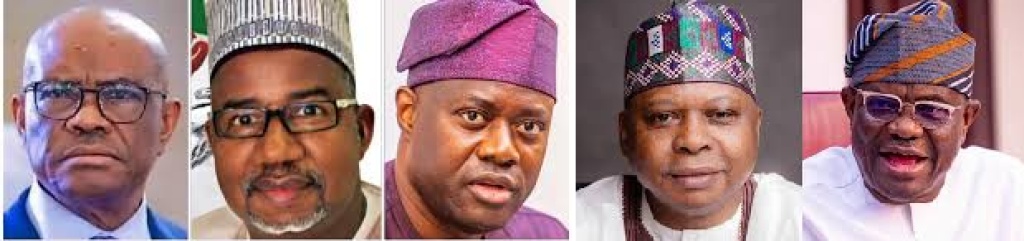
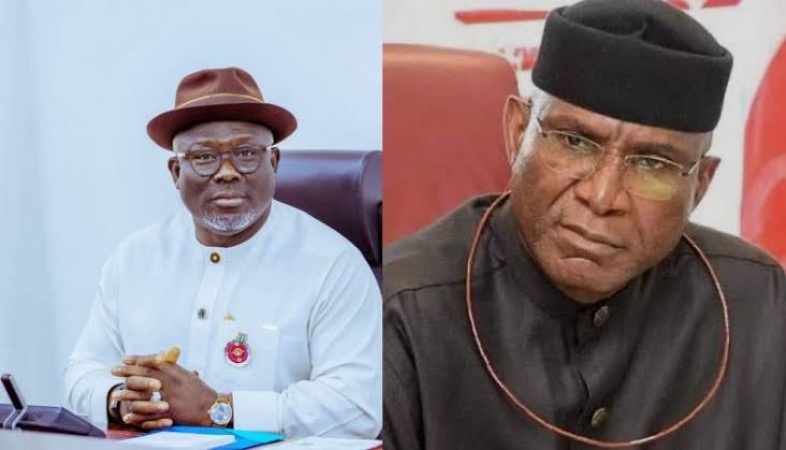
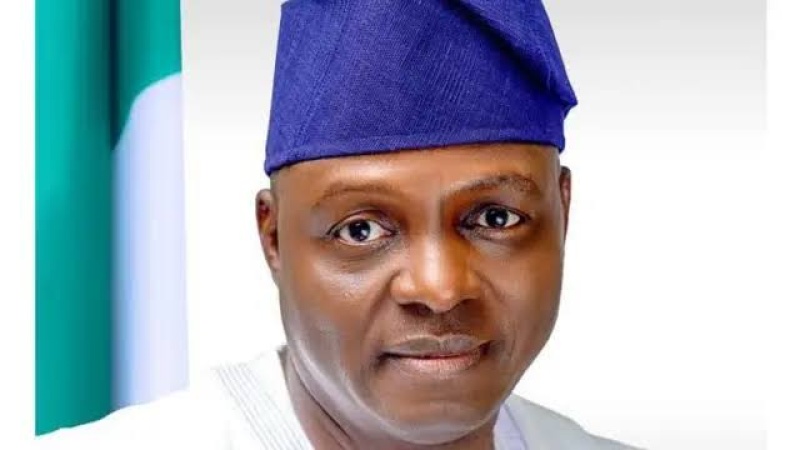
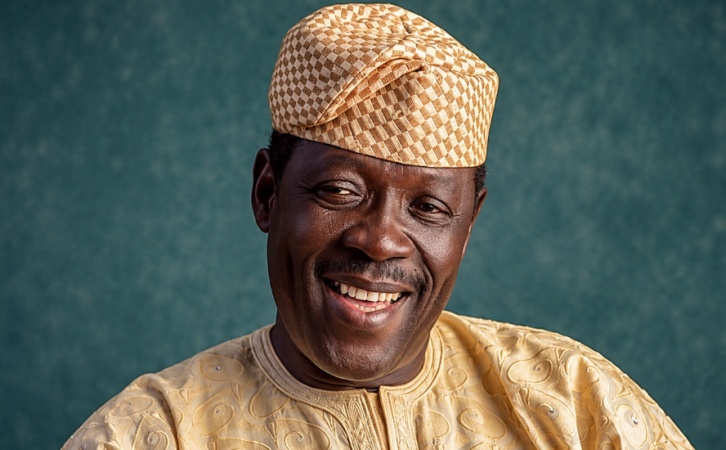
Nyesom Wike, Tanimu Turaki, Seyi Makinde and Bala Muhammed
Can the Peoples Democratic Party (PDP) achieve reconciliation before the commencement of nomination for the 2027 polls? That is the big question agitating the minds of members as well as supporters of the opposition party, as preparations for the 2027 general election continue to gather momentum.
Recently, the Independent National Electoral Commission (INEC) unveiled an amended timetable for the next general election, signifying the blast of the whistle for the contest for the 2027 polls.
According to the timetable, the presidential and National Assembly poll is slated for January 16, while the governorship and state assembly contests will be held on February 6, 2027. In line with the timetable, nomination of candidates will take place from April 23 to May 30. However, political parties are expected to submit their digital register to the electoral umpire by April 2.
Expectedly, political parties and aspirants for the 2027 general election have started serious preparations for the contest. However, for the PDP, which is the major opposition party, there is a cloud of uncertainty, owing to the protracted leadership crisis, which has polarised the party into two major camps.
The PDP has been embroiled in crisis for the past three years, owing to the tussle for the control of party machinery between the PDP governors, led by Bauchi Governor, Senator Bala Mohammed, and his Oyo State counterpart, Seyi Makinde, on the one hand and the minister of the Federal Capital Territory (FCT), Nyesom Wike, on the other hand.
The crisis escalated last November, after the immediate past National Working Committee (NWC) led by Umar Damagum, supported by the governors organised a convention in Ibadan the Oyo State which produced the Tanimu Turaki-led NWC.
In the aftermath of the Ibadan convention, loyalists of the FCT Minister set up a 13-man National Caretaker Committee, chaired by Abdulraham Mohammed, to administer the PDP pending the conduct of their own convention. Attempts by both groups to hold their respective meetings at the party’s national secretariat, the Wadata Plaza, on November 18, resulted in a clash, with the police sealing up the Wadata Plaza, as well as the party’s presidential campaign headquarters, the Legacy House.
However, The Court of Appeal, Abuja Division, on March 9, nullified the Ibadan convention of the opposition party, and upheld the judgment of the Federal High Court, Abuja Division, which restrained the opposition from going ahead with the exercise until it has complied with extant law.
Apart from the Court of Appeal Abuja suit, which was decided in favour of the FCT minister’s camp, there is also another suit pending at the Court of Appeal, Ibadan Division, challenging the judgment of the Federal High Court, Ibadan, which recognised the caretaker committee as the leadership of the PDP. Nonetheless, the Court of Appeal, Ibadan Division, has advised the parties to explore a resolution and report back to it.
Two weeks ago, the chairman of the PDP Board of Trustees (BoT), Senator Adolphus Wabara, while speaking at an expanded meeting of the board, which was attended by the Oyo State Governor and his Bauchi counterpart, as well as other leaders of the opposition party, announced that the Board has resolved to explore opportunities for settlement of the protracted crisis in line with the advisory of the Court of Appeal, Ibadan.
The National Publicity Secretary of the Turaki-led NWC, Ini Ememobong, noted that the party leaders have resolved that the major opposition party will not die and must be on the ballot in the 2027 contest. Ememobong noted that in as much as they are disposed to reconciliation with Wike’s camp, such reconciliation must be based on principles.
According to him, “Number one is that the PDP will not die. Number two, is that the PDP will be on the ballot,” he stated, adding that “the PDP is an opposition party currently. For any reconciliation that makes it an appendage, of the ruling party is not reconciliation. But any reconciliation that allows the party to survive, to allow the PDP to function as an opposition party that aligns with the wishes of the people, we are in support. The reconciliation must be based on the principles that the PDP does not die.”
However, spokesman of the caretaker committee, Haruna Mohammed, told journalists, last week, that their disposition to reconciliation, notwithstanding, the forthcoming convention to elect new NWC members is however not negotiable.
Mohammed noted that “reconciliation is an ongoing thing and it cannot in any way prevent the caretaker committee from carrying out the convention. If you recall, we had initially informed the representative of the Turaki group who attended our last NEC meeting that whatever their written proposals may be, two things remain sacrosanct: the existence of this caretaker committee and the conduct of this National Convention. So, irrespective of whatever reconciliation that is likely to happen, it will not affect the conduct and processes leading to this convention. We are still open for reconciliation.”
Analysts say PDP salvation in the coming election depends on the ability of gladiators to resolve all contentious issues in good time. But the question is: can both sides find a meeting point?
Bone of contention
There are precisely three major conflict points. They include the National leadership, the leadership of the party and the South-South, South -East and the structure of the party in 14 states, where the Wike group conducted congresses to choose party leadership last week. While leadership of the South-South and South- East PDP was among the issues that triggered the crisis, the caretaker committee last month announced the dissolution of the Zonal executives in the South -West and North- West, bringing to four the number of zones in contention.
Last December, the caretaker committee announced the dissolution of SWCs in 14 states, including Borno, Bauchi, Oyo, Zamfara, Yobe, Ekiti, Bayelsa, Enugu, Ebonyi, Anambra, Delta, Taraba, Kano and Lagos. The caretaker committee has gone ahead to hold congresses in the affected states and scheduled a national convention for March 29 and 30.
Therefore, pundits say the challenge before the gladiators would be how to harmonise all interests across the contentious zones and states to achieve peace and unify the opposition party for the 2027 contest.
It was gathered that in the event that the parties are unable to reach an amicable resolution, it is likely that they might be returning to the Court of Appeal, Ibadan division for adjudication on the appeal before the appellate court.
Nonetheless, immediate past deputy national youth leader of the PDP, Timothy Osadolor, told Daily Sun that it does not matter whether or not the party is able to resolve its issues before the commencement of nomination exercise. Osadolor explained that this is because PDP has been weakened by the protracted crisis and does not stand much chance in the 2027 contest.
According to him, “The damage is already done and there is no way any credible candidate will stand a chance, no matter how popular he or she might be. The countless litigation weakened the party base; there might still be those who are skeptical that all of these might be an exercise in futility. At the end of day, I don’t foresee PDP having a strong outing in this election cycle.”
Truly, the conflict has taken a toll on the opposition party. From 13 governors, in the aftermath of the 2023 polls, the number of states controlled by the PDP has reduced to two, with the Oyo and Bauchi states governors as the last men standing.
Also, the status of the major opposition party in the two chambers of National Assembly, have greatly diminished. In the last two years, no fewer than 100 National Assembly members elected on the platform of the PDP have defected to the All Progressives Congress (APC) and other opposition parties.
Regardless of the assurances by PDP leaders, across the two divides that the party will be on the ballot for 2027, this is the first time in its 26 years history that PDP members and supporters will be approaching a general election with so much trepidation and uncertainty. (The Sun)