ADAD
ADAD
Updating your news feed...
NEWS EXPRESS is Nigeria’s leading online newspaper. Published by Africa’s international award-winning journalist, Mr. Isaac Umunna, NEWS EXPRESS is Nigeria’s first truly professional online daily newspaper. It is published from Lagos, Nigeria’s economic and media hub, and has a provision for occasional special print editions. Thanks to our vast network of sources and dedicated team of professional journalists and contributors spread across Nigeria and overseas, NEWS EXPRESS has become synonymous with newsbreaks and exclusive stories from around the world.

.webp)

.webp)








.webp)
.webp)


.webp)






Loading banners
Loading banners...

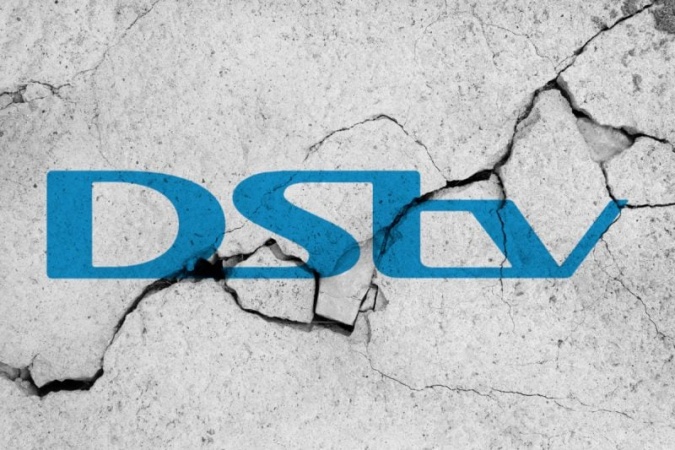
MultiChoice’s DStv, once the undisputed king of South African living rooms and the gold standard for premium entertainment, is facing an existential crisis as subscribers desert the platform in record numbers.
Over the 40 years since M-Net launched in October 1986, South Africa’s only real pay-TV offering became the ultimate status symbol for South African households.
South Africa was very late to TV broadcasting, with the state-owned Suid-Afrikaanse Uitsaaikorporasie (South African Broadcasting Corporation) only launching its first broadcast in 1976.
As is South African tradition, when adopting a technology late, we skipped black-and-white and went straight to the colour PAL standard used in the UK and large parts of Europe.
However, the quantity and quality of content available from the SABC were limited, with South African audiences often missing out on excellent shows made by U.S. and UK TV networks.
Movies would also only air on SABC long after they had disappeared from the theatre circuit and had been out in VHS cassette format for a while, if the public broadcaster showed them at all.
This all changed when Koos Bekker, a young lawyer who had started a career in advertising, sold his house and moved to New York, where he studied for an MBA at Columbia Business School.
There, he encountered the world’s first premium cable TV service, Home Box Office (HBO). The platform’s success inspired him to write an MBA thesis on the idea of M-Net.
With the help of friends, Cobus Stofberg and Jac van der Merwe, Bekker pitched M-Net to Naspers’ chairman Ton Vosloo, who agreed to launch the first pay-TV channel in South Africa.
Launched from a caravan in Randburg, M-Net initially only broadcast for a few hours each night over an encrypted analogue TV signal.
However, it quickly became South Africa’s premier video entertainment channel. Nine years later, MultiChoice was born, and with it, DStv.
As a latecomer, South Africa could once again leapfrog directly to digital satellite broadcasting standards — the “DS” in DStv.
Officially launching on 6 October 1995, DStv was the second digital satellite service in the world, and the first outside the U.S.
DStv quickly built its reputation as a hero of video entertainment in South Africa, delivering a level of variety and technical sophistication that the SABC simply could not match.
The broadcaster’s crown jewel undoubtedly remains SuperSport, which has secured exclusive rights to nearly every major sporting event, from Springbok rugby tests to the English Premier League.
For many South Africans, a DStv Premium subscription was considered a non-negotiable expense, primarily to ensure they never missed a match, race, or bout involving their favourite teams or sportsmen.
DStv’s hero status took a knock in the early 2010s as affordable uncapped broadband began taking off in South Africa.
The BitTorrent protocol made it faster, easier, and cheaper for people with Internet access to access international movies and shows.
Knowing that the only option to compete was to provide better service than piracy could, MultiChoice announced “Express from the US”.
This allowed DStv subscribers to watch new episodes of their favourite shows, such as Game of Thrones, within 1 to 24 hours after airing on HBO in the U.S.
Its Catch Up and PVR services also allowed customers to watch movies and series whenever they liked, rather than being beholden to a linear TV schedule.
This strategy was remarkably effective, making legal viewing more convenient than using torrents and ensuring that South Africans remained part of the global cultural conversation.
MultiChoice was back in the pound seats, and many people paid their monthly DStv Premium fee with a smile, as it meant their whole family’s entertainment needs were covered.
However, the arrival of global streaming giants like Netflix in 2016 marked the beginning of an industry-wide structural shift that MultiChoice struggled to adapt to.
Despite launching Showmax in August 2015 to get ahead of Netflix, the DStv Premium customer base began to bleed almost immediately.
As high-speed fibre Internet became more accessible and affordable, the value proposition of a R900-per-month satellite subscription crumbled in the face of R150-per-month streaming apps.
Had it not been for SuperSport, DStv’s death spiral would no doubt have been faster and much more spectacular than it was.
As it stands, Africa’s once mighty pay-TV titan is in a graveyard orbit, which its new French owner, Groupe Canal+, hopes to reverse in the coming years.

The data paints a stark picture of a brand in retreat, with MultiChoice losing approximately 2.8 million subscribers across its operations since its peak in March 2023.
Group subscriber numbers peaked at 17.3 million in 2023 and have since fallen to 14.4 million as of December 2025, driven by a reversal in its Rest of Africa business, once MultiChoice’s growth engine.
In South Africa, the decline was painful and more sudden, as high-value Premium subscribers, once the bedrock of the company’s profit, were the first to dump the service soon after Netflix’s 2016 launch.
The broadcaster attempted to offset these losses by aggressively growing its more mass-market “Compact” and “Access” tiers, but even customers on these packages soon began to cancel.
According to MultiChoice, load-shedding played a significant role in this decline, as persistent power cuts made traditional linear television unreliable compared to mobile-friendly streaming services.
Furthermore, the rising cost of living has forced many households to make difficult choices, with DStv often among the first luxury items cut from tight monthly budgets.
Despite this, MultiChoice continued implementing annual price increases to maintain its margins, which only accelerated the exodus of price-sensitive customers.
The core problem was straightforward: DStv became too expensive for what it offered, while cheaper and better alternatives, like Netflix, Amazon Prime Video, and Disney+, sprang up around it.
The company that once boasted it was faster than piracy has gone from being an essential luxury to a symbol of an era that the digital age has left behind.
(My Broad Band)