ADAD
ADAD
Updating your news feed...
NEWS EXPRESS is Nigeria’s leading online newspaper. Published by Africa’s international award-winning journalist, Mr. Isaac Umunna, NEWS EXPRESS is Nigeria’s first truly professional online daily newspaper. It is published from Lagos, Nigeria’s economic and media hub, and has a provision for occasional special print editions. Thanks to our vast network of sources and dedicated team of professional journalists and contributors spread across Nigeria and overseas, NEWS EXPRESS has become synonymous with newsbreaks and exclusive stories from around the world.


















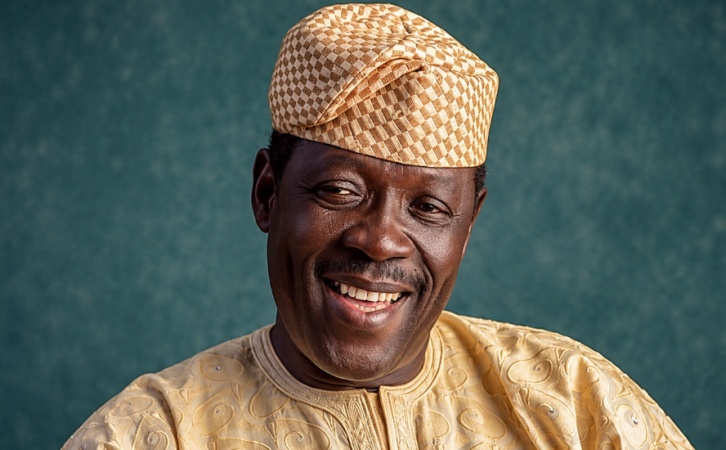

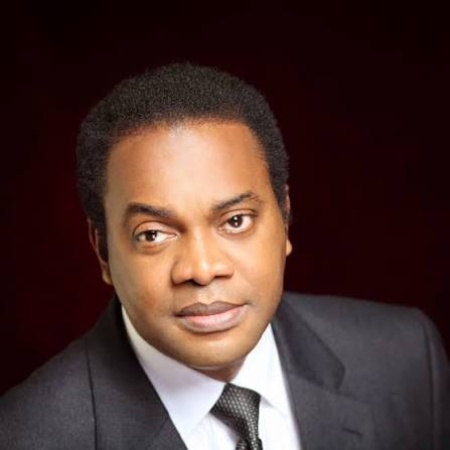


INEC Chairman Prof Joash Amupitan
Opposition political parties and Civil Society Organisations (CSOs) have expressed strong reservations about the Electoral Act 2026, which precludes certificate forgery and age falsification as grounds for nullification of results in an election.
Checks revealed that certificate forgery has been restricted to pre-election matters and is no longer a ground for any tribunal to nullify election results.
Section 138(1) of the amended Act provides that an election may only be questioned on two grounds: whether it was invalid by reason of corrupt practices or non-compliance with the provisions of the Act, or that the respondent was not duly elected by a majority of lawful votes cast.
Reacting to the development, the National Publicity Secretary of the party New Nigerian People’s Party (NNPP), Johnson Ladipo, described the move as “sad and unfortunate”, alleging that it undermines electoral accountability.
Ladipo, in a telephone interview with Nigerian Tribune, accused members of the ruling party and their allies in the legislature and executive of lowering democratic standards.
“It is really sad and unfortunate that we have come to this level, whereby those in authority have fallen so low. These are not honourable people. These are people who want to cheat the system and are now legislating to cheat Nigerians,” he said.
He argued that the amendment sends the wrong signal about the integrity of the electoral process and raises concerns about the credibility of candidates seeking public office.
However, supporters of the amendment have maintained that classifying such cases as pre-election matters is aimed at streamlining the electoral dispute process and reducing prolonged litigation after elections.
The development has sparked debate among political stakeholders, legal experts, and civil society groups, with differing views on its potential impact on Nigeria’s electoral system and democratic norms.
In his contribution, the National Publicity Secretary of the African Democratic Congress (ADC), Malam Bolaji Abdullahi, described the amendment by the ruling All Progressives Congress (APC) and its members in both chambers of National Assembly to lower moral standards to their level.
He said: “We have spoken on this. We are saying that what they have done is to lower the moral standards of the country to their level. What they are saying is that if an armed robber is going somewhere to steal, and you said that ‘if you don’t catch him at the crime scene, then you let him go away with the loot.’ We have condemned it several times. We are saying that it is very wrong.”
The ADC spokesman decried the continued silence by unions and CSOs over the purported move by the National Assembly to shield forgery of certificate in the election petitions in the country ahead of 2027.
Abdullahi insisted that bodies like the Academic Staff Union of Universities (ASUU), labour unions and civil society organisations in the country have surprisingly gone quite over the move but decided to leave such duty to the opposition.
According to him, “this action of the National Assembly is a direct insult to the educational development of the country”.
He added that it has “portrayed that Nigeria has become the nation of certificate forgers in its entirety.”
He noted that “the APC led federal government has failed Nigerians which is the reason they are making laws that lack integrity for the people in the guise of continuing in office.
“Let me say that the government doesn’t care if they pull down the country with the kind of laws that the national assembly is making for the people.”
Also reacting on Sunday, Auwal Musa Rafsanjani, Executive Director CISLAC and Head Transparency International Nigeria, said the development raised fundamental questions about accountability, integrity, and the credibility of individuals elected into public office.
CISLAC expressed its belief that this amendment was problematic and potentially regressive for Nigeria’s democratic and legal framework.
It said certificate forgery is not a mere technical irregularity but a serious criminal offense that directly speaks to the character, legitimacy, and eligibility of a candidate, stressing that shielding such infractions from post-election judicial scrutiny risks normalizing impunity.
It listed implications of the amendment to include erosion of electoral integrity, encouragement of impunity, judicial bottlenecks in pre-election matters, undermining the role of election tribunals, and voter disenfranchisement.
The organisation said the already overburdened courts might face increased pressure to resolve complex forgery cases within limited pre-election windows, potentially leading to rushed or inconclusive judgments.
It noted that Election Petition Tribunals are designed to address all matters affecting the validity of an election, including the qualification of candidates, stressing that stripping them of this authority narrows their effectiveness.
CDD wants post-election period of litigations decongested
Also speaking with the Nigerian Tribune, the Centre for Democracy and Development (CDD) West Africa Director, Dr Dauda Garuba, stressed the need to decongest post-election period of litigations.
He said: “I am comfortable with the position of the Electoral Act 2026 on this matter. Indeed, it was long overdue. As a country, we need to decongest post-election period of litigations. With appropriate steps taken and right things done, we can make it happen.
“Penultimate week, this was one of the issues in the discussion between the Chartered Institute of Forensics and Certified Fraud Investigators of Nigeria (CIFCFIN) and the Centre for Democracy and Development (CDD) which I serve as Director. Both organisations are exploring collaboration for early detection of cases of certificate forgery against public office seekers and political appointees before the cases climax into complex emergencies causing Nigeria embarrassment.”
The Labour Party (LP) Directorate of Mobilisation and Integration (DMI) in its reaction warned that recent changes to the Electoral Act could weaken accountability if not backed by stronger institutions.
A statement, the Director General of the Directorate, Marcel Ngogbehie, said the reclassification of certificate forgery and age falsification as strictly pre-election matters under the Electoral Act 2026 marks a significant shift in Nigeria’s electoral framework.
Ngogbehie acknowledged that the reform aims to reduce prolonged electoral disputes and ensure quicker resolution of cases, noting that delayed litigation has historically affected governance and public confidence in the electoral process.
However, he cautioned that the effectiveness of the reform depends on Nigeria’s broader institutional capacity, including the judiciary, electoral bodies, and law enforcement agencies.
The Directorate expressed particular concern over the continued application of constitutional immunity for certain public officeholders, including the President and state governors, arguing that it could create accountability gaps if disqualifying information emerges after elections.
Drawing a comparison with the United Kingdom, the statement noted that public officials there do not enjoy such immunity and can be investigated or prosecuted while in office, ensuring continuous accountability.
It warned that without adequate safeguards, the new electoral framework could lead to unintended consequences, including reduced scrutiny of candidates, over-reliance on procedural timelines, and diminished public trust.
In his reaction, National Coordinator, Coalition for Northern Groups (CNG), Comrade Jamilu Charanchi tackled National Assembly over the proposed amendment to the Electoral Act, 2026.
He maintained that the newly initiated amendment “weakens the power of Election Tribunals, erodes public confidence, and opens the floodgates for unqualified or fraudulent candidates to occupy public office without consequence. Worse still, it shifts the burden to pre-election litigation, a stage often plagued by delays, technicalities, and political interference, thereby denying many Nigerians the opportunity to challenge wrongdoing effectively.
“The implications are clear: A normalisation of fraud in public office; increased voter apathy due to loss of trust; A judiciary constrained from delivering substantive justice and a political class emboldened to manipulate credentials without fear.
“This is not progress. It is a rollback of accountability and a direct assault on democratic integrity. If credibility is sacrificed at the altar of convenience, then elections become mere rituals, not a reflection of the will or the standards of the people,” Comrade Charanchi stressed. (Nigerian Tribune)