Updating your news feed...
NEWS EXPRESS is Nigeria’s leading online newspaper. Published by Africa’s international award-winning journalist, Mr. Isaac Umunna, NEWS EXPRESS is Nigeria’s first truly professional online daily newspaper. It is published from Lagos, Nigeria’s economic and media hub, and has a provision for occasional special print editions. Thanks to our vast network of sources and dedicated team of professional journalists and contributors spread across Nigeria and overseas, NEWS EXPRESS has become synonymous with newsbreaks and exclusive stories from around the world.





















Loading banners
Loading banners...

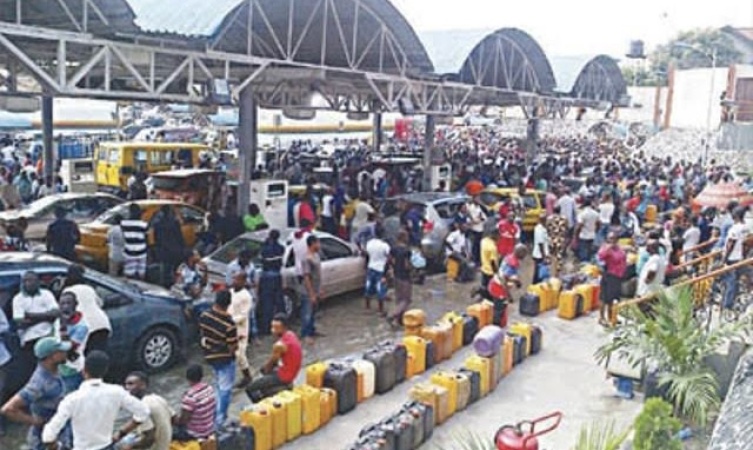
The recent adjustment in the pump price of Premium Motor Spirit (PMS), commonly known as petrol, is taking a heavy toll on residents, business owners and commercial transporters in Rivers State.
The situation is compounded by the fact that many filling stations along major roads remain locked up due to a lack of product supply on Tuesday.
A check by the Tribune Online along the busy East-West Road, specifically between the Rumuekini and Alakahia communities, showed a wide disparity in pricing among the few stations that were operational.
Kisl Oil and Gas Limited was selling at a high of ₦1,500 per litre, while Integrated Resources Limited offered the product for ₦1,400. Further down the road, Rainoil was trading at ₦1,300, and Williete at ₦1,250.
Meanwhile, the Nigerian National Petroleum Company (NNPC) Limited at Stadium Road was observed selling petrol at ₦1,280 per litre, offering a slight reprieve. Conversely, Nelly Val Oil and Gas was priced higher at ₦1,550. On the Eleme-Igbo Etche Road, both Sobaz and Reason Oil were selling at ₦1,300 per litre, adding to the patchwork of prices across the city.
The survey noted that despite the high prices, there were no visible long queues in the area, as motorists could purchase with relative ease from the available outlets.
However, the tranquility in the fuel market belies the economic pain being felt by consumers. The high cost of petrol is sending shockwaves through the transportation sector, with drivers struggling to stay afloat.
Commercial driver Preye Izogu expressed the frustration shared by many, pointing to the swift and opportunistic price adjustments by station owners. “The increment of the fuel is really affecting us negatively,” he said. “The worst part is that when the fuel attendant notices a top-up in the price of fuel, everybody will just adjust their pump price. As at last week, we were buying at the rate of ₦950 per litre, but immediately the price went up a little bit, they have increased it without even selling off their old stock first. Today, I bought petrol for ₦1,200 per litre. We are dying.”
Another driver, Chidi Amadi, lamented that the business is no longer profitable. “Transportation business is gradually dying. For us to even manage to settle the account of the motor that we are driving for the owners is now a problem. We are not making any gains, and to feed our family is now an issue due to the cost we are buying petrol. The government should try and help us so that the high cost of petrol will not run us out of business because presently, petrol stations are now collecting all our gains.”
The ripple effect extends beyond fuel costs to vehicle maintenance and daily running. Kenneth, a commercial driver, highlighted the paradox of high prices in an oil-producing nation. “The price of petrol is unbearable despite the fact that Nigeria is an oil-producing nation,” she stated. “As a transporter, if you take your car to the mechanic for repair and maintenance, you will be shocked with the amount they will charge you for basic things, and their complaint is that fuel is expensive. But if we the transporters attempt to add to the price of transport, before you know it, only fewer passengers will board your vehicle because they will tell you they cannot pay that amount you called. At the end of the day, you are still on the losing side because you are now wasting your fuel for nothing.”
This fear of losing passengers is a central theme, as explained by driver Edwin Echeon. “The prices are not stable; some petrol stations are selling for ₦1,200, ₦1,400, and even ₦1,500. As of last week, we were buying at ₦700; now they have increased it again, and it is really affecting us. If we also hike our price, the passengers will ask us why we are adding money. From here to Pipeline, it was ₦500 we were collecting, but now that fuel has gone up, we added ₦100, but most of the passengers are finding it hard to board our vehicle.”
A resident, Emem Okon, called for government intervention. “We really do not understand the rationale behind the increment of this petrol, but we are just pleading on the federal government to intervene on the fuel issue because prices of foodstuffs have gone up as well. It is hard for everyone.”
For now, the prices of foodstuffs in markets like Okuru Market in Abuloma remain unchanged. However, a trader, Folashade Ibrahim, warned that this stability is temporary. “The prices of goods have not changed yet, but prices of goods might go up as soon as they start restocking,” she said.
This anticipated increase in the cost of goods is already a reality for logistics operators. Lucky Maxwell, a courier, provided a clear example of the cascading effect. “Obviously, it is going to affect business; it is already affecting business. For instance, I did a waybill that I am supposed to pay ₦8,000 for; now I am paying ₦13,000. So when the goods arrive, I am going to add the cost of transporting it inside the waybill to make my own gain, and this is going to really, really affect sales and the cost of goods.” (Nigerian Tribune)