Updating your news feed...
NEWS EXPRESS is Nigeria’s leading online newspaper. Published by Africa’s international award-winning journalist, Mr. Isaac Umunna, NEWS EXPRESS is Nigeria’s first truly professional online daily newspaper. It is published from Lagos, Nigeria’s economic and media hub, and has a provision for occasional special print editions. Thanks to our vast network of sources and dedicated team of professional journalists and contributors spread across Nigeria and overseas, NEWS EXPRESS has become synonymous with newsbreaks and exclusive stories from around the world.



















Loading banners
Loading banners...

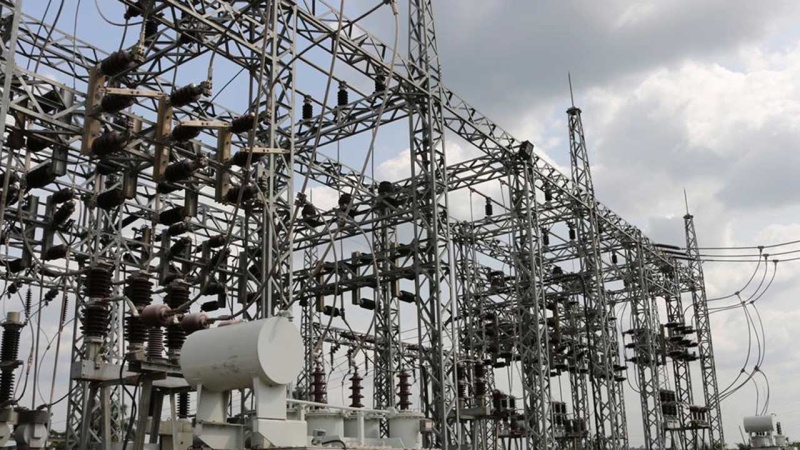
As widespread blackout and load shedding on the national grid persist, Nigerians across major cities are counting losses, with many small businesses shutting down and households forced to abandon bulk food purchases due to their inability to power refrigerators.
Daily Trust gathered that the electricity supply crisis intensified in early February after gas suppliers reduced volumes to power generation plants over mounting debts owed by generating companies (GenCos).
While plant owners blame the federal government for unpaid subsidy obligations, the crisis coincides with the dry season when hydroelectric plants operate below capacity due to low water levels.
The reduced generation has affected all parts of the country, forcing distribution companies (DisCos) to introduce load shedding to ration the limited electricity available.
This is just as the National Union of Electricity Employees (NUEE) is mobilising its members nationwide for a strike next week following the expiration of its 21-day ultimatum to the federal government.
The NUEE had, in a January 26 letter addressed to the Minister of Power, issued a strike notice accusing DisCos and GenCos of anti-labour practices, wage violations and failure to remit deducted Pay As You Earn (PAYE) taxes and pension contributions.
Data from the Nigerian Independent System Operator (NISO) shows that Abuja DisCo is currently receiving 539 megawatts (MW) from the grid; Ikeja DisCo, 533MW; Eko DisCo, 455MW; Ibadan DisCo, 336MW; Benin, 227MW; Enugu, 218MW; Jos, 159MW; Kaduna, 178MW; Kano, 190MW and Port Harcourt,196MW.
Artisans, residents count losses in Kano, Bayelsa
Artisans and residents across Kano State say the persistent blackout is crippling small businesses and worsening living conditions.
Power supply in Kano and parts of the North West is handled by the Kano Electricity Distribution Company (KEDCO), serving Kano, Katsina and Jigawa states.
Musa Abdullahi, a welder in Hotoro area of Kano, said he now relies almost entirely on a petrol generator.
“Before this load shedding became worse, we used to have at least eight to 10 hours of electricity daily. Now, we sometimes go two days without power. I spend between N8,000 and N12,000 daily on fuel. That is eating deep into my profit,” he said.
Abdullahi added that he had lost customers who could not wait for him to complete their jobs due to power interruptions.
“Some projects that should take one day now take three or four days. Customers get frustrated and go elsewhere,” he said.
A tailor in Sabon Gari, Aisha Sani, said her earnings had dropped by nearly half in the last two months.
She said since she uses industrial machines that require stable power, she misses deadlines when there is no electricity.
She said she lost at least five big orders recently because she could not deliver on time.
Frozen food and cold drinks sellers are also recording heavy losses. Maryam Ibrahim, who sells frozen chicken and fish at Kurna, said she lost goods worth over N300,000 after a 48-hour outage.
“My generator developed a fault and before I could repair it, most of my goods had gone bad. I had to throw them away,” she lamented.
According to a barber at Tarauni, Kano, Ibrahim Nasiru, “When there is light, customers rush in and we struggle to attend to them. But when there is no light, we just sit and watch. I cannot afford to run a generator throughout the day because my profit per haircut is small.”
Abubakar Sadiq, a civil servant at Rijiyar Lemo, said his family now spends more on fuel than on some essential household items.
“We have children who need to study at night. Without electricity, they cannot read properly. We spend so much on petrol for the generator. It is becoming unbearable,” he said.
Another Kano resident, Fatima Lawan, said the situation had affected water supply in many homes that depend on electric pumping machines.
“When there is no light, we cannot pump water into our tanks. We now fetch water from neighbours who have bigger generators or from commercial boreholes. It is stressful,” she said.
The situation is said to have compelled some businesses to begin laying off workers. Bashir Ahmad, who runs a printing press at Ungogo in Kano, said revenue had fallen by more than 40 per cent, forcing him to cut staff.
In Yenagoa, Bayelsa State, artisans say rising fuel costs have forced them to increase service charges, leading to poor patronage.
Stephen Eddie, who runs a barbing salon in Amarata, said he raised his price from N500 to N800 to offset generator expenses.
I don’t even make gains again, by the time you buy fuel to run the generator, most of the money you make will go into that, and customers are not coming as it used to be. But I hope the situation will soon change, because Governor Douye Diri has promised us that the gas turbine will be lit up very soon, and that will help in boosting the business in the town,” he said.
A welder in Opolo, Tariebi Ado, said many workshops have shut down because operators cannot afford diesel.
He said: “I have been closing this workshop since last week, I just come out today because someone gave me few protectors to do, if it was when power was stable, I used to come out to the workshop and at the end of the day, I will go back with money to feed my family.
“The government should help us invest in the power situation in this country, because without stable power supply, the economy of this country will not move forward. Like in Yenagoa here, we last saw light more than two weeks ago, how can an artisan work and make a living in such a situation.”
Kaduna, businesses turn to alternatives
In Kaduna, business owners say they have adjusted to the reality of unreliable power by adopting alternative energy sources; while residents say even when electricity returns briefly, bills remain high.
The CEO of Al Fatimah Laundry Services on Charanchi Road in Tudun Wada, Kaduna, Aliyu Abubakar, said that the lack of electricity no longer affects his business because he has already accepted the situation.
He said when there is no electricity, he uses a gas iron but there is electricity he makes use of it but, thus keeps all options.
“Honestly, we have lost hope in electricity in Nigeria,” he said.
According to him, He does not want his customers to suffer, so he uses gas irons but explained that it is easier and cheaper to work with electricity.
“As there is no steady power, we had to increase the price of ironing. If they iron clothes like shirts and trousers using electricity, we charge N200. But if we use a gas iron, the charge is N300. Some customers even prefer the gas iron because they do not want to wait for electricity to come. Many customers no longer believe that power will be restored when they need it, so they ask for the gas iron instead,” he said.
On his part, Ustaz Aliyu Suleiman, who lives in Rigasa area of Zaria, also said the delay in restoring electricity, especially during Ramadan, made people stop complaining because they were tired.
He said that many people now use small solar systems to light their homes and charge their phones.
“It is worrying that you can be in Kaduna city but feel like you are in a village because of the lack of electricity. If you want to run a business at home, like selling ice blocks and similar items, you cannot do it without electricity. Many people who used to run such businesses have stopped because they depend on power supply.”
He also said that whenever electricity finally comes to their area, they still receive high electricity bills despite the poor power
Abuja Band A customers lament
In Abuja, residents on Band A, who are expected to receive a minimum of 20 hours of daily supply under regulations by the Nigerian Electricity Regulatory Commission (NERC), say they are receiving far less.
Emmanuel Addah, a resident of Mabushi, said he had had to throw away perishable food items due to prolonged outages.
“It is very unfortunate that electricity consumers keep on being extorted by these companies. they know it is not possible to keep up with the supply but will still charge us the exorbitant price for band A customers. Why can’t they lower the price since they have not been able to meet up with the service they are meant to provide.”
Addah said the situation has made him not buy food in bulk as he usually does.
“Now, we have to go to the market almost everyday to buy perishable goods that would have been preserved in the fridge. But we can’t keep on wasting money. The only solution is to take the stress of going to the market frequently.”
For Alice Abraham, she said she is only receiving between 15 and 10 hours of electricity daily despite being on Band A.
“The power supply has reduced when compared to before. Though we are supposed to be premium customers, the situation does not reflect the high price of electricity we are meant to pay. I spend less than N20,000 a week on electricity but the supply is not commensurate, thus the government needs to intervene as it shows the power sector is in crisis. But the silence of the government shows it is also complicit and why allow a certain cabal to make you citizens go through hardship funded by the customers.”
On his part, Abel Ibrahim said since the load shedding began had to pay more for diesel to stay in business as constant electricity is important for his super market business.
“It cost of doing business is too high with this lack of solutions to fix our electricity sector. The government has only been making rhetoric without concrete actions to fix the electricity issue all this while. Why won’t our best brains leave when the dream is being suffocated by incompetency.”
Ilorin residents groan under rising costs
In Ilorin, Kwara State, residents and small business owners say the unstable electricity supply is piling financial pressure on households.
A computer technician operating under the name Phoenix Computers said he spends between N2,000 and N4,000 daily on fuel.
“I don’t have solar yet and the least I spend on fuel is N2,000 daily. At times, it gets as high as N4,000. This is a direct cost to us because there is a limit to how much you can increase the price of repairs due to competition. You don’t want to lose customers,” he said.
He explained that beyond the cost of fuel, the frequent power outages also slow down productivity.
He noted that the current heatwave has further compounded the challenge, as operating without cooling systems or fans is almost impossible.
“I have no choice but to put on the generator because customers cannot bear the heat inside the office. It is that bad. Even the staff cannot function properly under that kind of heat,” he stated.
Others say the heatwave had worsened conditions, making it difficult to operate without generators.
Findings showed that many small-scale business owners in areas such Mandate, Agbooba, Adewole and Surulere among others like welders had resorted to alternative power sources, including petrol generators and solar installations, to stay afloat.
Some residents said the high cost of fuel, coupled with the unstable electricity supply, is further stretching already tight budgets amid rising living costs.
They called on relevant authorities and power distribution companies to urgently address the situation to ease the burden on citizens.
Another resident of Ilorin, Mrs Oladuni Abdullahi, said: “With food to preserve, we cannot afford to stay without electricity for too long. Things spoil easily because of the heat. We are spending money we did not plan for.”
Similarly, Omowumi Zainab, a tailor, said pressure from customers has left her with no option but to spend heavily on fuel every day in order to meet deadlines, particularly with the rush for Salah celebrations.
“This is not even about Band A, B or C anymore. These days, the situation is getting worse in terms of epileptic power supply,” she said.
“We have solar, but it cannot power our refrigerator. And you know this is Ramadan; if you are not careful, your food stock will spoil. At home, my family spends about N3,000 on fuel daily because of the lack of electricity, which is getting worse. The same thing applies at my shop. With pressure from customers and preparations for Sallah, the situation is overwhelming. We do not want to disappoint our customers. We honestly do not know what to do now, and the worst part is that we do not know when the situation will improve,” she lamented.
Creatives decry infrastructure gap
Award-winning producer Sarz has also criticised unreliable electricity, describing it as a major obstacle to creativity.
Speaking on the Afropolitan Podcast, he said inconsistent power disrupts creative momentum.
“I was born and raised in this country and I have never experienced electricity for 24 hours. There are times when I wake up feeling inspired and I want to create music but there is no light. Sometimes, even when you want to buy fuel, they will tell you that there is a strike or scarcity. And then you end up doing not nothing and the potential is just wasted,” he said.
Sarz explained that creativity thrives on momentum and mental readiness, but those conditions can quickly be undermined when basic infrastructure fails.
“As a creative person, you need to be mentally charged to perform at your best. So, when the infrastructure is lacking at the moment, you are mentally charged, it is a challenge,” Sarz added.
He stressed that while Nigeria’s entertainment industry has recorded global success, its progress remains constrained by structural deficiencies. For the sector to truly flourish, he noted that consistent power supply and improved infrastructure must become a priority.
Why supply remains low
NISO had attributed the crisis to inadequate gas supply to thermal plants.
It had said the national grid was receiving only one-third of gas supply needed to provide adequate electricity supply to Nigerians.
In a statement, the management of NISO said this had brought on low supply across the country, leading to load shedding.
It noted that it had caused the reduction of electricity generation to 4,300 Megawatts.
“We hereby notify the general public and all market participants that the current average available generation of approximately 4,300MW is primarily due to inadequate gas supply to thermal generating stations.”
“Given that thermal plants account for the dominant share of Nigeria’s generation mix, any disruption or limitation in gas supply directly affects available generation capacity and overall grid output. Consequently, the current energy allocated to Distribution Companies (DisCos) reflects the reduced supply available on the grid.”
“Available operational data indicates that thermal power plants collectively require an estimated 1,629.75 million standard cubic feet (MMSCF) of gas per day to operate at optimal capacity. However, as of February 23, 2026, actual gas supply to the stations stood at approximately 692.00 MMSCF, representing a significant shortfall in daily gas supply requirements.”
It said the available gas supply represents less than 43% of the required volume, resulting in constrained generation output.
“The current low generation level is fundamentally driven by inadequate gas supply to thermal generating units, leading to reduced energy allocation to the DisCos.”
It added that when total system generation drops significantly, the Independent System Operator must implement load shedding across the system, while dispatching available energy in line with the NERC MYTO allocation percentages across all distribution networks to maintain grid stability and prevent system disturbances.
“While we regret the inconvenience this situation may cause electricity consumers and affected market participants, we will continue to work closely with relevant stakeholders to ensure full energy allocation as soon as gas supply improves and generation capacity is restored.”
Situation will not improve till April – AEDC
Meanwhile the Abuja Electricity Distribution Company (AEDC), while expressing empathy with the frustrations being experienced due to the limited power allocation to its customers, said Nigeria’s power sector is currently facing significant constraints during the dry season (typically November to April)
While also blaming the gas shortage, it said hydropower generation often drops during this season due to low water levels in dams, and many thermal plants experience reduced gas supply from pipeline issues, vandalism, and other supply-chain disruptions.
“These factors have led to lower overall generation and reduced allocations from the national grid to all Distribution Companies (DisCos), including AEDC.”
“Recent data from the grid operator show that allocations to DisCos have been severely limited at times, sometimes dropping dramatically due to system issues or generation shortfalls.”
It added that similar notices from other DisCos have attributed widespread outages to gas shortages and reduced national generation, emphasising that such declines are not within the DisCos’ control but require collective efforts from generation companies, gas suppliers, and regulators.
Over 5m customers still unmetered – NERC
Meanwhile 5,196,828 (million) electricity customers are yet to get meters across the country despite the issuance of 109,556 meters in the month of December by the 11 electricity Distribution Companies (DisCos) in the month of December.
According to a factsheet by the Nigerian Electricity Regulatory Commission (NERC), the national metering rate rose to 57.27% by the end of December, up from 56.54% in November. It said a total of 109,556 customers were metered in December alone, compared to 88,592 in November and it identified Ikeja, Eko, and Abuja DisCos as top performers that continue to lead with the highest metering rates.
It said they all maintain levels above 76% of metering rate of customers in their franchise areas.
It went on to state that a total number of metered customers as of December 2025, reached 6,966,584 out of 12,163,412 active customers. (Daily Trust)