ADAD
ADAD
Updating your news feed...
NEWS EXPRESS is Nigeria’s leading online newspaper. Published by Africa’s international award-winning journalist, Mr. Isaac Umunna, NEWS EXPRESS is Nigeria’s first truly professional online daily newspaper. It is published from Lagos, Nigeria’s economic and media hub, and has a provision for occasional special print editions. Thanks to our vast network of sources and dedicated team of professional journalists and contributors spread across Nigeria and overseas, NEWS EXPRESS has become synonymous with newsbreaks and exclusive stories from around the world.



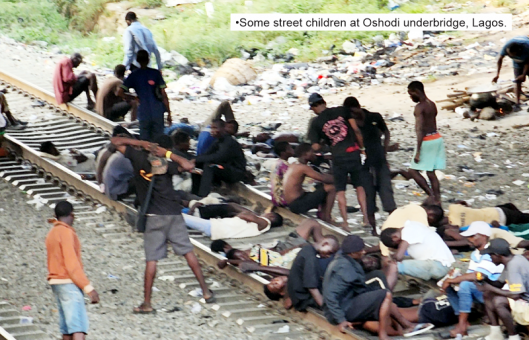
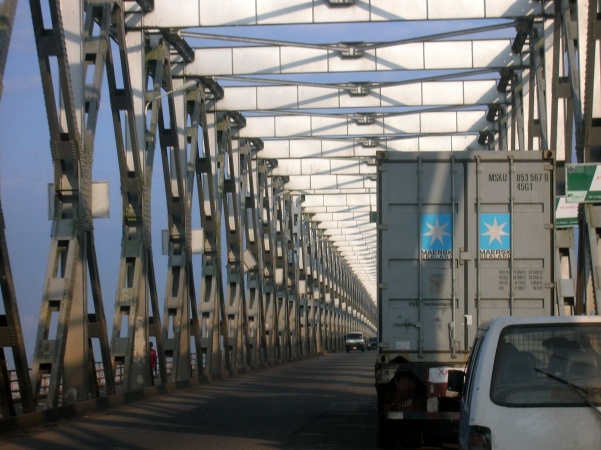
In the shadow of Oshodi’s bustling under-bridge in Lagos, a makeshift community thrives against the odds. On a sunny Thursday, Iga Samuel, a 25-year-old with the weathered look of someone far older, emerges from a narrow gap in the barricades erected by the Lagos State Government to prevent accidents on the new train tracks.
The pedestrian bridges built for safe crossing loom overhead while for Samuel and hundreds others like him, the space beneath, a precarious sanctuary carved out of concrete and necessity, remains home.
Samuel has lived on the streets since he was 15, fleeing a family in Badagry overwhelmed by poverty. “My parents couldn’t train everyone. They did not have enough to feed us,” he recounts over a meal.
After years of hardship, he spent a decade in prison for selling marijuana, a desperate hustle that ended in the trap of the taskforce. “Nobody to defend me. I no get lawyer, so they carry me go prison,” he said in Pidgin English.
Released, he turned to working as a bus conductor, scraping survival in a city that brands street dwellers as thieves. Yet, he insists, “I never thief any person money. Na just wetin I go chop we dey find.”
“All of us for this place, na here we form community. We dey look after one another,” he added.
Younger children sleep soundly under the bridge at night, protected by the older ones. They disperse in the morning to hustle across the city while the setting of the sun reunites them.
“We dey look after one another. The small, small ones among us dey sleep well.
“Sometimes we dey sleep for that bridge. Nobody dey rob anyone.
“Once morning reach, everybody go their own. For evening, we return.”
According to a report in 2023, from stakeholders for street children, a United Kingdom based non-governmental organisation, an estimated 150 million children reside in urban streets around the world. The causes of this phenomenon are varied, but are often related to domestic, economic or social disruption.
Yet, Samuel’s story is emblematic of a broader crisis gripping Lagos, Africa’s most populous city. Estimates suggest around 100,000 children and youth are affected by street life here; some living fully on the streets, others working there by day but returning to fragile homes.
According to the European federation for street children, “they are extremely vulnerable group of children living in most severe situations well beyond the usual notion of poverty.
“They face a gross violation of their human rights such as violence, sexual exploitation and abuses, chemical addiction and various other human rights violation.”
Yet beneath the bridges and in forgotten corners, these youths forge bonds that mimic family. They share food, watch over the vulnerable, and enforce an unspoken code: no internal theft, mutual protection.
This resilience stands in stark contrast to the hazards they face: sexual violence, drug exposure, exploitation by criminal rings, and stigmatization by authorities who conduct raids, labeling them threats.
The United Nation International Children Emergency Fund in 2017 defined street children as people below the age of 18 years who live on the street, off the street, and in between the street. According to the agency, there are two types of street children: the ones who are in the street full time and those that return to their home each night.
The phenomenon of children and youth living on the streets in Nigeria is deeply rooted in socio-economic realities. Poverty remains the primary driver, exacerbated by Nigeria’s economic growth and rapid population increase. Many families are unable to provide for their children, pushing them to seek survival on their own or abandon the home altogether.
Poverty, coupled with family dysfunction, abuse, neglect, and domestic violence, creates a perfect storm that displaces children to the streets.
In an interview with a social worker who runs Mountain Top Rehabilitation Centre, Mr Olushola Tejusho, he said some are victims of trafficking – used for begging, forced labour or criminal activities – while others are fleeing insecurity or political instability, especially from conflict-affected regions like the Northeast of Nigeria.
Displaced by war, violence, or economic hardship, these children find themselves in Lagos, seeking safety, stability or simply a place to survive.
“Many of them ran away from home,” he said. “Some are ashamed of their parents’ poverty. A 12-year-old told me his father survives by carrying loads in the market. The income is simply not enough.”
He noted that many families have more children than their income can support, further compounding the crisis. “There are some families you will go to you will see five children on 100k salary. Why won’t there be street children.”
According to a Global executive research organization, Talentum, Africa’s rising youth population is set to redefine the global workforce by 2030. About 60 per cent of Africa’s population is currently under the age of 25. The research indicates that by 2100 Africa’s youth will be equivalent to twice Europe’s entire population.
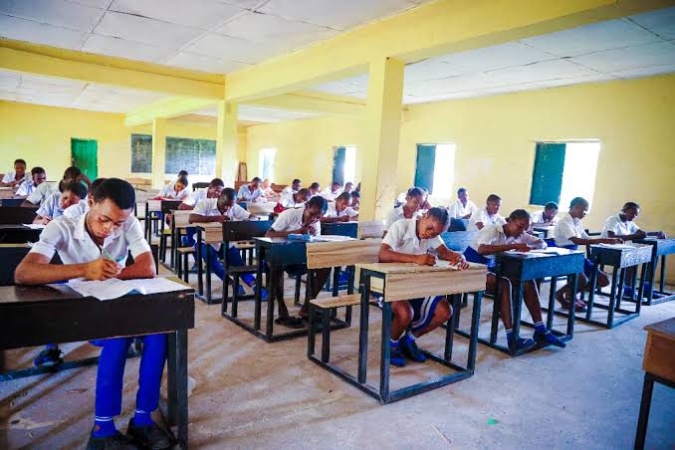
Nigeria stands at the centre of this shift facing an escalating education crisis that experts say could pose grave consequences for the nation’s future, as the number of out-of-school children continues to rise despite existing policies and funding mechanisms meant to guarantee access to basic education.
UNICEF further placed total number of out of school children in Nigeria at 10.5 million, making the country home to roughly one in five out of school children globally.
The National Bureau of Statistics reported youth unemployment rate at 43.3 per cent in the second quarter of 2024.
Mr Olushola Tejuosho described the situation as “alarming, painful, and dangerous,” warning that the country is steadily nurturing a generation of vulnerable children who are being left behind by both the state and the society.
According to him, going by the recent global data released by UNICEF, Nigeria currently has the highest number of out-of-school children in the world; a statistic that has reignited debate over responsibility, governance and accountability within the country’s education system.
Tejuosho explained that children who are denied access to education are more likely to fall victim to exploitation and social vices, not by choice, but by circumstances.
“When children who should be in classrooms are left on the streets, they become extremely vulnerable,” he said.
“They can be recruited into criminal activities, exposed to substance abuse, forced into street begging, hawking or even prostitution.
“They are not born into these things. Society pushes them there.”
He stressed that the long-term impact of mass educational neglect goes beyond the affected children themselves.
Related News
“A society with a large number of uneducated youths will struggle to rid itself of crime and instability,” he said.
“These children grow up without structure, without guidance, and without skills.
“Eventually, they become a danger not only to themselves but to everyone else.”
From Lagos to other urban centres, the presence of out-of-school children has become increasingly visible.
“They are everywhere now,” Tejuosho said, “begging, hawking, knocking on car windows in traffic and banging on doors. This is not normal. This is a sign of systemic failure.”
He warned that failure to address the problem urgently would result in a ‘multiplier effect,’ worsening insecurity, unemployment and social unrest in the years ahead.
“The child you ignore today could be the one driving your bus tomorrow,” he said, “untrained, unsupervised, possibly under the influence, or the one committing crimes in your neighborhood. This is how insecurity is born.”
Lagos State has been grappling with the challenge of addressing the needs of street children and youth. The government, through its various agencies and collaborations with NGOs, has established structures and policies aimed at rescue, rehabilitation, and reintegration.
The Commissioner for Ministry of Youth and Social Development, Mr Mobolaji Ogunlende, said his ministry has put in place programmes such as the Child Care Programme, which allows the creation of residential learning centers – homes that provide shelter, education, and support for children without families or those at risk of falling deeper into street life.
On the issue of migration, the commissioner described it as a challenge, noting that the state continues to experience mass influx of people seeking better economic opportunities.
“Lagos has a population of about 30 million people and the smallest land mass in Nigeria.
“People migrate here daily without plans or accommodation, and this places enormous pressure on the state,” he said.
Despite the challenges, the commissioner said the ministry continues to invest heavily in youth empowerment programmes, stressing that the focus has shifted from one-off interventions to structured, monitored support systems.
He cited initiatives such as the Business Amplifier Clinic, which provides training, grants and soft loans to young entrepreneurs, as well as vocational empowerment schemes, which distribute equipment like sewing machines, laptops and hairdressing tools.
Beneficiaries, he said, are now required to have registered guarantors to ensure accountability.
“We are no longer just giving out grants. We train beneficiaries on record-keeping, financial management and accountability,” he explained.
On data collection, Ogunlende admitted that obtaining accurate figures on street-connected children remains difficult due to their mobility. However, he said the state continues to collect operational data through rescue exercises, biometric registration and collaboration with the Lagos State Residents Registration Agency (LASRRA), local governments and NGOs.
Addressing concerns about criminalising vulnerable children, the commissioner stressed that the ministry adopts a child protection and welfare approach rather than a law enforcement one.
“Children are not treated as criminals. Our focus is safety, care and prevention of harm. Many of these children are victims of circumstances, abandonment and exploitation,” he said.
Addressing the plight of street youths, Tejuosho lamented the decline in communal responsibility that once served as an informal safety net.
“In the 80s and 90s, if a child left home in uniform and didn’t get to school, someone in the community would notice,” he recalled.
“That child would be questioned, reported or even escorted back home or to school.”
He said today’s economic pressures and changing social values have eroded that sense of collective responsibility.
“Everyone is focused on survival,” he said. “People no longer feel responsible for what happens in another person’s home. But this attitude is dangerous.”
According to him, collective effort – government agencies, community leaders, NGOs, religious organisations, and the private sector all have roles to play.
He said: “Community-based programmes such as vocational training, educational initiatives, and psychosocial support, are crucial in offering sustainable alternatives.”
Despite all these hardships, the resilience and resourcefulness of street youths are remarkable. Many develop survival skills, form tight-knit communities, and exhibit innate talents that often go unnoticed.
Some NGOs and social entrepreneurs have begun initiatives to tap into these potentials such as chess programmes that identify and nurture talent among street children, providing opportunities for education and empowerment.
Tunde Onakoya, a renowned chess player and social innovator, emphasises the importance of creating sustainable systems for these children. His programme involves engaging their minds, rehabilitating them, and exposing them to opportunities that can change their narratives. For many, street life is a temporary phase – a detour – rather than a permanent destiny.
The Lagos experience underscores a vital truth: the problem of street children is a societal failure that demands urgent, sustained and multi-dimensional responses. Policy reforms, increased funding, better data, community engagement, and comprehensive social safety nets are essential components of a long-term strategy.
As Lagos continues to grow and develop, the city’s future hinges on how well it protects its most vulnerable – its children and youth.
Beneath the bridges, in the shadows of the city, lie stories of resilience, hope, and the unbreakable human spirit.
Recognising and supporting these communities is not just a moral obligation but a strategic investment in Nigeria’s collective future. (TheNation)