ADAD
ADAD
Updating your news feed...
NEWS EXPRESS is Nigeria’s leading online newspaper. Published by Africa’s international award-winning journalist, Mr. Isaac Umunna, NEWS EXPRESS is Nigeria’s first truly professional online daily newspaper. It is published from Lagos, Nigeria’s economic and media hub, and has a provision for occasional special print editions. Thanks to our vast network of sources and dedicated team of professional journalists and contributors spread across Nigeria and overseas, NEWS EXPRESS has become synonymous with newsbreaks and exclusive stories from around the world.








.webp)



.webp)







Loading banners
Loading banners...


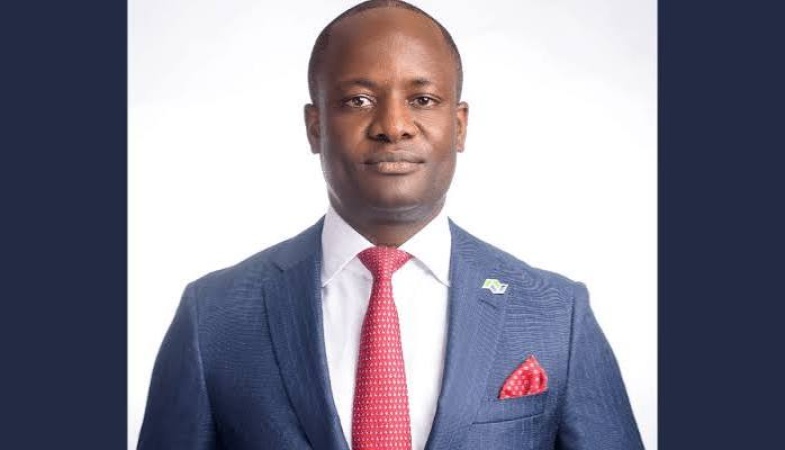
NBA President Afam Osigwe, SAN
The President of the Nigerian Bar Association (NBA), Mazi Afam Osigwe, SAN, has denied attacking judges and lawyers, insisting that his recent remarks on judicial corruption were a call for reform and a warning about the growing negative perception of Nigeria’s justice system.
Speaking in an interview with ARISE News on Wednesday amid controversy over reports that he described judges and lawyers as the “worst bribe takers and givers”, Osigwe said his comments had been misrepresented and taken out of context.
“It wasn’t,” he said when asked if his speech was an attack on the judiciary.
“It was a call to action, calls to reform, and a warning that if nothing was done to address the declining perception of the judiciary, that confidence in the administration of justice will be lost.”
He stressed that his intervention was centred on perception, not unproven accusations.
“Perception. That people believe that the justice sector is corrupt. I mean, I had no empirical evidence to back that up, but I had to sound that warning.”
Osigwe noted that even past and present Chief Justices of Nigeria have acknowledged concerns about public confidence in the courts.
“Even the current Chief Justice of Nigeria and many past Chief Justices of Nigeria have acknowledged the same and emphasised the importance of having a positive perception or view of the judiciary, and the need for public confidence to be won in order for the judiciary to be able to do a better job. So I actually wasn’t saying anything new.”
He explained that he cited reports by the United Nations Office on Drugs and Crime (UNODC), the Independent Corrupt Practices and Other Related Offences Commission (ICPC) and the National Bureau of Statistics, all of which were based on perception surveys.
“These are reports based on perception — how people see the justice sector. And the ordinary people, who are the consumers of our services at the bar and the bench, view our services in a negative light. They believe that justice is purchasable. And whether we believe that to be right or not, as Justice Dahiru Musdapher said, is not the issue. The important thing is that they feel this way, thereby imposing a duty on us to take steps to build confidence, to dispel that perception.”
Responding to criticism that his comments were explosive, Osigwe said he underestimated “the power of the media to misrepresent facts.”
“I thought that before people choose screaming headlines for papers, it would have been nice for that to be derived from the paper presentation.”
He acknowledged that the justice system is “on edge”, but said that in itself reflects the depth of public concern.
“The important thing is that it is the elephant in the room and we must address it.”
While emphasising that his speech focused on perception, he admitted that confirmed cases of judicial corruption exist.
“Oh, there are confirmed cases of judicial corruption. To pretend otherwise would be to deny the obvious.”
He pointed to instances where the National Judicial Council (NJC) has recommended the dismissal, suspension or termination of judges for misconduct.
“If we talk about something being systemic, it means that it may be widespread. And the fact that the NJC has, in the last so many years, recommended judges for either dismissal or termination of employment or suspension for corrupt practices would appear to confirm the fact that it is there and it is an issue that needs to be dealt with. We may not be able to eradicate it, but we should be able to keep it down.”
On the oft-quoted phrase that “it takes two to tango”, Osigwe clarified:
“In the situation where there is proven giving of a bribe, it takes two to tango.”
However, he stressed that corruption in the justice sector is not limited to judges alone.
“There are cases where some traditional rulers have been engaged to give bribes, serving or retired judges, religious leaders, family relations, court staff, lawyers — it’s a societal thing. And I tried to say it that much in my paper. So it’s not as if it’s just the judge.”
He added that in some cases, money is collected in the name of judges without their knowledge.
“Sometimes there are people who collect money in the name of a judge without the knowledge of the judge, or some lawyers who collect money from their clients that they were going to give a bribe to the judge, even when no such conversations are taking place.”
Osigwe warned that perception alone can damage democracy, even where corruption is not conclusively established.
“It’s not important whether this view is correct or not. The important thing is that the society which we serve is no longer happy with us and the work we do.”
Drawing from legal principles, he explained:
“In law, real likelihood of bias can lead to the setting aside of a judgment. And it doesn’t matter whether that perception is wrong. It’s about what would a right-thinking person say. If a right-thinking person would believe that justice has not been done, then that’s it.”
He maintained that where judgments defy established authorities, serious questions arise.
“When there are established authorities on an issue, and a judge decides contrary to that, even when it was brought to his attention, it could either be evidence of corruption or evidence of lack of knowledge of the law, incompetence. And whichever way it is, it is enough to see such a person off the bench.”
Osigwe recounted how public reaction to election judgments in states such as Kano demonstrated how perception of justice affects stability.
“When people perceive that the right thing has been done, it affects how they react… I always cite this example to show how public perception of whether justice has been done in a case has a big effect on democracy and security in our communities and states.”
The NBA president proposed several reforms, including merit-based judicial appointments, digital case assignment systems and removing the Chief Justice of Nigeria as Chairman of the NJC.
“Removing the Chief Justice of Nigeria as chairman of the NJC, allowing the five members of the bar who sit at the NJC to participate in disciplinary process actions against judicial officers — for some reason, people don’t think it’s a good idea.”
He also criticised what he described as lenient disciplinary measures.
“Sometimes the punishment meted out has not been quite satisfactory… when you say that a judicial officer who has been found to have violated his code of conduct should be suspended for six months or that the person will not be promoted to the Court of Appeal, I see that as a reward. If he’s not good enough to proceed to the Court of Appeal, why should he or she be good enough to remain at the High Court bench?”
On asset declarations, Osigwe expressed caution about making them fully public due to security risks, but endorsed lifestyle audits.
“The most important thing is a lifestyle audit. We should have lifestyle audits for people who occupy such office.”
Osigwe further warned that the judiciary risks being perceived as a political instrument.
“I lamented the fact that free speech is being muscled in Nigeria under the guise of charging people to court, investigating them for cybercrime and criminal defamation… judges and magistrates are increasingly appearing to be tools in the hands of politicians and big men and refusing people bail, even when there is no basis for it.”
He cautioned:
“If our judges become willing tools in giving them that which they desire, which is to put those people out of circulation, then there’s something wrong. And the judiciary becomes a willing tool in the hands of the oppressors and thereby becomes an oppressor itself.”
On electoral disputes, he said negative perceptions and conflicting judgments fuel doubts about neutrality.
“Sometimes the conflicting judgments of the court with respect to electoral matters give room for people to have doubts about the ability of the courts to do justice… there’s an accusation of judicialisation of the electoral process.”
Osigwe insisted that the legal profession must discipline its own members.
“If we blame the judges and pretend that there are no bad eggs amongst us, then we’re not serious about tackling the problem we face.”
He welcomed the proposed Legal Practitioners Amendment Bill currently before the National Assembly.
“If that bill is passed into law, it will go a long way in making it easy for disciplinary actions to be brought against lawyers, both junior and senior… and expanding the grounds upon which disciplinary action can be brought.”
Despite the challenges, he expressed confidence that reform is possible.
“It is reformable and I don’t think we require any external shock. The changes may be gradual… We must learn to hasten slowly to ensure that there is fairness to all concerned. But let us get it right. That is the most important thing.” (AriseNews TV)