
















Loading banners


NEWS EXPRESS is Nigeria’s leading online newspaper. Published by Africa’s international award-winning journalist, Mr. Isaac Umunna, NEWS EXPRESS is Nigeria’s first truly professional online daily newspaper. It is published from Lagos, Nigeria’s economic and media hub, and has a provision for occasional special print editions. Thanks to our vast network of sources and dedicated team of professional journalists and contributors spread across Nigeria and overseas, NEWS EXPRESS has become synonymous with newsbreaks and exclusive stories from around the world.
Naira and Dolar
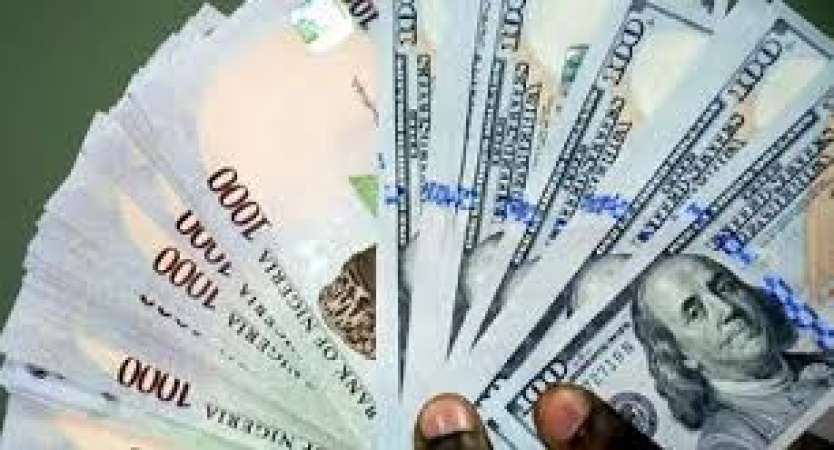
The Naira strengthened to N1,348 against the US dollar on the Nigerian Foreign Exchange Market (NFEM) yesterday, indicating a 14-month high since the introduction of the official window in December 2024.
The positive performance comes as the Central Bank of Nigeria (CBN) okayed the return and participation of licensed Bureau De Change (BDC) operators at the NFEM.
The central bank also approved that weekly FX purchases by each BDC be capped at $150,000, and that utilisation comply with existing BDC operational guidelines.
Also, Minister of Industry, Trade and Investment, Dr. Jumoke Oduwole, revealed that Nigeria’s total capital importation rose to about $21 billion in the first 10 months of 2025.
However, at the close of trading yesterday, the Naira was quoted at N1,348.95 per dollar, marking the first time it traded stronger than the N1,350 thresholds since the inception of the official FX window.
Data from the CBN website showed that the naira exchange rate against the greenback stood at N1,351/$ on Tuesday.
Year-on-year, the naira had gained N165, or 10.9 per cent, underscoring sustained strength amid policy interventions and improving market liquidity.
The development also influenced the parallel market, where the local currency appreciated marginally by N10, exchanging at N1,440 per dollar on Wednesday, up from N1,450 the previous day.
The central bank however explained that its latest dollar sale to BDCs was part of efforts to improve foreign exchange liquidity in the retail segment of the market and meet the legitimate needs of end users.
The development was conveyed in a circular signed by CBN Director, Trade and Exchange Department, Dr. Musa Nakorji.
Under the new directive, all BDCs duly licensed by the CBN are permitted to access foreign exchange through any Authorised Dealer Bank (ADB) of their choice, at the prevailing market rates.
The move, according to the circular, also aimed to deepen market efficiency and ensure broader access to foreign exchange across the economy.
The CBN, however, imposed strict compliance and risk-management conditions on the transactions.
Authorised dealers are required to conduct full Know-Your-Customer (KYC) and due diligence checks on BDC clients before any FX sale.
To further strengthen transparency and accountability, the central bank directed that all licensed BDCs must submit timely and accurate electronic returns in line with extant regulations.
Any unutilised foreign exchange must be sold back to the market within 24 hours, as BDCs are prohibited from holding FX positions purchased from the NFEM.
The circular further restricts settlement practices, mandating that all FX transactions be conducted through settlement accounts with licensed financial institutions.
Third-party transactions are prohibited, while cash settlement is limited to a maximum of 25 per cent of each transaction amount.
Overall, the directive reflects the CBN’s broader strategy to balance market access with strong regulatory oversight, ensuring liquidity in the foreign exchange market while safeguarding financial system integrity.
The CBN had stopped weekly dollar allocations to BDCs, alleging they were involved in illegal transactions and money laundering.
However, the return of BDCs into the official forex operation remained heavily regulated.
The current volume of FX allocation is an improvement over earlier interventions when the apex bank allocated between $10,000 and $20,000 to each BDCs.
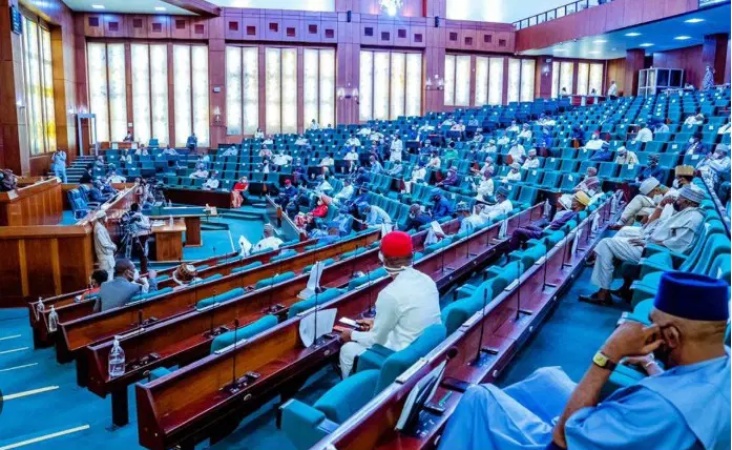
However, spoking at the ministry’s 2026 budget defence before the Joint House of Representatives Committee on Commerce, Oduwole stated that the rise in capital importation marked a sharp increase from about $12 billion in 2024 and less than $4 billion in 2023.
She attributed the recovery to deliberate ministry interventions, including the curation of over $5 billion in bankable projects, the establishment of sector-specific deal rooms, and the hosting of Nigeria’s inaugural Domestic Investors’ Summit.
On trade performance, Oduwole said Nigeria recorded a trade surplus in 2025, with total trade valued at about N113 trillion in the first three quarters of the year.
She added that exports increased by about 11 per cent year-on-year to $6.1 billion — the highest ever recorded in both value and volume.
Oduwole noted that the ministry intensified efforts to promote non-oil exports, improve market access for Nigerian goods, and strengthen quality infrastructure to meet international standards.
She added that Special Economic Zones contributed significantly to industrial diversification, generating over $500 million in export revenues and creating more than 20,000 direct jobs.
However, the minister appealed for an upward review of the proposed N2.72 billion capital allocation to the Ministry for 2026, warning that the amount would be insufficient to sustain momentum and execute priority programmes at scale.
The minister recalled that in 2024, the ministry had a total appropriation of N14.39 billion, with Personnel and Overhead allocations fully utilised, while 93.2 per cent of the N8.36 billion capital allocation was released and fully expended.
She revealed that the revenue performance that year exceeded target by approximately N154 million, with full remittance to the Consolidated Revenue Fund. (THISDAY)