
Updating your news feed...
NEWS EXPRESS is Nigeria’s leading online newspaper. Published by Africa’s international award-winning journalist, Mr. Isaac Umunna, NEWS EXPRESS is Nigeria’s first truly professional online daily newspaper. It is published from Lagos, Nigeria’s economic and media hub, and has a provision for occasional special print editions. Thanks to our vast network of sources and dedicated team of professional journalists and contributors spread across Nigeria and overseas, NEWS EXPRESS has become synonymous with newsbreaks and exclusive stories from around the world.










Loading banners
Loading banners...

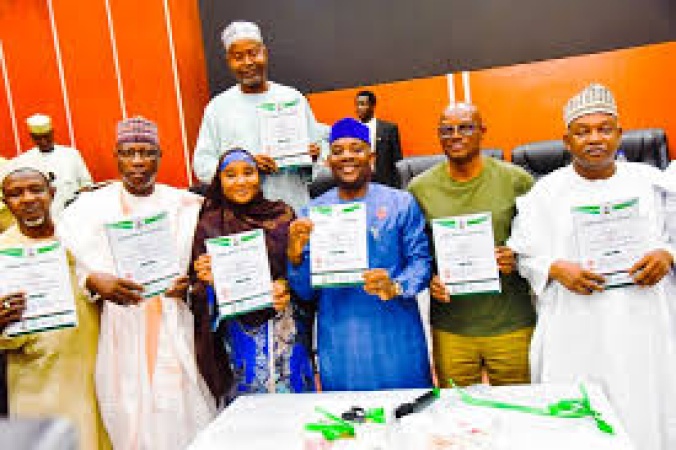
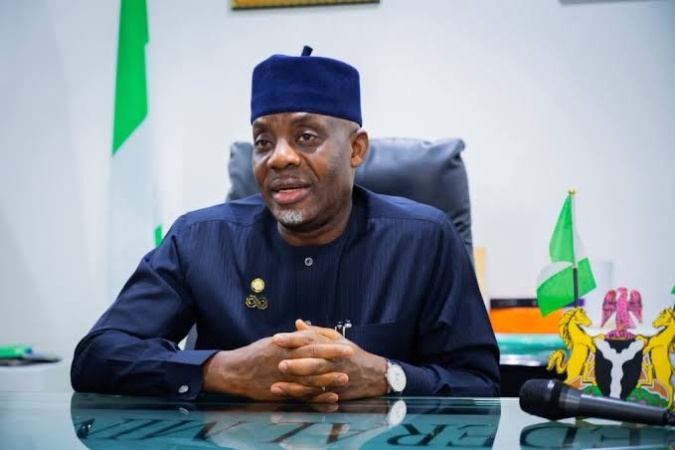
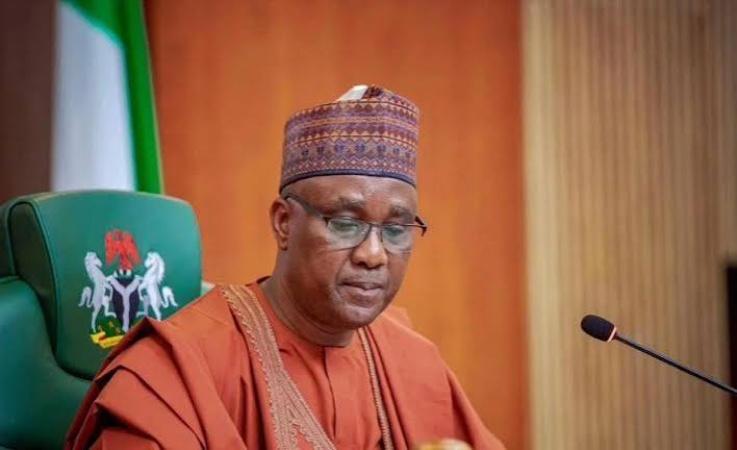
Hon Minister of Education, Dr Alausa M along with Hon Minister of State for Educationn; Prof Sa
STUDENTS, parents and stakeholders have expressed mixed feelings about the 2025 Federal Government of Nigeria and Academic Staff Union of Universities with many expressing fears and doubt over the sincerity, particularly in the area of commitment towards faithful implementation of the agreement signed and unveiled on Friday.
The Federal Government under the agreement is to inject about N30 billion stabilisation and restoration Fund in the public universities. The money would be disbursed in three equal instalments of N10 billion annually from 2026 to 2028.
“Is it the first time that government is signing such agreement with ASUU? Why was the 2009 agreement not implemented? The problem has been the lack of sincerity on the part of successive administrations in the country and the lip service paid to education. We are watching”.
These where the words of Jeccinta Adole, a 400 Level student of University of Jos. She happens to come from the same University of Jos with the President of ASUU, Professor Chris Piwuna, who also expressed “conscious optimism” about the agreement.
Adole told Sunday Tribune that her doubt stems from trust deficit that exists between the government and citizens over time. She said her prayer is that the current government hold fast to the terms of agreement so that her hope of graduating next year for her five-year programme will not be impeded.
While Adole is not alone in expressing such scepticism, some other Nigerians have commended both the Federal Government and members of ASUU for the sacrifices made to arrive at a concrete agreement likely to return University campuses to sustainable industrial peace and harmony for interrupted flow of academic calendar.
The 2025 FGN-ASUU agreement unveiled by the Federal Government on Friday, 14th January, 2026 would be due for renegotiation after three years of implementation. The historic unveiling ceremony signal a marked departure from 16 years of back and forth, disruptions in academic programmes by strike with the government playing ostrich in the negotiation process.
Sunday Tribune also gathered that the current agreement was crafted differently to avoid pitfalls and outlandish provisions which could hamper implementation. The agreement focuses on conditions of service, funding, university autonomy and academic freedom, and other systemic reforms to reverse decay, curb brain drain, and reposition universities for national development.
Previous efforts to renegotiate the 2009 Agreement were futile and even though four committees were raised for the purpose. The agreement that was due for renegotiation in 2012, dragged on for 16 years because of disagreements from both the Federal Government and ASUU.
Recall that government had established a committee led by Wale Babalakin, a Senior Advocate of Nigeria (SAN) and erstwhile pro-chancellor of the University of Lagos, in 2017 to review the 2009 agreement but the committee was unable complete the review.
The government constituted another committee headed by the then Chairman, Committee of Pro-chancellors, Prof Munzali Jibril in 2020 under the administration of late President Muhammadu Buhari was also set up and later another committee headed by the late Emeritus Prof Nimi Briggs.
On June 16, 2022, the Briggs Committee submitted a draft agreement to the government, terming it a product of collective bargaining, but the government didn’t implement the recommendations.
This culminated in the 2022 industrial action by ASUU which lasted for eight months. The strike began on February 14, 2022, and was officially suspended on October 14, 2022, following an order from the National Industrial Court and subsequent negotiations. It is also estimated that total strikes by ASUU in Nigerian universities took about four years of academic sessions because perennial disruptions almost on yearly basis before the coming of the current administration of President Bola Ahmed Tinubu.
It was against this backdrop that in 2024, the erstwhile Education Minister, Prof. Tahir Mamman, inaugurated the Yayale Ahmed-led committee to handle the renegotiation of agreements with university – based unions, leading to the actualisation of the 2025 FGN-ASUU agreement.
Speaking during the unveiling of the agreement, in Abuja, the Minister of Education, Dr. Olatunji Alausa, said the occasion represents far more than the unveiling of a document but symbolizes renewed trust, restored confidence, and a decisive turning point in the history of Nigeria’s tertiary education system.
According to him, the landmark 2025 FGN–ASUU Agreement was negotiated transparently and approved strictly in line with established government procedures.
First, the agreement provides for an upward review of salaries of academic staff in Federal Tertiary Institutions by 40 per cent, alongside improved conditions of service as approved by the National Salaries, Incomes and Wages Commission (NSIWC), with effect from 1st January 2026.
It also provided for Earned Academic Allowances grouped into nine in number, now clearly structured, transparently earned, and strictly tied to duties performed, thereby promoting productivity, accountability, and fairness.
“This group of allowances also consists of enhanced provisions for postgraduate supervision, fieldwork, clinical duties, moderation, examination responsibilities, and leadership roles within the tertiary education system,” the Minister stated.
He also announced that President Bola Ahmed Tinubu has approved new allowances for senior academics at the level of full-time Professors and Readers in the tertiary institutions.
Under the new special allowance, a professor will get N1,740,000 annually, equivalent to N140,000 per month and N840,000 annually, equivalent to ₦70,000 per month for Readers.Tagged “Professorial Cadre Allowance,” the Minister explained that this was specifically designed to support research coordination, academic documentation, correspondence, and administrative efficiency—thereby enabling scholars to focus more effectively on teaching, innovation, mentorship, and global knowledge production.
He emphasized that this defining feature of the agreement directly responds to the daily operational realities of our senior academics.
“For the first time, the Federal Government has approved a new Professorial Cadre Allowance. This allowance applies to senior academics at the level of full-time Professors and Readers in our tertiary institutions.
“Let me emphasize clearly that this allowance applies strictly to full-time, and not part-time, Professors and Readers”.
There is also provision for Maternity and paternity leave, where female academic staff are granted six months of maternity leave, while male academic staff are entitled to two weeks of paternity leave.
On the University staff schools, the new agreement stipulated that the Federal Government will continue to bear the full capital and recurrent costs of university staff primary schools, as well as the capital costs of university secondary schools.
The agreement also provided for Stabilisation and Restoration Fund, where the Federal Government would provide N30 billion for the stabilisation and restoration of universities. The money would be disbursed in three equal instalments of N10 billion annually from 2026 to 2028.
Also, a National Research Council Bill will be forwarded to the National Assembly. The proposed legislation provides for funding of research, innovation and development through at least one per cent of the Gross Domestic Product (GDP).
On University autonomy, the 2025 FGN-ASUU agreement provides for the review and amendment of five laws considered to impede university autonomy and academic freedom. This process will be initiated by the Federal Ministry of Education in collaboration with ASUU and other stakeholders.
The laws include the Joint Admissions and Matriculation Board (JAMB) Act; National Universities Commission (NUC) Act; Education (National Minimum Standards and Establishment of Institutions) Act; Universities Miscellaneous Provisions Act; and the Tertiary Education Trust Fund (TETFund) Act.
Minister of State for Education, Professor Suwaiba Said Ahmed, however, reaffirmed the commitment of the Federal Government to 100 per cent implementation of the agreement reached with ASUU.
She explained that what made the 2025 FGN-ASUU agreement different from the previous ones was the appointment of Alhaji Yayale Ahmed as the chairman of the renegotiation committee, noting that he was deliberately appointed based on his high-level experience in governance and government processes.
Yayale Ahmed was appointed to the position of Head of Civil Service of the Federation on December 18, 2000. He also served as Minister of Defence even though he had no military background and was later appointed as the Secretary to the Government of the Federation.
The Minister noted that the composition of the previous committees did not have such high-level public officers to negotiate on behalf of the government, adding that this kind of negotiation requires somebody who is a high-level public officer with understanding of how public service works and has all the information on what to agree upon for the government to be able to implement.
She further disclosed that President Bola Ahmed Tinubu was always briefed at every stage of the agreement and that the President gave approval for the 40% salary increment for the lecturers while all necessary calculations were done and captured in the 2026 national budget, making possible for the implementation to commence from January 1, 2026.
A parent, Mr. Alphonsus Inuwa, who is a civil servant and has his two children in public universities, appealed to the Federal Government to keep to the terms agreement to forestall strike in the future, saying the problem has always been that after signing agreement, government would go to sleep until the lecturers begin to “shout”.
He, however, commended that Federal Government for arriving at acceptable and workable agreement going by the comments by both ASUU leadership and the government. “All we pray for is that tomorrow our should not call us that they are returning because of strike.”
President of ASUU, Prof. Chris Piwuna, said the Union is consciously optimistic of the agreement, saying what the Union demands is sincerity on the part of the government in the implementation of the signed agreement.
He noted that ASUU and its members have remained committed to stability in the University, saying it is government forces the lecturers into industrial dispute by defaulting to the agreements.
“ASUU and its members have never been the ones defaulting in keeping to agreements. It is government. That’s why we keep talking about sincerity. Honestly, if there is just one word that government needs to take seriously is sincerity. If they are sincere in implementing, there should be no strike in the next three years when the agreement will be due for renegotiation.
“We are not going to pay ourselves salaries. We are not going to appoint Pro-Chancellors and Governing Councils. We are not going to appoint vice-chancellors in the strict sense of it. There are organs that are In place to do all of these things. So it is the abuse of the process that is the problem,” Piwuna said.
He, however, disclosed that there would be implementation monitoring team domiciled at National Universities Commission (NUC) and to be coordinated by the Office of the Executive Secretary of the Commission with members including Ministry of Labour, Ministry of Education, National Salaries, Income and Wages Commission and ASUU.
“The committee will continue to monitor the agreement and raise flags immediately, without wasting time, if we notice there is a delay,” he stated. (Sunday Tribune)




