Updating your news feed...
NEWS EXPRESS is Nigeria’s leading online newspaper. Published by Africa’s international award-winning journalist, Mr. Isaac Umunna, NEWS EXPRESS is Nigeria’s first truly professional online daily newspaper. It is published from Lagos, Nigeria’s economic and media hub, and has a provision for occasional special print editions. Thanks to our vast network of sources and dedicated team of professional journalists and contributors spread across Nigeria and overseas, NEWS EXPRESS has become synonymous with newsbreaks and exclusive stories from around the world.








Loading banners
Loading banners...

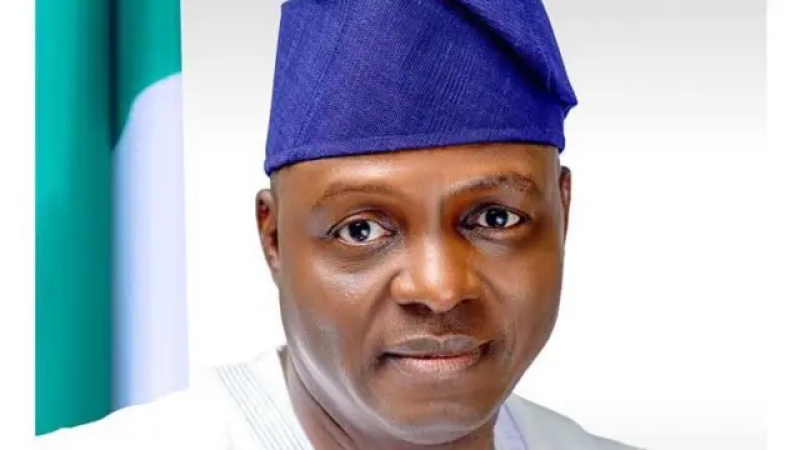
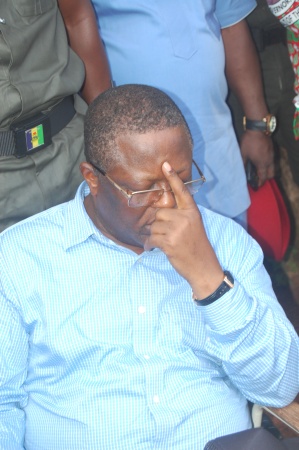
APC National chairman, Nentawe Yilwatda
At the start of business on the political front in the New Year 2026, the ruling All Progressives Congress (APC) would still be basking in the euphoria of its big wins in 2025, a signal that is bound to continue, influencing the shape of things as they unfold in 2026. With 28 states under its belt and still counting, leaders of the APC cannot but beat their chests as the lizard that jumps from an Iroko tree; if the onlooker won’t give it some praise, it won’t shy away from giving itself thumbs up with head raised high. Right now, the APC is not just controlling 28 states of the federation; It is in firm control of the two-thirds majority of the Senate and the House of Representatives, as well as the houses of assembly in the states controlled by its governors.
Since the party has succeeded in planting its feet firmly in all six geopolitical zones of the country in 2025, the shape of 2026-2027 politics is certain to be dictated by loyalists of the party. Will the party self-destruct, as we saw with the once dominant Peoples Democratic Party (PDP), or will it safely navigate the usual challenges of managing a huge behemoth? That is the question that stares its leaders in the face, come 2026.
The Year 2026 Is the prelude to the election year 2027. Even though not much is being said about the year, the foundation for most of the soup that the political leaders will cook in 2027 will be prepared in 2026. The primaries to determine candidates for the House of Assembly seats, House of Representatives seats, Senate, and governorship seats would be held in the new year. It is the same for the presidential primaries, which, in accordance with the existing Electoral Act 2022, must be held between now and July of the New Year. In real terms, therefore, Year 2026 is the year of politics and politicking, where all the pushing and shoving would unfold in the political field.
Though the Independent National Electoral Commission (INEC) has some 18 political parties with registered profiles in its custody, it is certain that not all of the registered parties will be full of activities in the New Year. Aside from the APC, which is sure to be active on so many fronts, the former ruling party, the PDP, will also be active in court and out of court. The new coalition, the African Democratic Congress (ADC), will also be active at some levels, as it moves to provide a huge challenge for the ruling party. The Social Democratic Party (SDP), which is already engrossed in an internal feud, will continue its survival battles, while the Labour Party (LP), which, on Wednesday, lost its 2023 presidential candidate, Peter Obi, to the ADC, will also keep the survival battle alive. That would also be true of the New Nigeria Peoples Party (NNPP), the party that posed a great threat to the victory record by the APC in the North-West in 2023 by winning the big voting hub, Kano, not just at the presidential election but equally at the governorship polls. The Young Progressive Party YPP) and Accord Party (AP) are the remaining parties that would seek to make their presence felt in the polity going into the thick of the electioneering processes. Besides the above, a number of issues that would signpost 2026 as the year of politics and politicking are further highlighted.
Battles won’t cease in the camps of struggling opposition parties.
Year 2025 was noted as the year of opposition party struggles in Nigeria. The PDP got itself entangled in internecine crises that have seen it tied down like a Christmas goat ready to be slaughtered. Its fortunes are locked down by contending forces, who are waiting for one court declaration or the other. It is almost certain that the PDP would be jumping from one courthouse to another at a time its leaders were supposed to be mapping out strategies to produce credible candidates that could unsettle the ruling APC. The decision of one camp of PDP leaders to hold a national convention in Ibadan in November 2025 and the resolve of another camp to set up a caretaker committee appear to have confirmed the division in its ranks and ruled out an early resolution of the internal squabbles. With none of the actors shifting ground, it would seem that the party and its stakeholders are prepared for a long wait on the High Courts, the Court of Appeal, and the Supreme Court. Incidentally, no one can compel any of the courts to take the cases expeditiously. But the dictates of the Electoral Act, as far as the deadlines in the electoral process, are sacrosanct. As far as the politics of 2027 is concerned, provisions of the 2022 Electoral Act would largely subsist, and that would indicate that candidates must emerge between the end of the first quarter 2026 and the beginning of the third quarter. Whether the various suits in the courts would have reached conclusive ends by mid-year 2026 is something to ponder about. Presidential hopeful in the PDP, Dr. Gbenga Olawepo-Hashim, who visited the national chairman of the party, who emerged at the November 2025 convention in Ibadan, said that the party’s crisis can be resolved in no time. Though he has not elaborated on what would constitute that magic, the party appears bogged down by a relentless dogfight that may dictate the extent of its involvement in the 2027 race. Thus, Year 2026 appears loaded with common uncertainties for the PDP. The fate of the NNPP is not far from the above. The party has become comatose since early in 2025 when combatants in its fold raised opposition against its leader and former governor of Kano State, Senator Rabiu Musa Kwakwanso. It is doubtless to indicate that NNPP’s relevance in Kano and its massive victory in that key stateweres due to Kwakwanso’s influence. With combatants in the party seeking to expel or reduce his involvement in its affairs, political stakeholders can easily identify a river that is distancing itself from its source. While the former Kano governor has been ambivalent about the true direction of his political But a bigger keg of gun powder is set to explode within the NNPP, as reports indicated at the close of business in 2025 that the governor of Kano State, a protégé of the Kwakwansiyya Movement, was set to defect to the APC. If that materialises, President Bola Ahmed Tinubu’s APC would have reduced a huge mountain of opposition challenge in the North West axis. That, notwithstanding, peace has eluded the midst of the NNPP for so long that it remains to be seen how much threat it could pose in 2026.
SDP and LP are also in the throes of crises
While the SDP is swimming in an ongoing crisis that ignited almost two years ago, there appear to be no signs of respite for the Shehu Gabam-led party. Though the electoral body, INEC, still recognises Gabam, the fact that stakeholders in the party are up in arms against its structures meant that the centre was not holding. As things stand, much of the party’s mobilisation efforts, which should be holding in the grassroots, have been holding on the pages of the newspapers, while its main opponent, the APC, is waxing stronger. The situation highlighted above is not far from the state of the LP, which lost Peter Obi on December 31. The party had broken into three factions at a point in 2025, and the factions have continued to jeer at each other. With Obi and his supporters out of the way, it is not clear yet whether the contending forces would sheathe their swords, seek to align with the ruling party, or find their way into the emerging opposition coalition like Obi.
The Scenario In the ADC Coalition
While parties like the YPP, Accord Party, and the Action Democratic Party (ADP) would seek to put up some activities in 2026, not many are convinced that their impact could shake the ruling APC substantially. The coalition African Democratic Congress (ADC) is the group expected to shake the ground in a way that the APC may feel the impact. Stakeholders in the polity are of the view that if the ADC coalition can remain strong and united going into the election in 2027, its impact could be massive. But the party must first navigate its challenging and risky curves of holding a unifying national convention and addressing the zoning formula. One issue that created the leeway for APC’s narrow victory in 2023 was the disagreement over the zoning pattern in the PDP. In fact, a simple arithmetic of the votes of the PDP candidate Atiku Abubakar and LP candidate Petr Obi showed a clear majority win. In 2023, PDP stakeholders were divided about the possibility of a northern president, with Muhammadu Buhari handing over to another northern candidate, Atiku Abubakar. There was also the anger among some Christians about what they considered the oddity of Muslim/Muslim of President Tinubu. As of the last check, ADC leaders said they have not debated the question of zoning and that building the coalition was most important. Whether the zoning question would constitute a cog in the wheel of the coalition is something to be seen. Nigerians would certainly be the witnesses as events unfold between now and mid-year. It is, however undoubtable that the resolution of the zoning concern in the ADC would go a long way in shaping its reach in 2027.
APC’s show in Ekiti and Osun are early pointers
While leaders of the PDP have continued to struggle for the soul of the party, an early casualty has emerged. The party’s candidate In the Ekiti governorship election is missing due to what INEC classifies as an irregular nomination. The governorship election in Ekiti is due on Saturday, June 20, 2026, while that of Osun State is due on August 8, 2026. It is possible the PDP might not field candidates in the two elections,s and if that remains the case, the fortunes of the party might as well be foretold ahead of 2027. This is because the irregularity identified by INEC in the party’s nomination of the candidate that has now been excluded in Ekiti was also present in the case of Osun primaries. While the APC would have a herculean task taking over the system in Osun from the incumbent Governor Ademola Adeleke, whose popularity in the state appears renowned, the setting in Ekiti could look like a walk in the park. Already, almost all the stakeholders in Ekiti are said to have declared their support for the incumbent governor, a scenario that leaves the opposition parties in limbo. Except for the ADC springs a late rally and a surprise, the governorship of Ekiti might just have been determined even before the people filed out to cast their votes. If the APC, however brace all odd and wins in Ekiti and Osun, its hold on the South-West might be nearing home.
Can the APC tame the challenge of huge size?
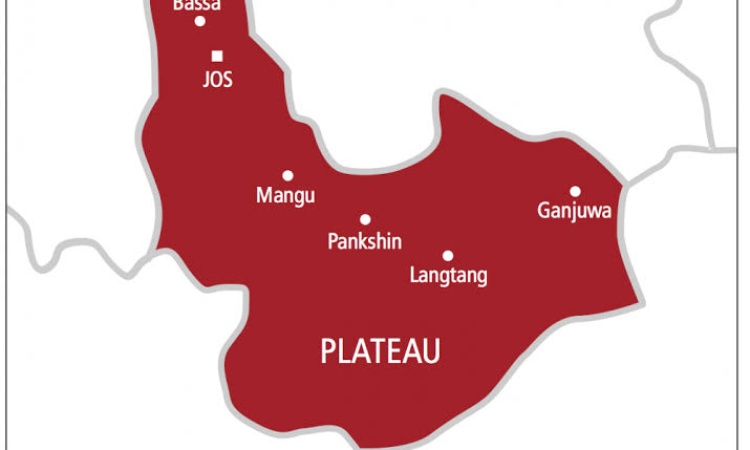
The PDP under former President Olusegun Obasanjo in 2007 was the exact size the APC attained in 2025. It was clearly in control of 28 states and had a clear majority in the National Assembly. But starting from 2010-2011, the party started fighting internal battles that eventually saw it out of power in 2015. Will the APC toe a similar part? That is the question the party’s leaders would need to have at the back of their minds as they celebrate the defection of governors and members of the National Assembly. A question was posed to the national chairman of the party, Prof Nentanwe Yilwatda, recently on how to contain the growing zine and the challenges it could pose. That question was very relevant on the heels of the disqualification of six prospective gubernatorial hopefuls in Osun State. The chairman was said to have given a technical answer to the effect that none of those disqualified could contest the grounds of disqualification. But to state that such tightening of the democratic space to achieve known ends paved the way for the bottled anger that eventually snowballed within the PDP is not a matter for debate. The party is set for its biggest tests going into the governorship contests and the contests for the National Assembly positions. It is a fact that those dissatisfied would seek to pitch their tents in other parties. That certainly would pose a challenge for the party leaders, especially if allegations of favouritism start emerging. The Nigerian experience with the PDP is that of a party that self-destructs due to failure to ensure internal democracy. The APC could land in a similar hot soup if it fails to manage its victory by conducting transparent primaries and democratic conventions. One challenge the APC would face is the question of old and new members in the states where the governors had defected from the PDP. The adopted principle of yielding party leadership to the governor of a state could prove dangerous in some settings, leading to dissatisfaction and defection. Stakeholders are already envisaging issues in Delta, Bayelsa, Rivers, Enugu, Plateau, and Kano if the governor eventually makes good the defection threat.
How APC’s offensive polluted the taste of palm wine in Delta, South-South
It is already affirmed that while the year 2025 amounted to a year of big wins for the APC, the opposition PDP has been embroiled in leadership tussle, culminating in huge depletion in its ranks, following relentless defection of the key figures. Ahead of next general elections, chieftains of the ruling party now declare, openly that the 2027 general elections have been won and lost, that is two clear years to the time the electorate would file out to vote.
28 governors, still counting…
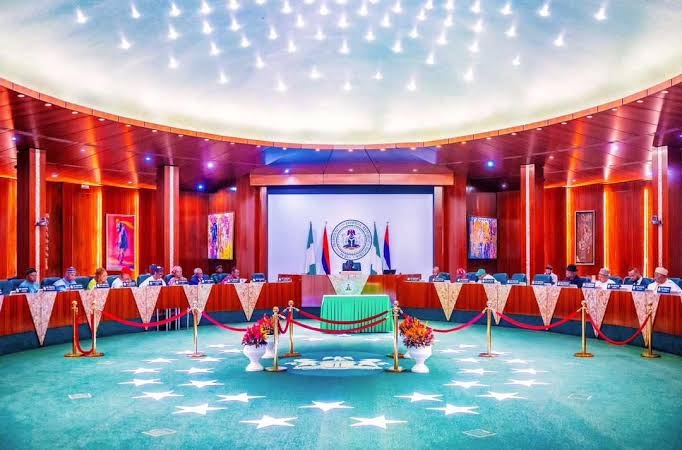
How many governors would satisfy the leadership of the APC before the next general election? That question is not about to be answered as many more governors appear on the line. It is not concluded yet whether all of the opposition governors would not have entered into one form of alliance or the other with the APC before the end of year 2026. At its National Executive Council meeting held at the State House, penultimate Friday, the APC paraded 28 state governors. For the national chairman of the party, Professor Nentawe Yilwatda, it was an opportunity to showcase the new entrants into that organ of the party. The PDP, which used to pride itself as being in control of the oil-producing Niger Delta region, has been left politically stranded in the area, with the APC firmly taking control.
Though the APC could only boast of Edo and Cross Rivers States ahead of the 2023 general elections, the party today now controls the governors of Delta, Akwa- Ibom, Bayelsa, and Rivers, marking a clean sweep of the oil-rich region. The governor of Delta State was the first to defect in April 2025, followed by Akwa Ibom, Bayelsa, and finally Rivers State in the months of June, October, and December, respectively. The remarks of governors of Delta and Rivers, while justifying their defection from the PDP to their new political haven was both hilarious and somewhat tragically dramatic. Charles Aniagwu, the Delta State Commissioner for Information, while confirming the decision of his principal to dump the PDP, likened the main opposition party to a palm wine whose taste has gone sour.
He said: “The decision was taken to build the bond of love that has existed in our state, to further advance the cause of security and welfare of our people, and to a very large extent, ensure that development in the Delta, because every politics is local.
“And in taking that decision, we came to the inevitable conclusion that moving out of the PDP is very, very necessary for us to be able to collaborate with our kith and kin and build that state that every Deltan will be proud of.
“We believe that what is happening and the state of the PDP is akin to that palm wine whose taste has changed, and there was a need for us to change the drinking pattern.”
His Bayelsa State counterpart, Sim Fubara, claimed he never belonged to the PDP as he was treated as persona non grata in the party.
He pointed fingers of scorn at the PDP as being responsible for his political travails, which culminated in his ouster from office for six months following the declaration of a State of Emergency by President Bola Tinubu.
He said: “If I have to be honest, was I really a member of the PDP? I wasn’t. Whatever I suffered during the political crisis, 90 per cent of it was imposed on me by the party.
“I was at my former party, just there. During the crisis, you can’t associate me with any group. I was just, let me say, at the balcony—I wasn’t inside the house; I was outside, at the balcony.”
Two governors in the North East and North Central states, Agbu Kefas of Taraba State and Caleb Muftwang of Plateau State, have equally declared their intention to join the APC.
APC’s Big wins yields comfortable majority in NASS, but…
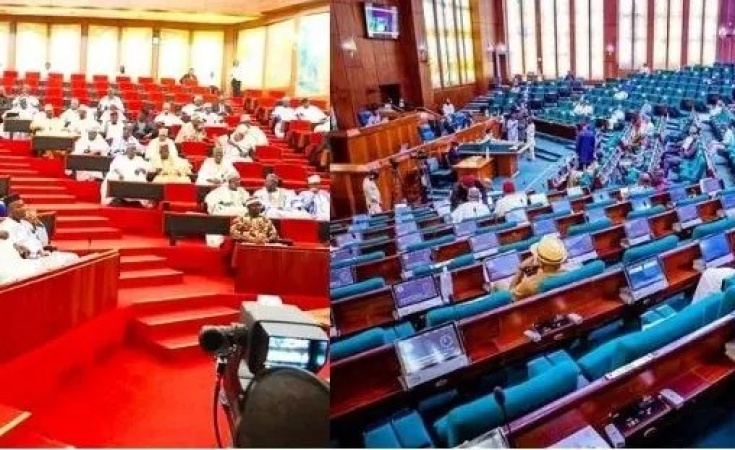
Investigation revealed that when the 10th National Assembly was inaugurated in June 2023, the APC had 59 seats out of 109 senate seats in the Red Chamber, leaving the opposition parties like PDP, APGA, Labour Party,y and Accord with 50 seats.
The situation was similar in the House of Representatives, where it could not boast of a comfortable majority. Two years down the line, the composition has changed in both chambers of Parliament. With defection of governors, particularly in the South-South states, the federal lawmakers have since absconded from the PDP with their governors, citing internal wrangling in the heavily fractured PDP.
Last October, the Senator representing Bayelsa Central, Benson Konbowei, and his counterpart representing Bayelsa East, Benson Agadaga, defected from PDP to APC, swelling its number to 76 in the Senate. In November, the Senator representing Cross River North, Senator Jarigbe Jarig, was also moved from PDP to APC, raising APC’s count to 77. The number has since increased to 78 with the defection of the Senator representing Kaduna North, Senator Sunday Katung, from the PDP to the APC.
While a two-thirds majority in the Senate of 109 translates to 73, and with its present composition of 108 (following the death of Senator Okey Ezea (LP, Enugu North), the APC parades 78 lawmakers in the Senate to PDP, which has 24, and APGA 2. With the defection of Senator Ireti Kingigbe representing FCT to the Social Democratic Party, the Labour Party has one Senator,r just like the New Nigerian Peoples Party, which has one Senator. In the House of Representatives, the APC has 240 lawmakers to PDP has 74, and the Labour Party has 25 members.
Others are the NNPP with 15 representatives, SDP,3, and the Young People’s Party with one seat.
With these configurations in the National Assembly, the APC now has the numbers to execute crucial, sensitive legislative assignments: declaration of a State of Emergency in an election year and amendment of the Constitution. But there are suspicions that the overwhelming majority in the two chambers could generate some undemocratic developments, such as the allegations of alterations to the Tax laws assented to by the President. Without an opposition strong enough to raise issues on the floor, there are fears thatthe assembly could drift away from the people.
Ndume’s alarm and APC’s burgeoning size
While members of the APC’s National Working Committee, the leadership of the Senate, and governors of the party operating under the platform of the Progressive Governors Forum, continue to bask in the euphoria of the migration into the party by opposition politicians, certain chieftains have called for caution as they noted that the influx could threaten its cohesion.
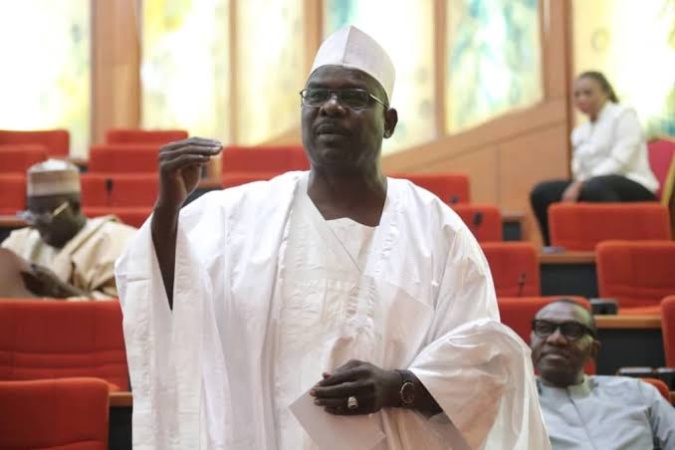
Former Senate Leader Ali Ndume, while addressing journalists at NICON Luxury Hotel in Abuja shortly after receiving the award for “Most Outstanding Legislature and Advocate of National Unity,” warned that the party risked implosion, noting that it was becoming bloated.
He said:” I have warned that the APC is becoming overloaded. And when you overload a ship, especially with mostly empty cargo, it risks capsizing,”
“If it capsizes, the owner of the ship will face a bigger problem. That is the situation we find ourselves in today.”
Also speaking in a similar vein at the NEC meeting held the penultimate week at the Banquet Hall, State House, the Speaker of the House of Representatives, Honourable Tajudeen Abass, cautioned that the influx into the party could threaten cohesion and unity, and be inimical to party discipline.
He said: ”We are a governing coalition that continues to grow. Managing this number can lead to fragmentation if there is no unity and discipline. NEC has a role to play in ensuring discipline and preventing factionalisation. APC must be a party that governs with discipline.” Ndume’s signals could amount to some early warning signs, the type that are popular with weather forecasts. Whether the APC would apply the needed regulation remains to be seen.
Governors, lawmakers’ endorsement of Tinubu to get louder in 2026
Ahead of the party’s presidential convention to pick its standard bearer for the 2027 general elections, governors, leadership of the National Assembly last May endorsed Tinubu as the sole candidate for the presidential race. The event was the APC National Summit at the Presidential Villa. In the tradition of presidential democracy, the incumbents usually enjoy the right of first refusal for a re-election ticket. That of President Tinubu might not be any different.
Imo State Governor and Chairman of the Progressive Governors Forum, Senator Hope Uzodimma, who moved the motion premised on Tinubu’s adoption of the successes of his reform agenda. His motion was seconded by the Kaduna state governor, Senator Uba Sani.
It was confirmed that before the Presidential Villa endorsement, the governors in their respective geo- political zones had passed a vote of confidence in Tinubu’s administration, praising his developmental strides and inclusive governance approach.
There is a growing indication that serving governors who are seeking a second term ticket would continue to push for the endorsement of the president so as to guarantee a similar gesture for themselves. The same trend may be followed by Senators and members of the House of Representatives who would continue to call for the endorsement of the president.
Investigations by the Nigerian Tribune confirmed that what played out in Ekiti State, where sitting governor, Abiodun Oyebanji, emerged as consensus candidate through an affirmation process, would play out in other states where incumbent governors are seeking fresh mandates. (Nigerian Tribune)