Updating your news feed...
NEWS EXPRESS is Nigeria’s leading online newspaper. Published by Africa’s international award-winning journalist, Mr. Isaac Umunna, NEWS EXPRESS is Nigeria’s first truly professional online daily newspaper. It is published from Lagos, Nigeria’s economic and media hub, and has a provision for occasional special print editions. Thanks to our vast network of sources and dedicated team of professional journalists and contributors spread across Nigeria and overseas, NEWS EXPRESS has become synonymous with newsbreaks and exclusive stories from around the world.





















Loading banners
Loading banners...

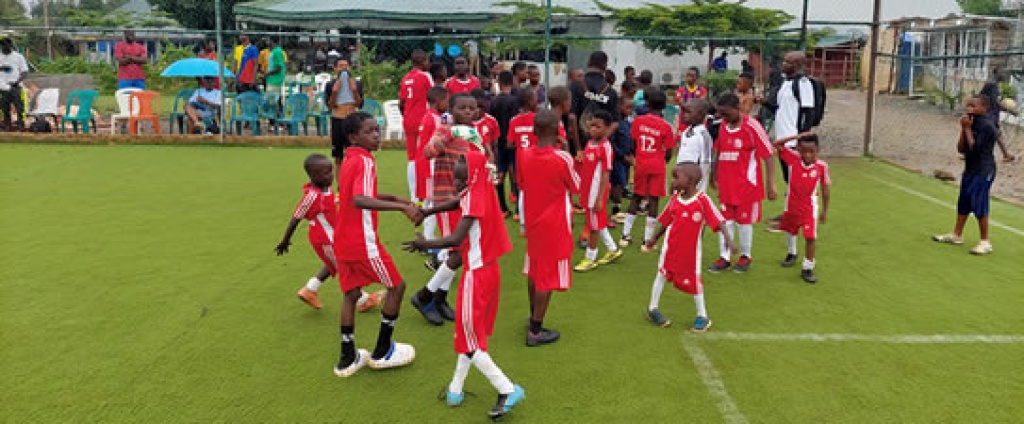
A training session at Aigbose Football Academy
Football has long been the heartbeat of Nigeria’s sporting culture, shaping the nation’s identity and inspiring millions across generations. Yet beyond the packed stadiums, roaring fans and celebrated national teams, the real architects of Nigeria’s football success are the academies quietly grooming talent in cities and communities across the country.
These academies scout, train and nurture young players, instilling discipline, building character and refining the skills of children and teenagers who dream of becoming future Super Eagles or global football stars.
Despite differences in size, philosophy, resources and training methods, all the academies share a common purpose: to create genuine pathways for young Nigerians to excel in football while also supporting their academic and personal development. Over the years, several of them have consistently produced players who rose to become Super Eagles regulars and international stars.
Among the most notable are Pepsi Football Academy, famous for producing talents like Mikel John Obi and for building a broad national scouting network; Ultimate Strikers Academy in Lagos, where Victor Osimhen’s remarkable journey began; and Simoiben Football Academy in Kaduna, founded by Moses Simon and credited with discovering rising Super Eagles defender, Benjamin Fredrick.
Also standing out is Taye Academy, the foundation of Kelechi Iheanacho’s career.
Spread across Ilorin, Lagos, Kano, Benin, Abuja, Warri and beyond, the academy ecosystem is wide, diverse and continually evolving. And while challenges remain, the steady transformation happening within these institutions highlights their growing importance to Nigeria’s sporting, social and economic future.
These academies differ in structure, size, philosophy and resources, yet they share a common mission: to provide young Nigerians various pathways to football excellence while ensuring academic growth, personal development and global opportunities.
Though challenges persist, the transformation taking place across these academies illustrates their importance to Nigeria’s social, sporting, and economic future.
Founded in 2005 under the administration of former Governor Bukola Saraki, the Kwara Football Academy (KFA) was envisioned as both a talent factory and an academic institution. Its inauguration by the late CAF President, Issa Hayatou, was a symbolic moment, signaling Nigeria’s intention to give youth football a more structured and professional foundation.
KFA quickly gained regional prominence under the leadership of a former Super Eagles coach, Clement Westerhof. The academy attracted global attention, including visits from internationally renowned figures such as José Mourinho. Many of its players progressed into professional leagues within and outside Nigeria, joining clubs across Europe and participating in national youth teams.
However, the academy eventually faced a period of stagnation. Reduced government attention slowed development, infrastructure aged and the academy’s once vibrant environment suffered. But recent years have brought renewed optimism. Under the current Governor, AbdulRahman AbdulRazaq, the academy is undergoing major renovations, receiving upgraded facilities and improved support.
Admission into the academy remains structured and competitive. Prospective students pay an application fee of 10,000 and an acceptance fee of 5,000. First term fees for new intakes is 301,000, covering boarding, uniforms, equipment and school materials, while returning students pay 265,500 per term. Subsequent terms for new intakes costs 193,000. With about 180 students, the academy emphasises rigorous schooling alongside football training.
Students follow a tight daily schedule beginning at 5am, with academic classes lasting from 8am to 1:20pm, followed by lunch and rest. Training sessions last from 4pm to 6pm, while evenings include dinner, prayers and prep before lights out at 10pm.
Beyond Nigeria, the academy draws students from Côte d’Ivoire, Ghana, Benin Republic and numerous states across the federation. Sponsorship support comes from organisations like Total Energies and the Bayelsa State Government, as well as local communities.
Despite its progress, some critics argue that the academy no longer has the vibrancy it once had.
But the Administrator, Mallam Ibrahim Bako, strongly disagrees, saying that the academy is experiencing one of its most productive eras.
“That’s not true. The academy is doing better than ever. Six of our players are on their way to Europe. We recently signed an MoU with Emeka Obasi, a London-based super agent and manager of Arsenal’s Bukayo Saka, for player transfers and management. We also have partnerships with other football clubs or agents outside the country like Emeka Obasi and a Togolese agent, Daniel, who organises scouting programmes to identify players who could be marketed abroad in the next transfer window aside several international scouts showing interest. The academy has grown from about 80 to 280 students, and our facilities have greatly improved through the efforts of the present state government,” he said.
Bako acknowledged challenges such as manpower shortage.
“For instance, with over 180 students, we only have six cooks in the kitchen and just six groundsmen maintaining five football pitches and other facilities.
“However, the government has been supportive. Our hostels have been renovated, teachers are paid regularly and the academy is now part of the civil service structure,” he said.
Concerns about high fees were dismissed by Bako, who compared KFA’s pricing with other elite academies.
“Not at all. Ours is one of the most affordable academies in Nigeria. Real Madrid Academy in Port Harcourt and SiaOne Academy in Abuja charge much higher fees, some up to ?2m annually. Here, we charge between N500,000 and N600,000 per year. Besides, we offer scholarships to exceptional talents and currently have about 70 of our students on full scholarships,” he said.
The KFA administrator said some of its players had received invitations from Bradford City in the UK and would be travelling soon, adding that another player, Ikechukwu, was heading to Belgium. Also, Kamaludeen, who represented Nigeria’s U-20 team, will be heading to Chelsea Football Club soon.
“Their agents have met with us. We’ve produced several outstanding players, including Dennis Bonaventure and Gbenga Arokoyo. These are among many others who have advanced their football careers both locally and internationally. The academy is fully registered under FIFA’s Transfer Matching System (TMS) and FIFA Connect, so all our player transfers are globally recognised,” he said.
Bako called for continued involvement from families and government stakeholders.
“A child who excels in football can change the fortune of an entire family. Parents should support their children’s ambitions and allow them to pursue what they love. The academy contributes significantly to the economy of the state and the country. The government has done a lot, our hostels, dining hall and clinic have all been renovated.
“However, maintaining five natural grass pitches is capital-intensive. We appeal to the government to continue supporting us, especially in pitch maintenance and manpower recruitment,” he said.
Similarly, Lagos has witnessed an explosion of football academies in the last decade, driven by high population density, strong sporting culture and increasing parental interest in structured youth development. Many Lagos-based academies emphasise a dual-focus system that integrates academics with football training to ensure balanced growth.
At Edufoot Sports Academy in Lagos, its Coach, Komolafe Shina, highlighted the academy’s philosophy.
“Our focus is to combine academics and sports. Over the years, we have encouraged and supported young people to go to school and play football. We have had players who went on scholarships, played in the university league, got shortlisted for the MLS Draft, and some have been drafted.
“We do more than teach skills; we guide students from amateur stages through tertiary education and towards professional pathways. Many of our boys have graduated from university. The next step is helping them secure a professional or semi-pro club so they can live their dreams. We are exploring opportunities in Europe, especially in Finland,” he said.
He explained that training schedules accommodated school hours, with younger students training on weekends and engaging in full-day programmes during holidays, with the academy organising mid-term camps and competitive fixtures with other reputable academies.
…Admission similar to conventional school model
“For beginners, we conduct a one-day trial. After assessing their interest and potential, we give them feedback and, if they qualify, they are given admission. There is registration, uniform and equipment fee, similar to a regular school system. It’s a one-time payment for new intakes. To qualify, you must be exceptional: your technique, game knowledge, character, attitude, speed of thought and level of interest all matter,” he explained.
Lagos Soccer Stars, another football academy, operates on similar principles. Its Coach, Stanley Unem, reflects on the academy’s trajectory.
“We started participating in local competitions and have grown from there. We always tell players to come as they are. We brush them up and give them the foundation they need to gain confidence and execute technical actions. Some players who were once excluded from their school teams are now representing their schools in international tournaments. That’s something we’re proud of. The academy has also participated in international tournaments, reaching a quarterfinal once, where they were eliminated on penalties, a major highlight in our journey.
“Currently, one of our players is in the PSG youth setup; a testament to the academy’s progress. We build their confidence so that wherever they go, they can give their best. We don’t have free facilities but we ensure we hire the best coaches and staff. A lot of resources go into helping the kids improve,” he said.
…Ironically, in Kano, it’s a different scenario
Despite being one of Nigeria’s richest reservoirs of football talent, the football academy in Kano faces infrastructural challenges that hinder professional football development.
Veteran grassroots Coach, Peter Henderson, gave a blunt assessment: “It takes a lot to run a football academy. You must have professional coaches, therapists, doctors, nutritionists and even hostels for players. You need proper registration with the NFF, affiliation with FIFA Connect and a Transfer Matching System (TMS). But in Kano, none of these structures exist. An agent wants to see the players, the facilities and the training environment. Without that, there is no serious business. You cannot imagine doing the right thing and the FA of a state suspending you for it. At one point, the referees’ association teamed up against me, saying I would not win matches. The frustration was too much. There is no professional academy in Kano. They run it with family and friends, and that is why they don’t succeed in the football business.”
InterTech Football Academy’s President, Dr Sulaiman Musa, however, has a different opinion. He echoed his concerns: “We don’t ask the government to give us money, but we need a good enabling environment. We need good training pitches. If you look at Kano today, most of the clubs are running helter skelter, looking for where to train. One of the major things I did was to enrol into Y-Scout, the number one scouting platform in the world. It’s not easy and it’s expensive. We pay about N8m. I’m the only one from the North on that platform. We are laying a solid foundation. It doesn’t work that you establish a club today and sell a player tomorrow. It needs patience. Some of our boys are between 15 and 17. Insha Allah, we are getting there.
“We have fantastic academies in Kano, but the constraint of playing grounds is the major challenge. If the government comes to the aid of clubs, the story will be different.”
In Benin City, Crown Hill Football Academy, founded in 2022 by Coach Efe Egigie, is another emerging institution combining grassroots exposure with structured coaching for children aged five to 17. Egigie’s move into coaching followed an injury that cut short his playing career.
“After my retirement from professional football, I started coaching with Buffalo FC Benin using my football experience. It was after that, that I enrolled for a coaching course at the Nigeria Institute of Sport (NIS) to equip myself with the rudiments and basics of football and got certified as a qualified coach.
“I started the academy in 2022, to teach the youths the basics of football and produce future talents for the nation and give back to society,” he said.
The academy, with over 30 children from age five, Coach Efe said its mission was to produce players who mastered the act of basic football so that when they got there, they would do it with ease.
He said the academy runs on modest fees but planned to expand into academic integration as it grew.
In Abuja, FOSLA Academy, founded in 2010 by former NFF President, Alhaji Sani Lulu Abdullahi, stands out for integrating academics with football. With more than 70 per cent of its students on scholarships, FOSLA ensures that children from low-income backgrounds access both education and elite training. The academy represented Nigeria at the 2023 World Secondary Schools Football Championship in Morocco, and its alumni, such as Onuche Ogbelu and Benjamin Mohammed, now play professionally abroad.
Alongside FOSLA are other football academies such as Eagles Wing Sports Academy, a professional soccer development centre for children and youths. It trains over 500 active players to discover and nurture their football passion early in life. Since 2017, it has instilled core football culture, structure and philosophy in ages two to 27, promoting personal growth and positive impact.
Headquartered in Abuja, with branches in Warri and Asaba, the academy hosts over 100 children every weekend for organised, skill-building sports activities. Registration is N450,000, with monthly dues of N60,000.
Founded in Jos in 2011, Derby Football Academy grew into a premier football institution, relocating to Abuja in 2021 to expand its reach. Its home is now the Turf Arena Big Field at Riverplate Park, Sani Abacha Way, where young players train under an expert’s guidance, learning not only football skills, but also discipline, character and teamwork.
The academy offers flexible training plans. An eight-week half term costs N170,000 for two weekly sessions and N200,000 for three. The 16-week full term plan is N310,000 for two sessions or N370,000 for three, while the full season plan costs N700,000-N800,000. All players require a training kit (N80,000) and medical insurance (N10,000 per term).
Derby emphasises holistic development through its Discovery Phase, using small-sided 4×4 games to teach ball mastery, basic actions and social skills in a fun environment. Its mission is to help talented players become professionals abroad while opening pathways to American university scholarships.
Led by a foreign technical director and licensed international and national coaches, Derby uses European-standard training, individual performance tracking and exposure to overseas scouts and international tournaments to prepare players for professional careers. Alumni like Joseph Eghenolohor, now signed with Red Star Belgrade, exemplify the academy’s success.
Juventus Academy Nigeria invites young players to develop their skills and chase their Bianconeri dreams through world-class football education delivered the Juventus way. With UEFA-accredited coaches and year-round training, the academy builds technique, discipline and character from first kicks to collegiate and professional levels. Supported by coaches from Turin, the programme upholds Juventus’ values of dedication, fun and professionalism. Players also have the chance to compete at the annual Juventus Academy World Cup in Turin, joining teams from across the globe.
Burna Boy Football Academy provides children aged four to 15 with quality football training rooted in discipline, education and strong technique. The academy promotes a holistic approach, engaging parents to value sports alongside academics. Its mission is to instil work ethic, discipline and a deep understanding of the game to prepare children for success in football and beyond.
AS Roma Academy Abuja offers gifted low-income boys and girls (U13–U17) a residential, scholarship-based Elite Squad programme. Players receive free top-level training under AS Roma methodology, plus education, accommodation and meals. Selected through tryouts, 60 exceptional talents nationwide gain a pathway to academic success or future football careers.
In Jos, Golden Soccer Academy is one of the famous football academies in Plateau State, located in Anguwan Doki in Bukur in Jos South LGA.
Founded in 1987, the academy has produced over 200 players for local and international leagues, and over 40 players from the academy have played in European football teams.
Coach Ahmad Ibrahim Bross, manager of the academy, said players like Ahmed Musa who played in CSKA Moscow; Nbaso Wangut who currently played in Colombia; Simon Moses who played at Gate but moved to England; Samuel Kanu who moved to England; Hilary Gong who was in Holland; and Ibrahim Shuaibu were all graduates of the academy along with many players within and outside the country who were making a mark in the football world.
The club’s manager noted that recently, some of their players who were trained at the academy moved to Slovakia, adding that they had been producing a good number of players who had made significant contributions to the world of football globally.
He also noted that the club had been grooming young players from the grassroots to the international stage, transforming them into accomplished footballers who had made a mark in the sport.
The manager said that major requirements for enrolment into the academy were talent and discipline.
“Here, we don’t collect money but focus on what you can offer; we focus on your talent and respect. Once you are able to display your talent and show respect, you are qualified to join the academy irrespective of your status,” he said.
The academy stated that their mission was to teach football and ensure young players had moral standards, enabling them to behave responsibly wherever they found themselves.
“When young players are enrolled, we make sure they learn good character and morality. If you smoke or drink, we ask you to stop. Some players who came here doing both have quit. We’ve taken many people off the streets and engaged them, and they’re doing well,” he said.
…Students, parents speak
Speaking of his experience, a former student of Kwara Football Academy (KFA), Jibril Isah, told Weekend Trust that his experience at the school remained one of the best phases of his early football development, both academically and athletically.
For him, the academy’s welfare system was one of its strongest points during his time there, as the feeding and accommodation were good.
Isah noted that while the academy offered solid football and academic grounding, its major gap was the lack of a structured transition pathway for graduates.
“I don’t think there is anything I would want to say other than ask them to look at a more comprehensive programme for the graduates to get clubs abroad. Most times, after graduation, you are on your own except for a few people with scholarships who continue to play there,” he said.
He stressed that despite this shortcoming, he remained grateful for the foundation the academy gave him.
Isah, who also passed through the Pepsi Football Academy, placed KFA just behind Pepsi in terms of national ranking.
“Apart from Pepsi Football Academy, which I would say is number one because of the opportunities there, as one of its former students, KFA is the second best in Nigeria,” he said.
Speaking about KFA, a parent whose son graduated from there, Mr. Muhammed Malagi, told Weekend Trust that his decision to enrol his child was prompted by his child’s ambition when he was young.
“While serving in Lagos then, the son of a colleague who finished from the school playing with Club Brugge in Belgium introduced the academy to me where his son finished from, the son was in Pepsi Football Academy Abeokuta, Ogun State, so I registered my son online and that was it; he graduated in 2019 at age 17.
“I have no regrets about it because he did well at the academy even though he was unable to actualise his dream as a professional player, he was nicknamed Little Messi but regrettably, I was not buoyant enough to send him for trials abroad,” he said.
He advised that the academy should look into how to support and secure teams for their graduates.
“After graduation, there should be collaboration with other clubs. After my son graduated, he was called for trials only once from Ukraine. After graduation, parents struggle for their children to get into teams abroad,” he said.
He added that no academy prospered without collaboration with others to ensure the good players were taken.
Another parent, Denis Peter, father of Super Eagles forward, Dennis Bonaventure, shared his experience with the academy. Peter enrolled his son at the academy in 2009 when, according to him, the school maintained full control of its environment and provided a balanced model of education and football.
“At that time, the academy was okay. The school was in absolute control of the entire environment. It was a conducive place for every child because they combined academics with football. I don’t know how it is now, but back then it was a very good place for any child with the dream of playing football,” he told Weekend Trust.
Peter, however, noted that the system at the time lacked proper follow-up plans for players after international exposure.
“Back then, the career progression was not what I expected. They travelled to several countries: South Africa, Mexico, and I think Spain, but when they returned, nothing followed. After such exposure, there should have been plans for scouts or follow-up opportunities. That didn’t happen, so I moved him to Abuja College”, he said.
Peter said it was from Abuja College that his son earned his first national team invitation.
Drawing from over three decades in Nigerian football, Peter spoke strongly about systemic problems affecting talent development.
“We have management issues in this country, and they still exist today, from cadet teams to the Super Eagles. As long as we are sectional in selection, we won’t go far. It’s the same politics and money influence that destroys good talent,” he stated.
Despite his observations about the system, he still ranked the academy among the country’s leading academies.
“They are still one of the best, they have about five standard training pitches which are not common across the country: hostel accommodation, training grounds. Back then, security was mostly private guards. I don’t know how it is now. It was free back then. I didn’t pay a dime. They fed players, sponsored them, and took care of everything. Both schooling and training were free. I can’t say if it’s still the same today,” he noted.
Peter advised academies across the country to focus on genuine talent rather than financial influence.
“Academies must scout genuine talent. We have many gifted children with no boots, sponsors; nothing. These are the players we should go for, not the ones whose parents have money. When academies start collecting money, they compromise the system,” he lamented.
In Lagos, right winger, Okokoake Abraham, said his motivation for playing football came from his passion for the game and a desire to support his family.
“My inspiration came from the love and dream of helping my family through the game of football. Seeing others succeed makes me believe I can succeed too,” he said.
Abraham said his journey to become a professional footballer was faced with several challenges, including limited resources, a tough environment and the struggle to balance school with training.
Despite these obstacles, he believes each experience has strengthened his resolve and shaped his career path. Crediting Edufoot Sports Academy Lagos for improving his game, he said, “The academy shaped my technique, confidence and football IQ. I play with better structure now.”
Abraham added that he aimed for more exposure and high-level competition as he worked towards becoming a professional footballer.
Central midfielder and full-back, Samuel Taiwo, also noted that his passion for football started early, inspired by watching great players and understanding how the sport could change lives.
“Football has always been my passion. Watching great players and seeing how football can change lives inspired me. I believed it could be my path to becoming something great,” he said.
Taiwo noted that the journey had not been easy, saying he was faced with financial challenges, lack of proper equipment and lack of transport funds and general support.
It hasn’t been easy, but I keep pushing. Football means everything to me. Edufoot has changed my discipline, movement, decision-making, and understanding of my position. I feel more confident about my goal,” he said.
In Jos, some of the young players at the academy spoke on their experiences during their stay there.
Sadiq Babayaro said, “I joined the academy this year and it has been a great improvement for me because I have been receiving good training and hospitality.”
Muhammad Garba is another young player who joined the academy in 2013. He said, “This academy is like a family to me because I joined when I was still young and I have today gained a lot of experience. The club sends me to various clubs to play. The management guides us in everything and not just football. I enjoy being part of it.”
Ajuma Job who joined the academy in 2023 said, “I have learned a lot so far. It is an academy with a good track record. It is a domestic academy with an international standard. We have coaches who push us to give our best at every moment, encourage us and I have improved.”
In Kano, Hamza Badamasi, a 19-year-old student, is among Kano academy’s players who caught the attention of German football giants, Bayern Munich.
Badamasi spent nearly two weeks in Germany, where he featured for the club in several matches. He said his dream was to return to Munich as a professional footballer.
“I joined the academy about six years ago. I never believed I would travel to Germany to play through this academy,” he said.
“I played almost six games at the club. It all started here in Kano when Bayern came for a talent hunt and about six of us were picked from our academy. From there, we were taken to Enugu, and I was fortunate to be among those selected to travel abroad.
“I want to be a big footballer one day. If possible, I would like to return to Munich. Their pitches, training patterns and even the food they provide players are all different compared to what we have here. I hope to be like Lamine Yamal one day,” Badamasi added.
The academy’s founder said the player was not retained by the club then because his age was below the FIFA standard age (18). He, however, said they hoped to reunite him with the club one day.
Another player, Aliyu Mukhtar, also 19, said he was discovered after playing in a local match and was invited to join the academy and that since then his game had improved.
“I was playing football on a pitch in the community when the academy’s founder asked my coach to send me to join the academy and was so happy. I want to go to Europe one day so my friends and family can see me on television. This academy gives me everything. They take care of all our needs, including transporting us from home to the training ground every day,” Mukhtar said.
Suleiman Musa, 19, who joined the academy in 2018, aims to become a professional footballer.
“I wish to play like Ronaldo, Messi and Neymar one day. I want to feature not just in Nigerian leagues, but also in European competitions,” he said.
NFF, stakeholders speak
The Nigeria Football Federation (NFF) recognises football academies as a vital part of the country’s talent pipeline but maintains that they must operate alongside formal grassroots structures, strong educational standards for players and well-organised youth competitions to truly elevate the national game.
The federation has repeatedly insisted that the development of young footballers could not rely on academies alone, stressing the need for proper schooling and structured pathways. As part of this stance, the NFF has made it clear that academies must meet specified benchmarks to earn official recognition.
In a recent conversation, NFF President, Ibrahim Musa Gusau, reiterated the federation’s position, stating that any academy that failed to comply with its standards would not be acknowledged.
“Any academy that doesn’t meet up to the standard will not be recognised. We will send people from our federation with their checklist to observe all academies in the country. No child must be a slave and must be educated in these academies,” he said.
Gusau also revealed that the NFF had set a clear target for the long-term impact of its grassroots strategy, expressing optimism that the current reforms would begin to yield visible results by the end of the decade.
“By 2030, we hope to see the products of our grassroots development. From age 23, we want to see players playing for the Super Eagles,” he said.
In the same vein, a prominent figure in Nigerian football development, Yemi Idowu, shared his concerns and aspirations for the future of football academies in the country.
While acknowledging the strides made in talent nurturing, he stressed that meaningful progress would remain limited without a stronger foundation in youth and junior-level structures.
“I’m happy with the work academies are doing, that’s the progression. But I would be happier if we had a proper youth and junior structure in place. Right now, it’s a bit disjointed,” he said.
Idowu highlighted the importance of building a consistent track record that revealed what approaches were effective. Referring to initiatives dating back to 2010, he noted that while some successes were evident, grassroots football still required greater attention.
He further argued that local coaches and academies should be empowered to take on more significant roles in shaping the next generation of Nigerian football talent.
Across Nigeria, football academies serve as incubators of talent, discipline and opportunity. They provide structured pathways for young athletes to pursue careers in football while gaining education and life skills. (Weekend Trust)