
Updating your news feed...
NEWS EXPRESS is Nigeria’s leading online newspaper. Published by Africa’s international award-winning journalist, Mr. Isaac Umunna, NEWS EXPRESS is Nigeria’s first truly professional online daily newspaper. It is published from Lagos, Nigeria’s economic and media hub, and has a provision for occasional special print editions. Thanks to our vast network of sources and dedicated team of professional journalists and contributors spread across Nigeria and overseas, NEWS EXPRESS has become synonymous with newsbreaks and exclusive stories from around the world.






















Loading banners
Loading banners...

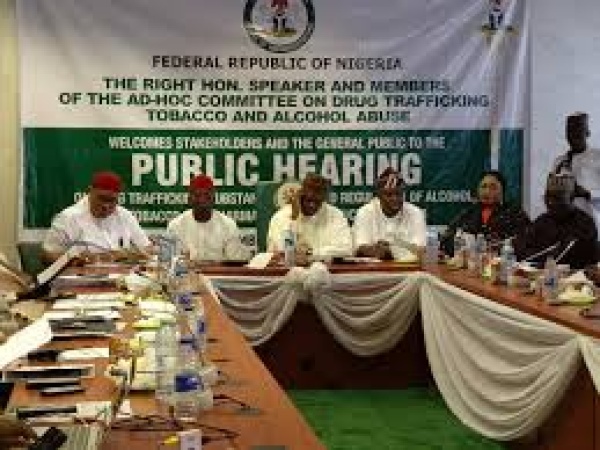
Hon Oluwatimehin Adelegbe, Chairman, House Ad hoc Committee on Drugs, Trafficking, Alcohol and To
The House of Representatives has begun an extensive probe into the escalating problem of drug abuse in Nigeria, with the goal of identifying systemic lapses, holding responsible parties to account, and curbing a threat that endangers both public health and national security.
At the commencement of the investigative hearing in Abuja, Chairman of House Ad hoc Committee on Drugs, Trafficking, Alcohol and Tobacco Abuse, Hon. Oluwatimehin Adelegbe, cautioned that drug abuse represented a serious danger to the very fabric of the country.
Adelegbe explained that the House set up the committee to uncover the truth, reveal institutional shortcomings, and propose firm and effective measures capable of reversing the troubling trend.
According to Adelegbe, the committee’s mandate was to investigate the problem, safeguard citizens, reform weak systems, and, ultimately, preserve lives.
He said the hearing was being held under the authority given by Nigerians and in response to a grave national emergency that threatened the country’s core values.
He stated that substance abuse, illegal drug trafficking, poorly regulated pharmaceutical distribution, exploitative alcohol marketing, and aggressive tobacco promotion had combined to create a severe and dangerous crisis.
According to him, the crisis is eroding the health of young people, reducing workforce productivity, destabilising communities, and jeopardising the country’s shared future.
Adelegbe stated that the situation could no longer be overlooked, pointing out that cannabis is openly smoked on the streets like cigarettes, methamphetamine use is spreading rapidly nationwide, and codeine-based cough syrups are sold almost as casually as soft drinks.
He added that tramadol 200mg was trafficked with the same level of organisation as hard drugs, while cheap and dangerous alcoholic concoctions were ruining the lives of young men and women in motor parks, campuses, and markets across the country.
The lawmaker further alleged that tobacco companies continued to take advantage of regulatory gaps by targeting minors through flavoured products, informal sales outlets, and misleading marketing strategies.
He also lamented the unchecked influx of substandard medicines, fake alcoholic drinks, and unregistered products into Nigerian markets, attributing this to weak enforcement at seaports, airports, and land borders, which he said were frequently exploited by trafficking networks.
Adelegbe observed that communities had been devastated by addiction, crime, and avoidable deaths, stressing that Nigeria is losing too many lives, futures, and families.
He said lawmakers must live up to the responsibility entrusted to them, stating that Nigerians are demanding clear answers, workable solutions, and decisive action rather than excuses.
He emphasised that the investigation was neither anti-business nor a witch-hunt, but a necessary accountability process aimed at safeguarding public health and national security.
While affirming support for legitimate industries, investors, and innovation, he insisted that no business should be allowed to operate in a way that endangered Nigerian lives or sacrificed young people for profit.
Adelegbe warned that no corporate entity would be allowed to hide behind claims of compliance while contributing to an addiction crisis, adding that all stakeholders invited to the hearing are partners in protecting the country and are expected to fully cooperate.
United Nations Office on Drugs and Crime (UNODC) expressed renewed concern about the scale of drug use in Nigeria, describing the situation as alarming and significantly higher than the global average.
In a memorandum presented to the committee, UNODC cited findings from the 2018 Nigeria Drug Use Survey, carried out with the National Bureau of Statistics and the European Union, which showed that 14.4 per cent of Nigerians between the ages of 15 and 64 used drugs.
The survey identified cannabis as the most widely used drug, with an estimated 10.6 million users, followed by about seven million people using pharmaceutical opioids, such as tramadol and codeine-based cough syrups.
It also revealed that close to three million Nigerians were living with drug use disorders serious enough to require counselling or medical treatment.
The report pointed to a disproportionate impact on women and girls, stating that although one in four drug users is female, only one in 20 people receiving treatment is a woman, suggesting that stigma and access barriers continue to prevent women from seeking care.
UNODC further warned that projections in the report indicated that drug use in Africa could increase by 40 per cent by 2030. It said for Nigeria, this could mean more than 20 million drug users, posing what an extreme threat to public health and public safety.
The UNODC 2025 World Drug Report, published in June 2025, also identified cannabis as the most commonly used drug worldwide, with an estimated 244 million people using it in 2023, representing 4.6 per cent of the global population aged 15 to 64.
The report stated that global cannabis use had risen by 34 per cent over the last decade and it remained the main drug of concern for 32 per cent of people receiving treatment in Africa.
Globally, cannabis accounts for about 42 per cent of drug use disorder cases, while opioids remain the deadliest category of drugs, responsible for roughly two-thirds of drug-related deaths worldwide, largely due to overdoses.
To tackle drug abuse and trafficking in Nigeria, UNODC recommended a practical, humane, and evidence-based strategy that combined intelligence-led law enforcement with expanded prevention, treatment, and harm-reduction services.
The agency’s policy proposals included legal reforms, decriminalising possession of drugs for personal use within defined limits, formalising harm-reduction approaches, strengthening asset forfeiture and financial investigations, updating chemical and precursor controls, and adopting alternatives to prison sentences for low-level, non-violent drug offences.
According to UNODC, those steps would help curb trafficking, improve access to treatment, reduce overdose and HIV rates, and reinforce Nigeria’s fight against organised criminal networks.
In a separate memorandum, National Drug Law Enforcement Agency (NDLEA) reaffirmed its strong commitment to shielding Nigeria from the dangers of illicit drugs and substance abuse.
The agency praised the House committee for its proactive initiative and pledged to offer additional technical support needed to develop a more robust national drug control strategy under the National Drug Control Master Plan.
NDLEA stressed the importance of stronger laws, better regulation, improved treatment systems, and increased operational resources to significantly enhance Nigeria’s ability to combat drug trafficking and protect public health. (THISDAY)




