ADAD

Updating your news feed...
NEWS EXPRESS is Nigeria’s leading online newspaper. Published by Africa’s international award-winning journalist, Mr. Isaac Umunna, NEWS EXPRESS is Nigeria’s first truly professional online daily newspaper. It is published from Lagos, Nigeria’s economic and media hub, and has a provision for occasional special print editions. Thanks to our vast network of sources and dedicated team of professional journalists and contributors spread across Nigeria and overseas, NEWS EXPRESS has become synonymous with newsbreaks and exclusive stories from around the world.













Loading banners
Loading banners...

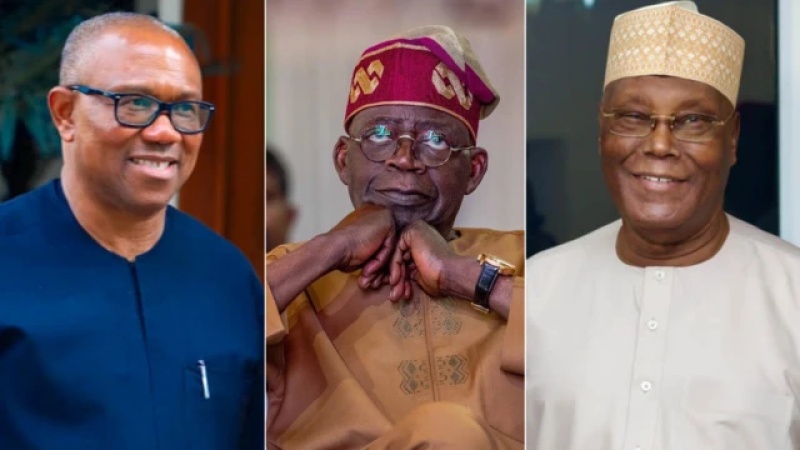
2027 gladiators Obi, President Tinubu, Atiku Courtesy BBC
By BONIFACE AKARAH
Both the ruling All Progressives Congress (APC) and the Independent National Electoral Commission (INEC) this Sunday evening, November 29, 2026, reacted angrily to a report that the presidential candidate of the Nigeria Democratic Congress (NDC), Peter Obi, has emerged ahead of APC’s President Bola Tinubu and former Vice President Atiku Abubakar of the African Democratic Congress (ADC) in the 2027 mock presidential election simulation.
The 2027 mock election report published by the Nigeria Election Intelligence System (NEIS) said that Omoyele Sowore, Presidential Candidate of the African Action Congress (AAC), finished 13th in the exercise.
Reacting angrily to the report, the APC Presidential Campaign Council describing the figures as fraudulent and insisting that INEC declared no winner or loser from Saturday’s mock presidential election exercise.
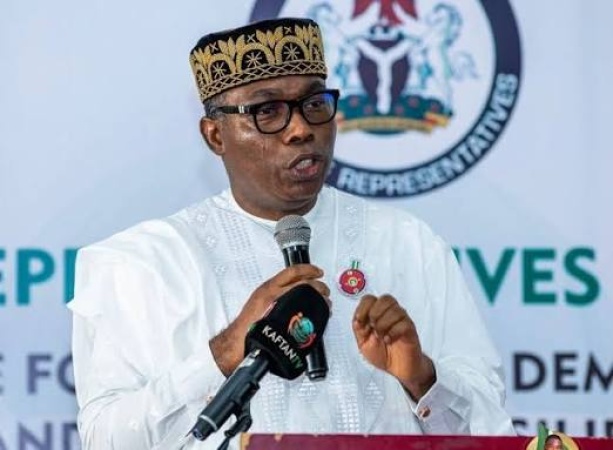
The council, in a statement signed by its Spokesperson, Dele Alake, said Nigerians should ignore the figures published by NEIS, which it described as a pro-NDC and pro-Peter Obi organisation.
The council said INEC conducted the mock election on Saturday in two polling units in each ward nationwide to test aspects of its preparations for the 2027 general election, including the Bimodal Voter Accreditation System (BVAS).
According to the APC council, the exercise covered 17,618 polling units out of 176,846 nationwide, representing about 10 per cent of the total polling units.
It said the ballot papers used in the exercise did not contain the names or logos of political parties, but instead featured options such as “AQUA”, “BLUE”, “COAL”, “CYAN” and “GOLD”.
“INEC declared no winner or loser,” the statement said.
The council therefore questioned how NEIS arrived at figures allegedly showing Peter Obi leading the exercise with more than five million votes and producing results for the APC, NDC, ADC and other political parties when those parties did not appear on the mock-election ballot papers.
“How did NEIS arrive at figures for the APC, NDC, ADC and other political parties when none of them featured on the ballot papers?” the APC council asked.
It also questioned the source and authority for the purported figures, noting that INEC had not collated or announced results from the exercise at polling-unit, ward, local-government, state or national levels.
“After the exercise, INEC did not collate or announce any results at the polling unit, ward, local government, state, or national levels. If the commission did not collate results, where did NEIS get the figures it claims to have recorded?” the council asked.
The APC council further questioned how NEIS could have arrived at more than 17 million votes from an exercise covering only about 10 per cent of the country’s polling units.
It said the figures were particularly questionable because NEIS itself reportedly described the process on its website as a “simulation”.
“Yet, it appears to have presented the figures generated from the exercise as though they were actual election results,” the council said, arguing that figures from a simulation should not be presented as a genuine representation of voters’ preferences.
The council described the purported publication as “an online political game designed to attract attention, engagement and traffic” rather than a reliable assessment of the country’s political mood.
It urged Nigerians not to interpret the figures as an indication of the likely outcome of the 2027 general election.
“The Obidient movement may choose to celebrate NEIS and its phantom figures, but such celebrations should not be confused with an actual electoral victory or evidence of nationwide support,” the council said.
The APC council also repeated its previous warning about what it described as alleged plots by opposition elements to manipulate public opinion through fake news and AI-generated images, discredit the electoral process and delegitimise INEC.
It alleged that such activities were aimed at creating conditions to “force a predetermined electoral outcome”, urging Nigerians to disregard what it called misleading information about the mock exercise.
The statement was signed by Alake in his capacity as Spokesperson of the APC Presidential Campaign Council.
INEC, on its part, promptly disowned the website neis.ng, declaring as “false and misleading” purported results it published from Saturday’s mock accreditation and election exercise.
INEC, in a statement signed by Adedayo Oketola, Chief Press Secretary/Media Adviser to the INEC Chairman, said the website was neither affiliated with nor authorised by or connected to the electoral commission.
The commission said the website had published purported results claiming that a named presidential candidate was leading the mock exercise, warning Nigerians against accepting or sharing the figures.
“The Commission wishes to state categorically that the website is not affiliated with, authorised by or connected to INEC in any way, and that the figures it displays are false and misleading,” the statement said.
INEC explained that the mock exercise did not feature real political parties or candidates, but used pseudo names generated solely for the dummy ballot papers.
“The mock exercise did not feature real political parties or candidates. It used pseudo names generated solely for the dummy ballot papers, which Nigerians saw during the exercise,” the commission said.
According to INEC, the exercise was conducted to test its technology, processes and logistics ahead of the 2027 general election and was not designed to generate electoral results for any candidate.
“The exercise was designed to test the Commission's technology, processes and logistics, not to produce results for any candidate,” it said.
The commission therefore rejected any claim that a candidate or political party won, led or trailed in the mock exercise.
“Any claim that a candidate or party won, led or trailed in the mock exercise is therefore baseless, and any website or platform presenting such figures as mock election results is deceiving the public,” INEC said.
The electoral body urged Nigerians, political parties, candidates and the media to disregard the content published by neis.ng and similar platforms and refrain from sharing it.
INEC said it would continue to publish verified information through its official channels, including its website and verified social media handles.
The commission also disclosed that it was reviewing the matter and warned that it reserved the right to take appropriate action against those responsible for spreading what it described as false election information.
The warning followed the circulation of purported figures from the mock exercise, which had been presented online as an indication of the standing of presidential candidates ahead of the 2027 election.
INEC stressed that no such candidate-specific result emerged from the exercise.