ADAD

Updating your news feed...
NEWS EXPRESS is Nigeria’s leading online newspaper. Published by Africa’s international award-winning journalist, Mr. Isaac Umunna, NEWS EXPRESS is Nigeria’s first truly professional online daily newspaper. It is published from Lagos, Nigeria’s economic and media hub, and has a provision for occasional special print editions. Thanks to our vast network of sources and dedicated team of professional journalists and contributors spread across Nigeria and overseas, NEWS EXPRESS has become synonymous with newsbreaks and exclusive stories from around the world.


Loading banners
Loading banners...

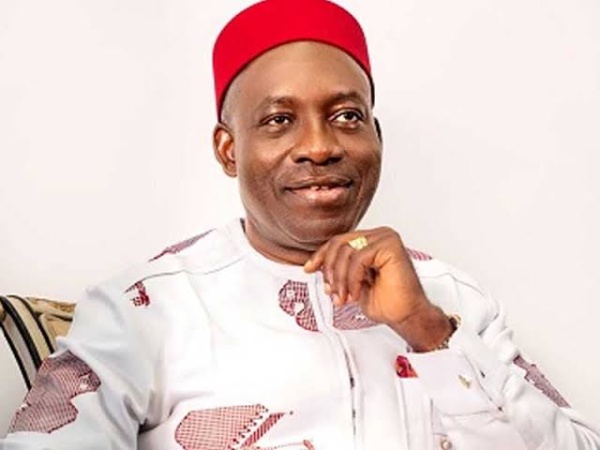
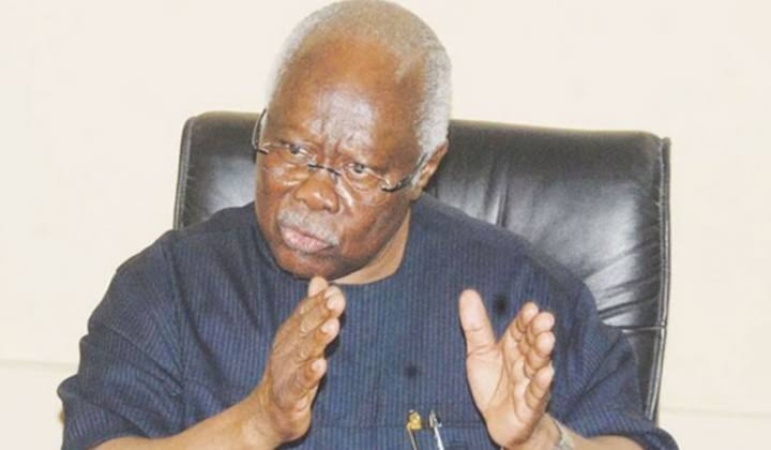
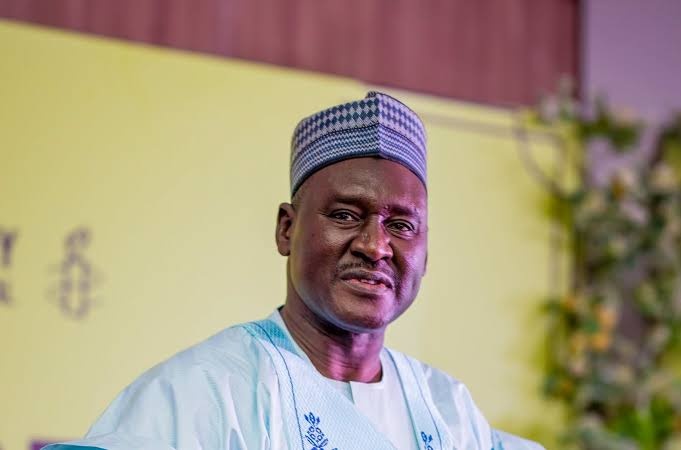
Denge Josef Onoh
Former Enugu lawmaker and Chairman of the Forum of Former Members of the Enugu State House of Assembly, Denge Josef Onoh, has described President Bola Tinubu’s promise to deliver the Eastern Nigeria rail line by 2031 as unrealistic.
He cited railway land encroachment, infrastructure vandalism and funding challenges.
Onoh, however, said he remained supportive of Tinubu and urged Ndigbo to vote for the President, whom he described as a leader with the political courage to confront Nigeria’s longstanding structural challenges.
In a statement made available to journalists in Kano on Sunday, Onoh was reacting to Tinubu’s pledge during his South-East presidential campaign rally in Enugu on Saturday, November 28, 2026, to connect the Eastern region with other parts of the country through the rail network.
He acknowledged that the President’s vision of integrating the South-East into the national railway network was commendable but warned that the project could remain an unfulfilled campaign promise if prevailing challenges were not urgently addressed.
According to him, his assessment was informed by his experience confronting alleged land encroachment and institutional decay within the Nigerian Railway Corporation (NRC), particularly in Enugu.
Onoh identified the alleged sale and partitioning of railway lands as one of the major obstacles to the project, recalling that the issue became prominent during his tenure as Chairman of the Enugu Capital Territory Development Authority (ECTDA).
He said that during the expansion of the Akanu Ibiam International Airport corridor in Emene, railway officials accused the ECTDA of encroaching on NRC property, prompting him to expose what he described as the sale of extensive railway lands to private individuals.
He alleged that residential estates, commercial buildings and other structures had been erected on portions of land originally designated as railway corridors.
Onoh warned that recovering such properties across several states would involve extensive demolition, huge compensation claims and prolonged litigation, making completion of the project within Tinubu’s second term difficult.
He also cited decades of vandalism along the Eastern railway corridor, which stretches approximately 1,443 kilometres from Port Harcourt to Maiduguri.
According to him, only the 62.8-kilometre Port Harcourt-Aba section has recorded significant progress, while large portions of the railway infrastructure across Abia, Imo, Enugu, Ebonyi and areas extending towards Benue have suffered vandalism, looting and deterioration.
He argued that rehabilitating more than 1,300 kilometres of damaged narrow-gauge railway or constructing a new standard-gauge line within four years would pose significant engineering and financial challenges.
Drawing a comparison with the power sector, Onoh recalled the 2023 promise of stable electricity, saying persistent grid collapses, metering deficits and mounting debts had demonstrated the difficulty of overcoming entrenched institutional problems.
He said the Eastern railway project could face similar challenges unless the Federal Government conducted a forensic audit of railway properties, recovered illegally acquired corridors and tackled those responsible for land racketeering and infrastructure vandalism.
“Presidential goodwill alone cannot override deep-seated institutional sabotage, funding shortfalls and legacy corruption,” he said.
On his political position, Onoh maintained that his support for Tinubu did not mean he could guarantee the President’s electoral fortunes in the South-East.
He said political leaders could only speak for themselves and exercise their individual votes, adding that the electorate retained the right to make its own choices based on their assessment of the issues.
“At the end of the day, I have only one vote. Other South-East leaders also have their individual votes, and we can only trust the electorate to weigh the issues and vote according to their conscience,” he said.
Onoh urged Tinubu to take immediate practical steps to recover railway corridors before 2027, insisting that the people of the South-East deserved concrete action rather than repeated electoral promises.
He said while the President’s ambition to connect the region to the national rail network deserved support, promising completion by 2031 without first addressing the existing obstacles amounted to raising expectations that might not be fulfilled. (The Guardian)