ADAD

Updating your news feed...
NEWS EXPRESS is Nigeria’s leading online newspaper. Published by Africa’s international award-winning journalist, Mr. Isaac Umunna, NEWS EXPRESS is Nigeria’s first truly professional online daily newspaper. It is published from Lagos, Nigeria’s economic and media hub, and has a provision for occasional special print editions. Thanks to our vast network of sources and dedicated team of professional journalists and contributors spread across Nigeria and overseas, NEWS EXPRESS has become synonymous with newsbreaks and exclusive stories from around the world.




















Loading banners
Loading banners...

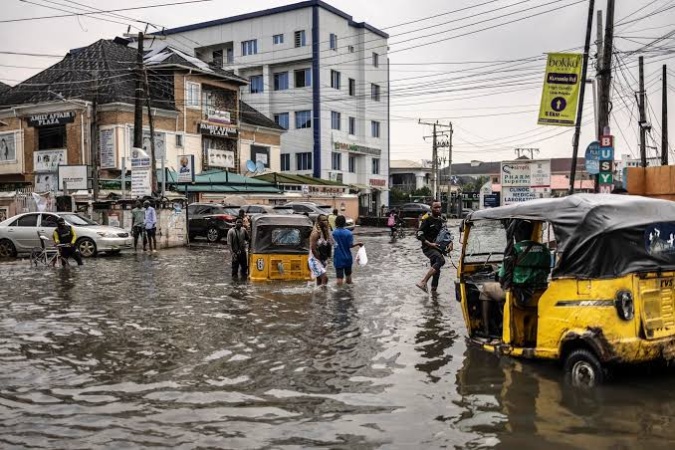
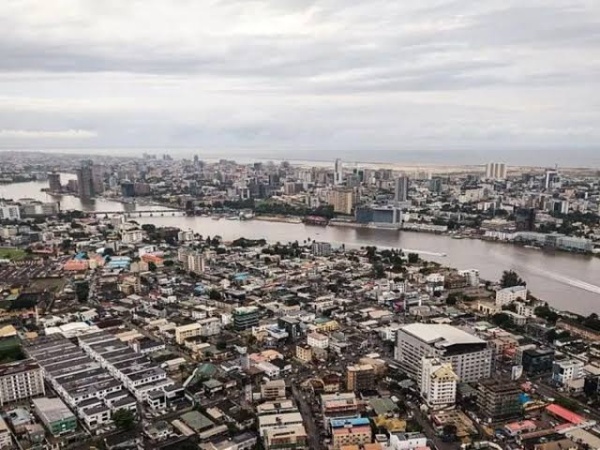
Lagos is sinking by an average of five millimetres every year, while Alexandria in Egypt is sinking at six millimetres annually, according to new research that warns of growing flood risks across Africa’s coastal cities.
The study, conducted by researchers from Virginia Tech, used radar images from the European Space Agency’s Sentinel-1 satellites to measure land movement in 20 African coastal cities. It found that some cities, including Lagos and Alexandria, were sinking much faster than estimates published by the United Nations’ climate science body, the Intergovernmental Panel on Climate Change (IPCC), in 2021.
Lead author Oluwaseyi Dasho said the effects of land subsidence could remain difficult to notice in everyday life but increase exposure to flooding over time.
The effects of subsidence, he said, “are often invisible in everyday life, but over decades they can substantially increase flood exposure”.
Subsidence occurs when the ground sinks, lowering the land relative to the sea and increasing the risk posed by rising sea levels linked to climate change.
The paper estimates that seven million people, one million buildings and assets worth $180 billion could be exposed to flood risks by 2050.
The researchers said a shortage of monitoring stations across Africa had made it difficult to obtain current, detailed information about land subsidence.
Using satellite radar data, however, the team was able to detect land movements as small as one millimetre per year.
Senior author Manoochehr Shirzaei said Sentinel-1 satellites pass over the same areas every six to 12 days, allowing scientists to track changes in the land. “The satellite transmits the radar signal, which hits the ground and bounces back to the satellite,” the geosciences professor explained.
He said the process is repeated during subsequent satellite passes, with the time taken for the signal to return recorded and compared to detect changes in the ground.
“The time between sending the signal and receiving it back is recorded, with changes in this value over time revealing how much the land has moved,” the study explains.
The research found that Alexandria was sinking at an average rate of six millimetres annually, while Lagos was sinking by five millimetres.
If the current rate continues, sea levels around Alexandria could rise 36 per cent more by 2050 than the IPCC projected under its middle emissions scenario.
Luanda, Angola, was also found to be sinking significantly, while Durban in South Africa remained stable or rose slightly.
Shirzaei said identifying areas where the IPCC had underestimated or overestimated the threat could help authorities direct resources to where they were most needed.
The study identified human activities, including excessive groundwater extraction, as major causes of land subsidence in some cities.
Shirzaei said many of the human-driven causes were concentrated in specific locations, making them possible to address through targeted policies.
The man-made drivers of subsidence are usually “extremely local, [which] means that we can combat them by creating local policies”, he explained.
The extraction of too much groundwater can cause soil to compact, leading to the ground surface sinking.
In Lagos, the reclamation of land from the ocean to create artificial islands and the construction of buildings on loose ground were identified as other possible causes.
The study also suggested that the Aswan Dam on the Nile could be trapping sediment upstream and preventing the natural replenishment of sinking land in Alexandria.
The researchers said measures to limit subsidence include providing alternative water sources and growing crops that require less water.
Shirzaei said areas where land subsidence could not be prevented would need to adapt to its effects “Whatever we cannot mitigate, we try to adapt to it.”
Such measures could include building flood defences and relocating critical infrastructure to higher ground.
Shirzaei said developing countries had been left out of much of the planning for rising sea levels because of inadequate monitoring.
He said the satellite techniques used in the research could also help close information gaps in other vulnerable regions, including the Pacific islands.
Dasho said he hoped the research, published in Science Advances, would help African governments prepare for future challenges.
He said the paper could help governments “prepare adequately for future challenges and more importantly for the future generations”. (AriseNews TV)