ADAD

Updating your news feed...
NEWS EXPRESS is Nigeria’s leading online newspaper. Published by Africa’s international award-winning journalist, Mr. Isaac Umunna, NEWS EXPRESS is Nigeria’s first truly professional online daily newspaper. It is published from Lagos, Nigeria’s economic and media hub, and has a provision for occasional special print editions. Thanks to our vast network of sources and dedicated team of professional journalists and contributors spread across Nigeria and overseas, NEWS EXPRESS has become synonymous with newsbreaks and exclusive stories from around the world.






















Loading banners
Loading banners...

mly Hauwa Onifade, ACIS
By ÓMÒLÈYÉ HAUWA ONIFADE
I am often asked what I mean by business reasoning.
My response is simple.
It is the habit of weighing value, cost, risk and exchange before making a decision.
It is a capability, not a talent, and like every capability, it can and must be taught.
Here is my longer response.
The easiest place to see business reasoning is in Lagos public transport, where nobody changes a price faster than a danfo conductor when it begins to rain.
On a dry evening, the song is steady: “Maryland, Anthony, Palmgrove, Yaba! W?lé, w?lé,
Má rò ?e! Yaba, five hundred!”
Then the first drops hit the windscreen, and the lyrics change.
In the twinkle of an eye, before anyone has opened an umbrella, Yaba becomes ?800.
Passengers begin to grumble, a few haggle here and there, and almost everyone still ends up paying in those few seconds, the conductor has done what an economics textbook needs a full chapter to explain.
He knows a seat is worth more to someone standing in the rain.
He also understands that the traffic ahead will burn more fuel and cost him trips.
He knows that if he pushes too far, his bus will leave half empty while the next one fills up.
And he knows that the fare is an agreement, not a decree, because if enough passengers refuse, it falls.
He may never name any of it.
Across town, however, a ride-hailing app reaches the same conclusion with an algorithm and calls it “surge pricing”.
The difference is that the conductor reaches it on instinct.
Value a bottle of water costs roughly the same to produce whether it sits on a supermarket shelf in Ikeja, in a hotel lobby in Victoria Island, or in the hands of a hawker on Third Mainland Bridge at seven o’clock in the evening.
Yet it is worth something differentin each.
The supermarket sells it as a necessity.
The hotel sells it as part of an experience, and its guests pay far more than the shelf price without a second thought.
The hawker, however, sells it as relief to a driver who has been stuck in traffic for an hour, and she knows exactly what that relief is worth.
Value is more than what a thing costs. It is the worth of a product, service or experience to a person at a particular time and place.
Cost most business owners I have worked with understand what they paid for their goods.
However, far fewer know what those goods truly cost once transport, packaging,
Storage, spoilage and their own time are accounted for.
The hawker on Third Mainland Bridge did not only pay for her water.
She paid for the ice that keeps it cold, the bus that brought her to the bridge, and the hours she spends on her feet, surfing between the cars.
Her real cost is higher than the price of the carton, and every business has a version of that hidden cost.
Pricing is as much a science as an art, and increasing a price is not the same thing as reasoning about one.
The science is in the numbers: if a product costs a trader ?800 and she sells it for ?1,000, she makes a profit of ?200. If she raises her price by ten per cent and still sells the same amount, her profit rises by half.
Few decisions move a business’s profit as much as its price.
The art is knowing how far she can go before her customers walk to the next stall, and finding ways to keep them without raising her price.
When I started my spice business, Turari Spices, I already understood the principles of costing. My challenge, however, was making the most of the profit each bottle could earn.
I had a vision for packaging that was sustainable, earthy and local, but it needed more capital than I had at the start, so I settled on a stop-gap: glass bottles shipped from a vendor in Kano.
Even these were costly, and that was before I had added a single label.
Instead of raising my price to cover them, I built a refill model.
A first purchase cost ?2,250, and any customer who brought back their bottle in good condition could refill it for ?1,850.
My customers saved ?400 on every refill, and I saved the cost of acquiring a new bottle.
Even with a stop-gap bottle, the business moved a step closer to the sustainable packaging I had in mind.
Risk every November, thousands of Lagos businesses make the same bet.
The caterer, the fashion designer, the small chops vendor and the make-up artist must each decide how much to buy before the Detty December rush arrives.
Buy too little, and they turn customers away in the busiest month of the year.
Buy too much, and January greets them with unsold stock and no money to restock.
Business reasoning does not remove risk, rater t weighs what could go wrong against what could go right.
My background in Actuarial Science taught me that risk is not the enemy.
Insurers do not refuse risk. They measure it, price it and decide how much of it they can carry.
The small business owner deciding how much stock to buy is doing the same work, usually without the training.
Exchange “Nne, abeg, add jara for me nah.”
“Ah!” the trader replies, as if you have asked for her whole shop.
Then she scoops a palmful of garri into your bag anyway.
She is not being careless with her stock.
She is making an exchange: a little garri today for your loyalty next week.
The suya man who hands you a piece to taste before you buy is doing the same thing, giving away a little meat for a likely sale.
Not every exchange is counted in naira, but every one of them is weighed.
Some exchanges are with the state.
Under Nigeria’s new tax law, small companies with an annual turnover of ?100 million or less and fixed assets below ?250 million pay no company income tax, but only if they can prove those figures with proper records.
The records are what a business gives, and the relief is what it gets.
Why it matters
For the past few years, Nigerian businesses have lived in survival mode.
Prices rose so fast that many simply raised theirs and hoped their customers would follow.
That season may be turning, but unevenly. Inflation has fallen to its lowest level since 2020, and surveys of larger firms show business conditions improving.
Yet many small businesses have been closing this year under the weight of energy and borrowing costs.
The Association of Small Business Owners of Nigeria (ASBON), has itself traced many of its members’ difficulties to the absence of proper business planning.
No business can reason its way out of an expensive power supply or a high interest rate.
But in an uneven recovery, the businesses that know their true costs, price deliberately and weigh their risks stand a better chance of being on the right side of it.
You see, most of the adults running those businesses are learning business reasoning by chance, and the expensive way: through losses, closures, and second, third and fourth attempts.
Many children who follow an adult to the market watch these exchanges every week.
Very few are ever taught to understand what they are watching.
They do not have to learn business reasoning the way their parents did.
A child who starts Primary 1 next year will grow into an economy shaped by open markets, new tax rules and new tools. The habits of mind she forms between the ages of six and fourteen will decide how she meets it.
Quantitative and verbal reasoning take root in those years because we teach them then.
Business reasoning deserves the same start, and it need not crowd an already full timetable: the prices, markets and choices children see every day are its teaching materials.
Business reasoning is not entrepreneurship, and it is not accounting.
Not every child will start a business, but every child will grow into an adult who compares offers, negotiates a salary, prices their time and decides whether a risk is worth taking.
A nurse who reasons this way makes better decisions about her own career.
A civil servant who reasons this way designs better policies for the businesses they affect.
When taught early, the capability becomes a habit, and the habit becomes a way of life.
The next time it rains and the Yaba bus fare suddenly becomes ?800, watch the conductor. Nobody taught him pricing in a classroom.
The hawker on Third Mainland Bridge was never taught either, and neither was the trader who adds jara to your bag.
They learned by watching others and by losing money, and many of them learned well.
But for every one who did, many more never learned at all.
When I am asked what business reasoning is, I say it is the capability behind every densible, intentional decision: knowing what a product, service or experience is
Worth, understanding its true cost, seeing what could go wrong, and weighing what we give against what we get in return.
It should be developed in every African child between the ages of six and fourteen, so that they grow up ready to thrive in the world that awaits them.
I am developing a framework for teaching it, and I invite education ministries, school owners and development partners across Nigeria and Africa to work with me to pilot it in primary schools, public and private.
My generation, and every generation before us, learned it by chance.
We can rewrite that story for the generations coming after us. Will they learn business reasoning by chance, or by design?
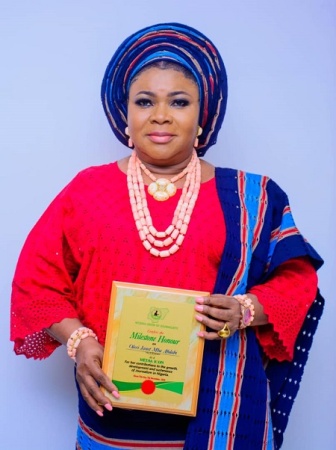
•Ómòlèyé Hauwa Onifade, ACIS, is a writer and business architect. She leads ByChance or Design, Ìdílé Publishing’s campaign for business reasoning to be taught in schools to children aged six to fourteen. Connect with her on LinkedIn at Linkedin.com/in/omoleyeonifade or email helloidile@gmail.com.