ADAD

Updating your news feed...
NEWS EXPRESS is Nigeria’s leading online newspaper. Published by Africa’s international award-winning journalist, Mr. Isaac Umunna, NEWS EXPRESS is Nigeria’s first truly professional online daily newspaper. It is published from Lagos, Nigeria’s economic and media hub, and has a provision for occasional special print editions. Thanks to our vast network of sources and dedicated team of professional journalists and contributors spread across Nigeria and overseas, NEWS EXPRESS has become synonymous with newsbreaks and exclusive stories from around the world.





















Loading banners
Loading banners...


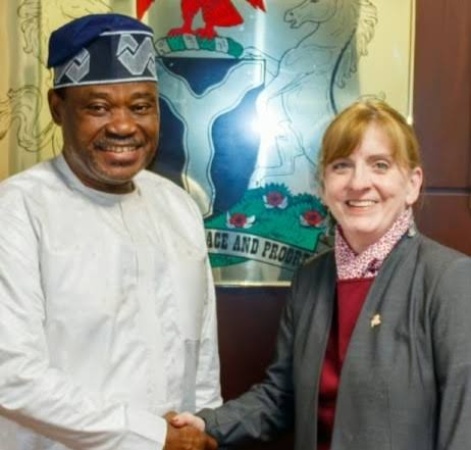
Director of the National Single Window Project, Mr Tola Fakolade
The Federal Government is moving to block revenue leakages, strengthen regulatory compliance and eliminate bureaucratic bottlenecks in Nigeria’s export sector through the second phase of the National Single Window (NSW) project, scheduled to go live on December 14, 2026.
The Director of the National Single Window Project, Mr Tola Fakolade, spoke on Thursday during the Phase Two National Single Window Sensitisation Programme in Port Harcourt, Rivers State.
The event attracted many stakeholders in the export sector, including government agencies such as the Nigerian Customs Service (NCS), the National Agency for Food and Drug Administration and Control, and the Nigerian Export Promotion Council (NEPC), among others.
Fakolade said the platform would simplify export documentation and permit processing by providing a single digital point through which exporters could submit documents and obtain approvals from relevant regulatory agencies.
He explained that the first phase of the project, which focused on submitting licences and permits, recorded significant successes, particularly in enforcing compliance and preventing revenue leakages.
According to him, feedback from participating agencies indicated that the platform’s compliance mechanisms had helped ensure that users adhered to regulatory requirements.
“One of the testimonials we got from some of the agencies on the first phase is that because of the enforced compliance on the platform, it actually forces users to be compliant. And when there’s compliance, then there’s a blockage of revenue leakage,” he said.
He expressed confidence that the achievements recorded in the first phase would provide a solid foundation for the export component, which he said was designed to improve efficiency and transparency in international trade.
Fakolade said the second phase would be implemented in two batches, with the first scheduled to begin on December 14.
He said the first batch would cover the issuance of export permits by regulatory and other agencies responsible for inspecting products and issuing permits before export.
The second batch, he added, would cover Central Bank of Nigeria (CBN) processes and was expected to go live in the first quarter of 2027.
Explaining the platform’s benefits, Fakolade said exporters would no longer need to visit different government agencies or submit the same documents through multiple independent systems.
“Instead of going to all the different programmes, you come to one platform, and you submit your certificate on one system,” he said.
He said the project team had concluded its User Acceptance Testing and would begin end-user training on November 16, urging exporters and other stakeholders to register and participate ahead of the December launch.
In his keynote address, Ndubueze Okeke, of the Nigerian Export Promotion Council (NEPC), urged the Federal Government to accelerate economic diversification by strengthening non-oil exports, warning that the country could not achieve sustainable economic growth by relying overwhelmingly on crude oil revenue.
Okeke said Nigeria must begin building an economy supported by multiple sectors, including agriculture, manufacturing, tourism, education, healthcare, financial services, and other areas with significant export potential.
He described the export component of the National Single Window as a strategic initiative that could reposition the economy, improve trade efficiency, and strengthen Nigeria’s competitiveness in the global marketplace.
“I say this with every sense of responsibility and without any apology: Nigeria cannot continue to depend overwhelmingly on crude oil revenue and expect to achieve sustainable economic growth,” he said.
Challenging Nigerians to look beyond oil, Okeke asked: “How many of us would want Nigeria’s oil to be exhausted in the next five years?”
He said the question was intended to encourage stakeholders to consider the country’s economic future beyond crude oil, stressing that Nigeria’s human resources, agricultural potential, industries and entrepreneurial capacity could sustain long-term prosperity.
Using the United Arab Emirates as an example, Okeke said the country had successfully diversified its economy by developing sectors such as tourism, trade, finance, education and healthcare.
He noted that Nigerians were already travelling abroad for educational and medical services, arguing that these activities represented opportunities Nigeria could develop and turn into export revenue.
He also urged the country to explore emerging niche markets, including halal products, as part of efforts to expand its non-oil export base.
On the National Single Window initiative, Okeke said its implementation was a significant milestone after nearly two decades of discussions about establishing a unified trade facilitation platform in Nigeria.
“For nearly two decades, we have talked about establishing a National Single Window in Nigeria. I am particularly delighted that I am alive to witness its actual implementation,” he said.
He explained that the export component would streamline documentation, simplify procedures and improve coordination among government agencies involved in export operations.
According to him, the platform would promote transparency, reduce the cost of doing business, eliminate unnecessary bottlenecks and improve the competitiveness of Nigerian exporters.
Okeke said the initiative would also strengthen Nigeria’s participation in international trade and create opportunities for local products to penetrate markets under the African Continental Free Trade Area (AfCFTA).
He said Nigeria recorded approximately $ 6.1 billion in non-oil export earnings last year, with more than 281 products exported to destinations worldwide.
He said the figure demonstrated the country’s potential to become a major export destination and trading nation.
“That achievement demonstrates that Nigeria has products the world wants. We have the agricultural resources, raw materials, industrial capacity and entrepreneurial energy to become a major export destination and trading nation,” he said.
However, Okeke identified inadequate attention to packaging, labelling, certification, quality assurance, and export documentation as challenges affecting the competitiveness of Nigerian products in international markets.
He maintained that Nigerian products could compete favourably globally if producers and exporters met the required international standards.
“In international trade, there is no special standard for Nigeria. Nobody will lower the bar because we are a developing country. If we want to compete, we must meet the standards required by the markets we seek to enter,” he said.
He stressed that the National Single Window’s success would require collective commitment from government agencies, exporters, manufacturers, financial institutions, logistics operators, and other stakeholders.
Okeke urged stakeholders to embrace technology, abandon outdated practices and take ownership of the initiative to ensure its successful implementation.
He said Nigeria had the products, human resources and market opportunities to expand its export economy, adding that the country needed efficient institutions, appropriate policies and collective determination to achieve its economic diversification objectives.
He said a stronger export economy would create employment, attract investment, generate foreign exchange and secure a more prosperous future for coming generations.
Okeke commended the Federal Government and programme organisers for the initiative and urged stakeholders to support its implementation.
Also speaking, the Controller of Customs in charge of Modernisation, Aondoni Christopher Fanyam, said the Nigeria Customs Service was collaborating with the National Single Window Secretariat and other government agencies to integrate their digital platforms for seamless export operations.
Fanyam said the initiative would integrate non-digitised documents and processes into the existing trade application and National Single Window platform to eliminate duplication and improve efficiency.
He described the project as a presidential initiative designed to establish a single point for submitting trade-related documents, from where relevant agencies could access the information required to perform their regulatory functions.
“The National Single Window Project is an initiative of the President to ensure single submission. So, with single submission, all documents are submitted in one place, so any agency that needs the information picks it up from that point of submission, so they don’t need to submit the same information to multiple independent systems,” he said.
Fanyam expressed confidence in the successful implementation of the export component, noting that the system had already been tested through the import processes and was now being replicated for exports.
He, however, acknowledged that the first phase encountered challenges, including change management, knowledge gaps and inadequate capacity building, which the authorities were addressing to ensure the success of the second phase.
According to him, the ongoing sensitisation and training programmes were designed to familiarise exporters and other stakeholders with the new processes before implementation.
On the challenges of manual documentation, Fanyam said the digital platform would eliminate bottlenecks in attaching physical documents and reduce the risk of submitting incorrect paperwork.
“Now with the digital, you only need the reference number of that documentation to be able to call that documentation from the National Single Window and use it,” he said.
He added that collaboration between the Customs Service, regulatory agencies, and the National Single Window Secretariat would make export procedures more efficient, transparent, and convenient for Nigerian businesses. (The Nation)