ADAD

Updating your news feed...
NEWS EXPRESS is Nigeria’s leading online newspaper. Published by Africa’s international award-winning journalist, Mr. Isaac Umunna, NEWS EXPRESS is Nigeria’s first truly professional online daily newspaper. It is published from Lagos, Nigeria’s economic and media hub, and has a provision for occasional special print editions. Thanks to our vast network of sources and dedicated team of professional journalists and contributors spread across Nigeria and overseas, NEWS EXPRESS has become synonymous with newsbreaks and exclusive stories from around the world.
.webp)



.webp)
.webp)

Loading banners
Loading banners...

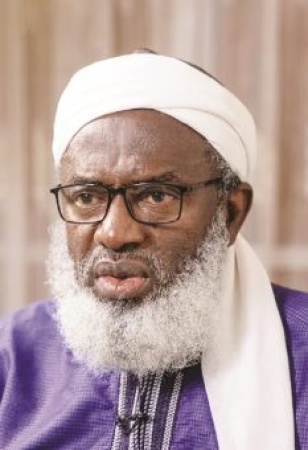
In this interview with an online platform, the PAPShow, Islamic cleric, Sheikh Ahmad Gumi, speaks on his controversial negotiations with bandits and his experiences during his visits to their camps. He also bares his mind on the nation’s economy, the president’s reforms and next year’s elections. Excerpts:
Many Nigerians are still struggling to afford food, transportation and other basic necessities. How do you reconcile the government’s economic recovery figures with the hardship people experience daily?
In a society like Nigeria, where one can confidently say that about 60 per cent of the population is semi-skilled or unskilled, the situation you have described should not come as a surprise. The economic measures introduced by the government since its inception are not something that came out of the blues. They are well-documented measures that many economists would recommend. That is why the International Monetary Fund (IMF) and other international institutions have welcomed some of Nigeria’s economic reforms, including the removal of petroleum and electricity subsidies. However, in a society where about 60 per cent of the population falls into the category I have described, a significant proportion of the people will inevitably be adversely affected by these economic changes. At the macroeconomic level, GDP has increased, government revenue has increased, and allocations have also increased. Virtually all the major indicators suggest that the Nigerian economy is recovering. But, as I said, that is at the macro level. The ordinary people are still bearing the consequences of the adjustment. What the government needs to do is establish effective social safety nets. I know it is making efforts in that direction, but the scale of intervention is not commensurate with the level of hardship. For instance, when we were growing up, one of the major campaign promises of politicians was free education, particularly universal primary education. Today, Nigeria has sufficient resources to provide free education not only at the primary level but also up to secondary school. Why should any Nigerian child be denied education when the country’s resources can support such a programme?
Are you saying the Tinubu’s administration is getting its economic policies wrong?
No. I am not saying the economic measures themselves are wrong. You may find very little fault with the economic direction in principle. The real question is: how much are we spending on social protection? How much of our national budget goes towards protecting vulnerable Nigerians? The government has introduced poverty alleviation programmes and other interventions. I am comfortable with them in principle, but the devil is in the implementation. You can have the best policy in the world, but if it is not properly implemented, it will not achieve its objectives.
There is also the problem of corruption in our institutions. It has been with us for a long time. Sometimes, you cannot blame only the President or a governor because corruption has permeated the entire society. We need a new national moral orientation.
Some people believe that with a strong leader, Nigeria’s problems can be resolved. Is President Tinubu the kind of strong leader the country needs?
Let us not forget that former President Muhammadu Buhari was also considered a strong leader. How did that end? Leadership requires more than an individual who is perceived as strong. The nation itself must have a strong institutional and moral foundation. Our national fabric must be strengthened, and our people must be educated. I can reduce many of our problems to the low level of education and the failure to carry ordinary Nigerians along in governance and development. There are highly qualified Nigerians all over the world. Our doctors, engineers and other professionals are doing exceptionally well abroad. Why are we not achieving similar results at home?
One of the reasons is that we have not adequately invested in the ordinary Nigerian.
No Nigerian child should be left out of school. No father should have to suffer simply because he wants to educate his child up to secondary school level. Government should take that responsibility seriously. Look at Finland. Education is free up to the PhD level. Saudi Arabia also provides free education up to secondary school level. Nigeria is a very wealthy country. We have the resources to provide free basic and secondary education for every child. I am not necessarily including tertiary education in that proposal, but our economy is strong enough to ensure that every Nigerian receives quality education up to secondary school. Education is the foundation of development and progress in every nation.
President Buhari was widely regarded as a strong leader, yet his administration faced serious challenges. How would you compare his leadership with what we have under President Tinubu? Do you think Tinubu is competent enough to seek re-election in 2027, particularly given concerns raised about his capacity to undertake nationwide campaigns?
If Nigerians are presented with options, they will make their decisions. I have only one vote. Besides, as a cleric, my students and followers belong to different political parties and persuasions. I cannot allow myself to become partisan. Nigerians should examine the choices available to them and decide. Our democracy is still developing. The Fourth Republic is about 27 years old. That is still a relatively young democracy. Look at the United States, which has had more than 200 years of democratic experience. Even there, you still hear allegations of electoral interference and other controversies. Our democracy is still maturing, and we should appreciate the opportunity to elect our leaders.
Is that why you are unwilling to disclose your preferred presidential candidate for 2027?
Yes. I cannot endorse or nominate anybody at this stage. If I publicly announce that I am supporting a particular candidate, some people may be influenced by my position. I do not want that. I want everybody to vote for whoever they believe is suitable.
Do you think democracy itself is one of the problems confronting Nigeria?
No. Democracy is very good for Nigeria. The liberal democracy we have adopted is healthy for our country. Just imagine living in some countries where citizens cannot freely express themselves. In some Arab countries, people cannot speak as openly as we do here. Freedom of expression is something money and political power cannot give you. Some people argue that freedom of expression means little to hungry people. But I disagree. You can ask a bird kept in a cage and provided with food. The moment its owner opens the cage, it flies away. The bird prefers freedom to the comfort of the cage. Nothing compares with freedom. Under democracy, you are free to aspire to political office, establish businesses, engage in farming and express your opinions. We should appreciate this freedom and use it productively.
Some critics argue that politicians elected under democracy have set Nigeria back by several decades. Do you agree?
No, I do not agree. We have access to the internet and can communicate freely. I have been to some advanced countries where people cannot even communicate freely through WhatsApp or other social media platforms without restrictions. In some places, communication is heavily regulated by the government. Nigeria must recognise the value of the freedom we enjoy and take advantage of it. Look at Libya. After the overthrow and killing of Muammar Gaddafi in 2011, the country descended into prolonged instability. One of the problems with dictatorship is that it does not allow institutions and democratic succession to develop. When the dictator is removed, the entire system can collapse because there is no established mechanism for transferring power. In a democracy, when one leader leaves office, another takes over. There is a succession process. A society needs continuous leadership renewal, just as stagnant water becomes polluted while flowing water remains fresh. I believe countries are better served by developing democratic institutions than by remaining under dictatorships.
Let us return to Nigeria’s economy. President Tinubu’s removal of the petrol subsidy on the day of his inauguration in May 2023 remains one of the most consequential decisions of his administration. Petrol prices have risen sharply, with serious consequences for transportation and the cost of living. Looking back, do you believe removing the subsidy was the right decision, or should the government have retained it until adequate social protection measures were introduced?
Removing the subsidy was an inevitable consequence of the circumstances in which Nigeria found itself. However, I would have preferred the government to establish strong social safety nets before removing it. The consequences we are experiencing could have been better managed if adequate protection had been put in place. But two or three years have passed since the policy was introduced, and I believe we should have adjusted our approach by now. One thing that surprised me after the subsidy removal was that I expected Nigerian roads to become relatively empty because of the increase in petrol prices. To my surprise, traffic congestion continued, particularly on major highways such as the Abuja-Kaduna road. You still see long queues of vehicles extending for kilometres, sometimes because of accidents or other obstructions. This suggests that Nigerians still have money to spend on petrol, despite the increase in prices.
I am not an economist, but I have observed that Nigerians sometimes complain about the cost of petrol while continuing to purchase it because it is a necessity.
Let me give you an example. I have seen significant construction work taking place on the Abuja-Kaduna road. The project had virtually stopped during the previous administration. We have also seen the establishment of several universities, including federal, state and private institutions. These are developments that should be acknowledged. The economy is recording growth, and there are improvements in certain areas. However, there are still unemployed Nigerians, people without adequate education and others struggling to survive. The government must therefore pay greater attention to the people at the bottom of the economic ladder.
You appear to be giving the government considerable credit despite the hardship Nigerians are experiencing. Has the administration done enough to protect vulnerable citizens?
I cannot be unfair to the government. It has introduced some interventions to support vulnerable Nigerians. But is what it has done enough? No.
That is why we must investigate how much money is being allocated to social protection programmes and how much is actually reaching the intended beneficiaries. My concern is that Nigeria has created different social classes, with some citizens effectively abandoned by the system. There are people living in remote and underserved communities who have little or no access to education, healthcare and other basic services. Some of them live in areas where government presence is almost nonexistent. These people feel forgotten. They are effectively treated as third-class citizens. Government must pay attention to them because neglecting such communities has serious consequences for national development and security.
Former Vice-President Atiku Abubakar has promised to restore the petrol subsidy if elected President. Do you consider that proposal realistic?
Before I studied the issue more closely, I had written extensively about subsidies from the perspective of an ordinary citizen. Subsidies exist in different parts of the world. Governments support essential goods and services when they believe doing so is necessary. The problem in Nigeria is that we have not sufficiently addressed corruption and the diversion of public resources. If you reopen the subsidy system without first tackling corruption, you may simply create another opportunity for the diversion of public funds. There is nothing wrong with removing subsidies and increasing social spending to compensate vulnerable citizens. But when you remove subsidies without adequately compensating the poor through social interventions, you create serious hardship. Similarly, bringing back subsidies without addressing endemic corruption would amount to throwing money into a well.
Can we honestly say that Nigeria has developed the level of institutional discipline required to operate a transparent subsidy system? I do not think so. Even without subsidies, Nigerians have lost confidence in public institutions. We need a moral reset. I have seen situations where hospitals are supposed to represent the highest expression of compassion and care, yet people cannot obtain basic medical supplies and treatment. If hospitals are in that condition, what more can we say about other institutions? During the administration of former President Goodluck Jonathan, I saw a documentary about Nigerian girls being trafficked to Europe for prostitution. I raised the issue with him and suggested that the government needed a nationwide moral reorientation programme. We have had initiatives such as the Ethical Revolution under the Shehu Shagari administration and War Against Indiscipline under Buhari. Nigeria needs a programme that will permeate every level of society and remind citizens that we must change our attitudes if the country is to survive.
You have previously described insecurity as a combination of poverty, ignorance and injustice, arguing that education and grassroots investment are essential to addressing it. Do you think the Tinubu administration is doing enough to tackle insecurity?
The government has improved on what we had before, but is it enough? No.
One major problem is the amount of money we spend on the kinetic approach to security. Previous administrations believed that spending enormous amounts of money on aircraft, weapons and other military equipment would automatically resolve insecurity. But some of that money could have produced better results if invested in education, healthcare, employment and other social interventions. The present government is making efforts, but they are still insufficient.
Insecurity is multifaceted. It is not a single phenomenon, and anybody who tells you that military operations alone will eliminate it is deceiving himself. We must pay greater attention to the non-kinetic approach. We cannot solve every security challenge with bullets and bombs. If military force alone could end the problem, we would have achieved that since 2009. I am also concerned about civilian casualties. We must examine the destruction of communities and the consequences of military operations on ordinary people.
Your advocacy for a non-kinetic approach has sometimes been interpreted as support for negotiating with bandits and terrorists, including giving them money. Is that what you are proposing?
Let me give you an example. I was once invited for a television interview where pictures of some bandits who had kidnapped schoolchildren were displayed. When I looked at the pictures, I noticed that some of the bandits were almost the same age as the children they had kidnapped. I also discovered that some of these people had attended school. The question I asked was: have we provided educational opportunities for all these children? Have we given them the opportunities they need so that they do not grow up envying others and attacking them? Every Nigerian child deserves access to education, whether the child lives in a settled community or in a nomadic environment. We have educational systems designed for nomadic communities in other parts of the world. Why can’t we strengthen such programmes in Nigeria? If we want responsible citizens, we must invest in their upbringing and education. We cannot abandon entire communities for generations and then expect them to develop the same opportunities and outlook as those who have enjoyed access to education and social services. This is not about being lenient towards criminals. It is about being fair and addressing the underlying causes of insecurity.
Can you give an example of the injustice or neglect you are talking about?
Only recently, two herders came to see me. They live around the Kachia area and were trying to move their cattle to a safer location in southern Kaduna because of insecurity and the declining availability of grazing land following the end of the rainy season. They had about 45 cattle and decided to transport them in a lorry. At the first military checkpoint, they were allegedly asked to pay money. After negotiations, they paid about N700,000. Some of the cattle were already distressed in the vehicle, and some were beginning to die, so they had little choice but to continue. At another checkpoint, they were reportedly asked to pay an additional N300,000.
Imagine having to spend almost N1 million simply to transport your cattle because of alleged extortion by security personnel. This is happening within our own security system. I am not suggesting that the government officially ordered such conduct. These are individuals who have compromised the system. But consider the consequences. What happens when the children of these herders grow up hearing about such experiences? We often concentrate on the reactions of people without examining the circumstances that produced those reactions. I have linked the herders with someone who can communicate with the General Officer Commanding (GOC) so that the soldiers involved can be identified and investigated. These are some of the realities that people do not always understand when discussing insecurity.
You have personally visited communities associated with banditry and engaged some of the people involved. What informed those engagements?
I did not go alone. I went with major Nigerian media organisations, the police and representatives of the local communities. It was not a secret mission. People saw us on camera, and the purpose was to understand the situation and explore ways of ending the bloodshed. We must understand that some of these people also see the security agencies as perpetrators of violence and extortion. When we visited one of the places associated with banditry, some of the people told us that they had lost uncles, brothers and other relatives during military bombardments. They said they regarded the security agencies as killers and extortionists. Some traced the origins of the violence to earlier clashes involving vigilante groups and herders, particularly incidents in which members of their communities were killed. Their explanation was that they were engaged in revenge attacks. I am not saying their actions are justified. Killing innocent people, kidnapping schoolchildren and extorting communities are unacceptable. But we must understand the cycle of violence if we want to stop it.
One of the people we encountered said the bloodshed had become too much. They also claimed that they were tired of the situation. Our responsibility is to encourage them to stop the violence and find a peaceful way forward.
Why do they continue to attack ordinary Nigerians rather than politicians or military personnel whom they accuse of victimising them?
We asked them that question. They explained that when military operations began, they believed the security forces had come to fight them. But we also questioned why they would kill women and children and why vigilante groups were allegedly arresting and killing members of their communities. Their response was that the situation had become a cycle of bloodshed, revenge and counter-revenge. We must find a way to stop that cycle.
Is it true that some powerful individuals or foreign interests are sponsoring these armed groups?
It is possible. Consider the millions of naira paid as ransom. Some of that money is used to purchase weapons. There is also competition among the different armed groups. Each group wants to possess more sophisticated weapons than the others.
The weapons come through black markets, just as illicit drugs do. If people have the money and the right connections, they can obtain them. As for the suppliers, foreign interests cannot be ruled out. A former Chief of Defence Staff once spoke about the discovery of foreign currencies, including dollars and euros, among Boko Haram members. That raises questions about possible foreign involvement and interference. We must investigate which foreign interests have the capacity and motivation to facilitate the movement of weapons into Nigeria.
Are you suggesting that foreign intelligence agencies such as Mossad or the former Soviet intelligence network, the KGB, could be involved?
They are among the possibilities that people may want to investigate. I am not making a definitive accusation against any particular country or intelligence agency. My point is that whenever a country becomes divided and unstable, external interests may exploit the situation. As the Hausa saying goes, when a wall develops a crack, a lizard can gain access to the room. We must strengthen our national unity and institutions so that nobody can exploit our internal weaknesses.
You told the BBC in an interview in December that everybody negotiates with armed groups, including the United States, citing the Taliban as an example. What exactly do you mean by negotiating with bandits? Does it involve paying them money?
No. Negotiation does not simply mean giving them money. It involves establishing dialogue, negotiating, reaching agreements, providing appropriate reparations where necessary and engaging them continuously. You do not simply abandon them after reaching an agreement. Let me give you an example involving Boko Haram. Former President Olusegun Obasanjo once found a way to meet some of the group’s leaders. They agreed to a 27-day ceasefire. According to what Obasanjo told me, the expectation was that the government would use that opportunity to sit down with them and negotiate a way out of the crisis. He said he presented the matter to the government at the time, but the government was unwilling to negotiate. I believe this is an approach we should examine.
You have also cited the Quran in support of negotiations with armed groups. What exactly does it say?
The Quran teaches that when your enemy inclines towards peace, you should also incline towards peace and put your trust in Allah, even if you fear that they may be attempting to deceive you. If people who have been involved in violence come forward and genuinely express a desire for peace, why should we automatically reject the opportunity? If Boko Haram leaders could sit down with a former Nigerian President to discuss peace, why should we consider it impossible to negotiate with other armed groups? We must be prepared to negotiate, reintegrate those who qualify for reintegration and continue engaging them.
What about the families of people killed by bandits and terrorists? How do you expect them to accept the reintegration of those responsible for killing their relatives?
That is a very important question. We are a nation that believes in the sovereignty of God. We are not a godless society. Some forms of judgment are not necessarily delivered here on earth. There is also the judgment of the hereafter. Our immediate priority must be to stop the bloodshed and end hostilities.
We cannot continue killing one another indefinitely. Look at what has happened in Gaza. The destruction and killing of thousands of people have created another generation of people who may grow up with deep hatred. You cannot eliminate an ideology or resolve a conflict simply by killing people. The more people are killed, the more resentment and hostility may develop. If Boko Haram can sit down with a former Nigerian President to discuss peace, and armed groups can also approach people like me seeking dialogue, I do not see why we should completely reject peaceful engagement.
Finally, let us discuss the 2027 general election. Do you think President Bola Tinubu will win?
If we are discussing Nigerian politics pragmatically and putting sentiments aside, there are certain factors that influence elections. Incumbency is a very important factor. Being in government gives a political party certain advantages. The number of party officials, governors, ministers, local government chairmen and other political office holders also matters. Poverty is another major factor. The ordinary poor Nigerian may not necessarily be concerned about political parties or ideological differences. Particularly in the North, there is a political psychology in which people appreciate whoever remembers them, visits their communities and provides assistance, even if it is something as small as a bag of rice.
The thinking is that somebody who remembers them is better than somebody who never visits their village. Unfortunately, some of those who distribute money and other inducements during elections may not necessarily be the best candidates. I am a pragmatic person, and I believe poverty will influence the 2027 elections because many people are vulnerable to vote-buying and other forms of inducement.
As a cleric, what qualities should Nigerians look for in politicians seeking their votes?
That takes us into the theological and religious dimensions of leadership.
Leadership is very important in Islam, but Nigeria is a pluralistic society with people of different religious backgrounds. I would rather leave the detailed religious interpretation to scholars who have addressed the subject. My position is that religious leaders must be careful not to use their influence to promote particular political candidates.
Should Nigerians vote for continuity or a change of leadership in 2027?
Whichever candidate wins, we should appreciate the democratic process. If Atiku wins, it is a win for us. If Tinubu wins, it is also a win for us. We have nothing to lose by allowing Nigerians to exercise their democratic rights.
Let us have a few rapid-fire questions. Who will you vote for as President in 2027?
I will certainly vote, but I will not disclose my choice. I will vote secretly because I do not want to influence anybody.
I want everyone to vote for the candidate they are comfortable with.
Who will you support for Kaduna State governor in 2027?
To be honest, Kaduna presents a win-win situation with the contenders. I have seen the work Governor Uba Sani is doing. I have also seen the changes taking place in the state.
You have praised Governor Uba Sani. Do you consider him a better governor than his predecessor, Nasir El-Rufai?
I do not want to be unfair to anybody. El-Rufai is my friend and classmate. I have known him for a long time. However, I have witnessed a paradigm shift in governance under Uba Sani. He understands governance, and I have seen the development projects he has attracted to Kaduna State. Some people complain that he does not spend enough time in Kaduna because he is often in Abuja. But how do you explain the projects coming into the state? I believe he deserves recognition for the work he is doing.
Does that mean you support Uba Sani politically?
No. I do not want to cheat any politician or give anyone an unfair advantage. I want to give everybody a level playing field. I do not want to use my religious position or influence to campaign for anybody. I am not a member of the APC, PDP or ADC. I do not belong to any political party. However, that does not mean I cannot acknowledge a politician or government official when I see something good. Just as I criticise them when they do something wrong, I should also commend them when they do something right.
You have a cordial relationship with El-Rufai. Have you ever advocated for his release, and have you discussed his situation with Governor Uba Sani?
Governor Uba Sani explained his position to me, and I am convinced that he does not have any personal interest in El-Rufai’s continued incarceration. El-Rufai has made mistakes, but I hope that after the election, whatever the outcome, a new chapter will open and there will be an opportunity to address his situation and secure his release.
You have also spoken out in defence of Sheikh Ibrahim El-Zakzaky in the past, despite differences in religious persuasion. What informed your intervention?
When Sheikh Ibrahim El-Zakzaky was incarcerated, that was the first time I met President Tinubu, who was not yet President at the time. It was in 2018. I approached him because I considered him someone I could speak to about the matter. I am a full-fledged Sunni Muslim, and I do not subscribe to the ideology of the Shiite Islamic Movement in Nigeria. However, I believed it was wrong to kill people and subsequently arrest their leader and subject him to what I considered unjust charges. I told Tinubu that justice required that El-Zakzaky should be released.
He listened to me and promised to speak with the President at the time. My position is not necessarily an endorsement of El-Zakzaky’s ideology. It is about justice.
Islam does not support injustice, and I cannot stand by and watch injustice simply because I disagree with someone’s religious persuasion. I believe there should be an appropriate opportunity to revisit the matter, and I hope he will eventually be released.(The Nation)