ADAD
Updating your news feed...

NEWS EXPRESS is Nigeria’s leading online newspaper. Published by Africa’s international award-winning journalist, Mr. Isaac Umunna, NEWS EXPRESS is Nigeria’s first truly professional online daily newspaper. It is published from Lagos, Nigeria’s economic and media hub, and has a provision for occasional special print editions. Thanks to our vast network of sources and dedicated team of professional journalists and contributors spread across Nigeria and overseas, NEWS EXPRESS has become synonymous with newsbreaks and exclusive stories from around the world.












Loading banners
Loading banners...

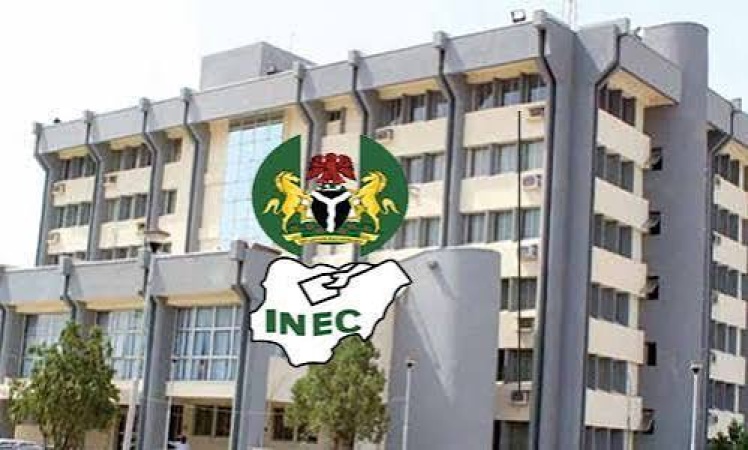
With 73 days left before the 2027 general elections, the Independent National Electoral Commission (INEC) is facing mounting questions over its compliance with the Electoral Act 2026, particularly its handling of the preliminary voters’ register and candidate nominations.
Stakeholders have faulted the commission for allegedly failing to meet statutory obligations while taking political parties and candidates to court over missed deadlines, raising concerns about its neutrality and institutional accountability.
The concerns come as INEC said it had removed more than 1.27 million invalid voter records from the national register after identifying about 1.5 million questionable entries.
The controversy has brought renewed attention to two critical areas of the electoral process: the submission of political parties’ membership registers and nomination of candidates, as well as the publication of the preliminary voters’ register.
Although INEC has defended its position on party membership registers by citing judicial pronouncements, particularly the Supreme Court’s September 2026 decision, stakeholders insist that the commission must demonstrate consistency, transparency and impartiality in interpreting and applying the law.
concerns have also raised a fundamental question about who holds the electoral umpire accountable when it allegedly fails to comply with the same laws it is constitutionally mandated to enforce.
INEC misses online publication deadline
TOP among the alleged breaches is the commission’s failure to publish the preliminary voters’ register on its official website within the timeline prescribed by Section 19(1) of the Electoral Act 2026.
The provision requires INEC to make the preliminary register available for public scrutiny by displaying it at registration areas and simultaneously publishing it on its website.
The Act also provides for a seven-day period of public inspection, not later than 90 days before an election.
While INEC conducted the physical display of the register between October 9 and 15, it failed to publish the document online within the stipulated period.
October 18 was the relevant deadline for the publication ahead of the January 16, 2027 presidential election and that of the National Assembly
Stakeholders argue that where the law expressly provides for both physical display and online publication, the commission owes Nigerians an explanation for the delay and the legal basis for its interpretation.
Other provisions attracting attention include sections 29, 31, 32, 82, 84 and 98, which address different aspects of voter-register transparency, candidate nomination, party primaries and election campaigns.
Section 31 deals with the withdrawal and substitution of candidates up to 90 days before an election, while Section 32 provides for the publication of the final list of candidates within the 60-day window.
It was also gathered that while INEC was still accrediting candidates, it was taking opposition candidates to court over alleged failure to meet deadlines for submitting parties’ membership registers.
The commission has maintained that its position on membership registers is informed by judicial pronouncements, particularly the Supreme Court’s September 2026 decision.
Lawyers fault selective enforcement of electoral laws
lawyer and principal partner, O. M Ajonye and Company, Legal Wise Chambers, Makurdi, Omale Ajonye, said the allegations surrounding INEC’s compliance with the Electoral Act raised serious concerns about institutional accountability and the credibility of Nigeria’s electoral process.
He argued that it was fundamentally inconsistent for the commission to insist on strict compliance with statutory deadlines by political parties and candidates, institute legal proceedings against alleged defaulters and yet face allegations of failing to fulfil its own statutory obligations.
He said: “The law must bind both the regulator and the regulated. Equally disturbing is the allegation of differential treatment in the handling of candidates’ nominations. If opposition candidates are challenged for missing deadlines, while others in substantially similar circumstances are accommodated, INEC owes Nigerians a convincing legal explanation.
“Selective enforcement undermines electoral neutrality and public confidence. The alleged failure to meet the statutory timeline for the voters’ register is also serious. The register is the foundation of credible elections, and any failure to comply with prescribed requirements could compromise voters’ rights and the integrity of the electoral exercise.
“This raises the pertinent question: Quis custodiet ipsos custodes?—who guards the guardians? INEC’s constitutional independence does not confer immunity from the law, judicial scrutiny or public accountability.”
For erstwhile National Secretary of the Yoruba Council of Elders, Dr Kunle Olajide, neither deliberate disregard for the law nor administrative shortcomings should escape accountability.
He said: “INEC must recognise that public confidence depends not only on its independence but also on its willingness to subject itself to the same legal standards it imposes on others.”
Olajide maintained that INEC was an umpire and not the owner of the electoral process, stressing that its authority derived from the Constitution and the Electoral Act, while the mandate belonged to the people.
“The commission must therefore demonstrate that nobody, including the institution conducting the elections, is above the law,” he added.
Suraj cautions against blaming electoral umpire alone
CHAIRMAN of the Human and Environmental Development Agenda (HEDA), Lanre Suraj, however, cautioned against holding INEC responsible for all the challenges confronting the electoral process without examining the conduct of politicians and political parties.
He argued that the activities of political actors often make the commission’s responsibilities more difficult and generate controversies capable of undermining public confidence in democratic institutions.
According to him, politicians and political parties are not always willing to play by the rules, particularly when their ambitions or political interests are threatened.
He identified internal disagreements over candidate selection, procedural lapses and attempts to manipulate the electoral process for political advantage as some of the factors behind disputes frequently attributed to INEC.
Suraj also observed that understanding Nigeria’s electoral politics required a deeper appreciation of the manoeuvring and tactics politicians deploy.
Citizens, he said, must be able to recognise when electoral controversies are deliberately manufactured to discredit institutions or divert attention from political parties’ failure to observe established rules.
While maintaining that his position was not an endorsement of impunity or a defence of INEC where it had failed to discharge its constitutional responsibilities, he insisted that allegations against the commission must be supported by verifiable evidence.
On claims that INEC showed preferential treatment by accepting or accrediting candidates submitted by the ruling party after the stipulated deadline while rejecting similar submissions by opposition parties, Suraj argued that affected parties and candidates should approach the courts to establish their claims.
He warned that sweeping allegations of bias without establishing the facts could further erode public confidence in electoral institutions and weaken democratic accountability.
“INEC must answer for any breach of the law, but politicians and political parties must equally be held responsible for their conduct. The credibility of elections, he argued, depends not only on the performance of the electoral umpire but also on parties’ willingness to respect the law, conduct transparent primaries and accept the rules governing electoral competition.”
Citizens urged to demand accountability
AS INEC faces questions over its implementation of the Electoral Act, stakeholders have identified judicial intervention, legislative oversight, independent monitoring and sustained public demands for transparency as avenues through which citizens can hold the commission accountable.
Omale said Nigerians must insist on credible voter registration, independent election observation and strict compliance with electoral laws, adding that specific allegations should be verified against relevant statutory provisions, INEC’s official timetable and documentary evidence.
He identified the courts as an important avenue for addressing alleged violations, while urging the Nigerian Bar Association and civil society organisations to monitor the commission’s activities.
He said: “Ultimately, INEC cannot be the enforcer of electoral laws and simultaneously become an exception to those laws. Its independence must never become a licence for impunity. The credibility of the 2027 general elections will depend on whether INEC is prepared to obey the same law it demands that political parties and candidates obey.”
Olajide, on his part, called on the National Assembly to intensify its oversight of the commission, while affected political parties and candidates should seek judicial redress where they can establish violations of their rights.
He also urged civil society organisations to independently monitor the voters’ register, candidate lists, election technology and result-transmission arrangements.
Beyond these measures, he proposed that INEC publish a comprehensive compliance report detailing its statutory obligations, deadlines, actions taken and explanations for any delays.
“Ultimately, credible elections cannot be guaranteed by assurances alone. Nigerians must insist on transparency, consistency and accountability before election day,” he said.
INEC removes 1.27m invalid voter records
MEANWHILE, INEC has removed more than 1.27 million invalid records from the National Register of Voters following a technology-enabled verification exercise that uncovered about 1.5 million questionable entries.
INEC Chairman, Prof. Joash Amupitan, disclosed this yesterday when the United Nations Special Representative of the Secretary-General for West Africa and the Sahel, Leonardo Santos Simão, visited the commission’s headquarters in Abuja.
Amupitan said the commission identified the questionable records as part of efforts to sanitise the voters’ register and eliminate irregularities capable of undermining the credibility of the 2027 general elections.
He explained that more than 1.27 million of the 1.5 million records identified had been confirmed invalid and subsequently removed from the database.
The INEC chairman said the commission was determined to strengthen the integrity of the National Register of Voters through technology, improved administrative processes and public participation in the verification exercise.
He disclosed that the register currently contained more than 103 million voters, with young Nigerians aged between 18 and 34 accounting for nearly 29 per cent of the electorate.
According to him, the commission is also conducting a comprehensive review of the register through the claims and objections process ahead of the publication of the final register scheduled for December 15, 2026.
INEC outlines preparations, seeks international support
AMUPITAN further disclosed that the nationwide Permanent Voter Card (PVC) collection exercise was ongoing, with collection points decentralised to registration areas and wards across the 774 local government areas.
He said the commission was strengthening the deployment of the Bimodal Voter Accreditation System (BVAS) and the INEC Result Viewing Portal (IReV) to improve voter accreditation and transparency in result management.
The chairman said INEC had completed nine of the 14 activities on its revised timetable for the 2027 elections, while operational readiness assessments were ongoing across the six geopolitical zones.
He added that the commission had procured 57,000 BVAS devices and election materials for 176,846 polling units.
Amupitan also disclosed that INEC had deployed its Candidates Nomination Portal, which processed nominations for 21 of the country’s 22 registered political parties.
He identified misinformation, disinformation, hate speech and the growing misuse of artificial intelligence as emerging threats to electoral integrity, calling for stronger international cooperation to address the challenges.
Receiving Simão, the INEC chairman sought the United Nations’ continued support for peaceful elections, while the UN representative acknowledged the enormous responsibility facing the commission amid security challenges in Nigeria and other West African countries.
Simão said elections should provide citizens with an opportunity to exercise their democratic rights peacefully and determine their political future rather than trigger violence, division and instability.
He assured the commission of the UN’s support, saying the organisation would maintain a presence throughout the electoral process to encourage positive conduct and promote peaceful participation.
“We are here, pleased to give you moral support, that you are not alone in facing this mammoth task,” he said.
He, however, clarified that the UN would not participate as an election observer because it had no mandate to undertake election observation.
imão stressed that the outcome of Nigeria’s 2027 elections would have implications beyond its borders, particularly for democratic stability, regional integration and peace in West Africa.
Also, during a separate meeting with British High Commissioner to Nigeria, Pete Vowles, Amupitan reaffirmed INEC’s commitment to conducting free, fair, credible and inclusive elections.
He said the commission was strengthening its operational, technological and administrative capacity, particularly in election logistics, deployment of personnel and materials, BVAS operations, timely uploading of polling unit results to IReV and intelligence-driven security collaboration.
Amupitan also sought expanded collaboration with the United Kingdom on cybersecurity, technological integrity, specialised training for electoral personnel, strategic communication, combating disinformation and voter education.
He called for continued support in promoting inclusive participation, particularly among youths, women, persons with disabilities and other marginalised groups.
Vowles, who said he had been in Nigeria for about eight weeks, described the country’s democracy as important to its citizens and the wider West African sub-region.
He acknowledged the longstanding electoral partnership between Nigeria and the United Kingdom, which has included technical assistance, capacity building, gender mainstreaming, voter education and institutional policy development. (The Guardian)